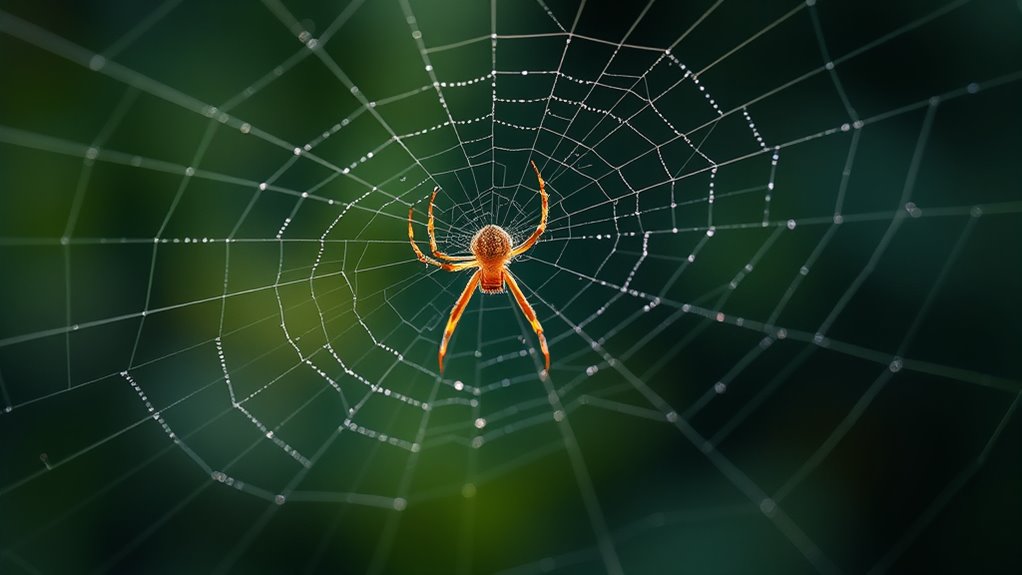

Spiders make silk using specialized glands in their abdomen that produce liquid protein. This protein is extruded through spinnerets, forming fibers that solidify as they’re spun. They can control the silk’s thickness and type during the process, which allows them to create silk for different purposes like webs, prey wrapping, or cocoons. Environmental factors also play a role in the silk’s quality. You’ll discover even more fascinating details about this intricate process ahead.
Key Takeaways
- Spiders produce liquid protein from specialized glands in their abdomen, which is essential for silk creation.
- The protein is extruded through spinnerets, where it solidifies into fibers during the spinning process.
- Different spider species produce various silk types for specific purposes, such as web-building or cocoon creation.
- Spiders control the silk’s thickness and properties through physical manipulation and environmental factors like humidity.
- The resulting silk is strong, flexible, and lightweight, making it superior to many synthetic materials.
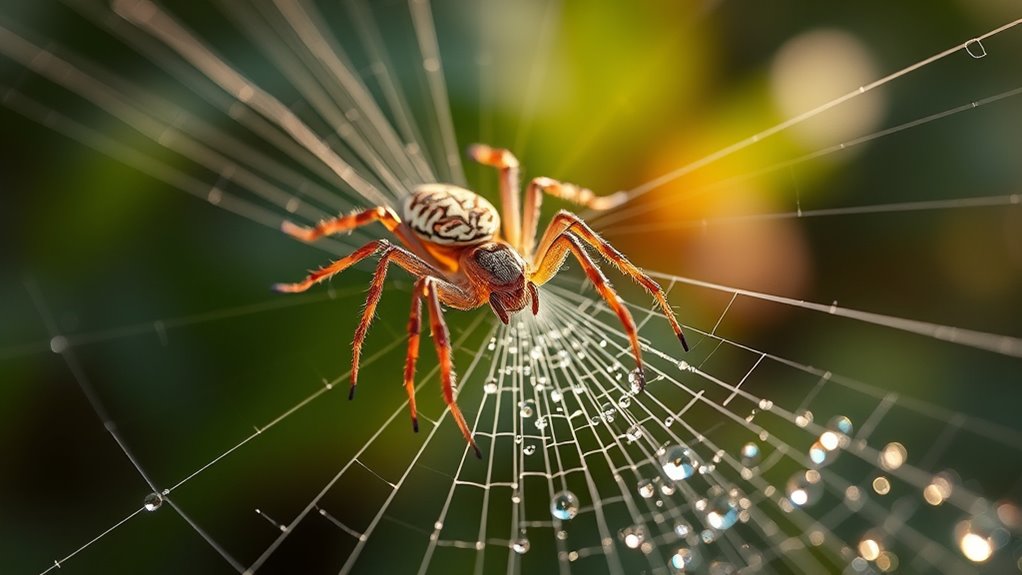
Although you might think of spiders as creepy crawlers lurking in corners, they’re actually fascinating architects, especially when it comes to silk production. The silk they create isn’t just a simple thread; it’s a remarkable material with unique spider silk properties that have captured the attention of scientists and engineers alike. Understanding how spiders make this incredible substance reveals the complexity of their silk spinning process and the purposes it serves in their lives.
When a spider decides to spin silk, it begins with specialized glands located in its abdomen. These glands produce a liquid protein that, when extruded through spinnerets, solidifies into silk fibers. The silk’s composition varies depending on the type of spider and its intended use, whether it’s for building a web, wrapping prey, or creating a cocoon. As you learn more about this process, you’ll discover that the protein structure of spider silk is what gives it those amazing properties—it’s incredibly strong, flexible, and lightweight.
During the silk spinning process, spiders can control the thickness and type of silk they produce. As they pull the liquid silk out of their spinnerets, they’re not just letting it flow; they’re actively manipulating it. This involves a combination of physical stretching and environmental factors like humidity and temperature. The result is a silk that’s not only durable but also elastic—some types can stretch up to five times their original length without breaking.
You might be surprised to know that spider silk has the potential to outperform many synthetic materials. Its tensile strength is greater than steel, and it’s biodegradable, making it an eco-friendly alternative for various applications. Researchers are studying spider silk properties to explore its potential in medical sutures, ropes, and even biodegradable fishing lines. The future could hold exciting possibilities as scientists aim to replicate this natural process through bioengineering. Additionally, the study of AI’s role in cybersecurity has led to innovative approaches in materials science, including spider silk research.

Land Guard 1500 sqft Spider Web, Bonus with 75 Artificial Spiders, Fabric Spider Webbing, Cobweb Halloween Decor for Indoor and Outdoor Party Supplies
- Coverage Area: 1500 sq ft of spider webbing
- Includes Spiders: 75 artificial PP plastic spiders
- Material: Durable polyester and safe plastic
As an affiliate, we earn on qualifying purchases.
As an affiliate, we earn on qualifying purchases.
Frequently Asked Questions
What Types of Spiders Produce Silk?
Most spiders produce silk, but notable types include orb-weavers, tarantulas, and funnel-web spiders. Each has unique spider silk composition, tailored for different functions like webs or draglines. You’ll find that the silk production process varies: orb-weavers create intricate webs for trapping prey, while tarantulas use silk for protective retreats. Understanding these differences helps you appreciate the diversity in silk characteristics and its essential roles in a spider’s life.
Can All Spiders Spin Silk?
Not all spiders can spin silk. While most species possess the ability, some, like the male adult spider of the family Uloboridae, have lost this skill over time. When spiders do produce silk, its composition varies based on the species and purpose. The silk spinning process involves specialized glands creating proteins that solidify upon exposure to air, resulting in the diverse silks used for webs, egg sacs, or even prey capture.
How Strong Is Spider Silk Compared to Steel?
Spider silk’s strength is remarkable; it’s often compared to steel. When you examine its structural properties, you’ll find that spider silk can be five times stronger than steel of the same diameter. This incredible strength comes from its unique silk production processes, allowing spiders to create threads that are both flexible and durable. So, while steel is tough, spider silk showcases nature’s engineering brilliance, proving that strength can come in unexpected forms.
Do Spiders Use Silk for Purposes Other Than Webs?
Spiders use silk for much more than just webs. Think about it: they rely on silk for communication, sending signals to other spiders through vibrations. It’s also a vital tool for predator defense; they can drop silk lines to escape quickly or create silk retreats for safety. So, next time you see a spider, remember they’re not just spinning webs but crafting a versatile survival toolkit!
How Long Can Spider Silk Last in Nature?
Spider silk can last quite a while in nature, often up to several years, depending on environmental conditions. Factors like humidity, temperature, and exposure to sunlight can accelerate silk degradation. You’ll find that in moist environments, silk tends to break down faster due to microbial activity. The environmental impact of silk is fascinating, as it biodegrades without leaving harmful residues, making it a more sustainable option compared to synthetic materials.
Conclusion
So, you might think spider silk is just a simple web, but it’s so much more. Each strand is a marvel of nature, crafted through a complex process that showcases the spider’s incredible abilities. Whether it’s for trapping prey or creating a safe home, this silk is a proof to evolution’s ingenuity. Next time you see a spider spinning its web, remember—what seems ordinary is actually extraordinary, reflecting the wonders of the natural world.