
Fireflies glow through a fascinating chemical reaction where an enzyme called luciferase interacts with a molecule known as luciferin. This reaction occurs in the presence of oxygen and produces light nearly 100% efficiently. The stunning flickers you see at dusk serve as a way for fireflies to communicate, attract mates, and establish territory. Each species has its unique flashing pattern. If you’re curious about the deeper significance of this mesmerizing phenomenon, there’s much more to explore.
Key Takeaways
- Fireflies glow through a chemical reaction involving the enzyme luciferase and the molecule luciferin in the presence of oxygen.
- This bioluminescent process results in nearly 100% energy conversion, making fireflies highly efficient light sources.
- The primary purpose of their glow is for nocturnal communication, attracting mates and signaling territory.
- Male fireflies emit rhythmic flashes, while females respond with distinct signals, creating a dance of lights for reproductive communication.
- The glow reflects millions of years of evolution, showcasing nature’s ingenuity in optimizing light production.
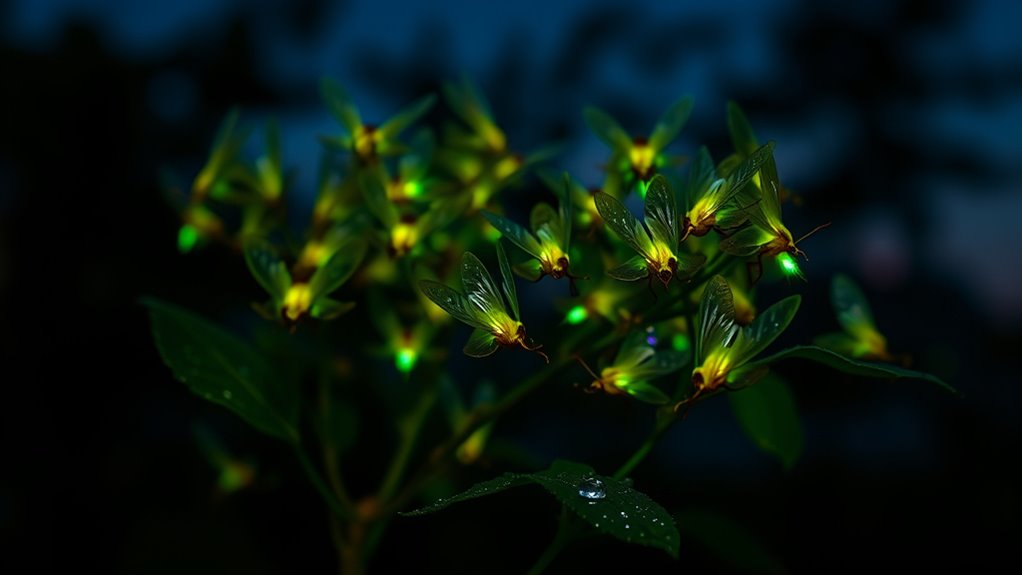
When you see fireflies lighting up a summer evening, you might wonder how they create that enchanting glow. It’s not magic; it’s a fascinating biological process known as bioluminescence. Fireflies produce light through a chemical reaction involving bioluminescent enzymes, specifically luciferase, and a light-emitting molecule called luciferin. When these two components react in the presence of oxygen, they generate light, which can be seen flickering in the twilight. This natural phenomenon is a remarkable example of nature’s ingenuity.
You may be curious why fireflies glow in the first place. The primary purpose of this light is nocturnal communication. These insects use their bioluminescent displays to attract mates, signal territory, and communicate with one another. Each species has a unique pattern of flashes that helps potential partners identify one another in the dark. When you witness that mesmerizing dance of lights, remember each flicker carries a message, a call in the night that plays a vital role in their reproduction and survival.
As a firefly glows, it’s also worth noting that the intensity and frequency of the light can vary. Male fireflies typically emit consistent, rhythmic flashes to catch the attention of females, who respond with their own unique signals. When you observe this interaction, you’re witnessing a beautiful exchange of light, a form of dialogue that unfolds in the shadows of dusk. This elegant display of bioluminescence isn’t just about attraction; it’s a sophisticated communication system that has evolved over millions of years.
While the glow is mesmerizing, the underlying science is equally fascinating. The efficiency of this light production is remarkable; fireflies convert nearly 100% of the energy from the chemical reaction into light, making it one of the most efficient forms of light generation found in nature. As you watch these enchanting creatures, consider the complexity of their biology and the role bioluminescent enzymes play in their lives. Mindfulness practices, such as visualization techniques, can help enhance your appreciation of the natural world around you.
Frequently Asked Questions
Do All Fireflies Produce Light?
Not all fireflies produce light. The bioluminescent mechanisms vary among different firefly species, leading to a fascinating diversity. While many species use light for attracting mates or signaling, some don’t emit any glow at all. You’ll find that the reasons for this variation often relate to their habitat and behavior. So, if you’re curious about fireflies, exploring the specific species will reveal their unique traits and whether they light up the night.
Are Fireflies Harmful to Humans?
Fireflies aren’t harmful to humans. Their bioluminescence is a natural wonder, used mainly for mating and communication. You can enjoy watching them without worry. While fireflies are safe, it’s best not to handle them, as their bodies can be sensitive. Regarding firefly safety, you’ll find that these creatures pose no threat, making summer nights filled with their glow a delightful experience for everyone. Relax and enjoy the light show!
What Do Fireflies Eat?
Fireflies mainly eat nectar and pollen, but their larvae have a different diet. As a larva, they often feed on small insects, snails, and even other larvae. When it comes to firefly mating, adult fireflies are more focused on attracting partners with their glow than foraging for food. So, while adults enjoy sweet nectar, the young ones are busy hunting to grow strong for their own dazzling displays in adulthood.
Where Can I Find Fireflies?
You can find fireflies in moist, warm areas, especially near water sources like ponds and marshes. Picture a summer evening; you’ll see them flickering in lush firefly habitats or along their breeding grounds. They thrive in tall grasses and open fields, where the air is still and the grass is damp. So, grab a flashlight and head out at dusk—who knows what magical display awaits you in the twilight!
How Long Do Fireflies Live?
Fireflies typically live for about two months. During this time, they engage in fascinating firefly communication, using their bioluminescence to attract mates. You’ll often see males flashing their lights to signal females, who respond with their own patterns. This mating behavior is essential for their reproduction. Once they mate, females lay eggs, and their life cycle continues, but you’ll only get to enjoy their enchanting lights for a short while.
Conclusion
In a summary, fireflies light up the night sky thanks to a fascinating chemical reaction in their bodies. This natural glow not only captivates us but also plays an essential role in their mating rituals. So, next time you see those twinkling lights, remember that it’s not just magic; it’s science at work! You could say these little bugs have found a way to light up their world, and in turn, ours too.