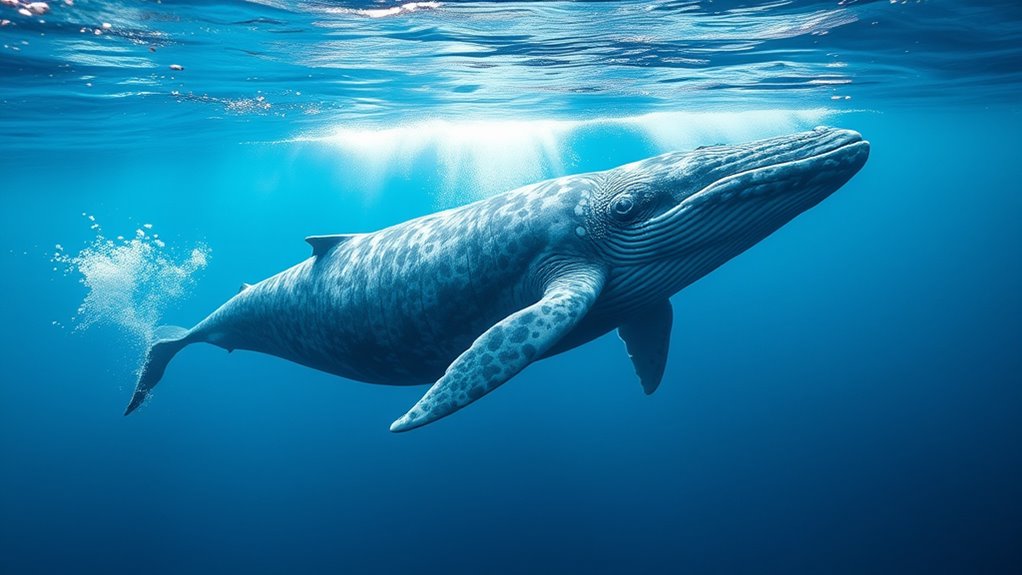

The blue whale isn’t just the largest animal alive today; it’s the biggest known to have ever existed on Earth. Its elongated, slender body gracefully glides through the ocean, leaving many in awe of its size and beauty. Blue whales communicate over vast distances using low-frequency sounds, essential for mating and navigation. However, they face serious threats like ship strikes and climate change. Want to learn how we can help protect these magnificent creatures?

Get pet supplies delivered free — and shop member deals
- Fast, free delivery on millions of items
- Access to Prime Big Deal Days deals on October 6–7
- Prime Video, Amazon Music and more included
Key Takeaways
- Blue whales are the largest animals on the planet, reaching lengths of up to 100 feet and weighing around 200 tons.
- Their long, slender bodies allow them to glide gracefully through ocean waters, captivating those who observe them.
- Blue whales communicate using low-frequency sounds, enabling them to maintain connections over vast distances in the ocean.
- Conservation efforts are crucial as blue whale populations have drastically declined due to past whaling, ship strikes, and climate change.
- Protecting blue whales requires safeguarding their ecosystems, ensuring healthy oceans, and promoting sustainable fishing practices.
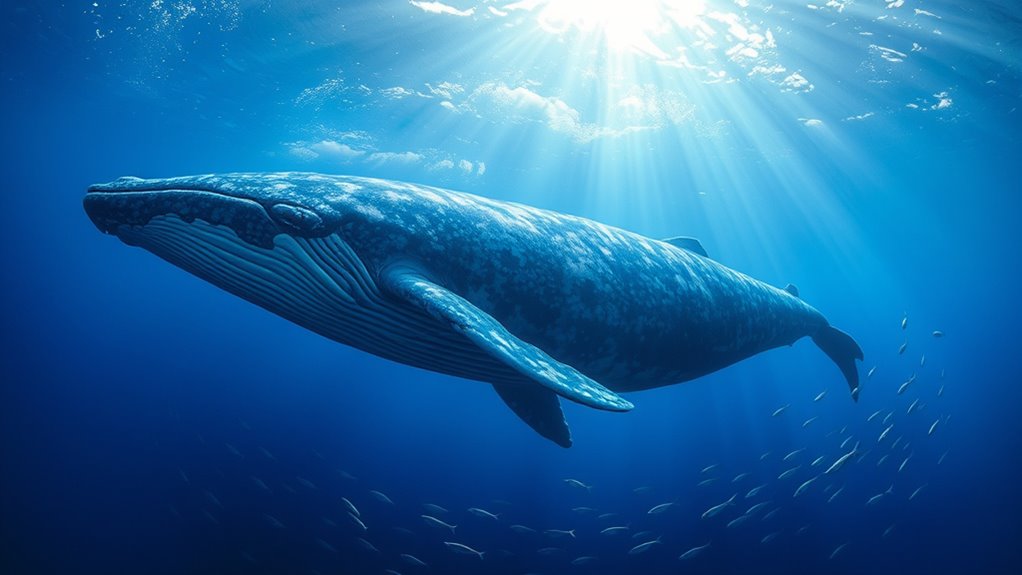
The blue whale, the largest animal on the planet, captivates with its immense size and graceful movement. Imagine standing on a boat and watching one of these magnificent creatures glide through the water, its long, slender body cutting through the waves. It’s not just their size that amazes you; it’s also how they communicate across vast distances in the ocean. Using low-frequency sounds, blue whales can convey messages to each other, allowing them to maintain connections even when miles apart. This marine communication is essential for their survival, helping them find mates and navigate their expansive habitats.
As you learn more about blue whales, you start to understand the importance of whale conservation. Despite their size, these gentle giants face numerous threats, including ship strikes, entanglement in fishing gear, and the impacts of climate change. Their populations have dwindled considerably due to whaling in the past, and now, every effort counts in ensuring they thrive in the wild. You might wonder how you can contribute to their conservation. The good news is that awareness and education can make a difference. By sharing what you learn about blue whales with others, you help promote their protection.
In your journey of discovery, you also realize that protecting blue whales means protecting their entire ecosystem. Healthy oceans are crucial for these creatures, as they rely on plentiful food sources like krill. By advocating for sustainable fishing practices and reducing pollution, you’re taking steps to guarantee that the habitats these whales depend on remain viable. It’s a collective effort—one that requires scientists, policymakers, and everyday people like you to collaborate and work towards a common goal.
As you continue to explore the world of blue whales, you find yourself drawn to their unique behaviors and habitats. You might even consider participating in local conservation initiatives or whale-watching tours that support ethical practices. Every action counts, and your involvement can create a ripple effect, inspiring others to join the cause. By fostering a deeper understanding of marine communication and the challenges blue whales face, you can help pave the way for a future where these magnificent creatures can thrive in the oceans.
In the end, your appreciation for the blue whale goes beyond admiration; it transforms into a commitment to protect and conserve these extraordinary beings for generations to come.
As an affiliate, we earn on qualifying purchases.
Frequently Asked Questions
How Do Blue Whales Communicate With Each Other?
Blue whales communicate with each other mainly through whale songs, which are low-frequency vocalizations that can travel long distances underwater. You’ll find that these sounds serve various purposes, such as attracting mates and coordinating movements within pods. Other communication methods include body language and echolocation. By using these techniques, blue whales can effectively share information and maintain social connections, even across vast ocean expanses. Their unique communication is essential for their survival.
What Do Blue Whales Eat and How Much?
Blue whales primarily eat tiny shrimp-like creatures called krill. During feeding, they gulp massive amounts of water and then filter out the krill using their baleen plates. On average, a blue whale consumes about 4 tons of krill each day during feeding season! The blue whale diet revolves around these small animals, making them highly efficient feeders in the ocean. So, if you’re curious about their eating habits, it’s all about the krill!
Where Can Blue Whales Typically Be Found?
You’ll typically find blue whales in open ocean waters, where they navigate vast migratory routes between feeding and breeding grounds. They thrive in diverse marine habitats, from the chilly Arctic waters to warmer tropical seas. Just as ancient mariners sought the horizon, blue whales journey across the globe, showcasing nature’s grandeur and the interconnectedness of life in our oceans. Their presence reminds us of the mysteries that lie beneath the surface.
How Long Do Blue Whales Live on Average?
Blue whales typically live around 70 to 90 years, though some can reach over 100 years. Their blue whale lifespan is impressive, showcasing their remarkable whale longevity. You might find it fascinating that scientists are still studying these majestic creatures to understand how factors like diet and environment influence their lifespan. By learning more about blue whales, you can appreciate not just their size but also their long lives in the ocean’s depths.
Are Blue Whales Endangered or Protected?
Yes, blue whales are endangered and protected under various international laws. You’ll find that blue whale conservation efforts focus on reducing threats like ship strikes and entanglement in fishing gear. Many countries have implemented whale watching regulations to minimize disturbances during their migrations and breeding seasons. By participating in responsible whale watching, you help support these magnificent creatures and contribute to their conservation, ensuring they can thrive in our oceans for generations to come.
Conclusion
In the vast ocean, you might find yourself reflecting on the blue whale, the largest creature to ever roam the Earth. It’s fascinating to think that while you’re gazing at the night sky, a blue whale could be swimming just below the surface, unaware of your existence. Coincidentally, both you and this magnificent beast share the same planet, each steering your own worlds. So, next time you’re near the sea, remember the incredible life that thrives beneath the waves.
Halloween Picks
halloween
As an affiliate, we earn on qualifying purchases.