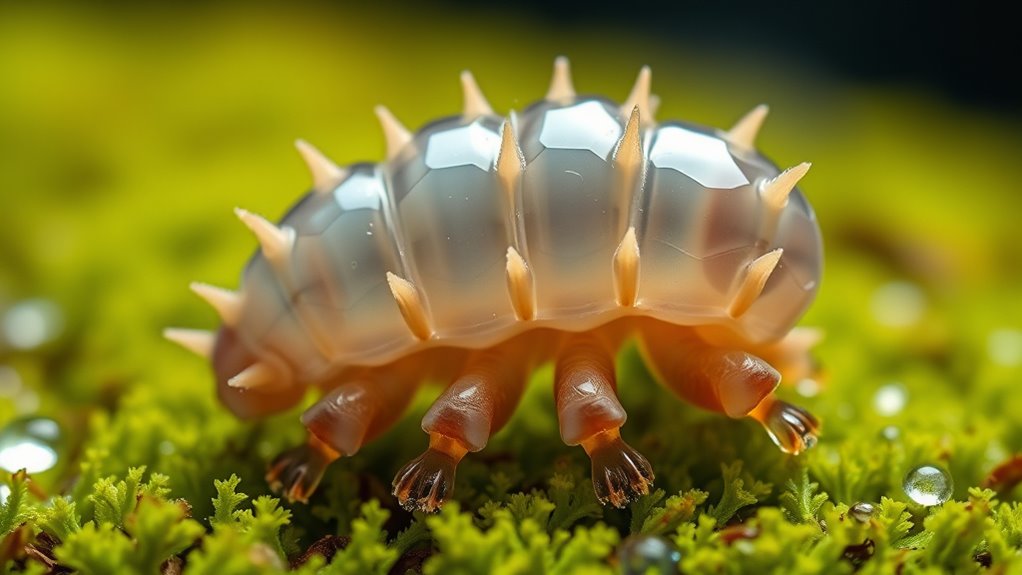

Tardigrades, or water bears, are remarkable tiny creatures that measure about 0.5 mm in length. They thrive in extreme environments, from the deep ocean to high mountain glaciers. These little survivors can endure temperatures ranging from -272°C to 150°C and can withstand intense radiation and pressure. When faced with harsh conditions, they enter a state called cryptobiosis, effectively shutting down their metabolism. There’s so much more to discover about their incredible survival strategies and resilience in the face of adversity.
Key Takeaways
- Tardigrades, or water bears, measure around 0.5 mm and thrive in extreme environments worldwide.
- They survive harsh conditions through cryptobiosis, entering suspended animation and shutting down metabolism.
- Tardigrades can withstand extreme temperatures, from -272°C to 150°C, and high radiation levels.
- Their unique biochemical adaptations, including special proteins and sugars, protect their cells during dormancy.
- Studying tardigrades enhances our understanding of resilience, with potential applications in emergency preparedness and crisis management.
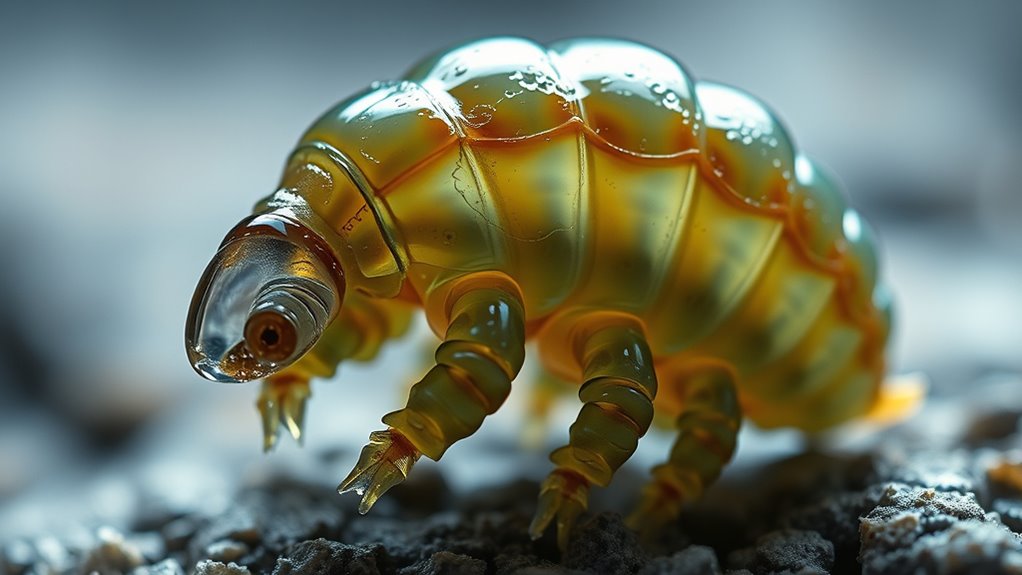
Tardigrades, often called water bears, are fascinating microscopic creatures known for their resilience. These tiny beings, measuring about 0.5 mm in length, can be found in some of the most extreme environments on Earth. Whether it’s the depths of the ocean, the frozen tundra, or even the harsh vacuum of space, tardigrades have a unique ability to survive conditions that would be lethal to most other forms of life.
One of the most remarkable survival strategies employed by tardigrades is a process called cryptobiosis. When faced with extreme conditions—such as extreme temperatures, pressure, radiation, or dehydration—they essentially shut down their metabolism and enter a state of suspended animation. In this state, their bodies lose almost all their water content, and they curl up into a ball, effectively protecting themselves from the harsh elements. You might find it hard to believe, but tardigrades can withstand temperatures as low as -272°C and as high as 150°C. This ability to endure such extremes showcases the incredible adaptability of these creatures.
Tardigrades employ cryptobiosis, entering suspended animation to survive extreme temperatures and conditions, showcasing their remarkable adaptability.
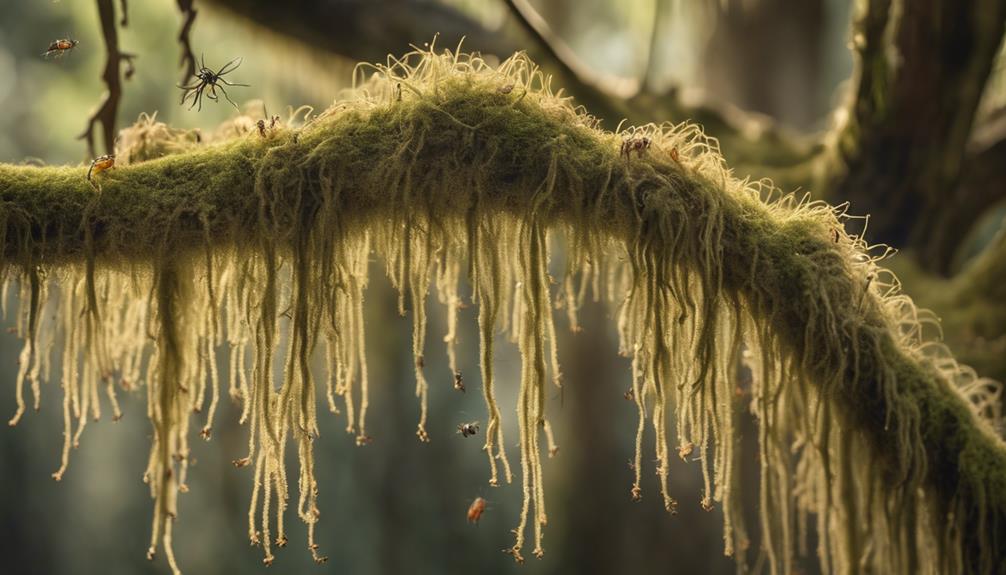
Imagine stumbling upon a patch of moss and discovering these resilient little beings. Even in the most inhospitable environments, such as hot springs or glaciers, you’ll find them thriving where other organisms can’t. Their presence in such diverse habitats speaks volumes about their evolutionary success. Tardigrades can survive radiation levels that would be fatal to humans and can even handle pressures six times greater than those found in the deepest ocean trenches. Their ability to endure these extreme environments is not just a proof of their toughness but also a fascinating area of study for scientists.
If you’ve ever wondered how these tiny creatures manage to come back to life after being in a dormant state for years, the secret lies in their unique proteins and sugars that protect their cells. When conditions become favorable again—like when they’re rehydrated—they can revive and continue their life cycle. This remarkable feat raises questions about resilience and survival that could have implications beyond just tardigrades, particularly in understanding personal and community resilience during emergencies.
Frequently Asked Questions
How Do Tardigrades Reproduce?
Tardigrades reproduce through various reproductive strategies, typically involving sexual reproduction. Males and females mate, and the female lays eggs, which can develop in different environments. Some species can also reproduce asexually, where females produce eggs without fertilization. The eggs then undergo development, often in protective structures that guarantee their survival. This adaptability in reproductive methods allows tardigrades to thrive in diverse habitats, showcasing their resilience in changing conditions.
What Do Tardigrades Eat?
Tardigrades primarily feast on plant cells, algae, and small invertebrates, showcasing a diverse diet. Did you know they can consume food that’s just a fraction of a millimeter? Their feeding habits are fascinating; they use a specialized mouth to pierce plant cells and suck out the contents. This unique tardigrade diet helps them thrive in various environments, allowing them to adapt and survive, even in the harshest conditions.
Where Can I Find Tardigrades?
You can find tardigrades in diverse habitats, from mosses and lichens to leaf litter and soil. They thrive in moist environments, so check your garden or a nearby park. To detect them, use a microscope after collecting a small sample of the substrate. Just add some water to the sample and wait a bit. Soon enough, you’ll spot these tiny creatures moving around, showcasing their incredible resilience in various ecosystems.
Are Tardigrades Harmful to Humans?
They say, “good things come in small packages,” and that’s true for tardigrades. Luckily for you, these tiny creatures aren’t harmful to humans. In fact, there are no significant health risks from tardigrades during human interaction. You might find them fascinating as they thrive in extreme environments, but they don’t pose any threat. Enjoy observing these resilient little beings without worry—they’re harmless and have no known effects on human health.
How Long Can Tardigrades Survive Without Water?
Tardigrades can survive without water for years, even decades! When they experience desiccation, they enter a state called cryptobiosis, where their metabolism nearly halts. This allows them to withstand extreme conditions. During this time, they don’t absorb water, but when rehydrated, they bounce back to life, resuming normal activity. It’s fascinating how these tiny creatures can endure so much, showcasing nature’s resilience in the face of extreme desiccation survival.
Conclusion
In the grand tapestry of life, tardigrades weave a thread of resilience, showcasing nature’s artistry in survival. These tiny water bears, like miniature superheroes, endure the harshest of storms and the fiercest of droughts, reminding you that strength often comes in the smallest packages. As you ponder their remarkable journey, let their story inspire you to embrace your own challenges with the same unwavering spirit, for even the tiniest creatures can leave an indelible mark on the world.

Laura is a versatile writer and editor whose passion for animals shines through in her work. With a keen understanding of language and a love for storytelling, Laura crafts compelling narratives that captivate our audience and inspire action regarding animal welfare. Whether she’s delving into the latest research or sharing heartwarming stories of animal companionship, Laura’s work will leave a lasting impression on all who read it.