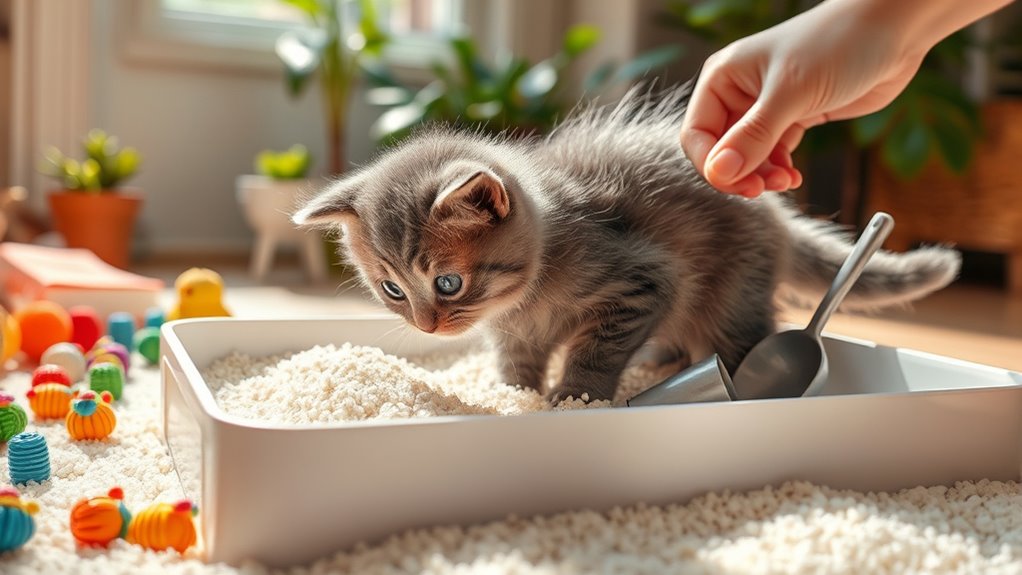

To litter train your kitten, start by choosing a suitable box with low sides for easy access and placing it in a quiet spot away from their food. Fill it with 1-2 inches of soft litter and gently place your kitten in it after meals or naps. Praise them when they use it correctly, and scoop daily to maintain cleanliness. If accidents happen, clean them thoroughly without scolding. There’s a lot more helpful info to make sure your kitten gets the hang of it!
Key Takeaways
- Choose a low-sided, stable litter box that is easy for your kitten to enter and exit comfortably.
- Place the litter box in a quiet, accessible location away from food and water to encourage use.
- Experiment with different types of litter to find your kitten’s preference, starting with a shallow layer.
- Encourage your kitten to use the box by placing them in it after meals and naps, and praise them when they succeed.
- Maintain the litter box by scooping daily and changing the litter regularly to keep it clean and fresh.
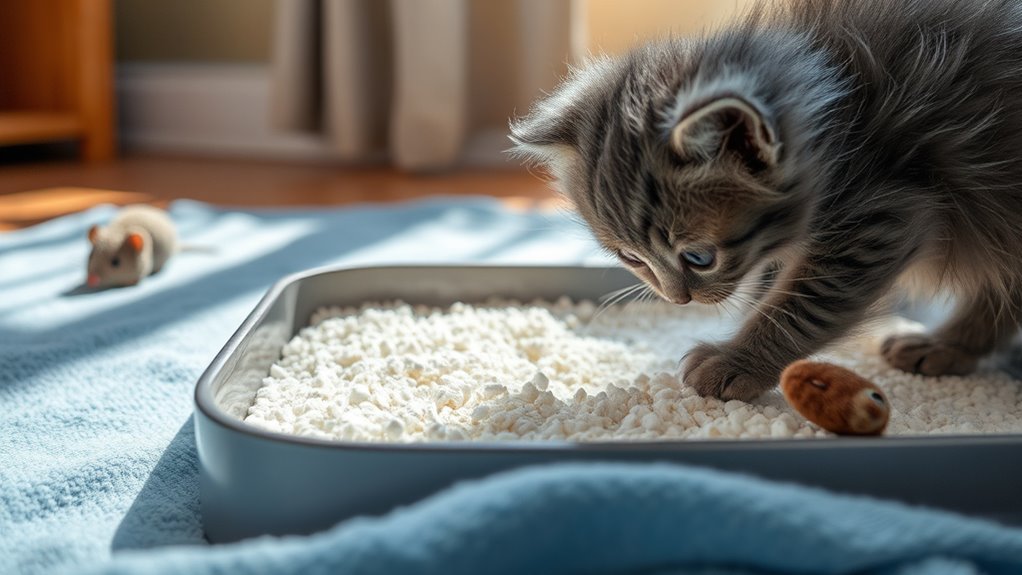
When you bring a kitten home, one of your first tasks is to litter train it, as this sets the foundation for a clean and happy living environment. Start by selecting the right litter box. Kittens prefer boxes that are low enough for them to easily enter and exit. A box with low sides will allow your kitten to hop in without hesitation. Next, you need to contemplate litter box placement. Choose a quiet, accessible spot where your kitten can feel safe while doing its business. Avoid placing the box near food and water bowls, as cats typically prefer a clean separation between eating and elimination.
Once you’ve got the box and its location sorted, it’s time to focus on choosing the right litter. There are various types available, such as clumping, non-clumping, clay-based, and natural litters made from materials like corn or recycled paper. Cats can be picky, so you might need to experiment a bit to find what your kitten prefers. Generally, clumping litters make it easier for you to clean, but some kittens may prefer a softer texture. Start with a small amount in the box, about one to two inches deep, and see how your kitten responds.
To encourage your kitten to use the litter box, you can gently place it inside after meals or naps, as these are times when it’s likely to need to go. If you catch your kitten squatting inappropriately, quickly but calmly pick it up and place it in the litter box. Praise it when it uses the box, reinforcing positive behavior. If your kitten has accidents, don’t scold it; just clean the area thoroughly to eliminate any lingering odors that might attract it back to that spot.
Consistency is key in litter training. Make sure you keep the litter box clean by scooping it daily and changing the litter regularly. This helps create a welcoming environment for your kitten. Also, keep an eye on your kitten’s habits. If you notice any changes, such as refusing to use the box or straining, consult your vet as it might signal a health issue. Additionally, utilizing an Intelligent Tutoring System (ITS) can provide valuable insights into your kitten’s behavior, helping you refine your training approach effectively.

Petmate Basic Open Cat Litter Pan, Multidirectional Easy to Clean Plastic Litter Box, Gray, Made in USA, 14" x 10.5" x 3.5", Small Recommended for Kittens and Small Cats
- Open-top design for easy access: Provides ample space for cats to enter and exit
- Contains litter with wide base: Prevents litter spillage and keeps floors clean
- Rim for easy lifting and moving: Allows effortless handling and cleaning
As an affiliate, we earn on qualifying purchases.
As an affiliate, we earn on qualifying purchases.
Frequently Asked Questions
What Type of Litter Is Safest for Kittens?
For kittens, the safest types of litter include unscented clumping clay or natural options like corn or wood-based litters. These materials are gentle on their sensitive paws and reduce the risk of respiratory irritation. When placing the litter box, choose a quiet, accessible location to encourage your kitten to use it comfortably. Avoid clumping litters with harsh chemicals since they can be harmful if ingested. Always monitor your kitten for any reactions.
How Often Should I Change the Litter?
Changing the litter’s like invigorating a canvas; you want it clean and inviting. Aim to change it at least once a week, but scoop daily to keep it crisp. Place the litter box in a quiet spot away from disturbances, and consider using scent deterrents to keep odors at bay. This’ll help your kitten feel comfortable and encourage consistent use. A clean box makes all the difference in their litter training journey!
Can I Use an Outdoor Litter Box?
Yes, you can use an outdoor litter box! In fact, outdoor placement can be a great option if your kitten enjoys fresh air. Just make sure it’s in a sheltered spot to protect it from rain and wind. You can choose from various litter box types, like a covered box to keep it clean or a simple open one for easy access. Just guarantee it’s convenient for your kitten to find and use.
What if My Kitten Refuses to Use the Litter Box?
If your kitten refuses to use the litter box, start by reassessing its placement. Make sure it’s in a quiet, accessible area. You might need a behavior correction approach, which can include gently guiding your kitten to the box after meals or naps. If the issue persists, try different litter types or box designs. Patience is key, so keep encouraging your kitten and soon enough, it’ll get the hang of it!
How Can I Clean up Accidents Effectively?
To clean up accidents effectively, act quickly, use the right products, and establish a cleaning routine. First, blot the area with paper towels to absorb moisture, then spray an enzymatic cleaner to eliminate odors. Make certain your litter box placement is ideal—choose a quiet, accessible spot. Finally, stick to a regular cleaning routine to prevent future mishaps. By doing this, you’ll create a more inviting space for your kitten to use the litter box.
Conclusion
Litter training your kitten is like planting a seed in fertile soil; with patience and care, it’ll bloom into a beautiful routine. Remember, every little success builds trust between you and your furry friend. Celebrate the small victories, and don’t fret over the occasional mishap. With time, your kitten will learn the ropes and turn into a litter box pro. Embrace the journey, and soon enough, your home will be a harmonious haven for both of you.