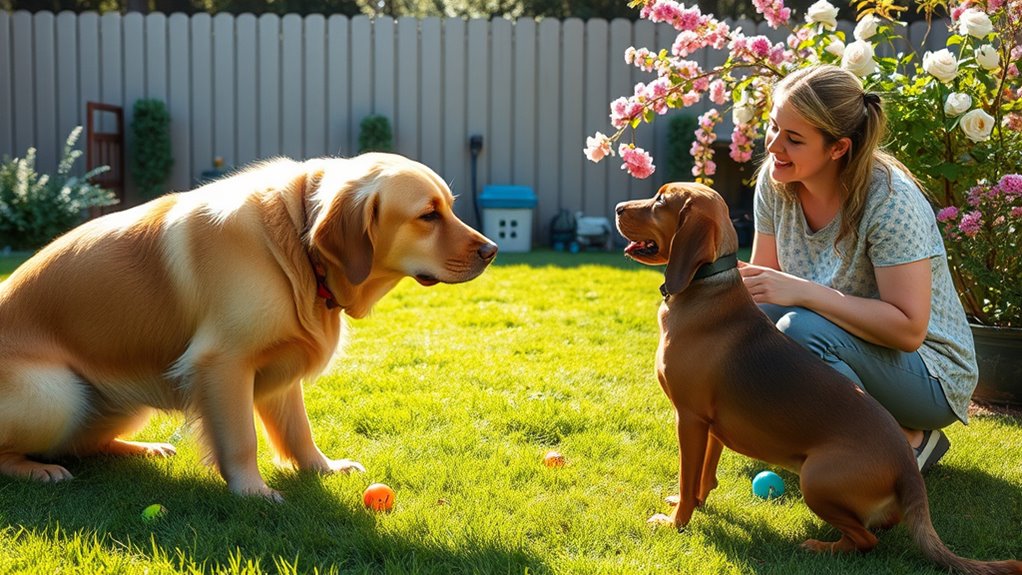

When you’re introducing a second dog, start by meeting in a neutral area, like a park. Keep those first encounters short and positive. Watch their body language closely for signs of stress or aggression. Feed them separately at first, and gradually get them used to shared spaces. Engage both dogs in fun activities together to strengthen their bond. With patience and by monitoring their interactions, you can create a harmonious home. There’s more to learn to guarantee a smooth progression.

Get pet supplies delivered free with Prime
- Fast, free delivery on millions of items
- Prime Video, Amazon Music and more included
- Member-only deals all year
Key Takeaways
- Introduce dogs in a neutral location, like a park, to minimize territorial behavior and stress.
- Monitor body language closely for signs of stress or aggression during initial meetings.
- Feed dogs separately to prevent food guarding, gradually allowing closer feeding as comfort develops.
- Engage both dogs in shared activities, fostering positive interactions and deepening their bond.
- Be patient and adjust the integration process at each dog’s pace, celebrating small successes along the way.
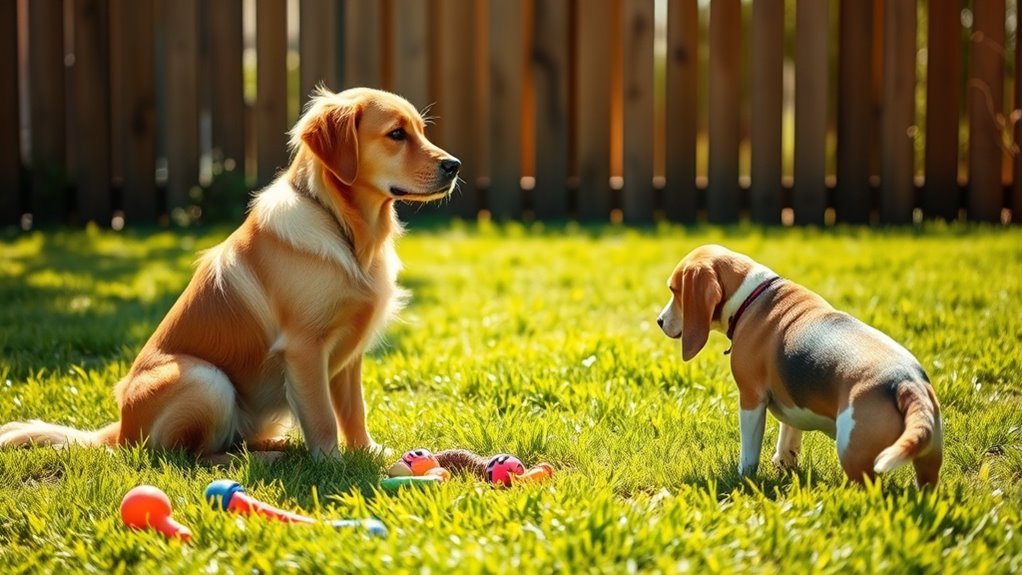
Adding a second dog to your home can be an exciting adventure, but it also requires careful planning. You need to consider how your current dog will react and how to integrate the new pup into your household. One of the most important aspects of this process is to establish effective socialization strategies. This ensures that both dogs can coexist peacefully and happily. You’ll want to introduce them in a neutral environment, perhaps at a park, where neither dog feels territorial. Keep the initial meetings short and positive, gradually increasing their time together as they become more comfortable with each other.
During these initial interactions, it’s crucial to observe their body language closely. Look for signs of stress or aggression, such as growling or stiff body posture, and be ready to intervene if necessary. Positive reinforcement plays a key role here. Reward both dogs with treats and praise when they behave well around each other. This helps create a positive association with one another, which is essential for a harmonious relationship.
Observe their body language closely and use positive reinforcement to foster a harmonious relationship between your dogs.
Next, managing feeding routines is essential for smooth integration. You don’t want food to become a point of contention. Start by feeding them separately in different areas of your home. This prevents any food guarding behaviors and allows both dogs to eat without stress. Over time, you can try feeding them closer together, but always supervise. If you notice any signs of aggression or possessiveness over food, it’s best to revert to separate feeding areas until they’re more comfortable.
As they settle into their new routine, continue to reinforce positive behaviors. Engage them in activities together, like walks or playtime, which can deepen their bond. This not only helps in their socialization but also establishes a sense of teamwork between the two dogs. It’s also a good idea to ensure that both dogs receive individual attention from you. This prevents jealousy and reinforces their unique relationship with you.
Finally, patience is key. Introducing a second dog can take time, and it’s important to allow both dogs to adjust at their own pace. Celebrate small victories along the way, and don’t rush the process. With the right socialization strategies and well-managed feeding routines, you’ll set the stage for a loving, peaceful home with both dogs thriving together. Remember, mindfulness practices can also enhance the bonding experience and help both dogs feel secure during this transition. Enjoy the journey of building a beautiful, blended family!
As an affiliate, we earn on qualifying purchases.
Frequently Asked Questions
How Do I Choose the Right Breed for My Second Dog?
To choose the right breed for your second dog, consider breed compatibility and activity levels. Look for breeds that complement your current dog’s temperament and energy. If your first dog is high-energy, a similar breed might be best. However, if your dog is more laid-back, a calmer breed could work well. Research different breeds, meet potential candidates, and think about how they’ll fit into your lifestyle and home environment.
What Should I Do if My Dogs Don’t Get Along?
If your dogs don’t get along, start by identifying the behavioral conflicts causing the issues. Use positive reinforcement training strategies to encourage good behavior and help them associate each other with rewards. Gradually increase their time together while closely monitoring interactions. If problems persist, consider seeking help from a professional trainer who specializes in dog behavior. With patience and consistency, you can help your dogs build a better relationship.
How Long Does It Take for Dogs to Adjust to Each Other?
Dog introductions can take anywhere from a few days to several weeks, depending on their personalities and past experiences. You’ll notice their adjustment timeline varies; some dogs warm up quickly, while others need time. Watch for signs of comfort, like playfulness or relaxed body language. Keep interactions positive and gradual, creating a safe space for both. Patience is key, so don’t rush the process—allow them to build trust at their own pace.
Should I Adopt a Puppy or an Adult Dog?
You should consider adopting an adult dog if you want a quicker adjustment period and less intensive training. Adult dogs often come with established behaviors, while puppies require significant time and patience for training. Age considerations matter too; an adult dog might fit better into your lifestyle, while a puppy can be a playful challenge. Ultimately, think about your time for training and the energy level you can commit to your new furry friend.
Will Adding a Second Dog Change My First Dog’s Behavior?
Adding a second dog can indeed change your first dog’s behavior, often like adding a new piece to a puzzle. Your first dog may exhibit excitement, jealousy, or even anxiety. With proper dog training and behavior modification techniques, you can help them adapt. Monitor their interactions closely, establish routines, and guarantee both dogs get equal attention. Remember, patience is key as they learn to navigate their new dynamic together.
Conclusion
Successfully introducing a second dog can transform your home into a harmonious pack. Just like a knight needs a trusty steed, your first dog will benefit from the companionship of a second furry friend. By following the steps outlined, you’ll foster a bond that enriches both their lives and yours. Remember, patience is key, and with time, your dogs will create a beautiful symphony of barks and wagging tails that echoes through your lives.
Halloween Picks
halloween
As an affiliate, we earn on qualifying purchases.