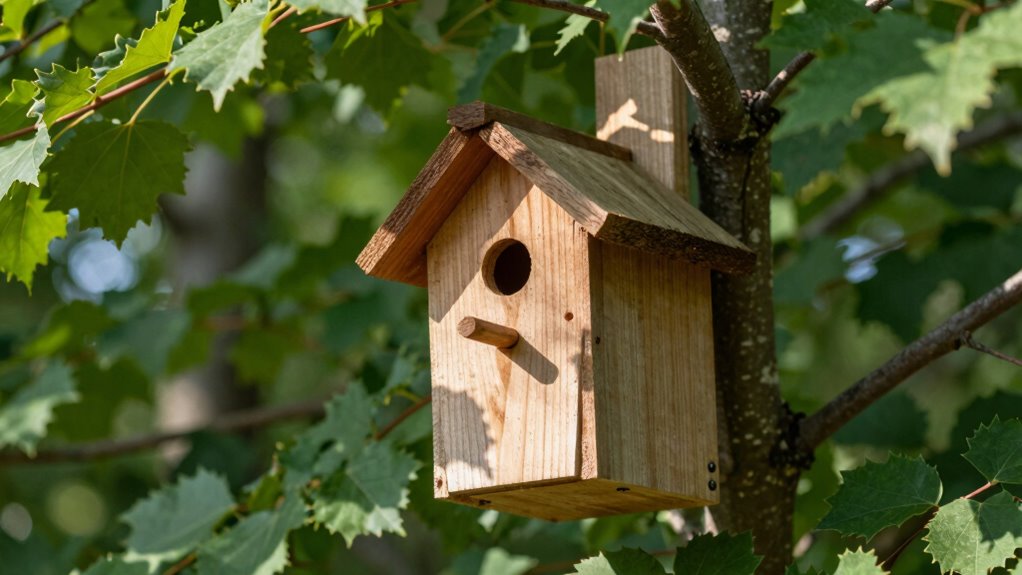

To safeguard nestlings, position your birdhouse thoughtfully by placing it at the right height—based on species—and in a sheltered spot near dense foliage or natural cover. confirm the house is mounted securely away from high human or predator activity, using predator guards and camouflage. Avoid open, exposed areas or low placements that make nests vulnerable. Following these placement rules keeps young birds safe, and more tips will help you create a truly wildlife-friendly haven.

Get pet supplies delivered free with Prime
- Fast, free delivery on millions of items
- Prime Video, Amazon Music and more included
- Member-only deals all year
Key Takeaways
- Mount birdhouses at appropriate heights, such as 5-10 ft for songbirds and higher for larger species, to prevent predator access.
- Place birdhouses among dense foliage or natural cover to conceal nests and reduce predator visibility.
- Use predator guards and predator-resistant materials to prevent climbing or reaching animals from entering.
- Position birdhouses away from high-traffic areas and predator-rich zones to minimize encounters with predators.
- Ensure stable mounting with secure attachment and choose shaded, sheltered sites to protect nestlings from weather and predators.
As an affiliate, we earn on qualifying purchases.
Why Proper Placement Protects Bird Nestlings From Predators
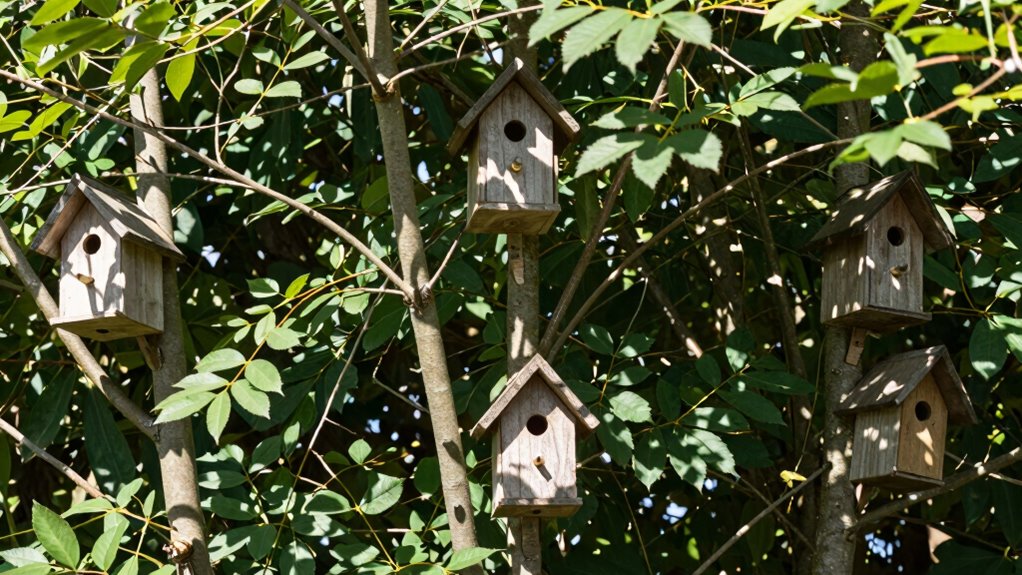
Proper placement of birdhouses is essential for protecting nestlings from predators. When you position your birdhouse carefully, you influence predator behavior, making it less likely they’ll target the nest. Predators often rely on sight, scent, and easy access; placing the house in an area that minimizes these factors helps keep nestlings safe. For example, mounting the house away from high-traffic or predator-rich zones reduces the chance of accidental encounters. Keeping the entrance hole away from open areas or overhanging branches also deters predators like cats, snakes, or larger birds. By understanding predator behavior, you create a safer environment that promotes nestling safety. Proper placement is a simple yet effective step to protect young birds and support healthy wildlife populations. Staying aware of predator habits and environmental risks is a key part of responsible wildlife-friendly birdhouse placement. Additionally, considering habitat preferences can further reduce predator access and increase nesting success. Being mindful of natural cover can also help conceal the nest from potential threats, and understanding predator behavior enables you to choose optimal locations for your birdhouse. Incorporating natural deterrents such as thorny branches or other obstacles can also further discourage predators from approaching the nest site.
How to Choose the Best Height and Location for Your Birdhouse

Choosing the right height and location for your birdhouse can substantially increase its chances of attracting and protecting birds. The ideal height depends on the species you’re targeting; for example, small songbirds prefer 5 to 10 feet high, while larger birds may need 15 feet or more. A suitable location should offer some cover, like trees or shrubs nearby, to provide safety from predators and harsh weather. Avoid placing the birdhouse in direct sunlight, as it can overheat nestlings. Instead, look for a spot with some shade during the hottest parts of the day. Ensure the site is stable and sheltered from strong winds, and face the entrance away from prevailing weather patterns. These considerations help create an inviting, safe environment for nesting birds. Proper placement is also essential to make your birdhouse more trustworthy and inviting for birds seeking a nesting site. Additionally, understanding bird behavior can guide you in selecting the most effective location to attract specific species. Recognizing predator risks can further help you choose a safer spot that minimizes threats to nestlings. Moreover, observing local wildlife patterns can improve your chances of successful nesting by aligning your placement with natural habits. Being aware of seasonal timing can also influence the success of nesting, as different species have specific breeding periods.
Tips for Keeping Birdhouses Safe From Predators and Intruders

To safeguard your birdhouse from predators, properly place predator guards where animals might reach or climb. Using camouflage and strategic concealment can also help keep intruders at bay by blending the box into its surroundings. Implementing these tips guarantees safer nesting for your feathered visitors. Incorporating energy-efficient technology into your birdhouse setup can further enhance its sustainability and security. Additionally, understanding wildlife-friendly practices can help you create a more secure environment that encourages safe nesting habits. Proper placement and habitat considerations are essential to minimize disturbances and promote healthy nesting environments. Being aware of local predator behavior can also inform your placement strategy to better protect the nestlings. Understanding natural predator patterns can help you anticipate and mitigate potential threats effectively.
Predator Guard Placement
Placing predator guards correctly is essential to protect your birdhouses from intruders. Guarantee the guard is positioned just below the entrance hole, preventing predators like squirrels and raccoons from reaching inside. When choosing material and decorative styles, opt for durable, predator-resistant options such as metal or hard plastic that withstand weather and chewing. Avoid decorative styles that include loose or intricate parts that could be gnawed or dislodged. Secure the guard firmly but avoid creating gaps where small predators might slip through. Proper placement not only deters intruders but also maintains the birdhouse’s aesthetic appeal. Regularly check the guard’s position and integrity, especially after storms or heavy winds, to keep your nestlings safe and secure. Using connected equipment can help monitor and ensure the predator guard remains properly in place over time.
Camouflage and Concealment
Adding natural concealment around your birdhouse is one of the most effective ways to deter predators and intruders. You should mimic natural surroundings by surrounding the box with native plants, shrubs, or branches that blend seamlessly into the environment. Avoid bright colors or artificial paints that can attract unwanted attention, making your birdhouse stand out. Instead, use muted, earthy tones or natural textures to help it blend into the landscape. Strategically placing the birdhouse among dense foliage or behind a screen of leaves can make it less visible to predators while still accessible to birds. Incorporating natural camouflage techniques further enhances protection by making the birdhouse indistinguishable from its environment. This concealment creates a safer space for nestlings, reducing the risk of predation and encouraging more birds to raise their young peacefully. Using native plants not only improves concealment but also provides natural food sources and shelter for the birds. Additionally, understanding predator behavior can help you choose the best placement to minimize risks and increase nesting success.
Selecting a Suitable Environment With Good Vegetation and Shelter
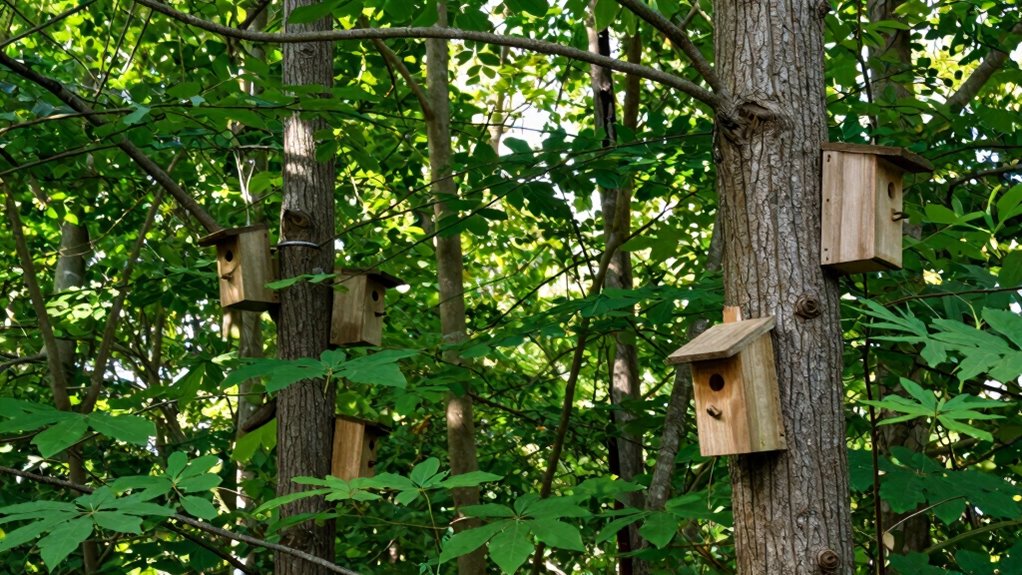
Choosing an area with native vegetation provides natural food sources and shelter for birds. You’ll also benefit from natural cover, which helps protect nests from predators and harsh weather. By selecting a site with these features, you create a safe and inviting environment for your feathered visitors.
Native Vegetation Benefits
Selecting an area with native vegetation provides essential shelter and food sources that support local bird populations. Native plantings attract insects and berries, offering reliable nourishment. They also promote habitat diversity, which benefits multiple species and encourages healthy ecosystems. Additionally, native vegetation can help support biodiversity by providing habitat for a wider range of organisms. Incorporating native vegetation can also reduce the need for maintenance and improve ecosystem health over time. Choosing native plants can create a more resilient environment, better equipped to withstand environmental stresses and pests. Furthermore, native plants tend to be more adapted to local conditions, making them a sustainable choice for long-term habitat stability. By fostering a balanced ecosystem, native vegetation can sustain a variety of wildlife and contribute to overall ecological stability.
Natural Shelter Options
A well-chosen environment with abundant vegetation and natural shelter provides birds with essential protection from harsh weather and predators. Look for areas with dense shrubs, trees, and natural cover that offer hiding spots and refuge. Natural cover can include fallen logs, thick bushes, or tall grasses that serve as shelter materials, helping nestlings stay safe and undisturbed. Avoid open, exposed locations where predators can easily spot nests. Instead, select sites near dense foliage or natural structures that blend seamlessly into the landscape. This environment not only safeguards young birds but also encourages their development by providing a stable, secure habitat. Prioritizing natural shelter options ensures a healthy, thriving bird population and promotes their natural behaviors. Incorporating wildlife-friendly planting can further enhance the habitat’s suitability for nesting birds.
Easy Tips for Mounting and Maintaining Birdhouses Safely
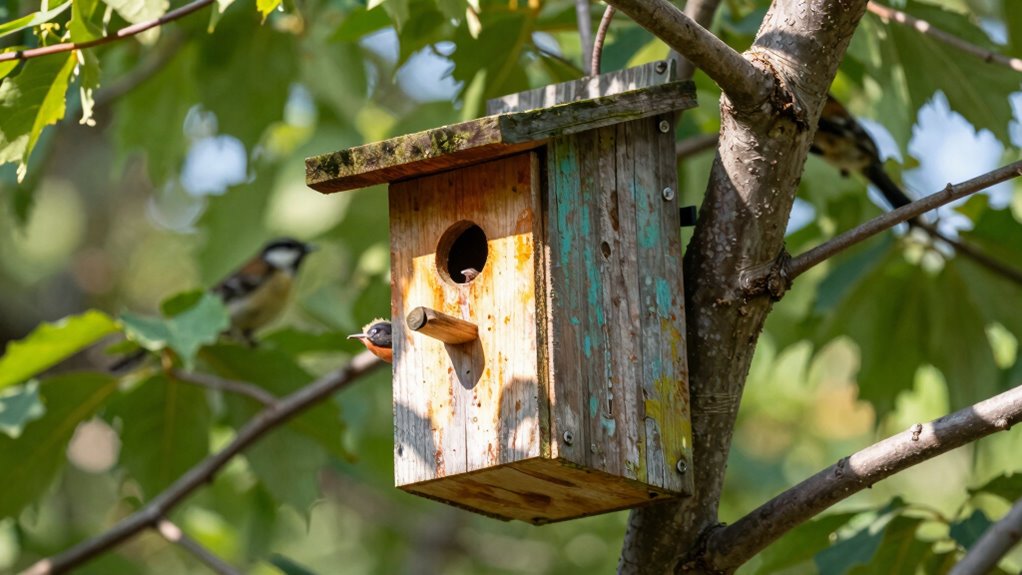
Mounting your birdhouse securely and safely is vital to protect both the birds and your property. Use sturdy brackets or mounts, guaranteeing the structure is stable against wind and weather. When installing, consider the height and angle to prevent predators from reaching inside. Regularly check your birdhouse for stability and tighten any loose screws or nails. DIY maintenance makes it easy to keep the house in good condition; inspect it at least once a season. Seasonal cleaning is imperative—remove old nesting material and wipe down the interior to prevent parasites. Use non-toxic cleaning solutions, and avoid harsh chemicals. Proper mounting and maintenance help guarantee the safety and comfort of nesting birds while prolonging the life of your birdhouse.
Common Placement Mistakes That Endanger Nestlings

Proper placement of your birdhouse is key to safeguarding nestlings from danger. Incorrect placement can expose nestlings to predators, harsh weather, or disturbance. Avoid these common mistakes:
- Mounting the birdhouse too low, making it easy for predators to access.
- Placing it in areas with heavy human activity, causing stress for nesting birds.
- Using unsuitable materials that don’t insulate or protect against the elements.
- Positioning the house where it’s exposed to direct sunlight or strong winds, which can harm young birds.
Selecting the right location and materials helps create a safe environment. Carefully consider placement height, shading, and predator-proofing. Properly positioned birdhouses guarantee nestlings stay protected and healthy during their critical early days.
Frequently Asked Questions
How Can I Tell if My Birdhouse Is Attracting the Right Species?
To tell if your birdhouse attracts the right species, observe bird species identification and nesting behavior cues. Look for frequent visits from the species you want, and note their specific nesting habits, such as cavity preferences or nesting materials. If you notice the right birds inspecting or building nests, you’re on the right track. Clear signs like feeding activity or hatchlings indicate the birdhouse successfully attracts your target species.
What Materials Are Safest for Birdhouse Construction?
You’re better off sticking with natural, safe materials for your birdhouse. Use untreated wood like cedar or pine because they offer great wooden durability and naturally resist decay. Avoid treated lumber or plastics that can harm nestlings. For added comfort, consider proper birdhouse insulation, but guarantee it’s safe and breathable. These materials create a cozy, healthy home and keep your feathered friends safe while they hatch and grow.
How Often Should I Clean and Inspect My Birdhouse?
You should clean and inspect your birdhouse at least once a year, ideally after the nesting season ends. Follow a cleaning schedule that includes removing old nesting material and checking for any damage or pests. Use inspection tips like looking for cracks, mold, or signs of predators. Regular maintenance keeps the birdhouse safe and welcoming for nestlings, ensuring they have a healthy environment to grow.
Are There Specific Plants That Attract Nesting Birds Nearby?
Imagine a garden bursting with life; native shrubs and flowering plants serve as magnets for nesting birds. You should plant species like serviceberry, elderberry, and bee balm nearby. These plants provide natural shelter and attract insects, making your yard irresistible to birds seeking nesting sites. By creating a lush, inviting habitat, you’ll encourage a vibrant chorus of bird songs and support local wildlife all season long.
How Does Nearby Human Activity Affect Bird Nesting Safety?
Nearby human activity can greatly impact bird nesting safety by creating disturbance zones that stress nestlings and parents. Increased noise, movement, and presence can lead to predator risks, making nests more vulnerable. You should place birdhouses away from high-traffic areas, minimizing disturbance zones, to protect the nestlings. Keeping your activities at a respectful distance helps reduce predator risks and ensures a safer environment for the birds to breed and raise their young.
Conclusion
By choosing the right spot, you’re creating a sanctuary where tiny wings can flutter safely, away from lurking shadows. Imagine a cozy nest tucked within lush foliage, shielded from prowling predators, where nestlings can grow strong and ready to take flight. Your mindful placement transforms your yard into a protected haven, nurturing life’s delicate beginnings. With each careful decision, you’re not just installing a birdhouse—you’re offering hope, safety, and a vibrant future for our feathered friends.
Halloween Picks
halloween
As an affiliate, we earn on qualifying purchases.