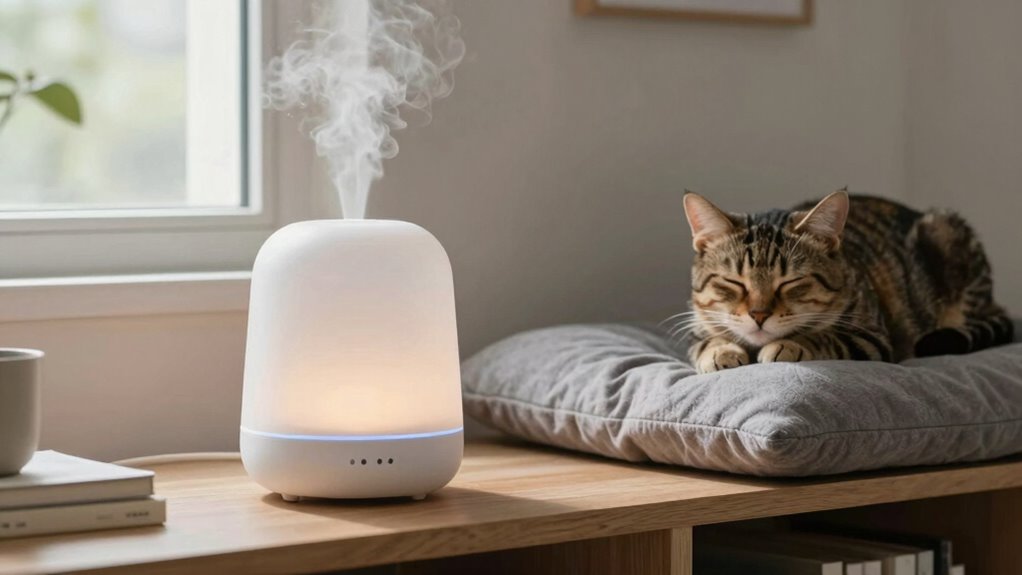

Cat calming pheromone diffusers release synthetic scents that mimic natural feline signals, helping your cat feel safe and relaxed, especially during stressful events. They can reduce anxiety signs like hiding, grooming, or agitation and are effective for many cats. However, they aren’t a cure-all, especially for severe behavioral issues or underlying health problems. If you want to learn more about their proper use and when they might not help, keep exploring further details.
Key Takeaways
- Pheromone diffusers release synthetic signals that promote relaxation and reduce stress-related behaviors in cats.
- They are most effective for mild environmental anxiety but may not work for severe or medical issues.
- Diffusers provide short-term calming effects and might diminish in effectiveness over time.
- Their success depends on individual cat sensitivity and should be combined with environmental enrichment.
- They won’t address underlying causes like health problems or significant behavioral disorders.

Cat Calming Diffuser Kit with 2 Diffusers & 4 Refills (48mL Each), Cat Pheromones Calming Diffuser for Cat Anxiety Relief, Stress Reduction & Behavior Support, 30-Day Refills, Suitable for All Cats
- Complete Calming Kit: Includes diffusers and 4 refills (48mL each)
- 30-Day Support: Refills provide a month of continuous calming
- Stress & Behavior Relief: Reduces scratching, spraying, hiding, and restlessness
As an affiliate, we earn on qualifying purchases.
As an affiliate, we earn on qualifying purchases.
How Do Cat Calming Diffusers Work to Reduce Stress?
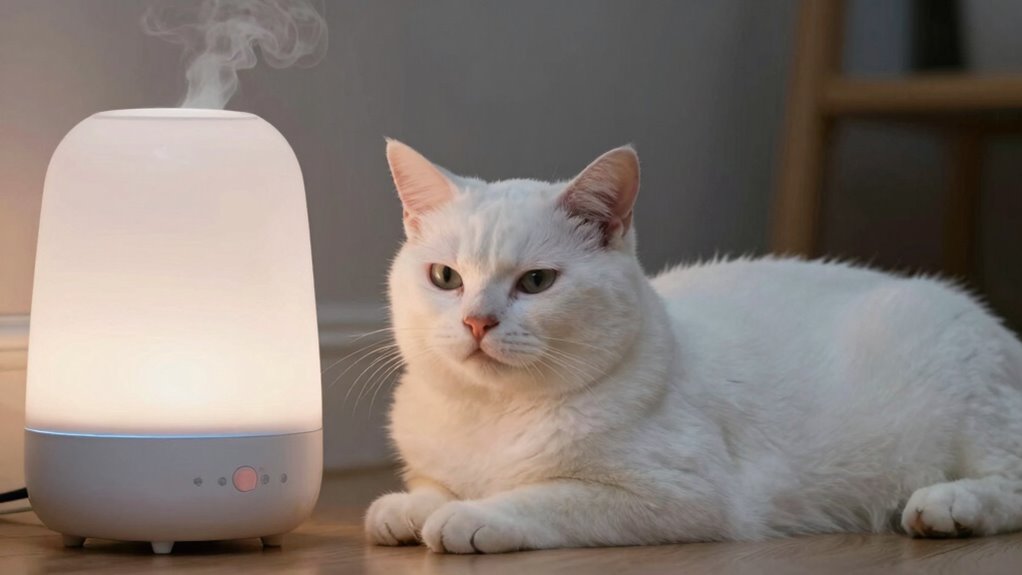
Cat calming diffusers work by releasing synthetic pheromones that mimic the natural signals cats produce to feel secure and relaxed. These pheromones are a form of scent therapy, designed to promote feline relaxation and reduce stress. When your cat inhales these calming signals, it triggers a soothing response in their brain, helping them feel safe in their environment. The diffuser disperses these pheromones continuously, creating a calming atmosphere in the room. This method is especially effective in reducing anxiety caused by changes, new environments, or loud noises. By mimicking the natural scent signals, calming diffusers provide a non-invasive way to help your cat feel more at ease, supporting their emotional well-being through targeted scent therapy.
Recognizing Anxiety in Your Cat: Signs You Should Watch For
Noticing when your cat is anxious can be tricky, but changes in behavior often give you clues. Look for signs like hiding more than usual, sudden aggression, or excessive grooming. Physical signs such as a tense body or dilated pupils also indicate your cat might be feeling stressed. Additionally, understanding behavioral signs can help you better recognize anxiety in your feline friend. Recognizing anxiety symptoms early can enable you to intervene before the stress affects your cat’s health or wellbeing. Being aware of environmental factors that contribute to cat stressors can also be crucial in providing a calming environment for your pet.
Subheading 1: Changes in Behavior
If your feline friend suddenly starts hiding more often or becomes unusually vocal, these could be signs of anxiety. Noticeable changes in behavior often indicate stress, and addressing them early helps prevent escalation. Implementing behavior modification strategies, such as consistent routines and positive reinforcement, can ease your cat’s anxiety. Environmental enrichment also plays a crucial role—adding new toys, scratching posts, or cozy hiding spots can distract and comfort your cat. Watch for signs like increased grooming, restlessness, or avoidance of familiar spaces. Recognizing these behavioral shifts allows you to respond appropriately, using calming techniques or pheromone diffusers, and creating a more reassuring environment for your feline companion. Being attentive to these changes helps promote a calmer, happier cat. Understanding animal behavior can further assist in identifying and addressing underlying causes of anxiety. Additionally, understanding animal stress signals enables you to intervene early and tailor your approach effectively. Recognizing behavioral cues helps you respond promptly and appropriately to your cat’s needs, and utilizing vet-recommended calming products like pheromone diffusers can often provide additional relief. The use of calming therapies such as pheromone diffusers is most effective when combined with other environmental and behavioral strategies.
Subheading 2: Physical Signs of Anxiety
Physical signs of anxiety in your feline friend can often be subtle but are important to recognize promptly. You might notice changes in their usual behavior, such as increased playful behavior or restlessness, indicating underlying stress. Pay attention to grooming habits—over-grooming or excessive licking can be a sign of discomfort. Conversely, a sudden decrease in grooming or neglecting self-care may also signal anxiety. Watch for tense body language, flattened ears, dilated pupils, or a tucked tail, which reflect heightened stress levels. If your cat is hiding more often or acting unusually agitated, these are clear signs they’re feeling anxious. Recognizing these physical cues early helps you determine when calming measures, like pheromone diffusers, might be beneficial. Understanding behavioral cues can further improve your ability to respond effectively to your cat’s needs. Additionally, being aware of physical signs such as dilated pupils or a tucked tail can help you identify stress more quickly.
Can Pheromone Diffusers Help Calm Your Anxious Cat?
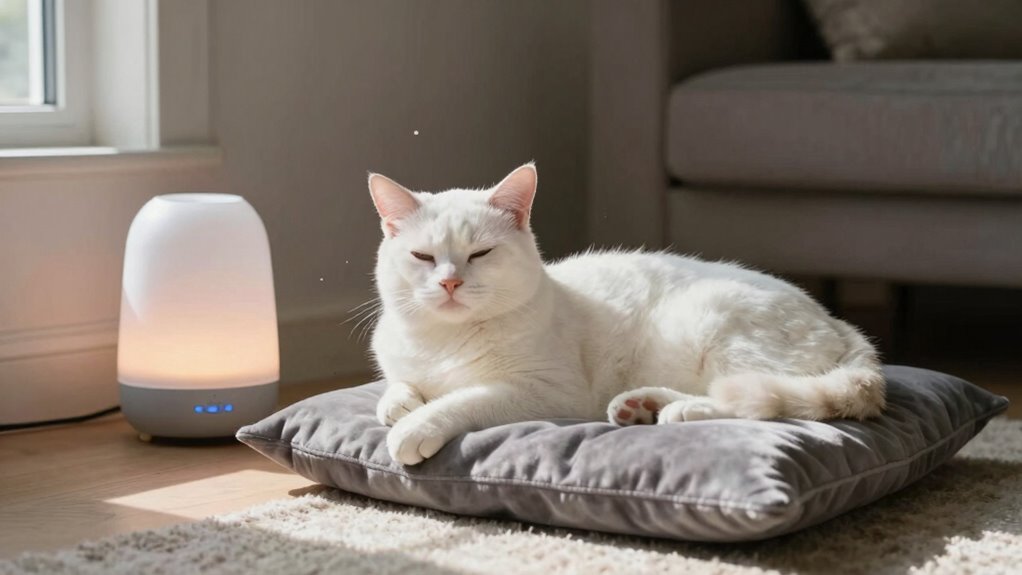
Pheromone diffusers are designed to mimic the natural signals that cats use to feel secure, and many pet owners find them effective for reducing anxiety. They can be especially helpful during stressful events like vet visits or loud thunderstorms. While they don’t directly influence feline nutrition or cat grooming habits, a calmer cat is more likely to maintain a healthy diet and grooming routine.
- They may reduce stress-related behaviors like hiding or aggression
- They can create a sense of safety in multi-cat households
- Effectiveness varies based on individual cat temperament
- They work best as part of a comprehensive anxiety management plan
- Not a quick fix—results might take days to become noticeable
What Are the Limitations of Using Pheromone Diffusers?
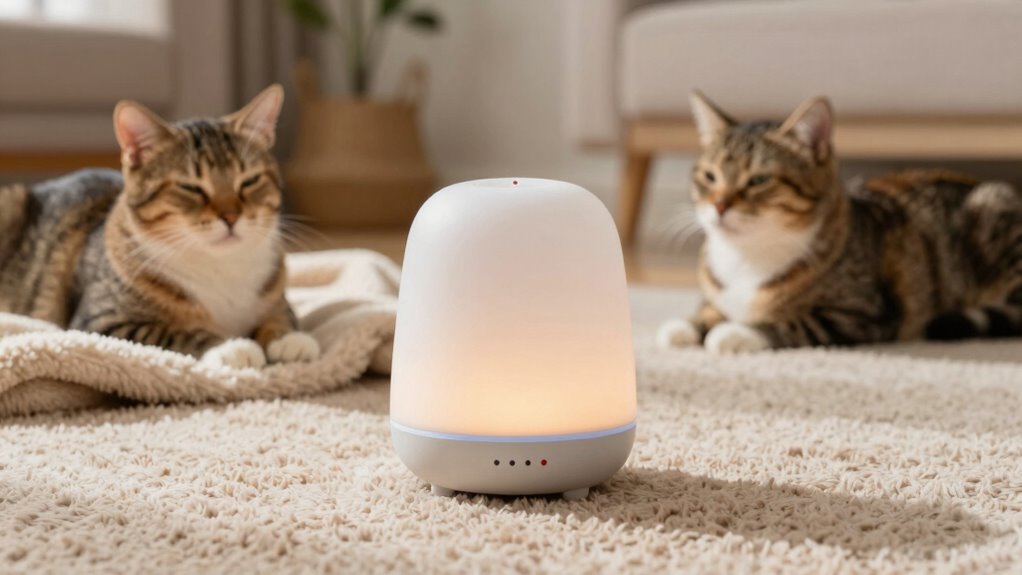
While pheromone diffusers can help calm your cat, they don’t work for every situation. Their effects are limited and don’t address the underlying issues causing your cat’s anxiety. Plus, the results can be temporary and vary from cat to cat. Additionally, they may be less effective if your cat’s behavior is linked to psychological conditions that require professional intervention.
Limited Effectiveness Scope
Despite their popularity, pheromone diffusers don’t work equally well for every cat or situation. Their scent effectiveness can be limited by individual differences, such as a cat’s sensitivity or preference. Some cats may not respond at all, especially if behavioral issues stem from underlying problems like stress or medical conditions. Additionally, social stigma around pheromone use might cause owners to doubt their effectiveness, further reducing perceived benefits. Pheromone diffusers tend to be more effective for mild stress or anxiety but often fall short in severe cases. External factors, such as other household smells or environmental changes, also diminish their impact. Ultimately, these limitations mean diffusers aren’t a one-size-fits-all solution and should be part of a broader approach.
Not Addressing Root Causes
Although pheromone diffusers can help soothe some cats, they don’t address the underlying causes of behavioral issues. Behavioral problems often stem from root causes like environmental factors, stress, or medical issues. Relying solely on diffusers might mask symptoms but won’t solve the real problem. To illustrate, consider this comparison:
| Root Causes | Pheromone Diffusers |
|---|---|
| Environmental stressors | May reduce anxiety temporarily |
| Medical conditions | Won’t treat underlying illness |
| Territorial disputes | Don’t resolve conflicts |
| Lack of enrichment | Doesn’t provide stimulation |
You need to identify and address these root causes for long-term behavioral change. Additionally, understanding behavioral health can help in creating a comprehensive plan tailored to your cat’s needs. Recognizing behavioral triggers is essential for effective intervention beyond temporary solutions.
Temporary and Inconsistent Results
Pheromone diffusers often provide only short-term relief, and their effects can vary widely from cat to cat. You might see some calming initially, but it doesn’t guarantee lasting change. Relying solely on pheromones can hinder behavior modification, making it harder to address underlying issues. Environmental adjustment is essential, yet diffusers won’t always resolve persistent problems. Factors like stressors or personality traits impact effectiveness. Sometimes, you’ll notice inconsistent results, which can be frustrating. Other limitations include:
- Temporary calming effects that fade over time
- Variability depending on individual cats
- Need for complementary behavior strategies
- External factors overpowering pheromone influence
- Limited success in severe behavioral issues
Ultimately, pheromone diffusers are a tool—not a cure—and should be part of a broader plan involving behavior modification and environmental adjustments.
Alternative Ways to Calm Your Anxious Cat
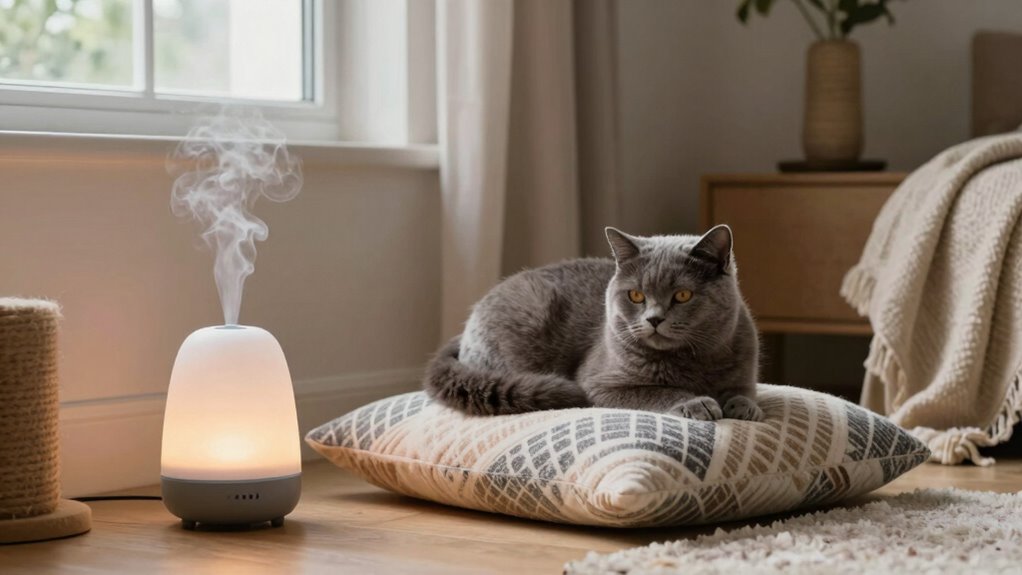
If your cat feels anxious, trying alternative calming methods can make a significant difference. Alternative therapies like calming music, pheromone sprays, or herbal remedies can soothe your feline’s nerves. Behavioral modifications, such as creating a safe, quiet space or maintaining a consistent routine, help reduce stress. Regular playtime can also channel excess energy and alleviate anxiety. Gentle massage or clicker training can foster trust and calmness. Keep in mind, these approaches aren’t a quick fix but can complement other strategies. It’s important to observe how your cat responds and adjust accordingly. Proper maintenance of calming products and methods ensures their effectiveness and safety for your pet. Combining these methods with professional advice ensures you’re addressing your cat’s needs holistically. With patience and consistency, you can help your cat feel more secure and relaxed, especially when utilizing evidence-based techniques supported by recent research.
How to Choose the Best Cat Diffuser for Your Furry Friend
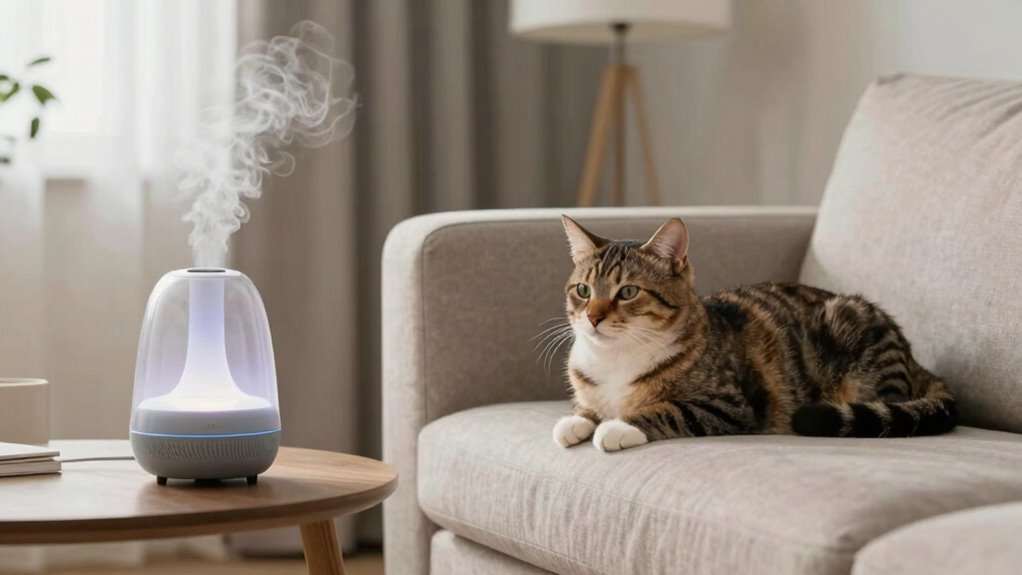
Choosing the right cat diffuser involves considering your cat’s specific needs and your home environment. Look for a diffuser that supports effective behavior modification by targeting your cat’s stress triggers. Make certain it covers the appropriate space size for your home, so the calming effects are evenly distributed. Consider whether additional environmental enrichment, like toys or hiding spots, complements the diffuser’s purpose. Check for ease of use and refill frequency to fit your routine. Also, select a product with proven safety standards to avoid adverse reactions. Remember, no diffuser works instantly, so patience and consistent use are key. By paying attention to these factors, you guarantee your feline friend receives the most benefit from the calming environment. Understanding the technology behind the diffusers can help you make an informed choice and enhance their effectiveness. Additionally, understanding how behavior modification techniques work can lead to better results over time.
Do Pheromone Diffusers Really Work? What Research Tells Us

While some pet owners remain skeptical, scientific research provides evidence that pheromone diffusers can effectively reduce stress and unwanted behaviors in cats. Studies show that these diffusers help calm cats experiencing environmental changes, loud noises, or conflicts with other pets. By promoting a sense of security, they may indirectly improve feline nutrition, as less stress leads to better appetite and digestion. Additionally, calmer cats are more likely to maintain healthy litter box habits, reducing accidents and marking. An understanding of somatic therapy techniques highlights how calming the body and mind can contribute to overall feline well-being. Moreover, the behavioral benefits of pheromone diffusers can vary depending on the individual cat and the severity of their stressors. Pheromone diffusers aren’t a cure-all, but research indicates they can be a valuable tool when combined with other behavioral strategies to create a more peaceful environment. For example, incorporating environmental enrichment can enhance their effectiveness by reducing stressors further.
Frequently Asked Questions
How Long Does It Take for a Diffuser to Show Results?
You’ll typically see the diffuser effectiveness within 7 to 14 days, but it varies depending on your cat’s behavior. The time to see results depends on factors like the severity of stress and how consistently the diffuser is used. For best results, keep the diffuser plugged in continuously and be patient. If you don’t notice improvements after two weeks, consider consulting your vet for additional strategies.
Are Pheromone Diffusers Safe for Kittens and Senior Cats?
Yes, pheromone diffusers are generally safe for kittens and senior cats when used as directed. You should still consider kitten safety and senior cat health by choosing diffusers specifically designed for multi-cat households or age-specific needs. Always monitor your cats for any unusual reactions, and consult your veterinarian if you have concerns. Proper use guarantees calming benefits without risking your cats’ well-being.
Can Multiple Diffusers Be Used in Large or Multi-Level Homes?
Yes, you can use multiple diffusers in large or multi-level homes to guarantee proper household coverage. Place diffusers strategically at different levels and near areas where your cat spends most of its time, avoiding direct contact with furniture or drafts. This helps distribute the calming pheromones evenly, reducing stress throughout the house. Just make sure not to overuse, and follow the manufacturer’s guidelines for safe, effective diffuser placement.
Do Pheromone Diffusers Affect Other Pets in the Household?
Pheromone diffusers generally don’t harm other pets, but they can influence the household atmosphere and multi-pet dynamics. Some animals might be more sensitive, causing subtle behavioral changes or stress. You should observe your pets for any unusual responses and adjust usage if needed. While these diffusers aim to calm cats, always consider individual temperaments and consult your vet if you’re unsure about their effects on other household animals.
How Often Should the Diffuser Be Replaced or Refilled?
Think of your diffuser like a flower that needs watering—regular refills keep it blooming. You should refill your cat calming pheromone diffuser every 30 days or as recommended on the label, to guarantee consistent effectiveness. The diffuser’s lifespan typically matches this refill schedule, so stay on top of it. Replacing or refilling it on time guarantees your cat continues to feel calm and secure in their environment.
Conclusion
Just like a gentle lullaby soothes a restless child, pheromone diffusers can provide comfort to your anxious cat. While they aren’t a magic cure, understanding their limitations helps you better support your furry friend. Remember, every cat is unique—sometimes, a little extra patience or alternative calming methods make all the difference. By staying attentive and compassionate, you’ll help your feline find peace, turning your home into their own personal haven—like a cozy corner in a busy world.