To safely feed wild birds outdoors, choose high-quality seeds like sunflower, nyjer, and millet, and offer fresh fruit or nuts. Avoid processed snacks, bread, or anything moldy or spoiled. Use the right feeders—like tube or platform types—in secure spots away from predators and busy areas. Keep feeders clean, change water frequently, and add native plants or water features to create a welcoming environment. If you continue exploring, you’ll discover how to keep birds healthy and safe.
Key Takeaways
- Provide high-quality seeds like sunflower, nyjer, and millet, and fresh fruits to ensure nutritional safety for wild birds.
- Avoid processed foods, moldy seed, and human snacks that can harm or attract pests to birds.
- Regularly clean and disinfect feeders and bird baths to prevent disease transmission and pest buildup.
- Choose appropriate, pest-resistant feeders and place them safely away from predators and windows.
- Create a bird-friendly habitat with native plants and water sources to support natural foraging and shelter.

Kingsyard 2 Pack Tube Feeders with 6 Feeding Ports for Outdoors Hanging, Premium Hard Plastic Weatherproof & Steel Hanger, Attracting for Wild Birds (Black)
- Durable Weatherproof Material: Made to withstand outdoor elements
- Multiple Feeding Ports: 6 ports with perches for multiple birds
- Built-in Drainage and Enclosed Housing: Keeps seeds fresh and dry
As an affiliate, we earn on qualifying purchases.
As an affiliate, we earn on qualifying purchases.
What Bird Foods Are Safe and Good for Wild Birds
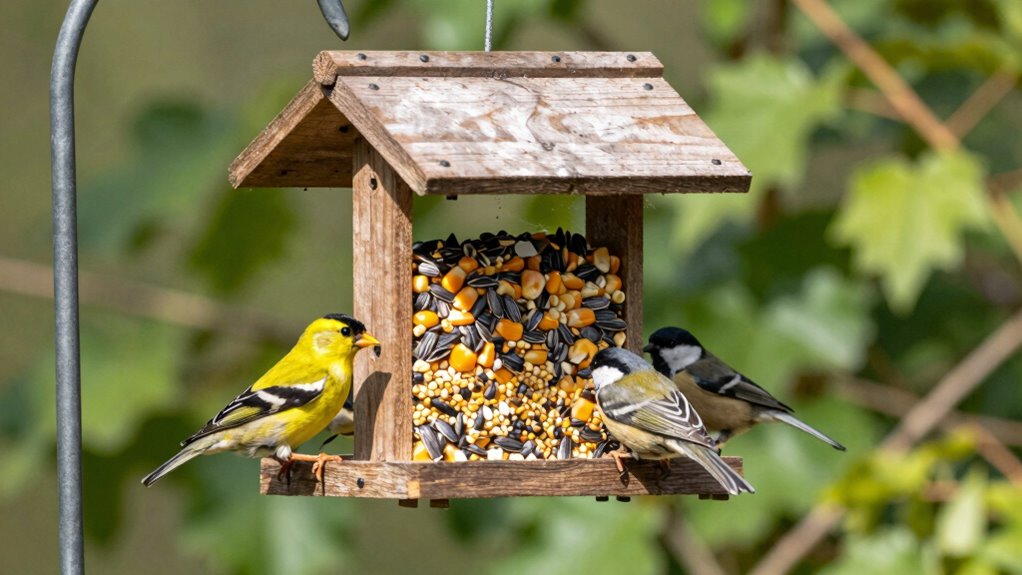
When choosing bird food for your outdoor feeders, it’s important to select options that are safe and nutritious for wild birds. Start with seed varieties like sunflower seeds, millet, and safflower, which provide essential fats and energy. These seeds are widely accepted by many bird species and help support their health. Additionally, offering fruit options such as chopped apples, berries, or raisins can attract fruit-eating birds and add variety to their diet. Avoid processed or flavored foods, and always verify that the seed varieties and fruit options are fresh and free from mold or chemicals. Providing a balanced mix of these safe foods encourages diverse bird visitors and promotes their well-being. Ensuring proper feeding hygiene and avoiding contaminated foods further helps prevent the spread of disease among wild bird populations. Being aware of wild bird nutrition can help you make informed choices that benefit their overall health and vitality. Incorporating nutritional needs into your bird feeding practices ensures that wild birds receive the proper nutrients they require for maintenance and survival. Recognizing the influence of cultural heritage on native bird species can deepen your understanding of their natural behaviors and habitat preferences. A good understanding of bird dietary habits can guide you in selecting the most appropriate foods for different bird species and seasons.
Foods to Avoid When Feeding Wild Birds
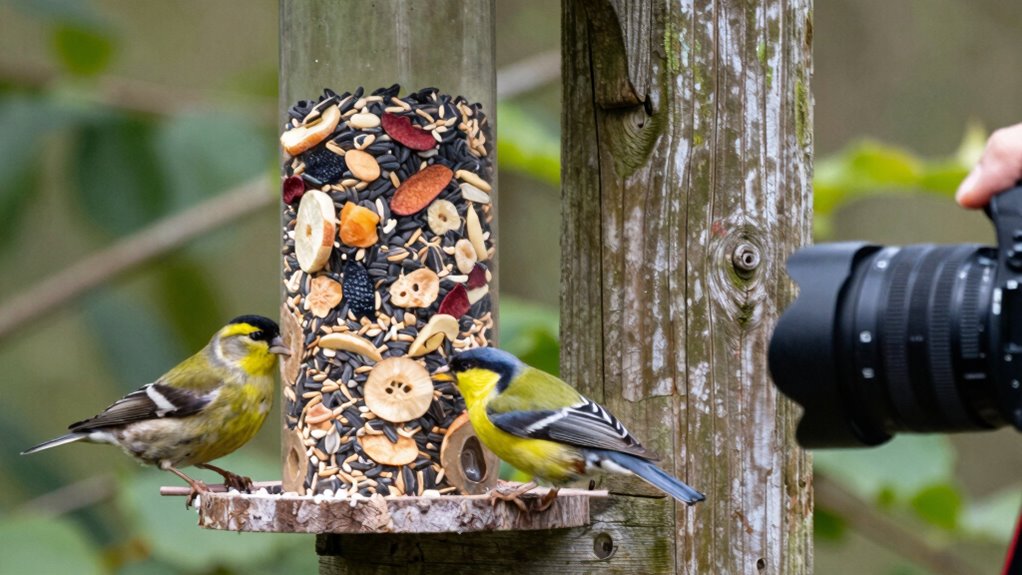
To keep wild birds healthy and safe, it’s crucial to avoid feeding them certain foods that can be harmful or toxic. Unhealthy snacks like bread, chips, or processed foods offer little nutritional value and can cause digestive issues. Toxic foods such as chocolate, avocado, caffeine, and salty snacks are dangerous and should never be offered. These substances can lead to poisoning or serious health problems in birds. Additionally, moldy or spoiled food can cause infections or illnesses. Always steer clear of offering anything that’s not specifically designed for wild birds. Providing safe, natural foods helps guarantee their well-being and supports a healthy, thriving bird population. Remember, what you don’t feed them is just as important as what you do. Making informed choices about food safety ensures you are effectively protecting the birds from potential hazards, especially considering their specific nutritional needs and sensitivities. Being aware of avian dietary requirements can further guide your feeding choices to promote their health. Proper knowledge of wild bird nutrition can also help you select the most beneficial foods for different bird species.
Which Bird Feeders Are Best for Different Birds
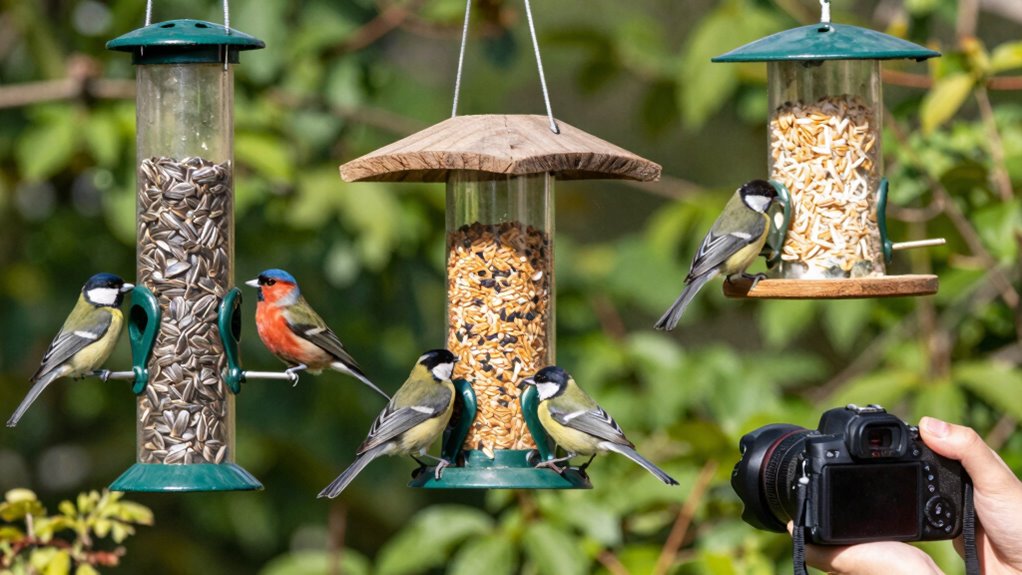
Choosing the right bird feeder depends on the types of birds you want to attract and where you place it. Different feeders suit different species, so consider their preferences and behaviors. Proper placement also helps make certain your feathered visitors stay safe and comfortable. Additionally, selecting feeders that match the tanning trends and promote healthy, natural feeding habits can encourage more diverse bird visits. Being mindful of bird feeding habits ensures you provide foods and feeder types that support their health and well-being. Incorporating wild bird habitat, such as nearby native plants, can further enhance the attractiveness of your yard for a variety of species. Understanding auditory processing and how birds perceive sounds can also help in designing quieter, less disruptive feeding areas that attract more visitors. Moreover, considering bird sensory perception can help you choose feeders that are less intimidating and more inviting to shy or cautious species.
Types of Bird Feeders
Different types of bird feeders attract different species, so selecting the right one depends on the birds you want to see. For example, tube feeders suit small songbirds, while platform feeders attract ground-feeding species. Decorative feeder styles add charm to your yard, and DIY feeder projects let you customize your setup. Understanding European cloud innovation can inspire eco-friendly choices in your birdfeeding setup, promoting sustainable practices. Additionally, considering outdoor space design trends can enhance the functionality and appeal of your bird feeders, making your outdoor area more inviting for both birds and humans. Incorporating sustainable materials into your bird feeder choices can further support environmental health and conservation efforts. Staying informed about automotive repair basics can also help you maintain your outdoor gear and tools used for building or installing feeders.
Feeder Placement Tips
Wondering where to place your bird feeders to attract the right species? Proper bird feeder placement is key to drawing in desired birds while preventing wildlife disturbance. Position feeders at different heights and locations based on the species you’re targeting. For ground-feeding birds, place feeders on stable, open platforms away from dense shrubs to avoid surprise predators. For songbirds, hang feeders near bushes or trees, offering quick escape routes and cover. Keep feeders away from busy areas and windows to prevent collisions and stress. Regularly cleaning and maintaining your feeders also helps prevent disease. Additionally, understanding local bird populations can enhance your overall outdoor dining experience during birdwatching outings. Considering native bird habits can further improve your feeder success. By thoughtfully choosing placement, you prevent wildlife disturbance and create a safe environment for all visitors. Remember, strategic placement encourages healthy, diverse bird activity in your yard. To optimize your efforts, researching preferred food sources for local species can make your feeders even more attractive and beneficial. Being aware of local predator presence can also help you adjust your feeder setup to protect vulnerable birds.
How to Feed Birds Responsibly and Prevent Pests
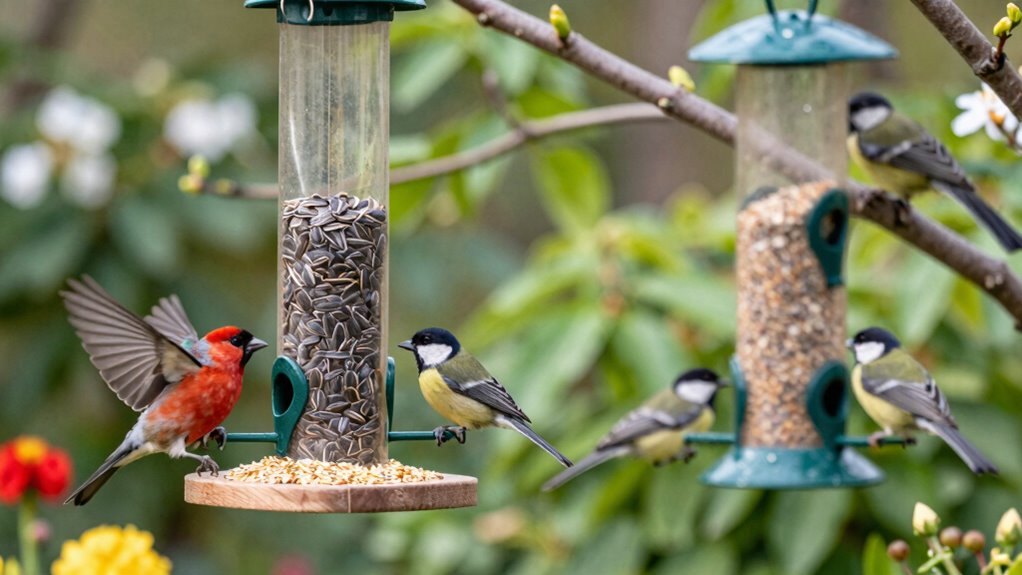
To feed birds responsibly, choose proper food that meets their needs without attracting unwanted pests. Keep your feeders clean by regularly washing them to prevent mold and disease. You can also use pest-repellent strategies, like placing feeders away from sheltered areas, to keep pests at bay. Additionally, selecting appropriate planting practices around your yard can support natural bird food sources and reduce dependence on feeders. Being aware of the history of pinball machines in your area can also inspire creative ways to incorporate bird-friendly features into your outdoor space.
Proper Food Choices
Choosing the right bird food is essential for keeping your feathered visitors healthy and preventing pest problems. Selecting appropriate seed varieties, such as nyjer, sunflower, or millet, ensures nutritious options that attract a variety of species without encouraging pests. Avoid cheap or filler-filled seeds that can spoil quickly and attract unwanted critters. Establishing consistent feeding schedules helps birds rely on your feeder and reduces leftover food that pests might seek. Place feeders where they’re easily visible to birds but away from areas prone to moisture or debris buildup. Always fill feeders with fresh seed, and avoid offering bread, processed snacks, or human food that can harm birds. Proper food choices and habits keep your feeders safe and inviting for wild birds.
Regular Cleaning Practices
Regular cleaning is essential for maintaining a healthy and pest-free bird feeding station. To prevent mold and bacteria, clean your feeders and bird baths regularly, at least once every two weeks. During cleaning, scrub feeders with a brush and a solution of diluted bleach or vinegar, then rinse thoroughly and let them dry completely. Proper bird bath maintenance is equally important; change the water frequently and scrub the basin to prevent algae buildup. Store seed properly by using airtight containers and keeping them in a cool, dry place to avoid attracting pests like rodents and insects. Implementing these seed storage tips and cleaning routines helps keep your feeding area safe for birds while reducing the risk of disease and unwelcome critters.
Pest-Repellent Strategies
Keeping your bird feeding station clean helps prevent pests, but you also need strategies to deter unwanted critters from reaching the seed and birds. Using natural deterrents like spicy cayenne or garlic powder can make seeds less appealing to squirrels and other pests. Installing pest-resistant feeders, such as those with baffles or weight-sensitive mechanisms, also helps keep critters at bay. Place feeders away from trees or structures that pests can jump from, and regularly monitor for signs of pests or damage. Avoid offering bread or processed foods that attract unwanted animals. By combining clean habits with natural deterrents and pest-resistant feeders, you create a safer environment for the birds and reduce pest problems without harming your feathered visitors.
Tips for Creating a Bird-Friendly Backyard Environment
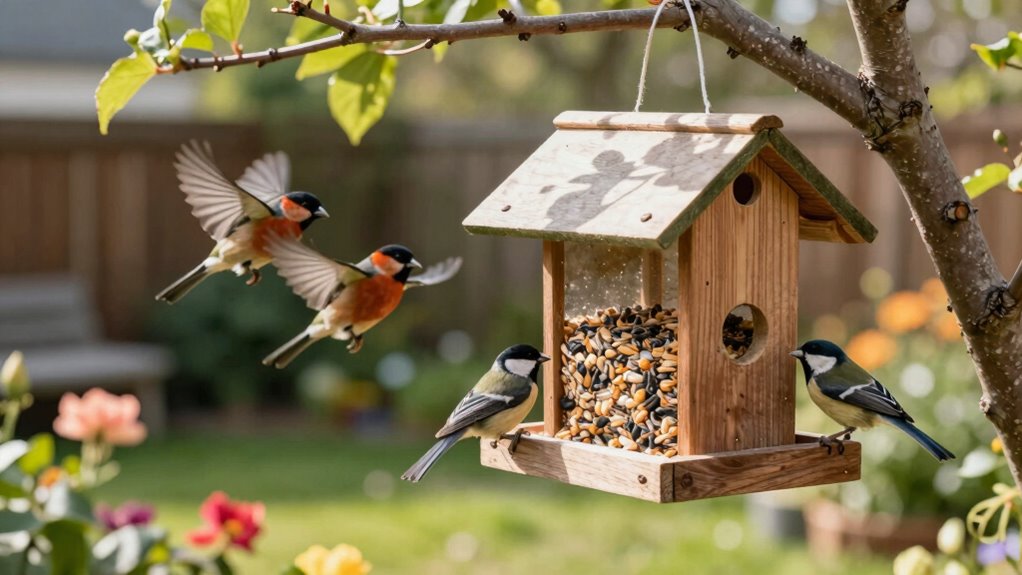
Creating a bird-friendly backyard begins with understanding what these wild visitors need to thrive. You can attract more birds and keep them healthy by incorporating native plants, which provide natural food and shelter. Adding water features like shallow ponds or birdbaths offers essential hydration and bathing spots. To enhance your space further, consider these tips:
Create a welcoming garden with native plants and water for healthy, happy birds.
- Plant native shrubs and trees to create shelter and nesting sites.
- Install water features that are clean and accessible for birds.
- Reduce pesticide use to protect birds from harmful chemicals.
Common Feeding Problems and How to Keep Your Birds Healthy

Even with the best intentions, feeding wild birds can sometimes lead to problems that threaten their health. Overfeeding or offering the wrong types of food can disrupt their nutritional balance, making them vulnerable to illness. Dirty feeders and spilled seed can promote disease transmission, so regular cleaning is essential for disease prevention. Avoid offering bread or processed foods, which lack proper nutrients and can harm birds. Instead, provide fresh seeds, nuts, or fruit to support their health. Monitor your bird population for signs of illness or malnutrition, and remove any moldy or spoiled food immediately. Ensuring proper hygiene, offering appropriate food, and maintaining a balanced diet helps keep your birds healthy and thriving.
Frequently Asked Questions
How Often Should I Clean My Bird Feeders to Prevent Disease?
You should clean your bird feeders every two weeks to prevent disease and guarantee healthy visiting birds. Incorporate cleaning routines that include scrubbing with hot, soapy water and disinfecting with a solution of one part bleach to nine parts water. Regular cleaning also helps with pest prevention, keeping mold, bacteria, and pests like ants or wasps at bay. Consistent maintenance supports the health of wild birds and your outdoor environment.
Can Feeding Wild Birds Attract Unwanted Pests or Predators?
Feeding wild birds can attract pests and predators, but proper pest control and predator prevention minimize risks. You might see squirrels, raccoons, or cats, yet secure feeders and clean areas reduce their access. Avoid leaving food spills or open containers that draw unwanted guests. Using baffles and choosing predator-proof feeders keeps birds safe while maintaining their popularity. Stay vigilant, and you’ll enjoy the birds without inviting trouble.
What Signs Indicate My Birds Are Unhealthy or Malnourished?
If your birds show signs of poor health or malnutrition, you’ll notice drooping feathers, lethargy, or difficulty flying. Watch for abnormal behavior such as decreased activity or missing feathers, which can signal nutritional deficiencies. Unhealthy birds may also have dull plumage or appear emaciated. Regularly observing these signs helps you address bird health issues early, ensuring they receive proper nutrition and stay healthy.
Are There Specific Plants That Attract More Wild Birds Naturally?
You don’t need fancy feeders—native flora and attractant plants are your best bet. They naturally draw wild birds, providing food and shelter without harm. Planting native trees, shrubs, and wildflowers creates a consistent, safe food source, encouraging a diverse bird population. Native plants are adapted to your environment, making them more reliable and sustainable, ensuring you attract more wild birds naturally while supporting local ecosystems.
How Can I Differentiate Between Beneficial and Harmful Wild Bird Species?
You can differentiate between beneficial and harmful wild bird species by observing their behaviors and origins. Focus on native species, which are beneficial as they support local ecosystems, while invasive species can be harmful, often outcompeting native birds. Learn to identify key features and consult local bird guides. By understanding native vs invasive and beneficial vs harmful, you’ll help maintain a healthy, balanced environment for your feathered visitors.
Conclusion
By choosing safe, nutritious foods and proper feeders, you create a welcoming space for wild birds. Imagine a family’s joy when they see a colorful cardinal visiting their backyard, knowing they’re providing a healthy, safe environment. Your efforts not only support local wildlife but also foster a deeper connection to nature. With mindful feeding, you become an essential part of their survival, inspiring others to do the same and protect our feathered friends.