If your chinchilla’s enclosure is poorly designed, it can quickly trap heat and cause dangerous temperature spikes. Weak ventilation, thick walls, and solid materials like plastic or metal block airflow, making it hard for heat to escape. This can lead to overheating, heatstroke, and health issues. To prevent this, guarantee proper ventilation and shade. Keep your chinchilla safe by understanding how heat builds up, and discover simple ways to keep them cool.
Key Takeaways
- Poorly ventilated enclosures trap hot air, causing rapid temperature increases and risking heatstroke.
- Solid or insulated walls retain heat, making cooling difficult during warm days.
- Lack of vents or openings prevents heat dissipation, leading to dangerous heat buildup.
- Thick bedding materials and dark surfaces absorb and trap heat, raising enclosure temperatures.
- Proper enclosure design with ventilation, shading, and cooling accessories helps prevent heat traps.
chinchilla cage with good ventilation
As an affiliate, we earn on qualifying purchases.
As an affiliate, we earn on qualifying purchases.
Why Heat Traps Are Dangerous for Your Chinchilla
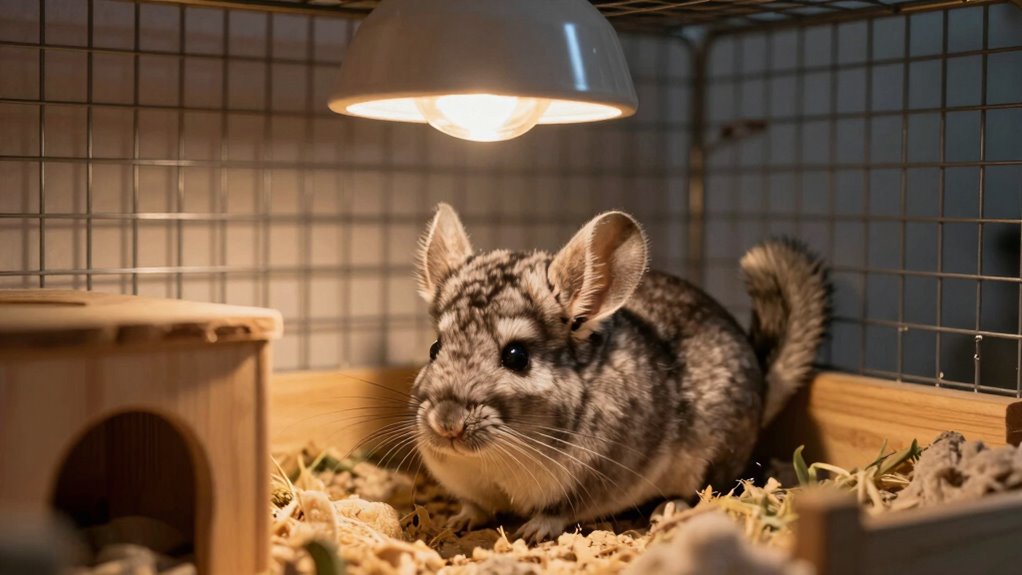
Heat traps can be deadly for chinchillas because they cause the enclosure to overheat quickly. Poor ventilation issues prevent hot air from escaping, trapping heat inside. If your cage has insulation problems, it can retain warmth even when it’s unnecessary, raising the risk of heatstroke. These issues make it hard for your chinchilla to cool down, especially during warmer days. Without proper airflow, heat builds up rapidly, and your pet’s body temperature can spike dangerously high. Recognizing these signs early is crucial to prevent overheating. Ensuring your enclosure has good ventilation and avoiding excessive insulation will help keep temperatures stable. Proper enclosure design is essential for maintaining a safe environment and protecting your chinchilla from heat-related dangers. Additionally, paying attention to airflow management can significantly reduce the risk of heat traps forming in your chinchilla’s habitat. Regularly inspecting the enclosure for ventilation issues can help prevent dangerous heat buildup before symptoms appear. Incorporating temperature regulation strategies and understanding heat build-up can further help maintain a safe and comfortable environment for your pet.
How Cage Design Causes Heat Build-Up in Chinchilla Habitats
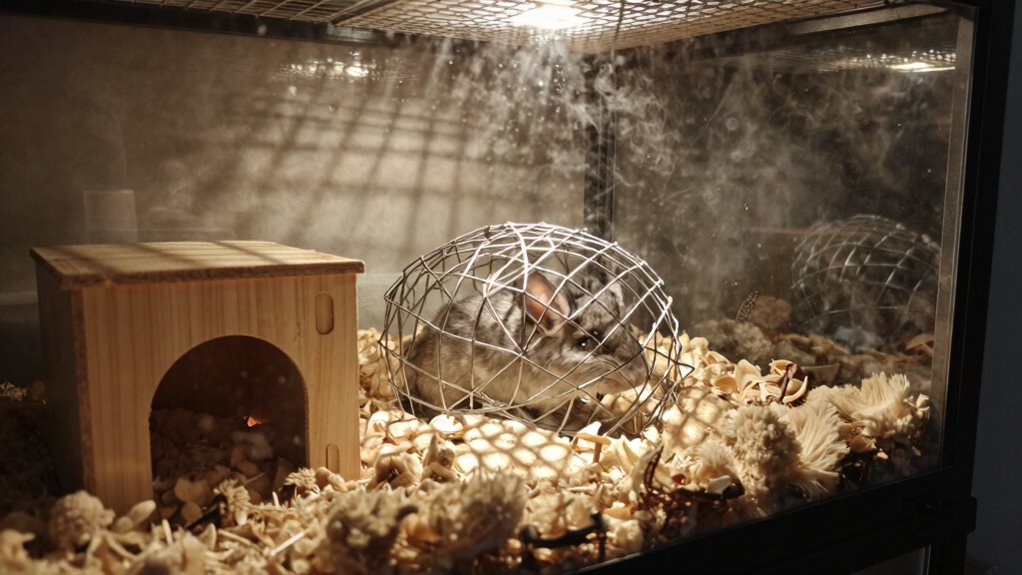
Poor cage design can substantially contribute to heat build-up in your chinchilla’s habitat. Poor ventilation design traps warm air inside, preventing proper airflow and making the environment stuffy. Without adequate airflow, heat accumulates quickly, increasing the risk of overheating. Additionally, the choice of material insulation plays a vital role; thick or poorly ventilated walls trap heat rather than dissipate it. Solid, non-breathable materials like plastic or metal can intensify this effect, especially if the cage lacks vents or openings. A well-designed cage should feature effective ventilation systems and lightweight, breathable materials to prevent heat from building up. Vintage-inspired cage designs can incorporate both aesthetic appeal and functional airflow, demonstrating how thoughtful cage design enhances airflow and comfort. Proper cage placement and the use of breathable bedding materials further assist in maintaining a cooler environment. Incorporating adequate shade is also essential to prevent heat absorption from external sources. By paying attention to these design elements, you can guarantee a cooler, safer environment for your chinchilla, reducing stress and health risks caused by excessive heat.
Signs Your Chinchilla Is Overheating
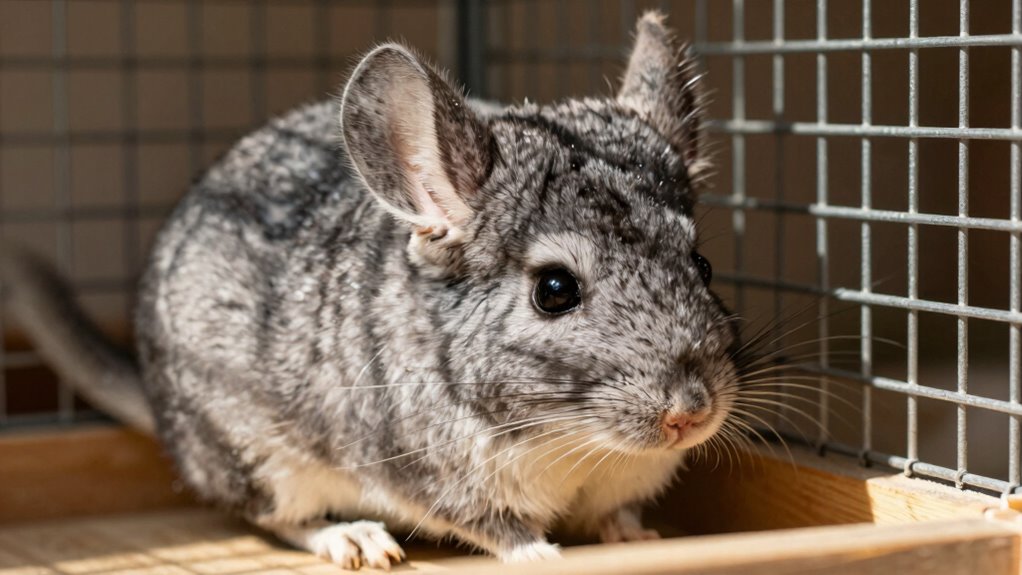
When your chinchilla starts to show unusual behavior or physical signs, it may be a clear indication that they’re overheating. Look for signs such as lethargy, rapid breathing, or excessive panting. You might also notice them drooping their ears or seeking cooler spots in their enclosure. Changes in humidity levels can exacerbate overheating, so monitor the environment closely—high humidity makes it harder for your chinchilla to cool down. Additionally, check the bedding materials; if they’re thick, dark, or made of materials that trap heat, they can contribute to rising temperatures. Ensuring proper ventilation and avoiding overly warm bedding can help prevent heat stress. Recognizing these signs early allows you to take swift action to keep your chinchilla safe. Being aware of enclosure design can help you optimize airflow and temperature regulation, and selecting heat-resistant bedding can further reduce the risk of heat buildup. Regularly assessing airflow patterns within the enclosure ensures your chinchilla remains comfortable and cool during warmer days. Incorporating temperature monitoring devices can provide real-time data to better manage environmental conditions and prevent heat-related illnesses in your chinchilla. Proper temperature regulation is essential for preventing heat-related illnesses in your chinchilla.
Simple Tips to Keep Your Chinchilla Cool and Safe

Keeping your chinchilla cool and safe is essential, especially during warmer months or in humid environments. To prevent overheating, avoid breeding challenges that can increase stress and body temperature. Confirm their enclosure is well-ventilated and placed in a shaded area away from direct sunlight. Dietary adjustments can also help; provide fresh greens and avoid high-fat treats that generate excess heat in their bodies. Regularly check the enclosure for heat buildup and refresh bedding frequently to maintain airflow. Use cool, damp cloths or provide a ceramic tile for them to lie on, helping regulate their temperature. Staying attentive to signs of distress is crucial for their well-being. Never leave your chinchilla in a hot car or near heat sources. Additionally, choosing climate-controlled environments with proper ventilation can contribute to a safer environment for your pet. Ensuring proper ventilation in their enclosure is vital for maintaining a comfortable temperature and preventing heat-related issues. Proper enclosure design with adequate airflow can further reduce the risk of heat buildup. Incorporating temperature regulation devices like small fans or misters can also help maintain a stable environment. Keeping these tips in mind helps keep your pet comfortable and safe year-round.
Managing Temperature During Hot Weather and in Small Spaces

During hot weather and in small spaces, managing your chinchilla’s temperature requires proactive measures to prevent overheating. Focus on ventilation improvements to keep fresh air circulating and reduce heat buildup. Enhancing airflow can be as simple as adding adjustable vents or using a fan nearby, ensuring your chinchilla stays cool without drafts. Cooling accessories, like frozen water bottles wrapped in cloth or ceramic tiles, provide effective ways for your chinchilla to cool down naturally. Keep the enclosure in a shaded area away from direct sunlight, and avoid overcrowding. Regularly check the temperature inside the enclosure, aiming to stay below 75°F. Proper ventilation is essential in controlling heat levels and maintaining good air quality. Using airflow management techniques can significantly help prevent heat stress. In addition, selecting enclosures with good thermal insulation can help regulate temperature more effectively. Ensuring adequate ventilation is maintained during hot days is crucial to prevent heat stress in chinchillas. Maintaining a consistent environment with temperature control is vital to prevent heat stress and ensure your chinchilla’s comfort. By implementing these strategies, you help prevent heat stress and promote a comfortable, safe environment for your chinchilla during hot days.
Frequently Asked Questions
How Often Should I Check My Chinchilla’s Cage Temperature?
You should check your chinchilla’s cage temperature daily to guarantee it stays within the safe range. Proper cage placement helps maintain a consistent environment, so monitor the temperature regularly with a reliable thermometer. Keep an eye on it especially during seasonal changes or heatwaves. Consistent temperature monitoring helps prevent overheating and keeps your chinchilla comfortable and healthy, avoiding the dangers of heat stress or cold.
Can Certain Cage Materials Worsen Heat Retention?
Think of your cage as a heartbeat—its rhythm depends on how well it breathes. Certain materials, like thick insulation or non-ventilated wood, trap heat, causing your chinchilla’s environment to rise too quickly. Poor cage ventilation worsens this, turning the enclosure into a sauna. Opt for materials that promote airflow, like wire, to keep the temperature steady. Proper choice guarantees your chinchilla stays cool, safe, and comfortable.
Are There Specific Accessories That Help With Cooling?
Yes, you can use cooling accessories like ceramic tiles or frozen water bottles to help lower temperatures in your chinchilla’s enclosure. Ventilation solutions, such as adjustable vents or fans, also improve airflow and keep your pet comfortable. Regularly adding these cooling accessories and ensuring proper ventilation prevents heat buildup, making your chinchilla’s environment safer and more comfortable during hot days.
What Are the Long-Term Effects of Heat Stress on Chinchillas?
Like a slow-burning candle, heat stress can quietly damage your chinchilla’s health over time. Prolonged heat exhaustion weakens their immune system, causes fur loss, and may lead to organ issues. Chronic overheating increases the risk of heart problems and decreases lifespan. To protect your chinchilla’s health, guarantee proper cooling and ventilation, and watch for signs of distress. Long-term heat exposure can have serious, lasting effects, so act quickly to prevent them.
How Does Humidity Affect Heat Build-Up in Enclosures?
Humidity levels greatly impact heat build-up in chinchilla enclosures. High humidity traps heat more effectively, making it harder for your chinchilla to stay cool. To prevent overheating, ensure good enclosure ventilation which helps reduce humidity and promotes airflow. By maintaining proper humidity levels and ventilation, you create a cooler, more comfortable environment that minimizes heat stress and keeps your chinchilla healthy and happy.
Conclusion
Remember, your chinchilla’s enclosure is like a delicate clock—one small heat trap can throw off its entire rhythm. By understanding how cage design influences temperature and staying vigilant for signs of overheating, you can keep your furry friend’s world safe and comfortable. With a little effort, you’ll prevent the heat from sneaking in unnoticed, ensuring your chinchilla’s health stays as steady as a heartbeat. Keep cool, and your pet will thank you.