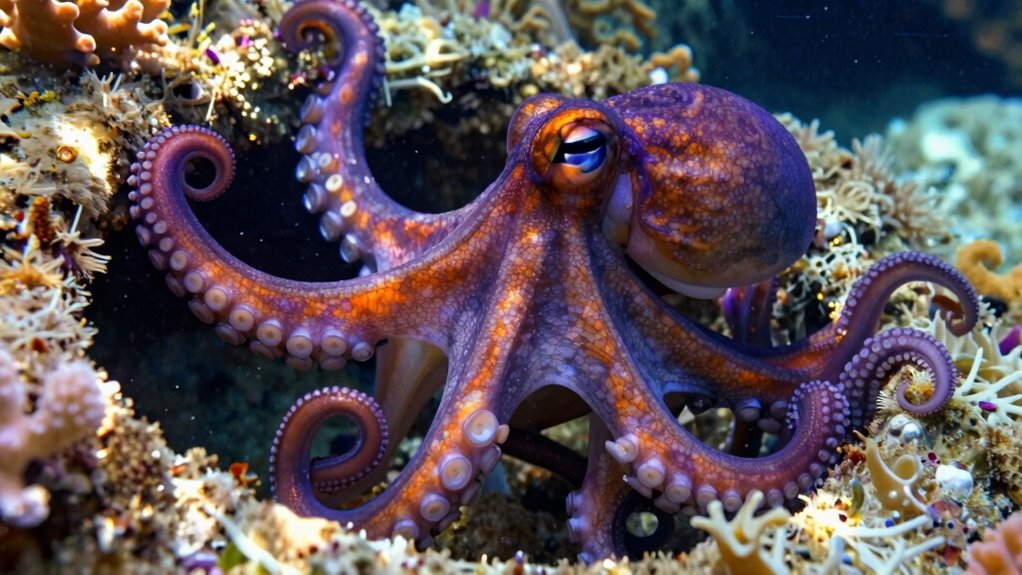

When faced with escape challenges, octopuses use their ability to rapidly change color and texture, blending seamlessly into their surroundings. They manipulate objects like shells and rocks to block entrances or create distractions, aiding in their escape. Their flexibility and problem-solving skills help them navigate tight spaces and outwit predators. Combining quick camouflage with clever manipulation makes them masterful escape artists. Keep exploring to uncover more about their fascinating strategies and abilities.

Get pet supplies delivered free — and shop member deals
- Fast, free delivery on millions of items
- Access to Prime Big Deal Days deals on October 6–7
- Prime Video, Amazon Music and more included
Key Takeaways
- They use rapid color and texture changes to blend seamlessly into their surroundings, avoiding detection.
- Octopuses manipulate objects like shells and debris to block entrances or create distractions.
- Their flexible arms and sharp beak enable them to navigate tight spaces and dislodge obstacles.
- They employ problem-solving skills and adaptive behaviors learned from experience to develop new escape tactics.
- Combining camouflage with prey manipulation, they deceive predators and escape effectively in complex environments.
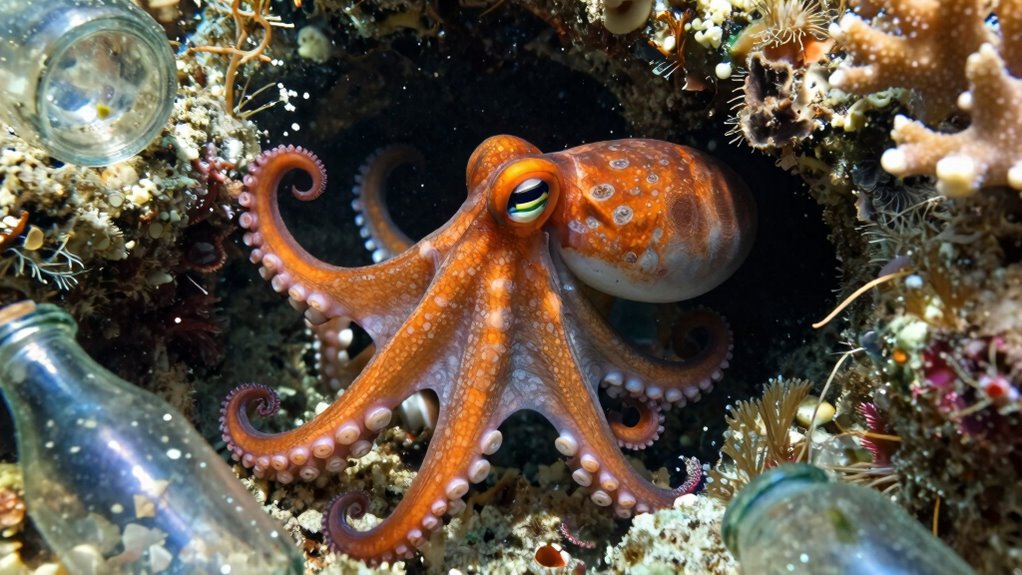
Have you ever wondered how octopuses manage to escape from predators or tricky enclosures? It all comes down to their remarkable ability to use camouflage techniques and manipulate their prey, skills that make them master escape artists of the sea. When danger lurks nearby, you’ll notice an octopus swiftly blending into its surroundings. Its skin contains specialized cells called chromatophores, which change color and texture almost instantly, allowing it to vanish into the background. This camouflage isn’t just for hiding; it’s a strategic move to buy time and confuse predators, giving the octopus a chance to slip away unnoticed. Whether it’s mimicking the rocky seabed or mimicking the appearance of a seaweed patch, they’re experts at blending in, making it nearly impossible for predators to spot them.
But camouflage is just one part of their escape arsenal. Octopuses also excel at prey manipulation, which they cleverly use to their advantage. When faced with a tight spot, you’ll see them grabbing nearby objects—shells, rocks, or even discarded debris—to block the opening of their den or to create a distraction. They can also manipulate their prey in surprising ways, using their flexible arms and sharp beak to pry open shells or dislodge obstacles blocking their escape route. This agility allows them to navigate complex environments with ease. Their intelligence shines through here; they don’t just rely on brute strength but employ problem-solving skills to outwit predators or escape confined spaces. For example, they might mimic the movement of a harmless creature to divert attention or use a piece of debris as a tool to barricade an entrance temporarily. Additionally, their ability to change their appearance rapidly is rooted in their camouflage techniques, making it difficult for predators to track them even when they are close by. Their capacity for adaptive behavior is supported by their metacognitive skills, which enable them to learn from experience and develop new escape strategies. This behavioral flexibility further enhances their survival chances in unpredictable situations. Interestingly, research shows that octopuses are capable of learning through observation, which further enhances their ability to adapt and survive in unpredictable situations. Moreover, their problem-solving abilities demonstrate a level of cognitive sophistication that helps them overcome various challenges in their environment.
In essence, the octopus’s ability to combine camouflage techniques with prey manipulation makes it a formidable escape artist. You might think a simple hide-and-seek game would be easy for predators, but with these strategies, they turn the odds in their favor. Their quick thinking and adaptive behaviors allow them to exploit their environment expertly, slipping through tiny cracks or changing their appearance in a flash. It’s this combination of visual deception and clever manipulation that makes octopuses some of the most skilled escape artists in the ocean. So next time you see one hiding in plain sight, remember—it’s not just luck, but a sophisticated set of skills that keeps them safe from harm.
As an affiliate, we earn on qualifying purchases.
Frequently Asked Questions
Do Octopuses Remember Escape Routes for Future Use?
Yes, octopuses remember escape routes for future use. Their memory retention allows them to learn efficiently from previous experiences, improving their ability to navigate complex environments. When faced with similar challenges, they quickly recall effective routes, demonstrating impressive learning efficiency. This adaptability helps them avoid danger and find food more effectively. Their cognitive skills, including memory, make octopuses some of the most intelligent invertebrates, capable of sophisticated problem-solving.
How Quickly Can Octopuses Adapt Their Escape Strategies?
You’ll find that octopuses adapt their escape strategies rapidly, often within minutes, by tweaking their camouflage tactics and predatory responses. When threatened, they quickly change color and texture to blend into their surroundings, confusing predators. Their flexible brains enable real-time adjustments, allowing swift responses to new threats. This agility helps them evade predators effectively, demonstrating a remarkable ability to modify their escape tactics on the fly.
Do Octopuses Communicate During Escape Attempts?
Surprisingly, octopuses don’t chat during escape attempts, despite their cleverness. Instead, they rely on camouflage tactics and predator detection skills to stay hidden. Ironically, their silent strategies are so effective, they don’t need to communicate. While they might coordinate with others in some situations, during escapes, their focus remains on blending in and detecting threats, proving that sometimes, silence truly is the best strategy.
Are Octopuses More Successful in Escape When Alone or in Groups?
You’ll find octopuses are more successful in escape when alone, as they rely on their camouflage tactics and tentacle agility without interference. Solo, they can quickly blend into surroundings or squeeze through tight spaces, making escapes more effective. In groups, they might compete or distract each other, reducing their chances. So, their individual skills shine brightest when they’re on their own, utilizing clever camouflage and flexible tentacles for a quick getaway.
What Environmental Factors Influence Octopus Escape Behavior?
You might find it fascinating that octopuses change color up to 10,000 times faster than humans blink, showcasing their incredible camouflage tactics. Environmental factors like water clarity, light levels, and predator presence markedly influence their escape behavior. When visibility drops or predators loom, they become more alert, utilizing camouflage and quick movements to evade threats. These conditions heighten their predator awareness, making their escape strategies even more dynamic and adaptive.
Conclusion
So, next time you watch an octopus slip through a tiny crack, ask yourself—aren’t they the ultimate escape artists? Their clever problem-solving and flexible bodies show just how resourceful nature can be. You’re probably amazed by their skills, wondering if we could be a little more inventive ourselves. After all, in a world full of challenges, isn’t it inspiring to see creatures that never give up? Maybe it’s time we learned a thing or two from these incredible masters of escape.
Halloween Picks
halloween
As an affiliate, we earn on qualifying purchases.