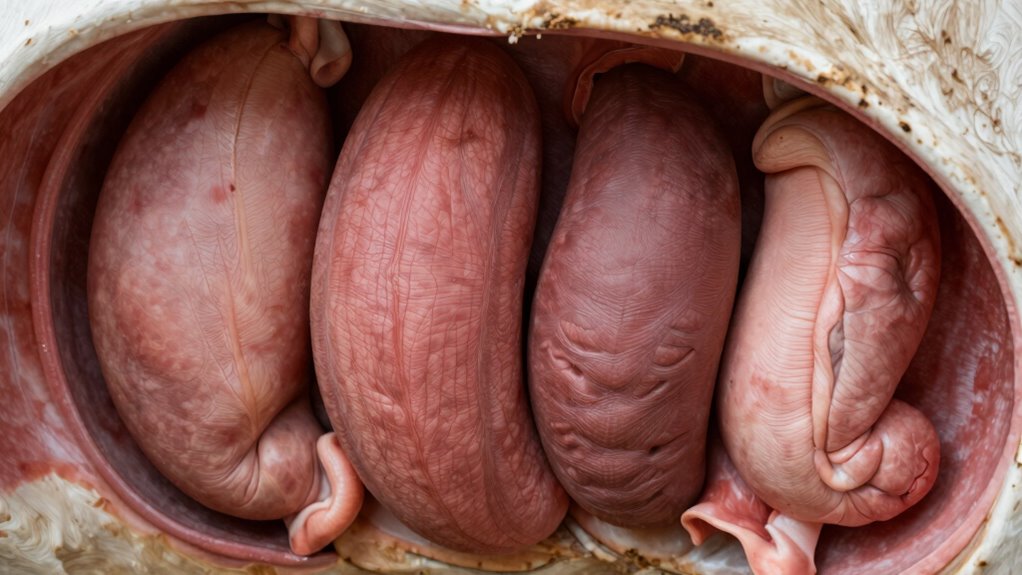

A cow has four stomachs: the rumen, reticulum, omasum, and abomasum, each playing a key role in digesting fibrous plants efficiently. The rumen ferments feed with microbes, while the reticulum sorts particles. The omasum absorbs water and nutrients, and the abomasum uses acids and enzymes to break down proteins. Understanding these stomachs and their functions helps you see how cows turn rough plant material into energy. Keep exploring to learn more about this complex system.

Get pet supplies delivered free with Prime
- Fast, free delivery on millions of items
- Prime Video, Amazon Music and more included
- Member-only deals all year
Key Takeaways
- Cows have four distinct stomach chambers: rumen, reticulum, omasum, and abomasum.
- These stomachs work together to digest fibrous plant material efficiently.
- The rumen is the largest, functioning as a fermentation vat for microbes.
- The reticulum sorts particles and aids in cud re-chewing, supporting digestion.
- The omasum and abomasum perform nutrient absorption and enzymatic digestion, respectively.
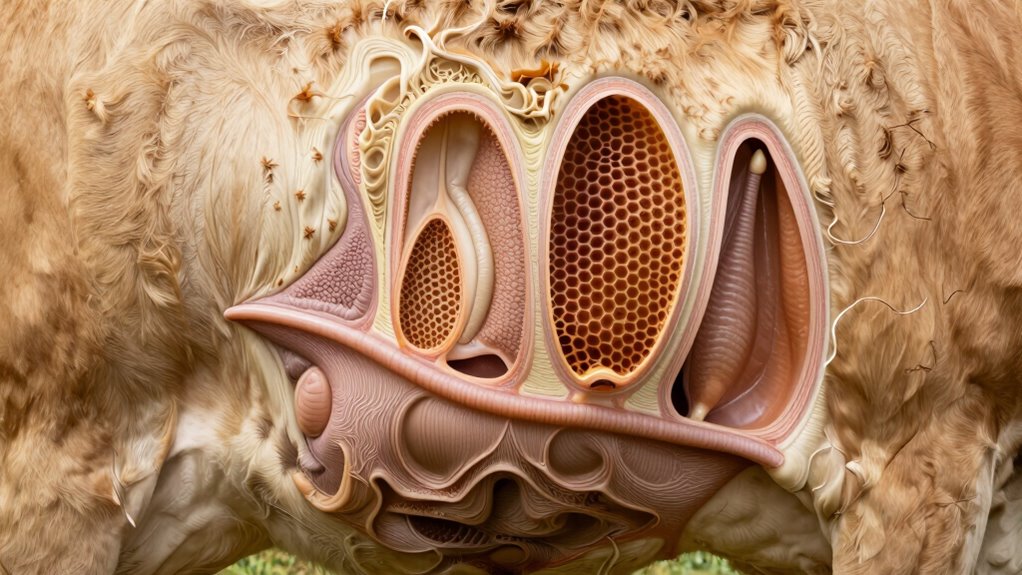
Cows have a distinctive digestive system that sets them apart from humans and many other animals—they actually have four stomachs. This specialized system allows them to extract maximum nutrients from fibrous plant material, which is vital for their survival and productivity. When you’re considering dairy cow nutrition, understanding how each stomach functions can help optimize their health and milk production. The four stomachs work together in a complex, efficient process that revolves around rumen fermentation processes, which are fundamental to a cow’s ability to digest tough plant fibers.
The first and largest stomach is the rumen, acting as a fermentation vat. When your cow eats, the feed first lands in the rumen, where microbes break down complex carbohydrates through fermentation. This process produces volatile fatty acids, which serve as a primary energy source for the cow. Rumen fermentation processes are essential because they enable the cow to convert fibrous plant material into usable nutrients, something humans can’t do. As a dairy farmer, you want to guarantee that your cow’s diet promotes healthy fermentation—this means providing the right balance of forage, grains, and supplements to keep the microbes thriving and the fermentation efficient.
Next is the reticulum, which works closely with the rumen. It acts as a sort of sorting station, capturing larger particles that need more digestion and guiding smaller, fermentable material back into the rumen. When the cow chews cud, it’s fundamentally re-chewing material from the reticulum to break it down further, increasing nutrient availability. Proper dairy cow nutrition supports this process by providing easily digestible feeds that maintain microbial activity and prevent issues like acidosis, which can disrupt rumen fermentation. Proper digestion depends heavily on the healthy functioning of all four stomachs working in harmony. Additionally, the reticulum plays a crucial role in regulating the flow of digesta, ensuring optimal digestion efficiency. Understanding the microbial processes within the rumen can help farmers improve feed efficiency and overall health. Moreover, the microbial activity in the rumen is influenced by the diet, emphasizing the importance of nutritional balance for maintaining a healthy microbial ecosystem.
The third stomach, the omasum, functions mainly to absorb water and nutrients from the partly digested feed. It also helps regulate the flow of digesta into the abomasum, the final stomach, which is comparable to the human stomach. The abomasum is where true enzymatic digestion occurs, breaking down proteins and other nutrients so they can be absorbed into the cow’s bloodstream. Maintaining a balanced diet ensures these stages proceed smoothly, maximizing nutrient uptake and supporting milk production. Additionally, a healthy digestive system relies on proper fermentation processes, which are crucial for the cow’s overall health and productivity.
As an affiliate, we earn on qualifying purchases.
Frequently Asked Questions
Do All Cows Have the Same Number of Stomachs?
Not all cows have the same number of stomachs because cattle breeds show stomach variations. Most cows have four stomach chambers, but some breeds might differ slightly in how they process food. You’ll find that dairy breeds, like Holsteins, and beef breeds, like Angus, share similar stomach structures. However, the exact size and function of each stomach chamber can vary based on the breed, affecting digestion and overall health.
How Does a Cow’s Stomach Process Different Types of Food?
You’ll be fascinated to know that a cow’s stomach has four chambers, each playing a crucial role. When it processes different foods, especially dietary fiber, the rumen fermentation kicks in, breaking down tough plant materials. This process allows the cow to extract nutrients efficiently. As food moves through the other chambers, it’s further digested, ensuring the cow gets maximum nutrition from its varied diet, including fibrous plants.
Can a Cow Survive With Fewer Than Four Stomachs?
A cow can’t survive with fewer than four stomachs because their unique digestive system is vital for ideal cattle nutrition. The four compartments—rumen, reticulum, omasum, and abomasum—work together to maximize digestive efficiency, breaking down fibrous plant material. Without all four, your cow’s ability to extract nutrients diminishes considerably, leading to health issues and poor productivity. To keep your cattle healthy, maintaining their natural four-chambered stomach system is essential.
Are Cow Stomachs Similar to Human Digestive Organs?
Cow stomachs aren’t similar to human digestive organs. You see, cows rely on microbial fermentation in their four stomach chambers—rumen, reticulum, omasum, and abomasum—to break down tough plant fibers. Unlike humans, who mainly use digestive enzymes in the stomach and intestines, cows depend heavily on microbes to digest their food. This unique system allows cows to extract nutrients from fibrous plants that humans can’t efficiently digest.
How Long Does Digestion Take in a Cow’s Stomach?
Digestion in a cow’s stomach takes about 24 to 48 hours. You’ll find microbial fermentation plays a key role, breaking down tough plant fibers in the rumen. Gastric motility helps move food through each stomach chamber, ensuring efficient digestion. This process is slow compared to humans, allowing cows to extract maximum nutrients from fibrous plant material, which is essential for their health and productivity.
Conclusion
Now that you know a cow has four stomachs, it’s pretty amazing how efficiently they digest their food. Did you know that a single cow can chew up to 50,000 times a day? That’s like chewing through a mountain of hay! Understanding their unique stomachs helps you appreciate how these gentle grazers turn grass into the milk and meat we enjoy every day. It’s truly a fascinating part of farm life!
Fall Picks
fall essentials
As an affiliate, we earn on qualifying purchases.