
You might wonder why monkeys have opposable thumbs. These thumbs let you grasp objects firmly, which is essential for picking fruits, peeling nuts, or crafting simple tools. They also help you communicate through gestures like grooming or pointing, strengthening social bonds. Over time, opposable thumbs have played a critical role in primate evolution, supporting complex behaviors and survival skills. Keep exploring, and you’ll discover even more fascinating ways these thumbs shape monkey lives.
Key Takeaways
- Opposable thumbs enable monkeys to grasp and manipulate objects securely.
- They facilitate tool use, enhancing foraging and survival skills.
- Thumbs support complex social behaviors like grooming and communication.
- The development of opposable thumbs reflects evolutionary adaptation to environmental demands.
- They improve monkeys’ ability to explore their surroundings and perform precise movements.
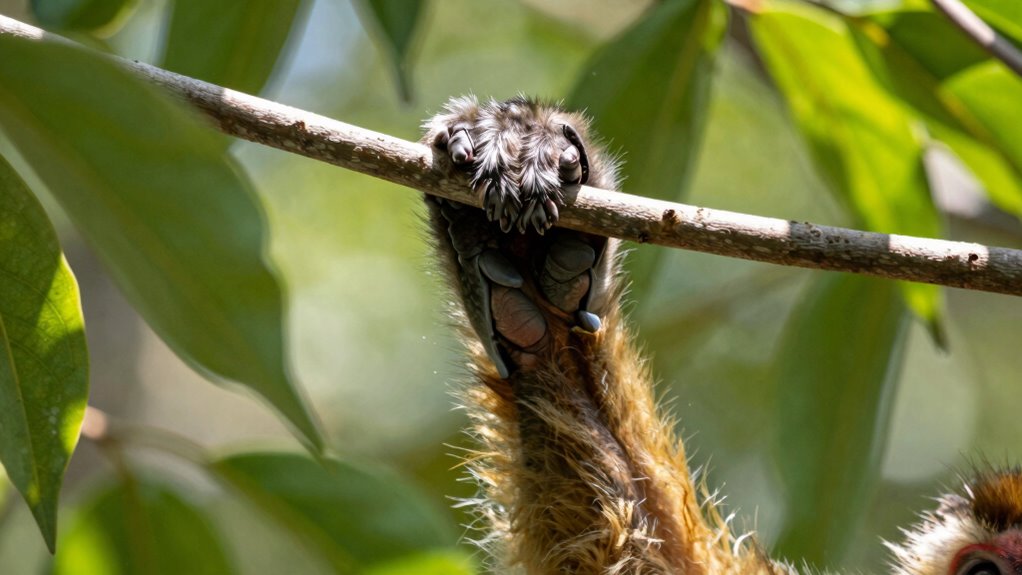
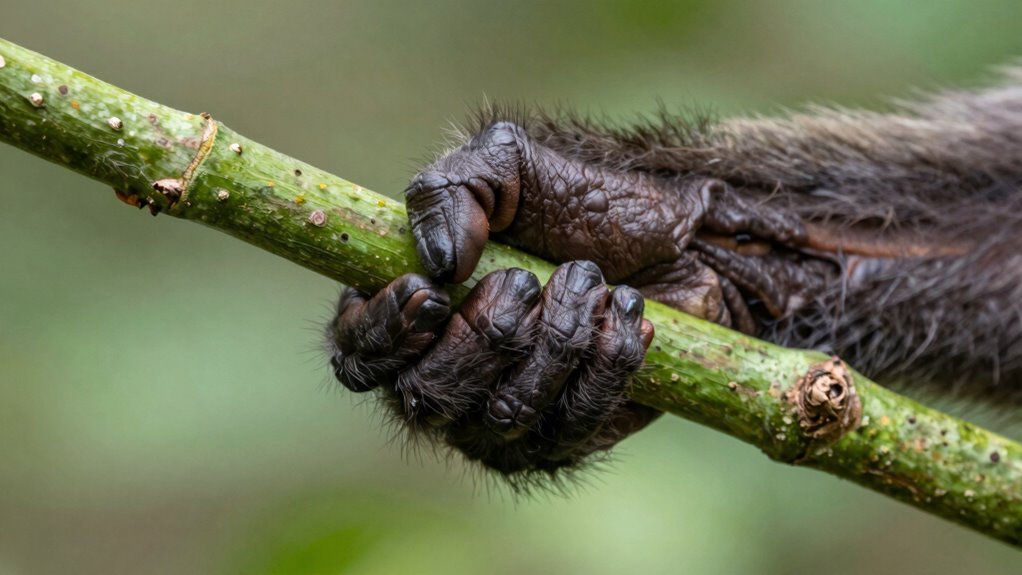
Monkeys are fascinating creatures that capture our curiosity with their intelligence and playful behavior. One of the most intriguing features they possess is their opposable thumbs. This unique trait plays an essential role in their daily lives, especially when it comes to monkey communication and their evolutionary adaptations. Opposable thumbs allow monkeys to grasp objects firmly, manipulate tools, and perform precise movements that are indispensable for survival. Their thumbs work in tandem with their other fingers, giving them a level of dexterity that’s impressive among primates. This ability enables them to pick fruits, peel nuts, and even craft simple tools, which sets them apart from many other animals. It’s not just about eating; their thumbs are indispensable for social interactions and exploring their environment. The evolutionary development of opposable thumbs highlights their importance in primate evolution and adaptation processes. When you consider monkey communication, opposable thumbs become even more significant. Monkeys often use gestures, facial expressions, and body language to convey messages within their groups. The dexterity of their thumbs allows them to make specific gestures, such as grooming or pointing, that help maintain social bonds and establish dominance or submission. Grooming, in particular, is a key social activity where monkeys use their thumbs to pick through fur and remove parasites or dirt—an act that reinforces social cohesion. Additionally, this thumb dexterity enhances their ability to use and create tools, further expanding their behavioral range. The development of opposable thumbs is also a remarkable example of evolutionary adaptation, demonstrating how physical traits can evolve to meet behavioral and environmental demands. Their ability to manipulate objects with their thumbs can facilitate the creation of signals or toys, further enriching their communication repertoire. This physical adaptation has also contributed to their diverse social structures and complex interactions. These physical adaptations have made it possible for monkeys to develop complex social behaviors that are essential for their survival and cohesion.

Little Live Pets Baby Monkey Minis – Chikki Cherry. Interactive Pet Toy. 20+ Sounds & Reactions. Soft Brown Fur. 7.4" Tall. Super Realistic. Feed, Nurture, React. Grippy Hands & Feet. Collect All 3
- Interactive Touch Sensors: Reacts to your touch
- Realistic Movements: Grips, grabs, hangs, hugs
- Nurture and Feed: Engage in caring activities
As an affiliate, we earn on qualifying purchases.
As an affiliate, we earn on qualifying purchases.
Frequently Asked Questions
Do All Monkey Species Have Opposable Thumbs?
Not all monkey species have opposable thumbs, but many do as part of their evolutionary adaptations. These adaptations help them grasp branches and manipulate objects, which is essential for their survival. In primate diversity, opposable thumbs stand out as a key trait that enables better climbing, foraging, and tool use. You’ll find that most Old World monkeys and apes have well-developed thumbs, highlighting their evolutionary success in complex environments.
How Do Opposable Thumbs Help Monkeys in Their Daily Lives?
Your opposable thumbs help you perform essential tasks like tool use, allowing you to grasp and manipulate objects with precision. They also facilitate social bonding, as you can hold hands, groom, and share food, strengthening relationships. These thumbs give you better control in your daily activities, from climbing trees to crafting tools, making your life more efficient and connected. Without them, many of your complex behaviors would be much harder to accomplish.
Are Opposable Thumbs Unique to Primates?
You might find it surprising, but opposable thumbs aren’t exclusive to primates. Evolutionary adaptations and genetic variations have led some species, like certain birds and rodents, to develop similar traits. These adaptations help them grasp and manipulate objects effectively. While primates are best known for their opposable thumbs, nature’s diversity means other animals have evolved comparable features, highlighting how evolution shapes survival strategies across different species.
Can Monkeys Lose Their Opposable Thumbs?
You might wonder if monkeys can lose their opposable thumbs, but it’s highly unlikely. Their evolutionary adaptations have made thumb dexterity essential for survival, allowing them to grasp and manipulate objects effectively. Such specialized traits are deeply ingrained, and losing them would compromise their ability to forage, climb, and defend themselves. Evolution favors the retention of these advantageous features, so monkeys generally retain their opposable thumbs throughout their lives.
Do Monkeys Use Their Thumbs for Grooming?
Yes, monkeys use their thumbs for grooming. Their thumbs help them grasp and pick out dirt, insects, and parasites from their fur. This grooming behavior is also a form of monkey communication, strengthening social bonds. Additionally, thumbs aid in maintaining balance when climbing and moving through trees. So, their opposable thumbs are essential not just for daily tasks but also for social interaction and steering their environment effectively.
Conclusion
Imagine holding a tiny, delicate key that opens a world of opportunity—that’s what opposable thumbs do for monkeys. They’re like nature’s Swiss Army knives, giving you the power to grasp, climb, and explore with ease. Without them, you’d be like a bird trying to swim—out of sync with your surroundings. So, next time you see a monkey, remember: those opposable thumbs are what make their adventures possible, turning everyday tasks into extraordinary feats.