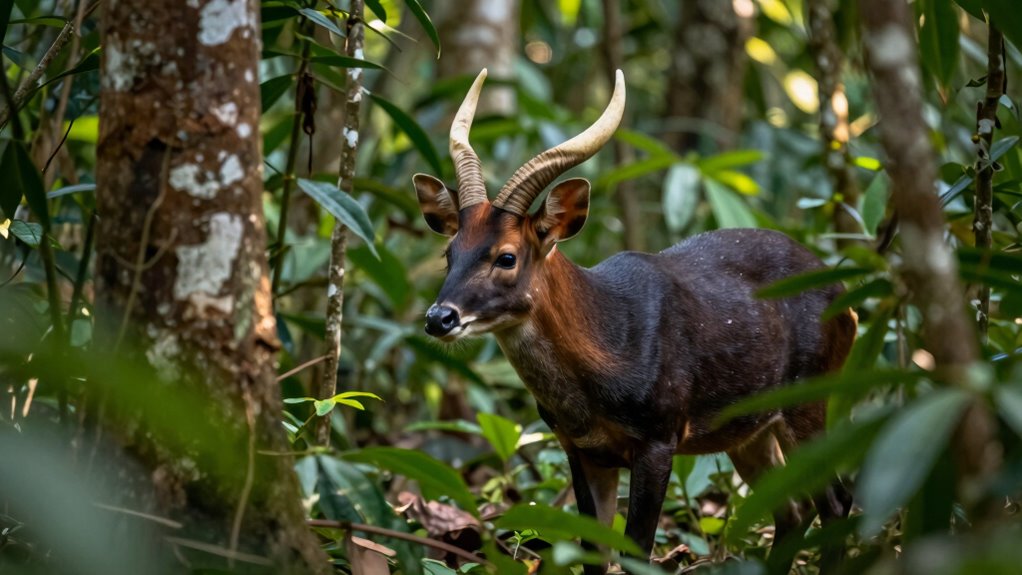

Meet the Saola, known as the “Asian unicorn,” because it’s incredibly rare and hard to find. It lives deep in the forests of Vietnam and Laos and symbolizes the importance of protecting endangered habitats. Threatened by deforestation and illegal logging, conservation efforts focus on preserving these essential ecosystems. The Saola also has cultural significance, inspiring local folklore and pride. Keep exploring to discover more about this mysterious creature and why it matters for our world.
Key Takeaways
- The Saola, known as the “Asian unicorn,” is an extremely rare and elusive freshwater bongo-like mammal native to Vietnam and Laos.
- It inhabits remote, dense forests of the Annamite Mountains, facing threats from habitat loss due to logging and agriculture.
- Conservation efforts focus on habitat protection and sustainable land-use to prevent its extinction.
- The Saola holds cultural significance for local communities, symbolizing nature’s mystery and inspiring preservation efforts.
- Its rarity highlights the importance of biodiversity conservation and ecological balance in Southeast Asia.
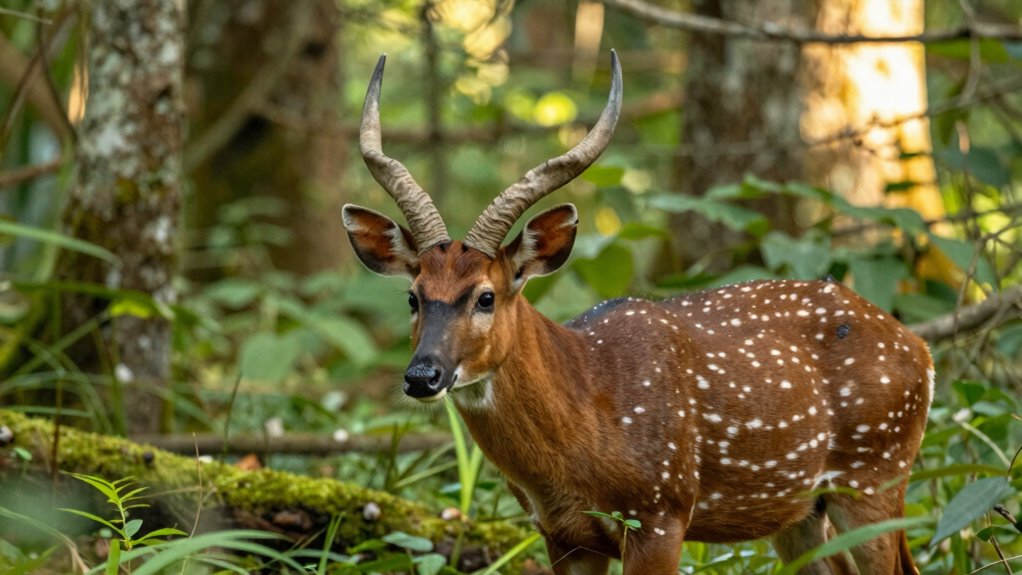
Have you ever heard of the Saola, often called the “Asian unicorn”? This rare and mysterious creature roams the dense forests of the Annamite Mountains in Vietnam and Laos, a region known for its rugged terrain and lush biodiversity. Despite its elusive nature, the Saola captures your imagination because it symbolizes both the fragility of endangered species and the urgent need for habitat conservation. You might not see one in person, but understanding its habitat and cultural significance helps you appreciate why protecting this species is so crucial.
The Saola’s habitat is essential to its survival. It lives in remote, evergreen forests that are often difficult to access, which has historically kept it hidden from human eyes. However, these same forests face threats from deforestation, illegal logging, and agricultural expansion. Habitat conservation efforts aim to preserve these critical ecosystems, ensuring the Saola and countless other species can thrive. When you learn about these initiatives, you realize that protecting the Saola’s habitat isn’t just about saving one animal; it’s about maintaining the delicate ecosystem balance. Conservationists work tirelessly to establish protected areas and promote sustainable land-use practices, knowing that the survival of the Saola depends on these efforts. Additionally, habitat destruction remains a significant challenge that hampers conservation progress. Recognizing the interconnectedness of ecosystems highlights the importance of biodiversity in maintaining ecological health. Protecting habitats also plays a vital role in preventing species extinction, which is a key focus of conservation programs worldwide. Understanding the endemic nature of the Saola emphasizes how specific and limited its habitat truly is, making conservation even more critical.
Culturally, the Saola holds a special place in local communities’ hearts. It’s often regarded as a creature of myth and legend, embodying the mystery and beauty of the forest. For many indigenous groups, the Saola symbolizes a connection to nature and a reminder of the importance of living in harmony with the environment. Its rarity fuels stories and folklore, making it a symbol of conservation and respect for nature’s wonders. This cultural significance can motivate local communities to participate in preservation efforts, fostering a sense of pride and responsibility. When you see how the Saola is woven into local traditions, you understand that its protection isn’t just a scientific goal—it’s a cultural one, too.
In essence, the Saola’s story highlights the importance of habitat conservation and cultural appreciation. You realize that protecting this elusive creature requires not only scientific efforts but also respecting and integrating local traditions. As you become more aware of the Saola’s plight, you’re reminded that preserving such species enriches our global heritage and ensures future generations can marvel at these extraordinary symbols of nature’s wonder.

BEBANG Binoculars for Adults 10×42 High Powered Waterproof Binoculars for Bird Watching, Hunting, Travel, Stargazing, Sports, Wildlife, Bright and Clear Range of View
1️⃣10x magnification, 42mm objective lens binoculars; Ultra wide field-of-view with long eye-relief
As an affiliate, we earn on qualifying purchases.
As an affiliate, we earn on qualifying purchases.
Frequently Asked Questions
What Is the Saola’s Lifespan in the Wild?
You’ll find that the saola’s lifespan in the wild is around 8 to 10 years. In its dense, montane forest habitat, it prefers shady, bamboo-rich areas where it can hide from predators. Its dietary habits mainly include leaves, grasses, and shoots, which it forages for carefully. Due to its elusive nature, studying its lifespan is challenging, but these animals generally live shorter lives compared to captive counterparts.
How Do Saolas Communicate With Each Other?
You might think Saolas communicate through majestic roars, but they actually depend on subtle Saola vocalizations and scent marking. Their quiet, elusive signals guarantee they stay hidden from humans, maintaining their mysterious aura. When a Saola scent marks, it’s like leaving a secret note for others, saying, “Keep your distance” or “I was here.” So, their communication is a delicate, secretive dance of sounds and scents, not grand displays.
Are Saolas Considered Critically Endangered or Extinct?
You should know that saolas are critically endangered, and some experts believe they might even be extinct. To protect these rare creatures, habitat preservation is essential, ensuring they have safe areas to thrive. Additionally, poaching prevention efforts help stop illegal hunting that threatens their survival. Supporting conservation programs can make a significant difference in giving the saola a chance to survive and, hopefully, recover in the wild.
What Are the Main Threats to Saola Survival?
The main threats to saola survival are like shadows creeping in the night, mainly habitat loss and poaching. You can help by supporting habitat protection efforts that preserve their forest homes and advocating for poaching prevention to keep hunters at bay. Without action, these rare creatures may vanish, so your efforts in conservation are vital to ensuring the saola’s future in the wild.
Can Saolas Be Kept in Captivity?
Saolas can’t be kept in captivity effectively right now. Preserving their natural habitat is essential, as habitat preservation helps maintain wild populations. While captive breeding programs have been explored, they haven’t succeeded in reproducing saolas outside their natural environment. Your focus should be on protecting their habitat and supporting conservation efforts to guarantee their survival, rather than attempting to keep them in captivity, which currently isn’t a viable option.
eco-friendly outdoor gear
As an affiliate, we earn on qualifying purchases.
As an affiliate, we earn on qualifying purchases.
Conclusion
Now that you’ve learned about the Saola, do you feel inspired to protect this elusive creature? Its rarity reminds us how fragile our planet’s wonders truly are. By spreading awareness and supporting conservation efforts, you can help guarantee future generations might also marvel at this Asian unicorn. Will you stand by and watch it disappear, or will you take action to preserve its home? The choice is ours—what will you do?
nature documentary books about endangered species
As an affiliate, we earn on qualifying purchases.
As an affiliate, we earn on qualifying purchases.
sustainable forest preservation tools
As an affiliate, we earn on qualifying purchases.
As an affiliate, we earn on qualifying purchases.