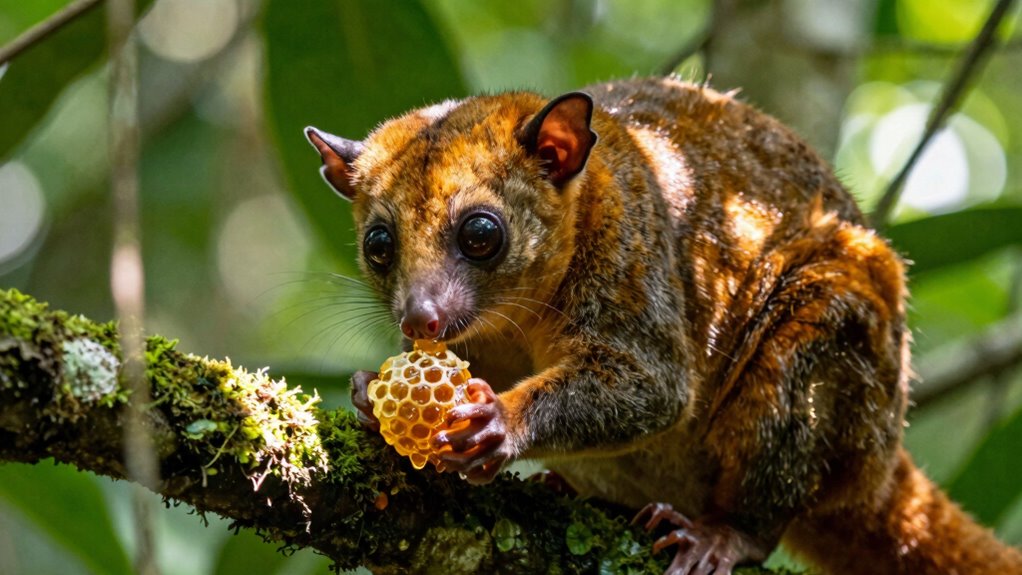

Meet the kinkajou, a small, agile mammal that lives high in tropical forest canopies. With its long, prehensile tail and sharp claws, it climbs swiftly and effortlessly through branches. Its keen senses help it locate fruit, nectar, and honey, which it loves most. Active at night, this curious creature often explores alone, pollinating flowers and dispersing seeds. To discover more about this fascinating forest dweller, keep exploring its unique adaptations and ecological role.
Key Takeaways
- The kinkajou is a small, arboreal mammal with a prehensile tail used for balance and climbing.
- It is nocturnal, highly agile, and specializes in raiding beehives for honey and nectar.
- Its keen senses, including excellent night vision and sharp claws, aid in foraging and navigating dense forests.
- The kinkajou plays a vital ecological role by pollinating flowers and dispersing seeds.
- Adapted for life in tropical forest canopies, it is a solitary species that spends most of its time high in trees.
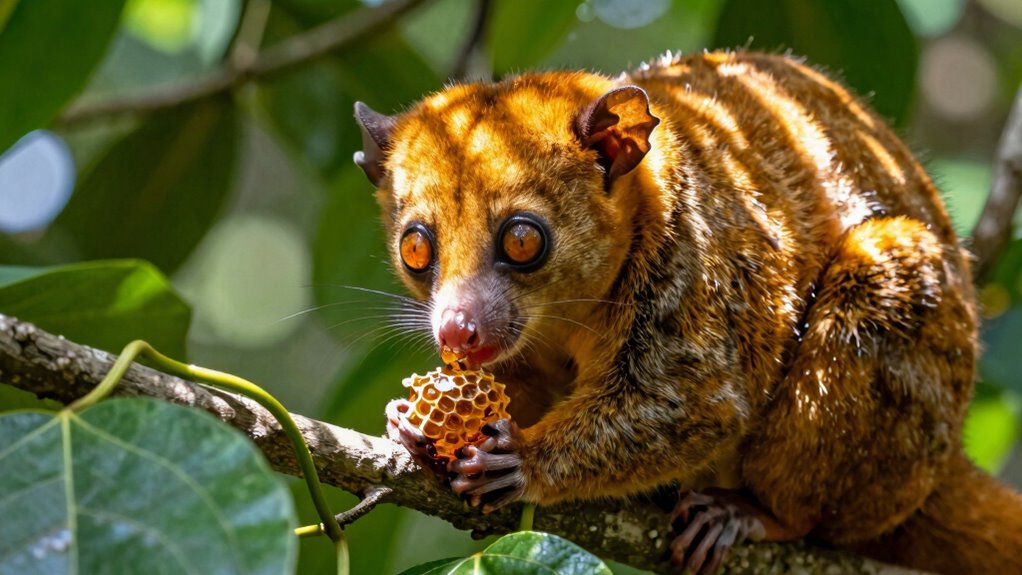
Have you ever wondered which small mammal spends its nights climbing through the treetops in Central and South America, driven by a sweet tooth for honey? That’s the kinkajou, a fascinating creature often called the “honey bear,” though it’s not actually a bear at all. This agile, nocturnal animal is perfectly adapted to its arboreal lifestyle, with a long, prehensile tail that acts as a fifth limb, helping it balance as it maneuvers through dense canopies. Its round, expressive eyes give it excellent night vision, essential for steering through the dark forests as it searches for food.
The kinkajou, a nocturnal climber with a prehensile tail and keen night vision, prowls Central and South American forests for honey.
You’ll find that the kinkajou is a master climber, capable of moving swiftly and gracefully among the branches. Its limbs are flexible, and tiny, sharp claws grip the bark securely. It’s not just about climbing; this creature is also an adept forager, with an incredible sense of smell that guides it to ripe fruit, nectar, and, most notably, honey. It’s this affinity for honey that has earned it its nickname, and you’ll often see it at active moments during the night, raiding beehives with surprising agility. Despite its small size—usually around 3 to 4 feet from nose to tail—this animal can be quite bold when it comes to honey.
The kinkajou’s diet is diverse, but honey is a favorite, and it’s known to be quite clever at breaking into beehives. Its long, sticky tongue, which can extend up to 5 inches, helps it lap up nectar and honey from deep within combs. Its rounded ears are highly sensitive, helping it detect movement and sounds in the dark. This keen sense of hearing, combined with its sharp claws, allows it to locate and access hidden food sources efficiently. As you observe or learn about the kinkajou, you’ll see that it’s a solitary creature, usually venturing out at night and spending most of its life high in the treetops.
Despite its small stature, the kinkajou plays an essential role in its ecosystem. It helps disperse seeds from the fruit it eats and assists in pollination, especially with flowers that bloom at night. Its unique adaptations make it a remarkable example of evolution’s ingenuity in tropical forests. Additionally, the kinkajou’s arboreal lifestyle emphasizes how crucial tree-dwelling species are for maintaining healthy forest ecosystems. So, next time you think about creatures that thrive in the treetops, remember the kinkajou—nature’s adorable, honey-loving climber, perfectly adapted to life in the lush canopy.
As an affiliate, we earn on qualifying purchases.
Frequently Asked Questions
What Is the Lifespan of a Kinkajou in Captivity?
In captivity, a kinkajou typically lives around 23 years. Since they have a diet preference for fruits, honey, and small animals, you should provide a balanced, varied diet to guarantee longevity. Their nocturnal habits mean they’re most active at night, so you’ll want to create a stimulating environment for their activity. Proper care, diet, and a suitable habitat help kinkajous thrive and reach their full lifespan.
Are Kinkajous Suitable Pets for Households?
Kinkajous aren’t suitable pets for households because their diet preferences mainly include honey, fruit, and insects, requiring a specialized diet. They also need a spacious, tall habitat mimicking their natural trees, with plenty of climbing opportunities. These animals are nocturnal, social, and require extensive care and enrichment. Without proper habitat requirements and diet, they can become stressed or ill, making them unsuitable for most pet owners.
How Do Kinkajous Communicate With Each Other?
You’ll notice kinkajous communicate with each other through nocturnal vocalizations, like chattering and squeaking, especially at night. They also use scent marking to establish territory and convey information. When you observe them, you’ll see these behaviors help them stay connected and avoid conflicts. Their vocalizations and scent marking are essential parts of their social interactions, making them fascinating creatures with complex communication methods.
What Are the Main Predators of Kinkajous?
You might be surprised, but predators like owls, jaguars, and hawks pose threats to kinkajous, especially since their nocturnal behavior keeps them active at night. When you focus on habitat preservation, you’re helping to safeguard these creatures from losing their natural homes to deforestation. Their main defense is staying high in the trees, using their agility and keen senses to avoid danger. Preserving forests guarantees they remain safe and thriving.
Can Kinkajous Be Trained to Do Tricks?
You can train kinkajous to do tricks, but it requires understanding their behavior and patience. Use positive reinforcement training techniques, like treats and praise, to encourage desired actions. Keep training sessions short and consistent, respecting their natural curiosity and independence. Remember, kinkajous can be unpredictable, so your approach should be gentle and respectful, focusing on building trust. With patience, you can teach them simple tricks, but always prioritize their comfort and well-being.
Conclusion
You now know the kinkajou, a tiny acrobat of the treetops, with a sweet tooth for honey that fuels its nightly adventures. Like a moonbeam dancing through the leaves, this creature’s curiosity and agility make it a master of its forest home. Keep an eye out next time you wander near the trees—you might just glimpse this elusive, honey-loving explorer, quietly weaving its story into the vibrant tapestry of the jungle.