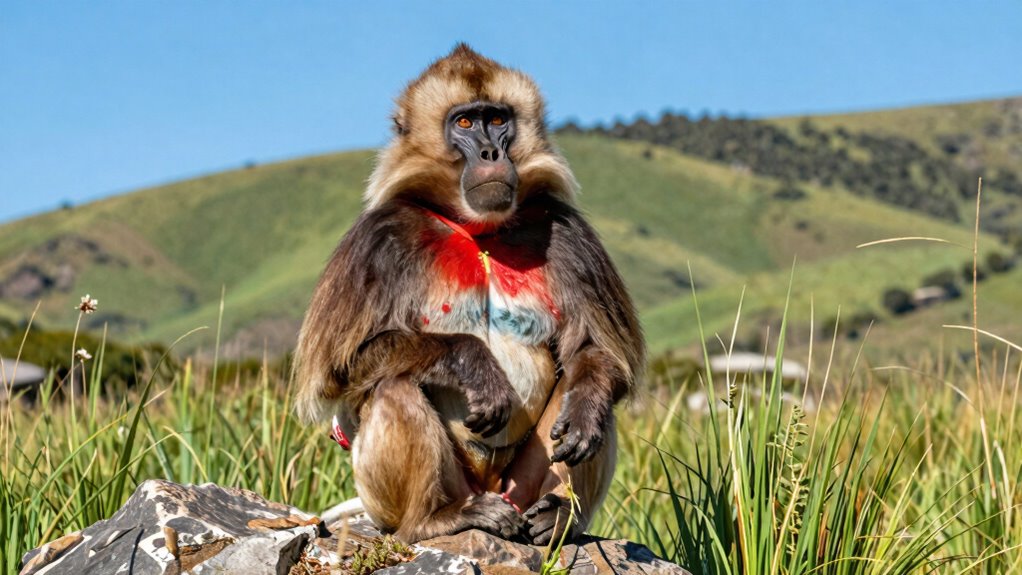

Meet the gelada, a unique primate found only in Ethiopia’s highland grasslands. You’ll notice they spend most of their time on the ground, using their strong teeth to eat grass, which is unusual among primates. They live in large social groups with a dominant male leading and close bonds among females and their young. If you keep exploring, you’ll discover even more fascinating facts about these incredible, grass-eating monkeys.
Key Takeaways
- Geladas are unique Ethiopian primates that primarily feed on grass, using specialized incisors to access tender shoots.
- They live in large social groups called bands, led by a dominant male, with close-knit female and offspring subgroups.
- Adapted for herbivory with muscular mouths and large molars, they play a vital role in highland grassland ecosystems.
- Found exclusively in Ethiopia’s rocky grasslands and river valleys, their presence supports biodiversity and ecosystem health.
- Conservation efforts focus on habitat preservation and anti-poaching to ensure their survival amid threats like deforestation.
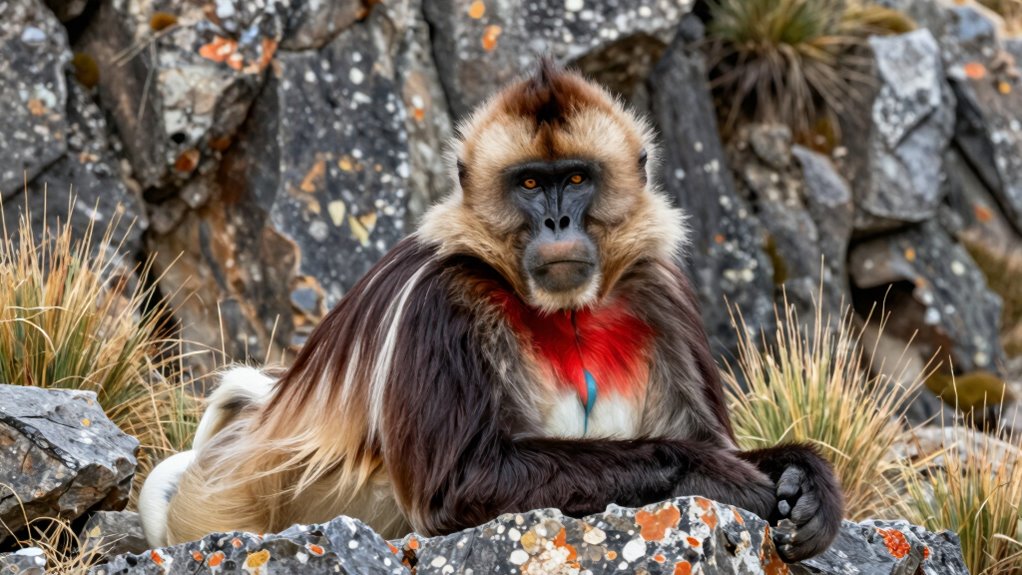
Have you ever wondered what makes geladas unique among primates? These fascinating creatures are only found in Ethiopia, and their distinctive behaviors and social systems set them apart from other monkeys. The gelada’s social structure is particularly intriguing. They live in large, complex groups called bands, which can include up to a hundred individuals. Within these bands, a clear hierarchy exists, with a dominant male leading and safeguarding the group. The males compete fiercely for leadership, often engaging in displays and fights to establish dominance. Females and their offspring form close-knit subgroups, and grooming plays an essential role in maintaining social bonds. Unlike many primates, geladas are primarily ground-dwellers, often seen foraging on the rocky grasslands and river valleys of Ethiopia’s highlands.
Their unique diet also contributes to their distinct identity. Geladas mainly eat grass—an unusual trait among primates—using their strong, finger-like incisors to extract the tender shoots they prefer. This specialized diet allows them to thrive in environments where other species might struggle, giving them a unique ecological niche. You might notice, as you observe them, how their muscular mouths and large molars are perfectly adapted for their herbivorous lifestyle. Understanding their habitat and dietary adaptations highlights their ecological significance, especially in highland ecosystems. Additionally, their role in maintaining the health of their grassland habitats underscores their importance in biodiversity.
Conservation efforts are crucial for these remarkable primates, as their habitats face increasing threats from agriculture, deforestation, and human encroachment. Organizations and local communities are working together to protect the Ethiopian highlands, where geladas reside. Efforts include habitat preservation, anti-poaching measures, and raising awareness about their ecological importance. You can support these initiatives by learning about geladas and spreading awareness of their plight. Protecting geladas isn’t just about saving a single species; it’s about maintaining the health of entire ecosystems and supporting biodiversity in Ethiopia.
Understanding the gelada’s social structure and the ongoing conservation efforts helps you appreciate their resilience and the importance of safeguarding their environment. These monkeys are more than just grass-eaters—they’re crucial components of their habitat, with complex social lives that reflect the delicate balance of their ecosystem. By learning about their behaviors and the threats they face, you become part of the effort to ensure these extraordinary primates continue to thrive. The more you know, the more you realize that protecting geladas is a shared responsibility that benefits not only them but the entire natural world they inhabit.
primates binoculars for wildlife viewing
As an affiliate, we earn on qualifying purchases.
As an affiliate, we earn on qualifying purchases.
Frequently Asked Questions
Are Geladas Endangered or Threatened Species?
You might be surprised to learn that geladas are considered vulnerable, facing threats from habitat loss and human activities. Their social structure, which revolves around large, intricate groups, helps them protect themselves, but their dietary habits—mainly grass—depend on healthy grasslands. Protecting their habitat is essential, so you can help guarantee these fascinating monkeys continue to thrive in Ethiopia’s wild landscapes.
How Do Geladas Communicate With Each Other?
You observe that geladas communicate mainly through vocalizations and social grooming. Their vocalizations include various calls that express excitement, warning, or bonding, helping maintain group cohesion. Social grooming plays a key role in strengthening bonds and reducing tension among individuals. By engaging in these behaviors, geladas effectively share information, show affection, and establish social hierarchy within their groups, ensuring their survival and social harmony.
What Is the Lifespan of a Gelada in the Wild?
You’ll find that a gelada in the wild typically lives around 15 years. Their lifespan is influenced by their diet, mainly consisting of grasses, which supports their energy needs. Their social structure, often a large troop with a dominant male, helps protect and care for each member. This social system, combined with their diet, allows geladas to thrive in their mountain habitats, despite challenges like predators and environmental changes.
Do Geladas Have Any Natural Predators?
You should know that geladas face natural predators like leopards and eagles, which threaten their survival in the wild. Their social structure, consisting of large groups, helps protect them from these dangers, as safety in numbers offers better vigilance. Their dietary habits, mainly grass-eating, keep them on open terrains where predators are more visible, giving them a better chance to spot threats early and respond quickly.
Can Geladas Be Kept in Captivity as Pets?
Keeping geladas as pets isn’t advisable. Their dietary adaptations require specialized care, mainly a diet rich in grass and specific nutrients, which is hard to replicate in captivity. Visualize their complex social structure thriving in the wild, where they interact in large groups. In captivity, these social needs and dietary requirements are impossible to meet, making them unsuitable and unethical as pets, and risking their health and well-being.
Conclusion
Now that you’ve met the gelada, you see why they’re truly one of a kind. With their grass-eating habits and social bonds, they remind you that sometimes, it’s the simplest things that make life interesting. Keep in mind, appearances can be deceiving—these monkeys are much more than meets the eye. So, next time you think of wildlife, remember the gelada’s charm and resilience. They prove that even in the wild, it’s the little things that count.