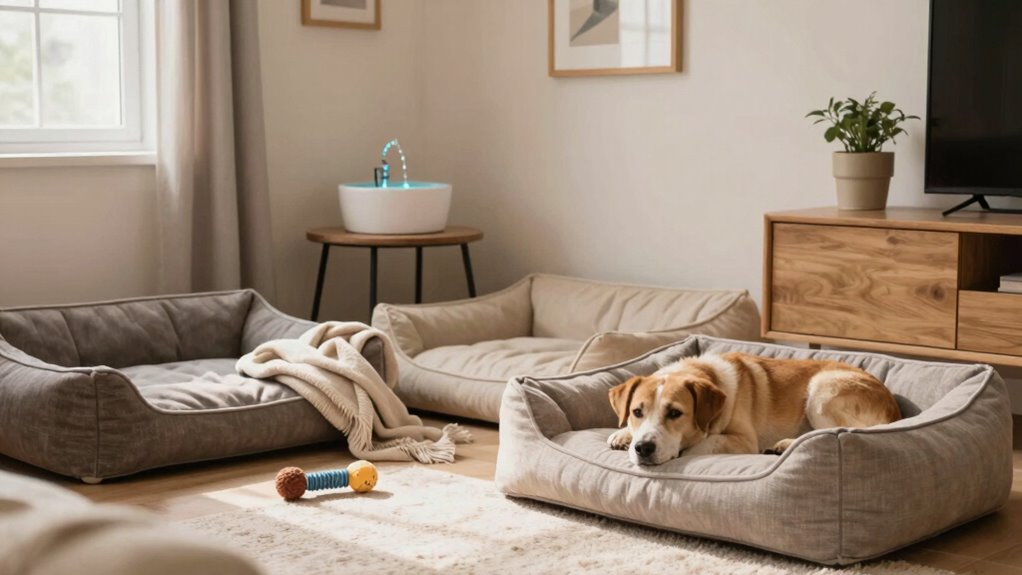

To set up a low-stress home for your rescue dog, create a predictable routine and a calm environment. Use soft lighting, soothing sounds, and a secure crate as a safe space. Gradually expose your dog to new sights, sounds, and smells with positive reinforcement, treats, and praise. Build trust and confidence slowly, and avoid overwhelming your dog. By following these steps, you’ll help your dog feel safe and comfortable. Keep exploring for more tips to ease your dog’s adaptation.
Listen free for 30 days with Audible
Thousands of audiobooks and originals — cancel anytime.
As an affiliate, we earn on qualifying purchases.
Key Takeaways
- Create a consistent routine with regular feeding, walks, and quiet time to provide predictability and reduce anxiety.
- Designate a quiet, comfortable space with soft lighting and soothing sounds as a safe retreat.
- Gradually introduce new stimuli and social interactions using positive reinforcement to build confidence.
- Utilize crate training as a secure sanctuary, encouraging voluntary use with treats and praise.
- Incorporate calming elements, such as soft bedding and gentle routines, to foster trust and relaxation.
Bringing a rescue dog into your home can be a rewarding experience, but it also requires creating a calm environment that helps them feel safe and secure. One of the first steps you should take is focusing on dog socialization. Many rescue dogs have had limited interactions with people or other animals, so gentle, positive exposure is essential. Start by introducing your dog to new sights, sounds, and smells gradually. Use treats and praise to reinforce calm behavior during these encounters. Socialization isn’t about overwhelming your dog but about building their confidence step by step. As they become more comfortable, you can introduce them to other pets and familiar humans, always monitoring their reactions. This process helps prevent fear or aggression and encourages healthy, happy interactions. Incorporating positive reinforcement techniques can significantly enhance your dog’s comfort and trust during this process.
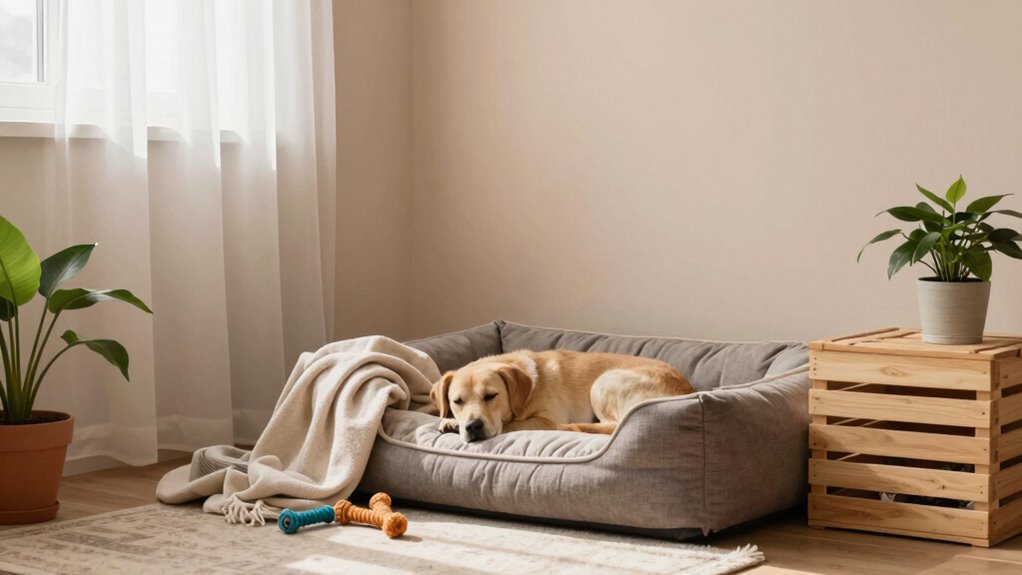
Another fundamental aspect of establishing a low-stress home is crate training. A crate becomes a safe haven for your dog—a place where they can retreat and relax. Begin by placing the crate in a quiet corner of your home, making it inviting with soft bedding and some toys. Don’t force your dog into the crate; instead, encourage voluntary entry by offering treats or toys inside. Keep initial sessions short and positive, gradually increasing the duration as your dog becomes more comfortable. Consistency is key—use the same cues or commands when encouraging your dog to enter or exit the crate. Over time, your dog will associate the crate with safety and calmness, which can be especially helpful during stressful situations, like vet visits or thunderstorms. Building a sense of trust and security is essential for helping your rescue dog adapt and feel more at ease. Additionally, maintaining a predictable routine helps your dog feel more in control and less anxious in unfamiliar situations. Creating a calming environment by incorporating soft lighting and soothing sounds can also support your dog’s comfort and relaxation.
As an affiliate, we earn on qualifying purchases.
Frequently Asked Questions
How Long Does It Typically Take for a Rescue Dog to Adjust?
It typically takes a rescue dog a few weeks to adjust, but it varies based on their past experiences. During this time, use calming techniques like gentle voice and secure space to help them feel safe. Incorporate socialization tips gradually, introducing new people and environments slowly. Patience and consistency are key; your dog will settle in when they feel secure and loved, usually within one to two months.
Should I Crate Train My Rescue Dog?
Did you know that 70% of rescue dogs benefit from crate training? Yes, you should crate train your rescue dog, as it provides a safe space and helps manage behavior. When doing so, focus on a consistent feeding schedule and choose toys that promote calmness. This approach reduces stress, encourages independence, and makes your dog feel secure in their new environment.
What Are Signs of Stress in a Rescue Dog?
You might notice puppy anxiety signs like trembling, pacing, or excessive barking, which indicate stress. Social withdrawal is another key sign, where your rescue dog avoids eye contact, hides, or isolates themselves from family members. Watch for changes in appetite or unusual behaviors, as these also signal distress. Recognizing these signs early helps you address their needs, creating a calmer environment and easing your dog’s adaptation into your home.
How Can I Help My Dog Build Confidence?
Think of your dog like a hero in training—building confidence takes patience. Start with puppy socialization and gentle exposure to new people, sounds, and environments. Use anxiety reduction techniques like calming voice, treats, and consistent routines. Celebrate small victories to boost their self-assurance. Over time, your dog will feel more secure, brave, and ready to face new adventures, just like a hero overcoming challenges with your support.
Is It Necessary to Change My Home Environment Completely?
You don’t need to change your home decor completely; instead, create a calm environment by minimizing loud noises and sudden movements. Incorporate soothing colors and comfortable spots for your dog to relax. Use socialization techniques gradually, exposing your dog to new sights and sounds at their pace. Small adjustments, like a designated quiet area, help your rescue dog feel safe without overhauling your entire home.
Conclusion
Creating a calm, welcoming home eases your rescue dog’s adjustment and fosters trust. Remember, nearly 70% of adopted dogs show signs of stress or anxiety initially, so your patience makes a huge difference. By providing a quiet space, consistent routines, and gentle reassurance, you help your furry friend feel safe and loved. Your efforts not only reduce their stress but also set the stage for a happy, healthy bond that lasts a lifetime.
NFL season / tailgating Picks
team gear
As an affiliate, we earn on qualifying purchases.