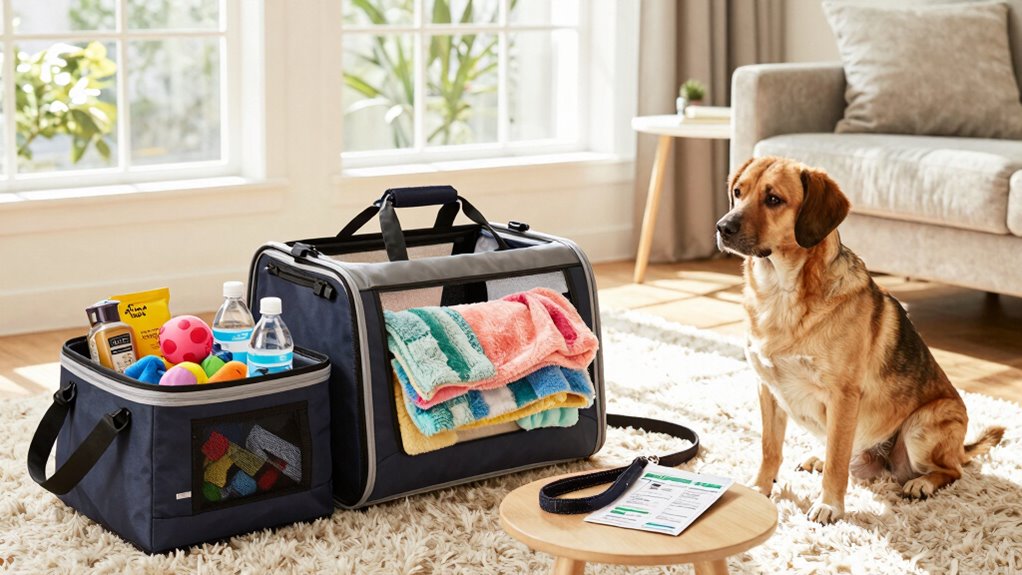

To guarantee a chaos-free pet travel day, keep their routine as consistent as possible and pack familiar items like toys, bedding, and treats. Prepare all documents ahead of time and confirm carrier safety standards. Maintain a calm attitude and use calming techniques to reduce anxiety. Offer water and light snacks during transit, and monitor your pet’s behavior closely. For detailed steps on making the day smooth and stress-free, keep exploring these tips.
Key Takeaways
- Maintain a consistent routine and feed a light meal earlier to reduce pet anxiety on travel day.
- Prepare all documents and carrier labels in advance for quick, organized access.
- Use familiar scents, toys, and bedding to comfort your pet during transit.
- Keep the pet securely in a well-ventilated carrier, avoiding unnecessary opening during travel.
- Stay calm yourself to help minimize your pet’s stress and ensure smooth handling throughout.
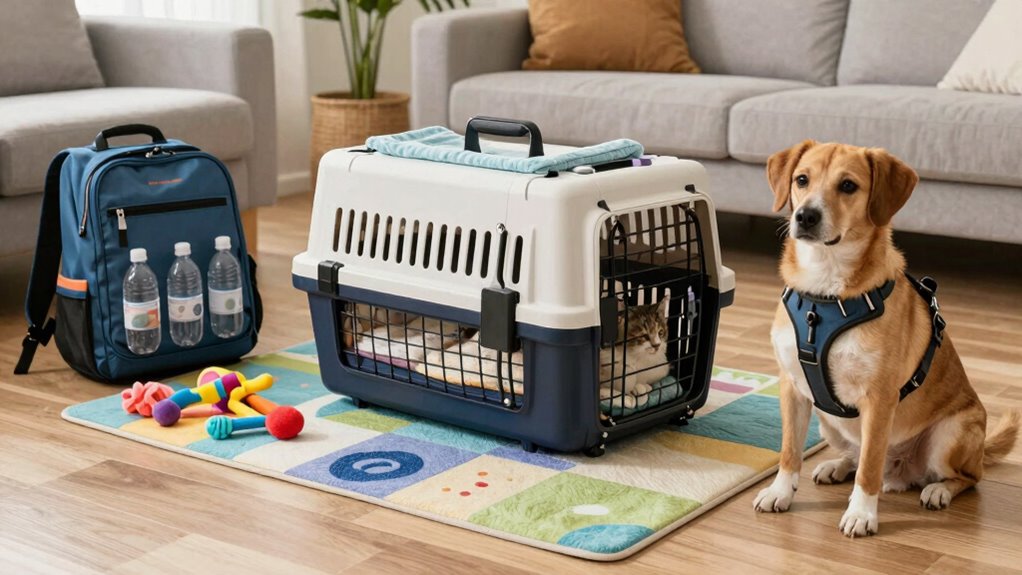
Are you preparing for a trip and wondering how to make travel day smooth for your pet? The key is planning ahead and staying organized. Starting with pet feeding routines, you want to keep your pet’s schedule as consistent as possible. Avoid feeding your pet right before departure—aim for a light meal a few hours earlier, so they aren’t hungry or uncomfortable during travel. If your pet usually eats twice a day, stick to this routine leading up to the trip, but consider skipping the last meal on the day of travel to prevent nausea or accidents. Bring familiar food, treats, and water to keep your pet comfortable, and remember to pack extra in case delays happen. Having their usual food helps prevent stress and digestive issues, making the journey easier for everyone. Ensuring your pet’s comfort through travel documentation is also essential to avoid last-minute issues at check-in or border crossings. Additionally, understanding proper pet handling during transit can further reduce stress for your animal. A calm environment during travel can significantly ease your pet’s anxiety, especially if you incorporate calming techniques or familiar scents. Being aware of pet relaxation methods can help you implement effective calming strategies during transit. Also, familiarizing yourself with safe travel practices can help you make better decisions during the trip.
Next, focus on travel documentation preparation. Double-check that all necessary paperwork is in order before departure. This includes updated vaccination records, health certificates, and any permits required for your destination. Keep these documents in a designated folder or digital file that’s easy to access during check-ins. If you’re flying, confirm airline policies for pet travel and ensure your pet’s carrier meets all size and safety requirements. Label the carrier clearly with your contact information and your pet’s name. Carry a recent photo of your pet in case they get lost, and consider having a list of emergency contacts, including your veterinarian. Preparing these documents early prevents last-minute stress and guarantees a smoother check-in process at airports or border crossings.
On the day of travel, maintain a calm environment as much as possible. Keep your pet relaxed with familiar toys or bedding in their carrier. Follow a consistent routine—take them for a walk or bathroom break before leaving, just like you normally would. During transit, stay calm yourself; animals pick up on your stress, which can make them anxious. Keep your pet secure in their carrier, and avoid opening it unnecessarily to prevent escapes. Make sure they have access to water and a small amount of food if the trip is long. Throughout the journey, monitor their behavior and comfort, adjusting as needed. Being aware of common travel stress signs can help you respond promptly and keep your pet as comfortable as possible during the trip.
pet travel carrier with safety standards
As an affiliate, we earn on qualifying purchases.
As an affiliate, we earn on qualifying purchases.
Frequently Asked Questions
How Early Should I Arrive at the Airport With My Pet?
You should arrive at the airport at least two hours before your flight for domestic trips, and three hours for international ones. This gives you ample time to handle pet travel documentation, confirm airline pet policies, and go through security. Check with your airline beforehand, as some may require earlier check-ins. Being early helps reduce stress and guarantees you’re prepared for any unexpected questions or procedures related to traveling with your pet.
What Are the Best Calming Techniques for Anxious Pets During Travel?
Think of calming your pet during travel as guiding a tiny boat through choppy waters. You can soothe pet anxiety with calming remedies like pheromone sprays or calming treats, which act as gentle anchors. Soft music, familiar blankets, and a calm voice help reassure your pet. These techniques help ease their nerves, making travel smoother for both of you. Stay patient and attentive, and your pet will feel more secure.
Can I Feed My Pet Right Before Traveling?
You shouldn’t feed your pet right before traveling, as it can cause discomfort or nausea during transit. Instead, make sure they stay hydrated with plenty of pet hydration options, and give them a light meal a few hours beforehand. Also, have all travel documentation ready to avoid delays. This way, your pet remains comfortable, and the journey stays smooth and stress-free.
What Should I Do if My Pet Gets Car Sick?
What if your pet gets car sick? First, make certain your pet stays well-hydrated; offer small amounts of water during breaks to prevent dehydration. To improve travel comfort, consider using a calming crate or seat, and keep the car cool and quiet. Have some favorite toys or blankets nearby to offer reassurance. Have you tried natural remedies like ginger or calming sprays? These can help ease nausea and make the trip smoother.
Are There Specific Travel Accessories Recommended for Different Pet Sizes?
Yes, there are specific pet travel gear tailored for different pet sizes. For small pets, use secure carriers with ventilation and padding for comfort. Medium-sized pets benefit from crash-tested travel crates or harnesses that attach to seat belts. Large pets need sturdy, well-ventilated crates or travel kennels that provide ample space and stability. Always consider pet size considerations when choosing gear to guarantee safety, comfort, and compliance with travel regulations.
Conclusion
As you prepare your pet for a smooth travel day, picture a calm and cozy scene—your pet nestled comfortably in their carrier, a soft blanket wrapped around them, while you gently check everything off your list. With each step, you’re creating a safe haven amid the hustle. When the journey begins, both of you can breathe easy, knowing your careful planning has turned potential chaos into a peaceful adventure, ready to be enjoyed together.