
TL;DR
A report in Veterinary Practice News describes how advanced imaging, including PET/CT, and artificial intelligence can support veterinary care but do not replace clinical judgment. Two cases at Red Bank Veterinary Hospital show the technology prompting treatment in one dog and supporting a decision to avoid invasive procedures in another. The report says costs, risks, patient welfare and family preferences remain part of care decisions.
A report in Veterinary Practice News describes how advanced imaging and artificial intelligence are expanding the information available to veterinary teams, while arguing that clinical judgment and communication with pet owners remain central to decisions about care. Veterinarian Peter S. Chapman illustrates the point with two dogs at Red Bank Veterinary Hospital: PET/CT helped identify a tumor in one and supported avoiding a high-risk biopsy and surgery for the other.

Get pet supplies delivered free with Prime
- Fast, free delivery on millions of items
- Prime Video, Amazon Music and more included
- Member-only deals all year
PET/CT combines computed tomography, which shows anatomy, with positron emission tomography, which measures activity using a radiopharmaceutical tracer. Chapman says the combination can help characterize abnormalities and may be used in oncology, as well as investigations such as unexplained fever or lameness. Findings still may require additional tests: imaging alone, he cautions, will rarely establish a diagnosis with certainty, and incidental findings can lead to further testing that may not be necessary.
In one case, a dog received PET/CT for an unrelated reason, and the scan revealed a small, previously unrecognized lesion beneath the skin. An excisional biopsy identified it as a mast cell tumor, according to the report. In a second case, PET/CT was used to assess an atypical cystic liver lesion. The absence of tracer uptake suggested a lower likelihood of aggressive disease, Chapman wrote, and the dog avoided a high-risk liver biopsy and surgery. The lesion remained stable on subsequent ultrasound examinations.
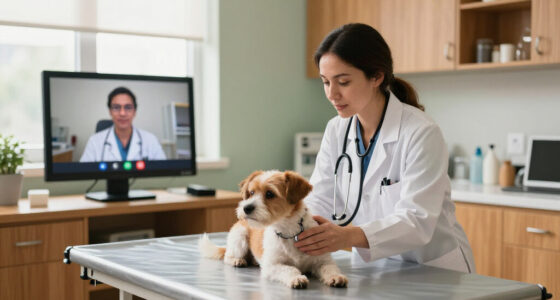
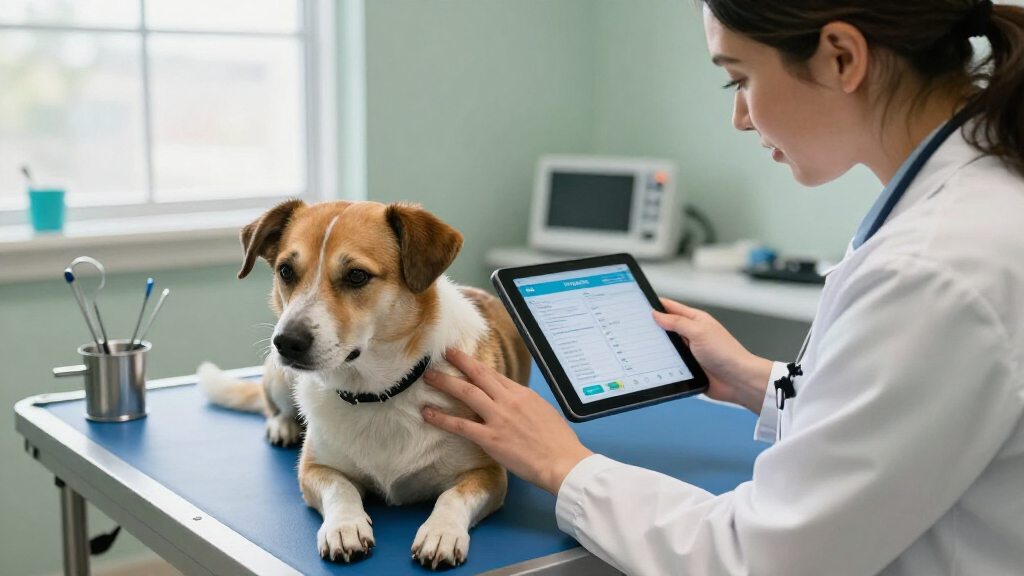
The report also addresses AI tools used for diagnostic support, medical documentation, client communication and administrative work. These systems can help organize information and reduce paperwork, Chapman says, but their outputs can be incomplete, biased or wrong. Veterinary professionals must check them against the full clinical picture, with practices setting rules for privacy, oversight and appropriate use.
How Technology Shapes Care Choices
The examples show that better diagnostics can influence care in opposite directions: they may reveal a problem that warrants intervention, or provide evidence supporting a less invasive approach. That matters to pets and their families because further testing and treatment can carry financial costs, anesthesia risks, travel and other burdens.
Chapman’s central point is that a more advanced test is not automatically a better choice. Veterinary teams should discuss whether results are likely to change a plan, clarify prognosis or quality of life, and justify the burdens involved. Decisions also depend on each animal’s age, temperament and likely treatment burden, as well as a family’s goals and circumstances. Technology can inform those discussions, but should not dictate the outcome.
Products Worth Considering

Fi Series 3+ Smart GPS Dog Collar and Pet Health Tracker, Gray, Large

Dyson Ball Animal 2 Upright Corded Vacuum Cleaner, Fuchsia

PetSafe Electronic Pet Door with Collar Key Sensor, Large
As an affiliate, we earn on qualifying purchases.
PET/CT and AI in Veterinary Practice
Chapman places these cases within a broader expansion of veterinary diagnostics over roughly the past two decades. Advanced laboratory tests and imaging can provide more detail about anatomy, biological activity, disease progression and response to treatment. Earlier detection may create more treatment options, while improved staging can help guide care and potentially avoid more invasive procedures. The report does not say that earlier detection will benefit every patient; the value depends on what the results show and whether they change management.
The article also cites a 2026 study of 673 veterinary workers: 72.3 percent said AI would change the profession, while 90.5 percent reported little or no formal AI training. The figures indicate reported expectations and training levels among those surveyed; the source does not provide further study details in the supplied material. Chapman argues that responsible adoption requires training and human verification, alongside clear policies for data privacy and use.
Limits of the Evidence and AI
The report describes two clinical cases, not a controlled study measuring PET/CT’s accuracy or its effect on outcomes across a larger group of animals. It does not establish how often the technology finds tumors early, prevents procedures or changes treatment. The liver lesion’s stable follow-up is reported, but the source does not give the length of monitoring.
It is also unclear from the supplied material how widely PET/CT is available in veterinary practice, what it costs, or which patients are most likely to benefit. The 2026 survey figures are presented without details such as the respondents’ roles, methods or sampling limits. Chapman’s examples and cautions should not be read as proof that a particular scan or AI system will produce the same result for another patient.
Questions for the Next Care Decision
The report does not announce a new program, policy or scheduled milestone. Its practical next step is case-by-case discussion before testing: veterinary teams and owners can ask whether results may change treatment, what the test’s limits are, and whether likely benefits justify cost, anesthesia, travel and other burdens.
For practices adopting AI, Chapman calls for staff training, clear privacy and use policies, human oversight and verification of system outputs. The source gives no timeline for those steps or for broader changes in practice. For individual patients, follow-up and interpretation will depend on the findings, the animal’s condition and the care plan agreed by the veterinary team and family.
Key Questions
What does PET/CT show in veterinary medicine?
PET/CT combines anatomical imaging with information about metabolic activity. CT shows the location and features of an abnormality, while PET uses a radiopharmaceutical tracer to indicate activity. The report says this can help characterize lesions, but imaging findings may need additional testing to establish a diagnosis.
What happened in the two cases in the report?
One dog’s scan, performed for an unrelated reason, revealed a lesion later diagnosed by excisional biopsy as a mast cell tumor. In another dog, lack of tracer uptake in a liver lesion supported avoiding a high-risk biopsy and surgery; subsequent ultrasound examinations found the lesion stable, according to Chapman.
Does the report say advanced imaging is right for every pet?
No. Chapman says a test should be considered in light of whether it is likely to change care, clarify prognosis or quality of life, and justify burdens such as cost, anesthesia and travel. The source does not provide a universal recommendation for patients.
Can AI make veterinary decisions on its own?
The report presents AI as a support tool, not a replacement for professional judgment. Chapman cautions that its outputs can be incomplete, biased or incorrect and says veterinary teams need to review them within the full clinical picture.
What does the report say about veterinary workers’ AI training?
It cites a 2026 study of 673 veterinary workers in which 90.5 percent reported little or no formal AI training. The supplied source does not include further details about the study’s methods or respondents.
Source: veterinarypracticenews.com