TL;DR

Get pet supplies delivered free with Prime
- Fast, free delivery on millions of items
- Prime Video, Amazon Music and more included
- Member-only deals all year
Veterinary dentist John R. Lewis says a lesion beneath a cat’s tongue should not automatically be assumed to be squamous cell carcinoma. His report describes other possible causes, including salivary ranulas, eosinophilic granulomas, foreign bodies and chronic irritation, and emphasizes biopsy for a definitive diagnosis.
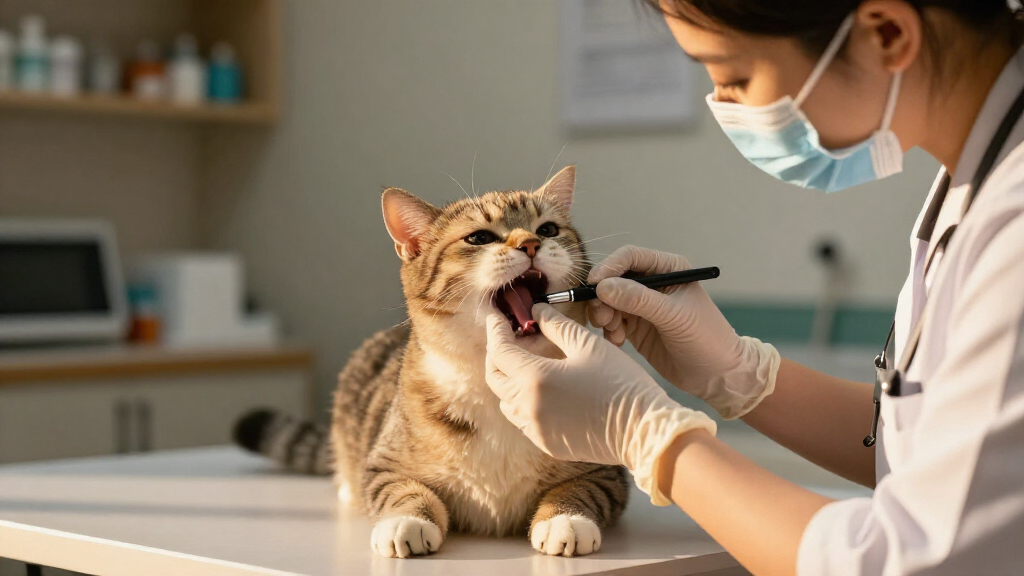
Veterinary dentist John R. Lewis is urging clinicians to consider causes beyond squamous cell carcinoma when evaluating a lesion beneath a cat’s tongue, describing examples that include ranulas, eosinophilic granulomas and foreign-body irritation. His report in Veterinary Practice News says the lesions can look similar on examination, making histopathology important when a definitive diagnosis is needed.
Lewis notes that in an older cat with bloody drool, reduced appetite and difficulty swallowing, sublingual or lingual squamous cell carcinoma may be the most likely diagnosis. But he cautions that appearance alone can mislead: eosinophilic granulomas may be smooth and resemble a ranula, or firm, ulcerated and verrucous, resembling cancer.
A ranula is a swelling caused by abnormal saliva accumulation after damage to a salivary gland or duct. It may occur on one or both sides beneath the tongue and is not usually inflamed, although a large swelling can be injured by contact with teeth. Lewis says some resolve without treatment, while surgery to remove the mandibular and sublingual glands is often needed.
In one case described by Lewis and colleagues, a one-year-old Ragdoll had a firm, ulcerated sublingual swelling and a history of a swollen lower lip. Biopsy identified eosinophilic granulomatous glossitis. The lesion shrank substantially within a week of steroid treatment and was nearly resolved after two weeks. The clinicians recommended consultation with a veterinary dermatologist to investigate possible allergic causes.
Why Similar-Looking Lesions Need Testing
The clinical stakes are high because a lesion that looks like cancer may have a different cause and treatment. Conversely, assuming a swelling is benign based only on its appearance could delay appropriate care. Lewis’s examples show why veterinarians may need to combine the cat’s age, symptoms, examination findings and tissue biopsy rather than rely on visual assessment alone.
The report is a clinical reminder, not a study establishing how common each diagnosis is or comparing treatments. For cat owners, persistent swelling, bleeding, drooling, trouble eating or difficulty swallowing warrants veterinary assessment. These signs do not by themselves identify the cause.
Products Worth Considering

PETLIBRO Automatic Cat Feeder for Two Cats with AI Recognition Camera

PETLIBRO Granary 2 Vision Duo Automatic Cat Feeder for Two Cats

PETLIBRO RFID Automatic Cat Feeder with Wi-Fi and Diet Tracking
As an affiliate, we earn on qualifying purchases.
Conditions Behind Tongue-Area Swelling
The salivary ducts open at small structures called caruncles beneath the tongue. Damage to those openings, ducts or glands can allow saliva to escape and collect, forming a ranula. Lewis also describes postoperative swelling after salivary ducts are cut and tied during oral tumor surgery; this can resemble a ranula but, in the cases he refers to, a “pseudoranula” resolved within days.
Other possibilities include eosinophilic disease, which can affect the lips or sublingual tissues, and a linear foreign body caught around the lingual frenulum. The latter can cause swelling and redness, and Lewis says it is seen most often in young cats, though it can occur in dogs. Chronic rubbing, including irritation from a rough tooth surface associated with tooth resorption, may produce granulation tissue.
What Examination Cannot Establish
The report does not give prevalence estimates for these conditions or say how accurately outward appearance distinguishes among them. The 1978 experimental study cited by Lewis found no ranulas in dogs after surgical injury to a salivary duct or gland, but he describes it as a small study and says he has seen a postoperative ranula in a clinical case. The likelihood of that complication therefore remains unclear from the material provided.
In an individual cat, the cause, the need for surgery and the appropriate treatment depend on veterinary examination and diagnostic findings. Lewis’s case report does not establish that steroid treatment is suitable for every sublingual lesion.
Diagnosis Guides Follow-Up Care
Veterinarians may recommend sampling a lesion for histopathology when examination cannot distinguish among cancer, inflammatory disease and other causes. The findings can guide treatment, which may range from monitoring or addressing irritation to surgery for a ranula. Lewis also recommends dermatology consultation when eosinophilic disease raises concern about an underlying allergic cause.
Owners should seek veterinary care for a new or persistent swelling beneath the tongue, particularly if it is accompanied by bleeding, drooling, reduced appetite or difficulty swallowing. The source does not set out a universal testing or treatment protocol; decisions depend on the individual animal and the diagnosis.
Key Questions
Does a lesion beneath a cat’s tongue mean it has cancer?
No. Squamous cell carcinoma is one possible cause, but Lewis also lists ranulas, eosinophilic granulomas, foreign bodies and chronic irritation. A veterinarian must assess the lesion.
What is a ranula in a cat?
A ranula is a swelling beneath the tongue caused by saliva collecting after damage to a salivary gland or duct. Its appearance alone may not distinguish it from other lesions.
How can a veterinarian confirm the cause?
As described in Lewis’s report, histopathology of a biopsy can provide a definitive diagnosis in some cases. The veterinarian determines which examinations or tests are appropriate.
What symptoms should prompt a veterinary visit?
Arrange veterinary assessment for tongue-area swelling, bleeding, drooling, reduced appetite or difficulty swallowing. These signs have multiple possible causes and cannot diagnose a condition on their own.
Source: veterinarypracticenews.com