
TL;DR
A digital auscultation system developed for dogs combines a stethoscope attachment, an AI algorithm trained and validated on canine heart sounds, and a veterinary app. Its results are intended to support—not replace—veterinarians’ assessments; the supplied report does not establish how much the tool improves clinical outcomes.
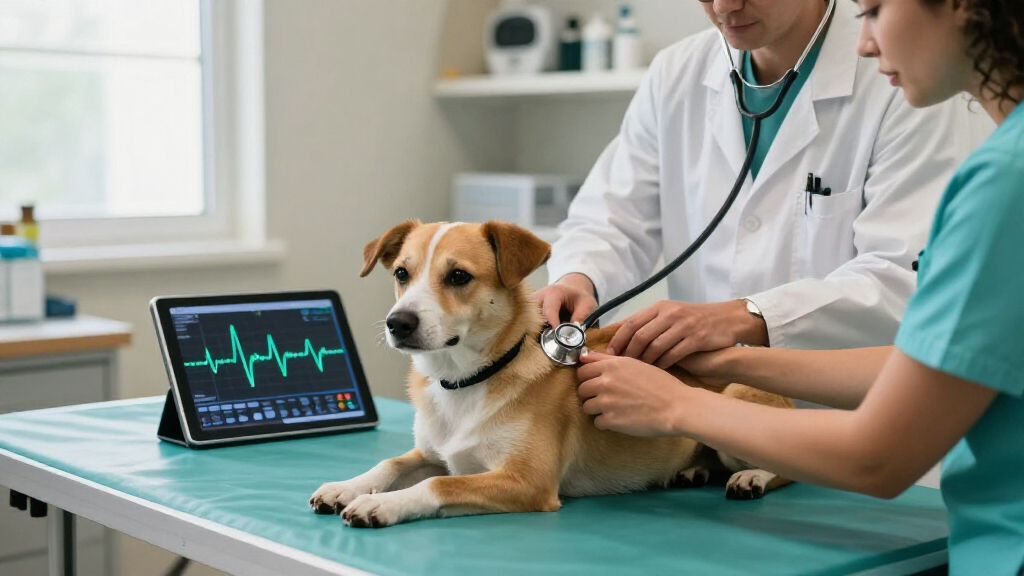
A canine-specific AI tool pairs a digital stethoscope attachment with software that analyzes recorded heart sounds, giving veterinarians another aid for detecting and grading heart murmurs in dogs. The system was developed with veterinary and industry collaborators and is intended to support clinical assessment, not replace it, according to a report by Veterinary Practice News.

Get pet supplies delivered free with Prime
- Fast, free delivery on millions of items
- Prime Video, Amazon Music and more included
- Member-only deals all year
The system has three parts: an attachment that connects to most single-tube acoustic stethoscopes, an AI algorithm trained and validated using thousands of canine heart-sound recordings, and a veterinary mobile app. The app displays AI-generated insights alongside recordings and visualizations, allowing clinicians to review the sound findings during their assessment.
Digital stethoscopes can record and amplify heart sounds, and some include noise-cancellation features. In the described workflow, the recording is sent to a connected mobile application or cloud platform for analysis. The resulting information can help clinicians decide whether further evaluation may be appropriate, but it does not itself establish a diagnosis or determine treatment.
The source report describes the tool as developed specifically for canine cardiac health, in contrast with many veterinary AI platforms and research studies that draw on human-medicine applications without veterinary-specific validation. It does not provide a product launch date, independent trial results, or comparative performance figures for this particular system.
Earlier Clues to Canine Heart Disease
A murmur can be an early sign of heart disease, including myxomatous mitral valve disease (MMVD), the most common acquired heart disease in dogs. MMVD is chronic and progressive. The report says that identifying affected dogs before heart failure develops may preserve the opportunity to consider guideline-directed treatment shown to prolong symptom-free survival for eligible patients.
But finding a murmur is not the same as determining the disease’s stage or whether treatment is warranted. The report describes stage B2 MMVD as involving both a murmur and evidence of sufficient heart enlargement, assessed through echocardiography and/or chest radiography. AI-supported sound analysis could help flag a finding for veterinary follow-up; the available source does not show that it can replace those diagnostic steps.
The potential relevance is practical as well as clinical. A recording and visual display may give a veterinarian additional information when a subtle sound is hard to hear, and may help explain findings to a pet owner. Whether this produces earlier diagnoses or better outcomes in routine practice remains to be established.
Products Worth Considering

Roborock Qrevo 2 Pro Robot Vacuum and Mop

PetSafe ScoopFree OpenSky Self-Cleaning Litter Box

Fi Series 3+ Smart GPS Dog Collar and Pet Health Tracker, Gray, Large
As an affiliate, we earn on qualifying purchases.
Why Murmurs Can Be Missed
Listening to a dog’s heart is a routine part of veterinary care, from early puppy visits onward. Auscultation is used to screen for congenital and acquired heart disease, but murmur detection can vary with the clinician’s experience, the time available, the dog’s behavior, background noise, hearing, and the stethoscope being used. A murmur may also be quieter away from its point of greatest intensity.
The report cites a study in which primary-care veterinarians detected one of 97 soft murmurs identified by a veterinary cardiology specialist in puppies. A separate study of 57 dogs with mild MMVD found interobserver agreement for murmur detection ranging from 63% to 88%, with more experienced veterinarians generally identifying murmurs more consistently. These findings describe particular studies; they are not estimates of the performance of the new AI tool.
Digital recording is one response to these limitations. The report notes that AI use is already common among veterinary professionals: a 2024 survey found 69.5% used AI tools daily or weekly. That overall figure does not indicate how many use cardiac tools or establish their effectiveness. The report identifies veterinary cardiology as an area where species-specific validation has received recent attention.
Performance in Everyday Practice
The supplied report does not state the system’s sensitivity, specificity, false-positive rate, or performance across different breeds, ages, clinics, and recording conditions. It also does not describe a controlled comparison showing that the tool detects more clinically significant murmurs than veterinarians using conventional auscultation.
It remains unclear how often AI results would lead to additional imaging or other tests, whether they change treatment decisions, and whether use of the system improves patient outcomes. The report does not provide independent evaluation details, pricing, availability, or information about how the tool handles recordings that are unclear or incomplete. Veterinarians must interpret any output in the context of the dog’s history and examination.
Validation and Clinical Follow-Up
The next evidence readers and veterinary teams would need includes published performance data, independent testing, and studies of the tool in routine primary-care settings. Those assessments could clarify whether it reliably flags subtle murmurs, how often results prompt follow-up, and whether the workflow benefits dogs without creating unnecessary testing.
For now, the development adds a canine-trained analysis layer to digital heart-sound recording. A veterinarian’s examination remains central, and owners should ask their veterinarian what a murmur or AI-generated result means for their individual dog. The report does not name a forthcoming study, regulatory milestone, or release date.
Key Questions
What does the canine AI tool do?
It analyzes heart sounds recorded with a digital stethoscope attachment and displays AI-generated insights and recordings in a veterinary app. It is described as a tool to support veterinary assessment.
Does an AI result diagnose heart disease?
The report presents the system as decision support, not a stand-alone diagnosis. Veterinarians interpret findings alongside the dog’s examination and may consider additional tests, such as imaging.
Why can a heart murmur be difficult to detect?
Soft murmurs may be affected by clinician experience, examination time, background noise, the dog’s behavior, hearing, stethoscope performance, and where the chest is listened to.
Has the new system been shown to improve dog health outcomes?
The supplied report does not provide outcome data or comparative performance figures for this system. Its claimed role is to support earlier detection and consideration of further diagnostics.
What should an owner do if a murmur is reported?
Discuss the finding and any recommended follow-up with a veterinarian. A murmur alone does not establish the stage of heart disease or determine whether treatment is needed.
Source: veterinarypracticenews.com