

This checklist is for anyone setting up or refreshing a small pet habitat and comparing the pieces that make daily care more manageable. It covers cages, exercise wheels, hideouts, litter trays, dust baths, and a reptile heat lamp, with product names supplied for some sections and general selection guidance for others.

Get pet supplies delivered free with Prime
- Fast, free delivery on millions of items
- Prime Video, Amazon Music and more included
- Member-only deals all year
Each section focuses on one habitat slot: why it matters, what to check before choosing, and where a named pick may fit. Advice-only sections stay focused on the item’s role and the animal’s needs, without a specific product recommendation.
Use the checklist to measure your available space, confirm species compatibility, and compare each item with your care setup. Check dimensions and included features against the animal and enclosure before buying, and treat the product name as a starting point for your own fit check.
Small Animal Cages
A cage shapes how you arrange the rest of a small pet’s habitat, so start with the animal’s needs and the space available in your home. The PawHut Two-Story Small Animal Cage with Shelf and Wheels, 39″ x 20.5″ names a two-story design, a shelf, wheels, and listed dimensions. Those details give you a concrete starting point for checking placement and layout.
A common mistake is choosing by the feature list alone. Check the cage’s full assembled footprint, including any parts that project outward, and confirm that its levels and openings suit the intended animal. Make sure you can reach the interior for routine cleaning and arrange food, water, resting areas, and enrichment without blocking access. The listed dimensions do not, by themselves, establish suitability for every small animal.
Before deciding, verify what is included and how the cage is meant to be assembled. Consider whether the wheels and shelf work for your room and care routine, and compare the usable interior with your habitat plan. Measure first, then confirm species fit and access details using the product information.
What to look for:
- Confirm the assembled footprint fits the planned location.
- Check interior dimensions and usable floor area.
- Verify that levels, openings, and access suit the intended animal.
- Review what is included and how the cage is assembled.
- Consider whether wheels and the shelf fit your room and cleaning routine.
PawHut Two-Story Small Animal Cage with Shelf and Wheels, 39" x 20.5" x 36.5"
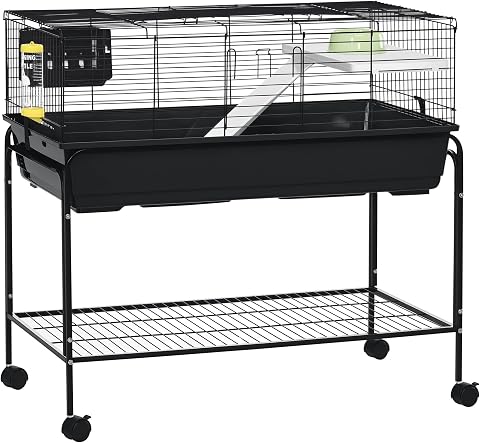
This versatile small animal cage features a two-in-one design that can be used on a stand or placed on the floor, with wheels for easy mobility. It includes a shelf for storage, an elevated platform, and accessories like a food dish, hay feeder, and water bottle, providing a comfortable habitat for small pets.
Pros:
- Versatile 2-in-1 design for stand or floor use
- Wheels for easy mobility and repositioning
- Includes storage shelf and pet accessories
Cons:
- Assembly required
- Limited information on durability
- Potentially large size may require ample space
Best for: Caregivers comparing a cage with a shelf and wheels
Not ideal for: Anyone who has not confirmed the animal and space fit
Bottom line: Check the usable interior and assembled dimensions against your habitat plan before choosing this cage.
Hamster Wheels
An exercise wheel is a habitat item that should be selected for the hamster it will serve and the enclosure where it will go. The named pick is the Niteangel Super-Silent 10-Inch Hamster Exercise Wheel; its product name identifies a 10-inch wheel and describes it as super-silent. Confirm those details against the product listing and your setup before making a decision.
One common mistake is assuming a wheel is suitable just because its diameter is stated. Check whether the running surface and overall design are appropriate for your hamster, and make sure the wheel can sit securely without crowding other habitat essentials. Consider how it will be cleaned and whether its placement leaves enough room for the rest of the enclosure layout. The product name alone does not establish fit for every hamster or habitat.
Think about noise in the context of where the enclosure is kept, but do not let that label replace a fit and stability check. Review the wheel’s dimensions, assembly details, and care instructions, then compare them with your available enclosure space and the animal’s needs. A deliberate fit check helps keep the choice grounded in your own setup.
What to look for:
- Confirm the wheel dimensions and running surface in the product details.
- Check suitability for the hamster that will use it.
- Make sure it can be placed securely in the enclosure.
- Leave room for other habitat essentials.
- Review cleaning and assembly instructions.
Niteangel Super-Silent 10-Inch Hamster Exercise Wheel

This hamster wheel has dual ball bearings for quiet running and a wide track designed to let small animals exercise without bending their backs. Its height is adjustable, and the solid acrylic base is suitable for cages, terrariums, glass tanks, or platforms.
Pros:
- Dual ball bearings are designed for quiet operation
- Wide running track is designed to reduce back bending
- Adjustable height accommodates different bedding levels
- Solid base works in cages, terrariums, and glass tanks
Cons:
- Hand wash only
- No warranty
Best for: Hamster caregivers checking a wheel against their enclosure
Not ideal for: Anyone relying on the product name alone to confirm fit
Bottom line: Verify the wheel’s dimensions, stability, and suitability for your hamster before placing it in the habitat.
Guinea Pig Hideouts
A hideout gives a guinea pig a designated place to retreat within its habitat, so consider how the item fits into the enclosure and your cleaning routine. The supplied pick is Guinea Pig Cage DIY Small Animal Playpen with Waterproof Liner – Expan. Its name describes a playpen with a waterproof liner, but does not establish exactly what components or dimensions are included.
A common buying mistake is treating a playpen as interchangeable with a hideout. Check the listing carefully to understand the product’s intended use, what comes in the package, and whether it provides the sheltered space you want. Confirm the dimensions against the enclosure or planned play area, and look into how the liner is installed and cleaned. The word “waterproof” in a product name is not a substitute for reviewing care instructions or verifying construction details.
Plan the placement so the item works with the guinea pig’s other habitat essentials and leaves you room to reach in for routine care. Check dimensions and included parts before purchase, then decide whether this named item meets your specific need for a retreat, a play area, or both. Its title alone cannot confirm that it serves every setup.
What to look for:
- Clarify whether the product is intended as a hideout, playpen, or both.
- Check all dimensions against the enclosure or planned play area.
- Verify exactly which components are included.
- Review how the liner is installed and cleaned.
- Confirm the layout leaves access for routine care.
Guinea Pig Cage DIY Small Animal Playpen with Waterproof Liner – Expandable Meta

This modular playpen features a waterproof polyester liner that protects against chewing and simplifies cleaning. The hook‑connected panels are easily assembled and reconfigured, allowing you to create a spacious habitat for guinea pigs, rabbits, or other small pets.
Pros:
- Waterproof liner prevents chewing and makes cleaning easy
- Hook‑on panels allow quick assembly, disassembly, and reconfiguration
- Customizable layout works for various small pets and spaces
- Dedicated door opening provides smooth access for animals
Cons:
- Heavier at 10 lb, which can make relocation cumbersome
- Assembly may be time‑consuming for first‑time users
Best for: Caregivers considering a playpen-style item for a guinea pig setup
Not ideal for: Anyone seeking a confirmed hideout without checking the listing
Bottom line: Review the product’s intended use, dimensions, and included parts before treating it as a hideout.
Rabbit Litter Trays
A litter tray can help define a designated area in a rabbit’s habitat, so choose one that works with the animal’s space and your cleaning routine. This section has no specific product pick; focus on the tray’s dimensions, shape, and placement rather than assuming one style will suit every rabbit or enclosure.
A common mistake is selecting a tray without checking how it fits the available area. Measure the intended spot and consider whether the tray can be positioned without interfering with access to other habitat essentials. Review the construction and cleaning instructions, and check whether the entry and overall shape are practical for the rabbit that will use it. Do not infer fit from a general label or appearance alone.
Before buying, compare the tray’s stated dimensions with both the habitat and your planned placement. Think through how often you will need to reach it for cleaning and whether its position can be maintained as part of your routine. Fit and access are useful starting points for narrowing options; confirm all other suitability details from the product information and your care guidance.
What to look for:
- Measure the intended tray location before shopping.
- Compare tray dimensions with the rabbit’s habitat.
- Check entry shape and construction details.
- Review cleaning instructions and access for routine care.
- Confirm placement will not obstruct other habitat essentials.
Chinchilla Dust Baths
A dust bath is a habitat item to assess in light of your chinchilla’s care setup and the space available. There is no named product pick in this section, so use the checklist to identify the details that matter to your routine and verify product information before choosing.
A common mistake is selecting a bath based only on its appearance or a broad product label. Check its dimensions and construction, and consider where it will be placed during use and stored afterward. Review cleaning instructions and confirm that its shape and access work for your chinchilla and the surrounding habitat. Product titles alone cannot establish that an item is suitable for a particular animal or setup.
Compare candidate baths with the enclosure layout and the way you plan to manage the bathing area. Make sure the item can be accessed for care without disrupting other habitat essentials, and check the product details for what is included. If you are unsure about the appropriate bathing setup, rely on trusted chinchilla care guidance alongside the listing. A measured choice is easier to integrate into a consistent routine.
What to look for:
- Check dimensions against the available habitat space.
- Review the bath’s construction and access.
- Confirm cleaning and storage instructions.
- Consider placement alongside other habitat essentials.
- Use chinchilla care guidance to confirm suitability.
Reptile Heat Lamps
A heat lamp fixture is a setup component to evaluate alongside the reptile enclosure and the intended heating arrangement. The supplied pick is REPTI ZOO Reptile Light Fixture with Dimming Thermostat, 5.5-Inch Deep. Its name identifies a fixture, a dimming thermostat, and a listed depth; check the listing to confirm the full specifications and what is included.
A common mistake is assuming that a fixture suits an enclosure simply because it includes a thermostat. Confirm compatibility with the intended lamp and enclosure, and review the fixture’s dimensions, installation requirements, and operating instructions. Consider where it will sit relative to the enclosure and how you will monitor the setup. The product name alone does not establish suitability for every reptile or heating plan.
Before buying, compare the stated depth and full measurements with the enclosure and planned placement. Check the manufacturer’s guidance and use reptile-specific care guidance to determine whether the setup is appropriate for the animal. Review the dimming and thermostat details rather than relying on the feature name, and confirm that installation and use align with the instructions for the fixture and enclosure.
What to look for:
- Confirm compatibility with the intended lamp and enclosure.
- Check the fixture’s full dimensions and listed depth.
- Review installation and operating instructions.
- Verify what components are included.
- Use reptile-specific guidance to confirm the heating setup suits the animal.
REPTI ZOO Reptile Light Fixture with Dimming Thermostat, 5.5-Inch Deep Dome, 100

This 5.5-inch aluminum dome fixture includes a dimming thermostat for controlling reptile heat lamps up to 100 watts; the bulb is not included. Its temperature sensor adjusts heat within a 20–50°C (68–122°F) range, and the digital display shows the ambient and set temperatures.
Pros:
- Dimming thermostat with temperature sensor
- Digital display shows ambient and set temperatures
- Temperature can be displayed in Celsius or Fahrenheit
- Ventilation holes support heat dissipation
Cons:
- Heat lamp bulb is not included
- Not water resistant
Best for: Reptile keepers comparing a fixture with a dimming thermostat
Not ideal for: Anyone assuming the thermostat alone confirms suitability
Bottom line: Verify fixture, lamp, and enclosure compatibility and follow product and care guidance.
Build the setup in a needs-first order: first confirm the habitat and available space, then identify the items needed for the animal’s daily environment and care routine. Measure each placement, verify compatibility, and review product instructions before adding accessories. That approach helps keep the checklist focused on fit and practical use.
Take it one section at a time and use the look-for points to compare options against your own setup. A careful check of dimensions, included parts, and care details can make the decisions clearer. You can make steady progress by confirming one habitat need at a time.
Black Friday Picks

Breville Barista Express Espresso Machine with Built-In Grinder, Black Truffle
As an affiliate, we earn on qualifying purchases.