
If you notice your dog losing interest, showing signs of fatigue, or becoming irritable during fetch, it’s time to reset. Avoid overusing the ball launcher by setting limits, incorporating rest days, and mixing up toys and activities. Pay attention to their energy levels and stop before they become overwhelmed. By maintaining a balanced routine, you can prevent burnout and keep playtime fun. Keep going, and you’ll learn simple strategies to keep your dog safe and happy.
Key Takeaways
- Limit fetch sessions and incorporate regular breaks to prevent overexertion and mental fatigue.
- Rotate toys and vary activities to keep your dog mentally stimulated and reduce obsessive behavior.
- Adjust ball launcher settings for distance and speed based on your dog’s size and energy level.
- Recognize signs of fatigue or disinterest early and modify routines accordingly.
- Schedule rest days and include calming activities to promote recovery and emotional well-being.
Why Dogs Get Burned Out From Fetch Games
Have you ever noticed your dog suddenly lose interest in fetch despite loving the game? This often happens when dog boredom sets in, making the activity less stimulating. Repeating the same fetch routine with the same toy can cause your dog to become disinterested or even tired of the game altogether. Additionally, toy durability plays a big role; if the toy quickly wears out or breaks, your dog might lose confidence in it or get frustrated. When toys aren’t engaging or last long enough, your dog may stop retrieving altogether. Understanding these factors helps you recognize when your dog needs a break or a new, more durable toy. Keeping fetch fresh and ensuring toys are sturdy can prevent burnout and keep your pup excited to play. Recognizing the importance of reliable, well-researched information about pet behavior can help you choose the best strategies for keeping your dog engaged. Also, it’s beneficial to incorporate contingency plans for playtime to accommodate your dog’s changing energy levels and prevent overexertion. For example, varying the types of toys or introducing different play activities can help maintain your dog’s enthusiasm and prevent fetch fatigue. Being aware of dog psychology can further enhance your approach to maintaining their interest and well-being during play.
What Causes Fetch Obsession and Overexertion in Dogs

What drives a dog to become obsessed with fetch and push itself to the point of overexertion? Often, it’s a combination of natural prey drive and learned behavior, reinforced by their desire for play and attention. Sometimes, dogs aren’t given proper guidance on limits or rest, leading them to chase endlessly. Poor dog nutrition can also play a role, as lacking essential nutrients might increase their energy levels or decrease impulse control. Additionally, without veterinary advice on appropriate activity levels, you might unknowingly encourage overexertion. Dogs that receive excessive stimulation or don’t have a balanced diet may develop obsessive behaviors around fetch. Recognizing these factors helps you understand their drive and prevent burnout, ensuring they stay healthy and happy during play. Proper use of training tools and techniques can also help manage their energy levels effectively, and understanding dog exercise needs is crucial for a balanced routine. Moreover, understanding dog behavior signs can help you identify when your pet is reaching their physical or mental limits, preventing potential injuries or stress. Being aware of energy management strategies can further help in maintaining a healthy activity level and avoiding exhaustion.
How to Recognize Signs of Fetch Burnout in Your Dog

Noticing the early signs of fetch burnout is essential to prevent your dog from overexerting itself. Watch for behavioral cues such as reluctance to play, excessive panting, or lagging behind. These signs indicate your dog may be experiencing fatigue or stress, impacting their overall dog health. Pay attention to changes in energy levels, decreased enthusiasm, or signs of discomfort during play. Use this table to identify specific cues:
| Behavioral Cue | Physical Sign | Possible Cause |
|---|---|---|
| Lethargy | Heavy breathing | Overexertion or stress |
| Disinterest | Lagging behind | Burnout or boredom |
| Irritability | Avoidance of fetch | Overuse of energy |
Recognizing these signs helps you adjust play and prevent burnout, promoting your dog’s well-being. Being aware of dog health factors such as stress and fatigue ensures you can create a balanced play routine. Additionally, understanding breed traits can help tailor activities to suit your dog’s natural energy levels and capabilities. Properly monitoring your dog’s energy levels can significantly extend their enjoyment of playtime and reduce the risk of injury. For example, incorporating mental challenges into play can provide stimulation without overtaxing physical energy. Furthermore, consulting return policies for pet equipment can ensure smooth exchanges if necessary.
How to Set Limits and Keep Fetch Play Safe
To keep fetch play safe and enjoyable for your dog, setting clear limits is key. Establish a maximum number of throws per session to prevent overexertion and burnout. Use consistent training techniques to reinforce boundaries, like stopping play when your dog shows signs of fatigue or disinterest. Remember, fetch isn’t just about exercise; it also impacts your dog’s overall health, including dog nutrition, by preventing overfeeding or stress-related issues. Incorporate regular breaks and monitor your dog’s behavior to avoid obsession. Keep sessions short and positive, gradually increasing duration as your dog builds endurance. Consistency in training plays a vital role in maintaining boundaries and ensuring your dog’s well-being. By setting these limits, you help maintain your dog’s love for play while safeguarding their physical and mental well‑being. Additionally, understanding the importance of consistent storytelling in training can enhance your communication and reinforce boundaries effectively. Recognizing signs of mental exhaustion can help you adjust playtime before burnout occurs, especially when considering dog energy levels and their impact on overall health. Engaging in mindful play also promotes emotional well-being, helping your dog stay happy and balanced during activity.
Tips for Rotating Toys and Activities to Prevent Overuse

Rotating your dog’s toys and activities is essential to prevent overuse and keep playtime exciting. Toy rotation helps maintain your dog’s interest and reduces the risk of burnout from repetitive fetch routines. By varying activities, you can keep your pup engaged and prevent boredom. Incorporating variety in play routines can also support your dog’s mental stimulation and overall well-being. Consider these tips for effective activity variation:
Rotating toys and activities keeps your dog engaged and prevents boredom.
- Swap out toys weekly to keep things fresh
- Introduce new types of toys, like puzzle or plush options
- Mix fetch with other games, such as tug or hide-and-seek
- Use different play locations to stimulate your dog’s senses
- Utilizing trusted precious metals IRA providers can help finance future activities and provide peace of mind regarding your investments
- Understanding the importance of existential themes can encourage you to explore new ways to mentally challenge your dog through innovative play ideas
- Exploring electric bike conversion kits can open up new outdoor adventures for you and your dog, offering fresh environments for play and exercise
- Incorporating interactive toys can further enhance your dog’s mental engagement and prevent monotony
This approach ensures your dog stays enthusiastic about play, minimizes overuse, and promotes a healthy, balanced routine. Remember, a variety of toys and activities keeps your dog mentally and physically stimulated.
How to Adjust Your Ball Launcher Settings to Reduce Overexertion

Adjusting your ball launcher settings is key to preventing overexertion and keeping play safe for your dog. Start by tweaking the launch distance and speed based on your dog’s size and energy level. Use ball launcher adjustments to set manageable distances, avoiding overly long throws that tire your pup too quickly. A simple table can help you find the right balance:
| Dog Size | Launch Distance | Speed Setting |
|---|---|---|
| Small | Short | Low |
| Medium | Moderate | Medium |
| Large | Long | High |
| Senior | Short | Low |
These adjustments help prevent overexertion prevention, keeping fetch fun and safe without pushing your dog beyond their limits. Understanding training techniques can also improve your dog’s endurance and enjoyment during play. Incorporating safety-conscious practices such as monitoring your dog’s breathing and body language during play can further reduce the risk of burnout. Additionally, professional guidance can be beneficial in tailoring the play setup to your dog’s specific needs and ensuring a healthy, enjoyable experience.
Why Rest Days Are Essential for Your Dog’s Fetch Fun
Even when your dog is enthusiastic to play, incorporating rest days into their routine is crucial for preventing injuries and maintaining long-term energy. Rest days allow their muscles to recover and reduce the risk of overexertion. During these breaks, focus on calming activities like dog nap times and gentle treat training. These moments help reinforce good behavior without physical strain. Skipping rest can lead to burnout, soreness, and decreased enthusiasm for fetch. To guarantee your dog stays healthy and eager, consider these tips:
- Schedule regular rest days in your fetch routine
- Use dog nap times to promote relaxation
- Incorporate low-impact treat training for mental stimulation
- Watch for signs of fatigue and adjust playtime accordingly
Balance play and rest to keep fetch fun and safe for your furry friend.
How to Keep Fetch Engaging Without Overdoing It

While rest days help prevent burnout and keep your dog excited about fetch, it’s equally important to keep playtime fresh and fun. Incorporate variety by changing locations, introducing new toys, or practicing different training techniques. This keeps your dog mentally stimulated and enthusiastic to participate. Also, pay attention to dog nutrition; proper diet supports sustained energy and recovery. Use a table to plan engaging activities:
| Activity | Focus |
|---|---|
| New fetch locations | Mental stimulation |
| Interactive toys | Playfulness and engagement |
| Short sessions | Prevent overexertion |
| Training tricks | Boosts cognitive skills |
| Varying fetch toys | Keeps play exciting |
Mixing these strategies ensures fetch remains fun without overdoing it, promoting healthy, balanced play.
What to Do When Your Dog Shows Signs of Burnout

When your dog starts showing signs of burnout, it’s important to recognize those cues early. Once you notice them, you can modify your play strategies to help your dog recover and stay engaged. A thoughtful approach ensures you both enjoy fetch without pushing too hard.
Recognize Burnout Signs
Noticing the signs of burnout early can make a big difference in helping your dog recover and enjoy their activities again. Look for subtle changes that indicate fatigue or disinterest, such as decreased enthusiasm or reluctance to fetch. Burnout signs often include lethargy, irritability, or avoiding play altogether. Maintaining training consistency helps prevent overexertion, while ensuring a nutritional balance supports their energy levels. Keep an eye out for these key indicators:
- Loss of interest in fetch or play
- Excessive yawning or restlessness
- Sudden clinginess or withdrawal
- Reduced stamina or performance
Addressing these signs promptly allows you to adjust your approach and prevent further burnout, fostering a happier, healthier dog. Recognizing early warning signs is essential for a balanced, enjoyable fetch routine.
Adjust Play Strategies
If your dog shows signs of burnout, it’s time to adjust your play strategies to help them recover and regain enthusiasm. Prioritize playground safety by creating a calm environment free of distractions and hazards, ensuring your dog feels secure. Incorporate new training techniques that focus on mental stimulation rather than just physical exertion, such as puzzle toys or obedience exercises. Reduce the frequency of fetch sessions and introduce variety to keep play fresh and engaging. Avoid overusing the ball launcher and give your dog plenty of rest between sessions. By modifying your approach, you prevent further burnout and help your dog develop a healthier, more balanced play routine. Remember, patience and attentiveness are key to maintaining your dog’s love for fetch.
Simple Strategies to Keep Playtime Safe and Fun for Everyone
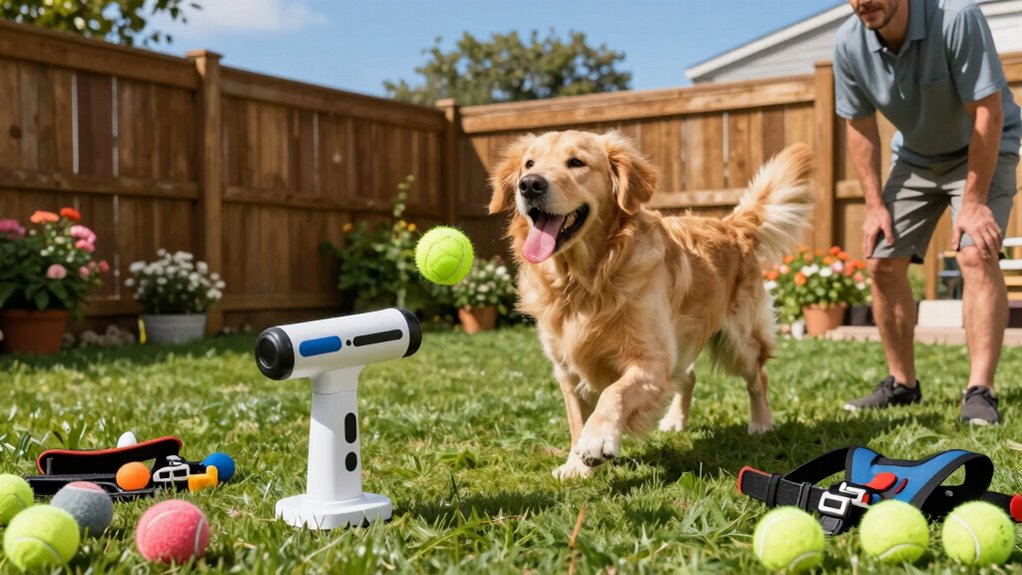
To guarantee playtime remains safe and enjoyable for everyone, setting clear rules and boundaries is essential. Establish specific time limits for fetch sessions to prevent overexertion and burnout. Incorporate short, positive puppy training breaks to reinforce good behavior and prevent frustration. Focus on balanced dog nutrition to keep your pup energized without overdoing it. Make sure play areas are free of hazards and use appropriate-sized toys to avoid choking risks. Keep a close eye on your dog’s mood and energy levels—if they seem tired or stressed, it’s time to pause. Remember, fun is key, but safety comes first. By implementing these simple strategies, you ensure play remains a healthy, happy experience for you and your furry friend.
Frequently Asked Questions
How Often Should I Schedule Rest Days for My Fetch-Loving Dog?
You should schedule rest days for your fetch-loving dog about every 2 to 3 days, depending on their energy level and age. This rest day frequency allows for proper dog recovery time, preventing burnout and injuries. Watch for signs of fatigue, like lagging behind or disinterest, and adjust accordingly. Remember, a well-rested dog performs better and stays healthier, so prioritize regular breaks to keep their fetch enthusiasm sustainable.
What Are Alternative Activities to Fetch That Prevent Burnout?
Imagine your dog as a noble knight seeking new quests. To prevent burnout, try interactive toys that challenge their mind or scent games that tap into their natural sniffing instincts. These activities keep your pup engaged without the repetitive fetch. Switching things up prevents boredom and overexertion, making playtime fun and fresh while strengthening your bond and keeping your dog happy and healthy.
How Can I Tell if My Dog Is Overexerted During Play?
You can tell your dog is overexerted if you notice fatigue signs like heavy panting, lagging behind, or reluctance to continue playing. Watch for overexertion symptoms such as limping, excessive drooling, or glazed eyes. If your dog seems tired or unsteady, give them a break and hydrate. Recognizing these signs helps prevent exhaustion and keeps play safe and enjoyable for your furry friend.
Are There Specific Breeds More Prone to Fetch Obsession?
Did you know that retrievers, especially Labrador Retrievers and Golden Retrievers, are more prone to fetch obsession due to their breed tendencies? These breeds are naturally driven by retrieving instincts, which can lead to obsessive play. To prevent burnout, limit fetch sessions and introduce variety in play. Recognizing these tendencies helps you manage your dog’s energy levels and keeps playtime enjoyable without overdoing it.
What Safety Features Should I Look for in a Ball Launcher?
You should look for a ball launcher with safety features like an automatic shutoff to prevent overheating and guarantee safe operation. Anti-jam features are also essential, as they help avoid malfunctions that could cause injury or damage. These features protect both you and your dog, making playtime safer and more enjoyable. Always check the user manual for specific safety instructions and proper maintenance tips.
Conclusion
Think of your dog’s energy as a delicate flame—if you keep it burning fiercely without pause, it’ll eventually burn out. By setting gentle limits, rotating activities, and giving your pup rest, you nurture that flame into a steady glow rather than a destructive blaze. Remember, the goal isn’t just a fiery burst of fun, but a steady, sustainable warmth that keeps your bond strong and your dog happy for years to come.