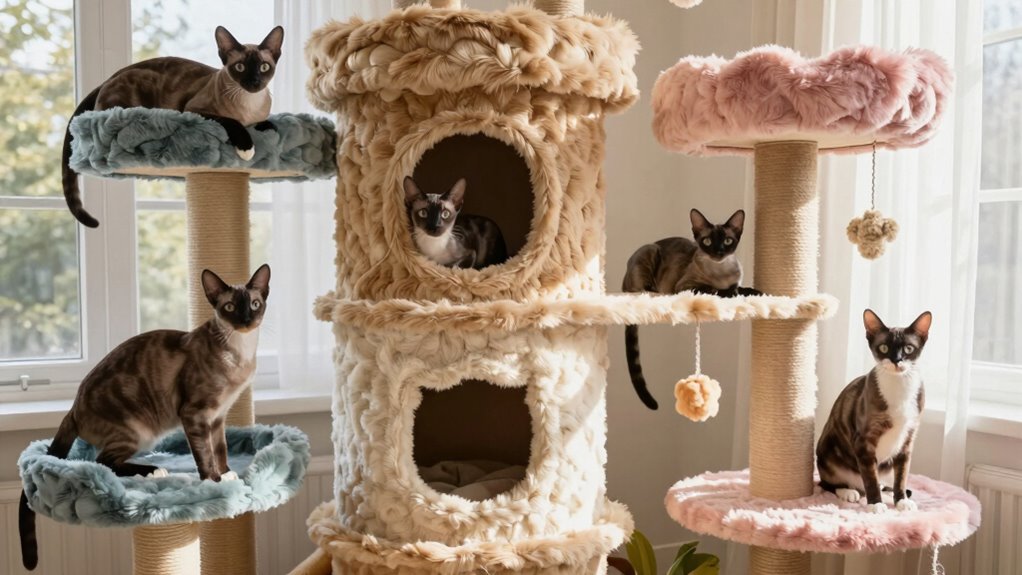

To stop feline bullying quickly, design a multi-cat tree with plenty of elevated spaces, personal hideouts, and clear boundaries. Position perches and platforms at different levels to reduce competition and give each cat a safe retreat. Incorporate separate zones for resources and private time, so they don’t feel threatened or crowded. A well-planned layout fosters natural territorial instincts and minimizes conflicts. Keep exploring, and you’ll discover more tips to create a peaceful, harmonious home for all your cats.
Key Takeaways
- Implement multiple elevated perches and hideouts to create personal territories, reducing resource competition and conflicts.
- Strategically place cat trees at different levels and distances to minimize monopolization and promote peaceful coexistence.
- Provide private zones with designated perches and retreat spots, allowing cats to relax without feeling threatened.
- Ensure resource areas like feeding and litter are accessible from various levels to prevent territorial disputes.
- Introduce new structures gradually and monitor behavior to adjust layouts, preventing stress and promoting harmony.

Wall-Mounted Cat Climber Set with Climbing Shelves, Perches, Bridge,Hammock,Scratching Board & Ball - 7 Pcs Wood Indoor Cat Furniture for Kittens Play (Beige)
【Cat Wall Shelves】- Keep your indoor cat happy and entertained with this wall-mounted cat climber set featuring multiple...
As an affiliate, we earn on qualifying purchases.
How to Recognize Feline Bullying in Your Home
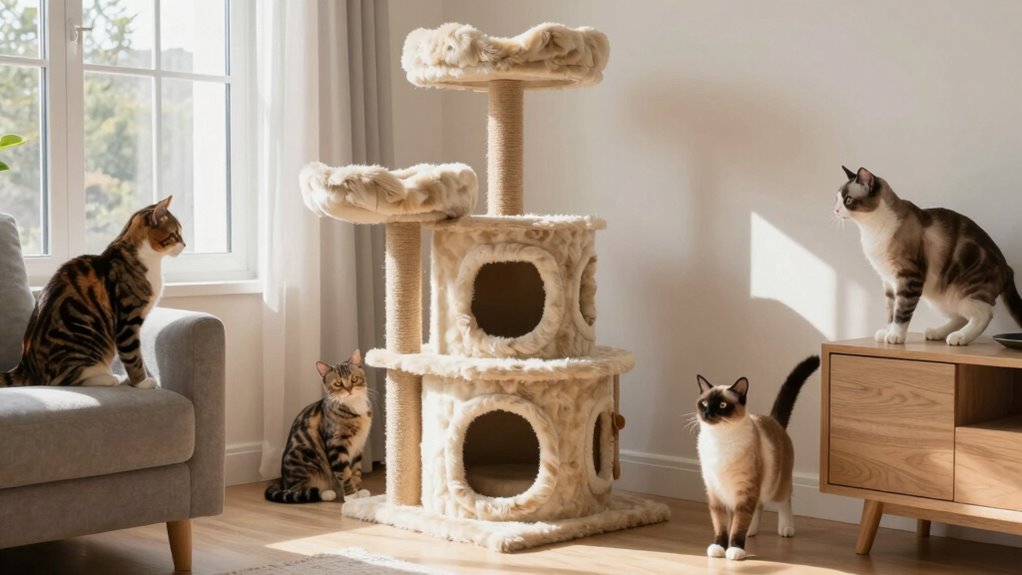
Feline bullying can sometimes fly under the radar, but recognizing the signs is essential for maintaining harmony in a multi-cat household. Watch for subtle cues like excessive territory marking, where a cat sprays or rubs against objects to claim space. Play aggression can also be mistaken for friendly interaction but may escalate to fighting if unchecked. Notice if one cat consistently chases, swats, or blocks another’s access to resources like food, water, or litter boxes. A bullied cat might hide more often or show signs of stress, such as flattened ears or a tense posture. Understanding these behaviors helps you identify bullying early, so you can intervene before it worsens. Recognizing these signs is key to creating a peaceful environment for all your cats. Additionally, implementing multi-cat cat trees designed to provide individual spaces can significantly reduce tension and prevent bullying behaviors. Providing designated hiding spots and vertical spaces allows cats to retreat and feel secure, further minimizing conflicts. Incorporating appropriate environmental enrichment can also help divert attention from aggressive interactions and promote positive social behaviors. Using behavioral observations to monitor interactions can help detect escalating tension before it turns into full-blown aggression. Being aware of the importance of social hierarchy can also aid in understanding natural feline interactions and reduce misunderstandings.

NOVGOBHOT Cat Wall Shelves for Large Cats – 9-Piece Wooden Wall-Mounted Cat Shelves Set, Kitty Climbing System with Perches, Scratching Post & Condo House
Sturdy Wall-Mounted Cat Shelves for Large Cats: Made from thick, durable wood, these wall mounted cat shelves support...
As an affiliate, we earn on qualifying purchases.
Why Multi-Cat Tree Layouts Help Reduce Cat Conflicts
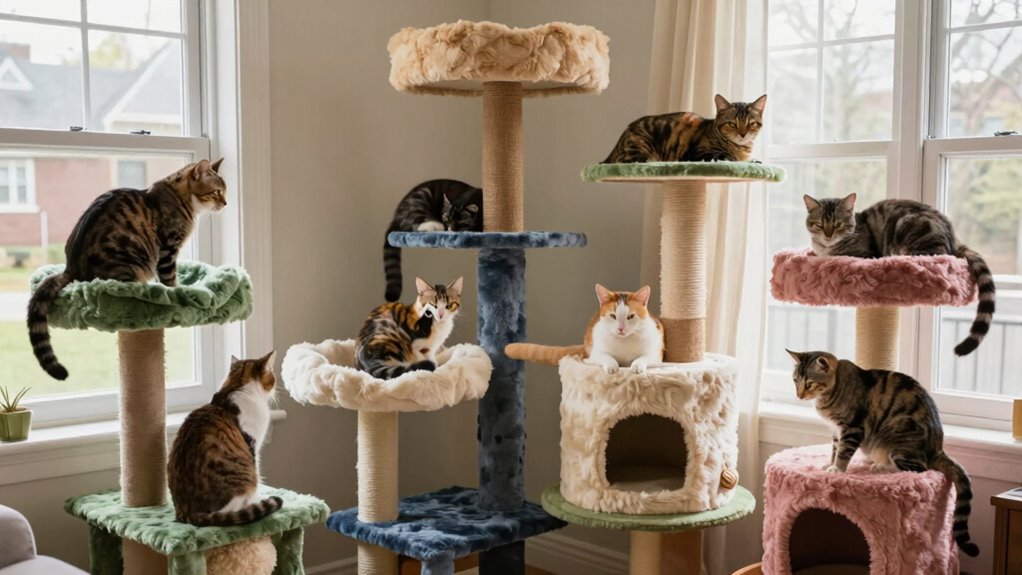
Multi-cat tree layouts give your cats multiple elevated spaces to explore and perch on, reducing competition for territory. By creating personal zones, each cat can enjoy a sense of privacy, which lowers tension. When resources like food and litter are spread out, conflicts over these items decrease considerably. Additionally, designing the layout with individual spaces in mind allows each cat to feel secure and less prone to bullying.
Multiple Elevated Spaces
Providing multiple elevated spaces in a cat tree allows your cats to claim their own territory and observe their environment from different heights. This setup helps reduce conflicts by minimizing competition, as each cat can find a perch without interference. Proper furniture placement ensures these spaces are accessible and spread out, preventing overcrowding in one area. Elevated spots also give cats a vantage point to monitor scent marking and territorial boundaries, which helps them feel secure. When cats can comfortably claim their own high ground, they’re less likely to feel threatened or defensive. This sense of security fosters peaceful interactions and diminishes aggressive behaviors. Additionally, creating biodiversity within the household can be supported by creating varied environments that cater to different feline personalities. Providing a variety of perching options allows cats to choose spaces that suit their individual preferences, further reducing territorial disputes. Creating multiple elevated spaces not only promotes independence but also encourages natural territorial behaviors, helping cats establish boundaries and reducing stress. Incorporating different textures and levels within these spaces can also enhance enrichment and mental stimulation. Offering diverse climbing surfaces can contribute to overall physical health and activity levels. Overall, multiple elevated spaces give your cats the independence they need, promoting harmony in your multi-cat household.
Personal Territory Zones
Creating designated personal territory zones within a multi-cat tree layout allows each cat to establish a sense of ownership and control over specific areas. When each cat has clearly defined territory boundaries, they feel secure and less threatened by others. These zones help prevent conflict by reducing the need for cats to compete over space, as they recognize which areas are theirs. By providing separate spaces for resting, observing, or hiding, you encourage respectful distance and minimize territorial disputes. Properly structured territory zones give cats the opportunity to retreat and relax without feeling cornered or challenged. This setup promotes conflict prevention, helping cats coexist peacefully. When cats feel their personal space is respected, aggression and tension naturally decrease, fostering a calmer, more harmonious environment. Incorporating territory zones that cater to their natural instincts further enhances their sense of security and reduces stress. Additionally, designing the layout with natural feline behaviors in mind supports their emotional well-being and contributes to a peaceful multi-cat household. Recognizing and accommodating territorial instincts through thoughtful layout design is essential for reducing conflicts and promoting harmony among cats. In fact, understanding their behaviors and needs allows for creating an environment that minimizes stress and encourages positive interactions.
Reduced Resource Competition
When each cat has its own designated personal territory zones, it naturally reduces the need for them to compete over shared resources. Clear territorial boundaries help cats feel secure, decreasing conflicts over food, water, litter boxes, and resting spots. Multi-cat tree layouts position platforms, hideaways, and perches at different levels, allowing cats to choose their preferred areas without interference. This effective resource allocation minimizes stress and prevents disputes, as each cat perceives its space as uniquely theirs. When cats can access what they need without feeling threatened, tension drops considerably. Creating distinct zones fosters a peaceful environment, encouraging cats to coexist without constant battles over resources. Properly designed multi-cat trees make territorial boundaries obvious, promoting harmony and reducing the likelihood of bullying. Additionally, providing sufficient vertical space is crucial, as it allows cats to establish their own territory and observe their environment from a safe distance. Offering individual hiding spots and perches further supports personal space and reduces confrontations, contributing to a calmer multi-cat household. Recognizing and respecting territorial behavior helps owners create a balanced environment that minimizes stress and promotes positive interactions. Incorporating behavioral understanding helps owners recognize signs of stress or territorial disputes early, enabling timely intervention.

5-in-1 Cat Wall Shelves, Solid Wood & Velvet & Sisal Scratcher, 44lbs Max Load, Wall Mounted Cat Furniture for Climbers, Cat Climbing Wall System, Fits Drywall & Solid Walls - Light Gray
44lbs Load Tested for Maximum Stability - We don’t just claim strength—we test it. Every shelf in our...
As an affiliate, we earn on qualifying purchases.
Designing Safe Zones With Perches and Hideouts for Your Cats
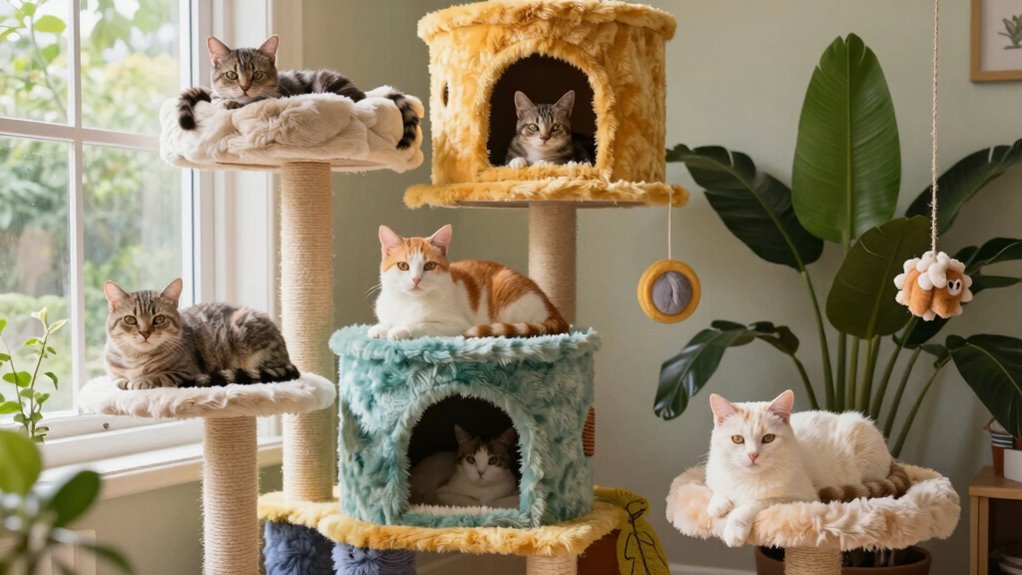
Designing safe zones with perches and hideouts is essential for giving your cats a sense of security and control in their environment. Providing vertical spaces allows cats to observe their surroundings and retreat when needed. Strategically placed hideout locations give them private areas to relax and avoid conflicts. To create effective safe zones, consider these tips:
Create secure safe zones with perches and hideouts to help your cats feel safe and relaxed.
- Use high perches to give cats a commanding view
- Incorporate multiple hideout locations at different levels
- Ensure hiding spots are cozy and enclosed
- Place perches and hideouts in quiet, low-traffic areas
- Understanding bank SWIFT/BIC codes can inspire creative, colorful hiding spots and perches that appeal to your cats. Utilizing vertical space effectively can also help reduce territorial disputes by providing multiple territories within your home. Creating a variety of enclosed hideouts can further support your cats’ comfort and privacy needs. Additionally, incorporating wide, stable perches can help prevent accidents and promote safe observation.
These features help reduce stress and promote peaceful interactions among your cats. By offering accessible vertical spaces and secure hideouts, you foster a calmer, more balanced multi-cat household.

NUNU LAB Cat Wall Shelves, 6 Pcs Luxury Wall-Mounted Cat Climber Set, Indoor Cat Furniture with 1 Condos House, 2 Cat Wall Shelves, 1 Scratching, 1 Bridge Ladder, 1 Scratching Pad, Black
DELUXE CAT FURNITURE SET - A set of 6 pieces, the set includes 1 cat condo, 1 cat...
As an affiliate, we earn on qualifying purchases.
Arranging Cat Trees to Encourage Friendly Interactions

To encourage friendly interactions, place your cat trees strategically, ensuring they’re close enough for easy access but not crowded. Spacing them out properly helps prevent territorial disputes and promotes positive encounters. Incorporate multiple access points to allow cats to move freely and choose their preferred routes. Utilizing connected environments can further foster social behavior and reduce conflicts among cats.
Strategic Placement and Spacing
Strategic placement and spacing of cat trees play a crucial role in encouraging friendly interactions among your cats. Properly positioned trees help reduce territorial disputes and facilitate natural behaviors like scent marking. When arranging the trees, consider your cats’ hierarchy, placing higher perches for dominant cats while ensuring others feel secure. Spacing trees apart prevents competition and invites exploration, promoting positive interactions. To optimize the environment, keep these tips in mind:
- Distribute trees evenly across the space to prevent monopolization
- Place some trees near feeding areas to associate positive experiences
- Use different levels and angles to encourage movement and curiosity
- Ensure access to multiple vantage points, reducing stress and territorial disputes
This setup fosters a peaceful, engaging environment where cats can coexist happily.
Incorporate Multiple Access Points
Incorporating multiple access points in your cat tree setup encourages friendly interactions by giving each cat various routes to reach high vantage points and common areas. When cats can choose their paths, they’re more likely to engage in playful communication, reducing tension and promoting positive social bonds. Multiple entry and exit options also help prevent territorial disputes, as cats don’t need to compete for a single spot. Additionally, access points facilitate grooming routines, allowing cats to approach each other calmly and comfortably. This setup creates a dynamic environment that encourages exploration and interaction, making cats feel secure and less likely to bully. Ultimately, well-designed access points foster a peaceful, cooperative atmosphere, helping your multi-cat household thrive.
Choosing Features That Minimize Stress and Fights
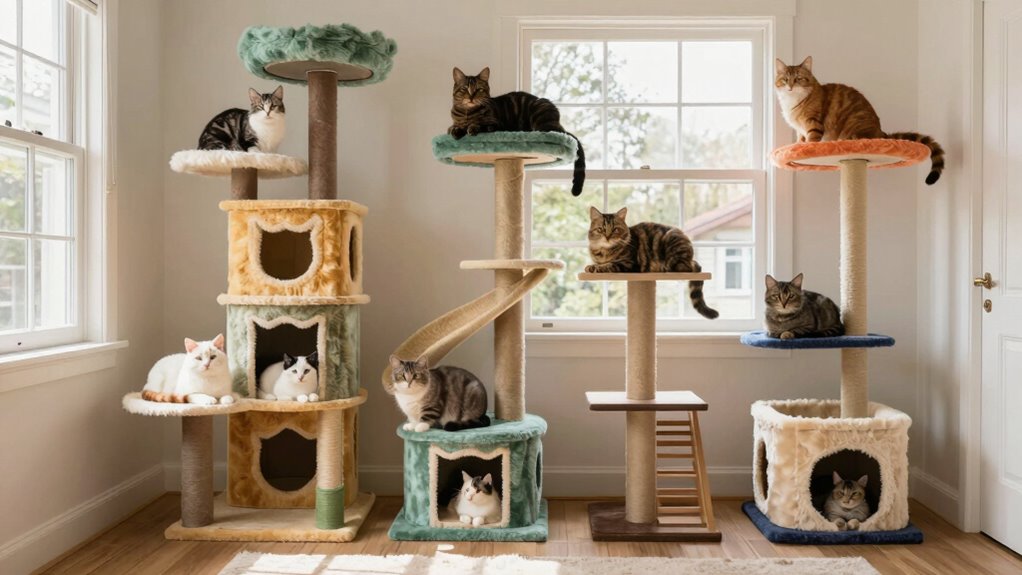
Choosing features that minimize stress and fights is essential for creating a peaceful multi-cat environment. You want to design your tree with elements that promote harmony. Incorporate spots where cats can enjoy interactive play, reducing boredom-driven conflicts. Provide multiple perches and hiding spots to give each cat a sense of security and personal space. Consider platforms that facilitate grooming routines, allowing cats to clean themselves comfortably without interference. Guarantee the layout encourages gentle interaction rather than competition. Using neutral-colored, non-stimulating materials can also help keep the environment calm. Remember, the goal is to create a space where cats feel safe and relaxed, decreasing triggers for fights and stress. Prioritizing these features can help maintain peace and foster positive relationships among your cats.
Tips for Introducing New Cats Using Your Tree Layout
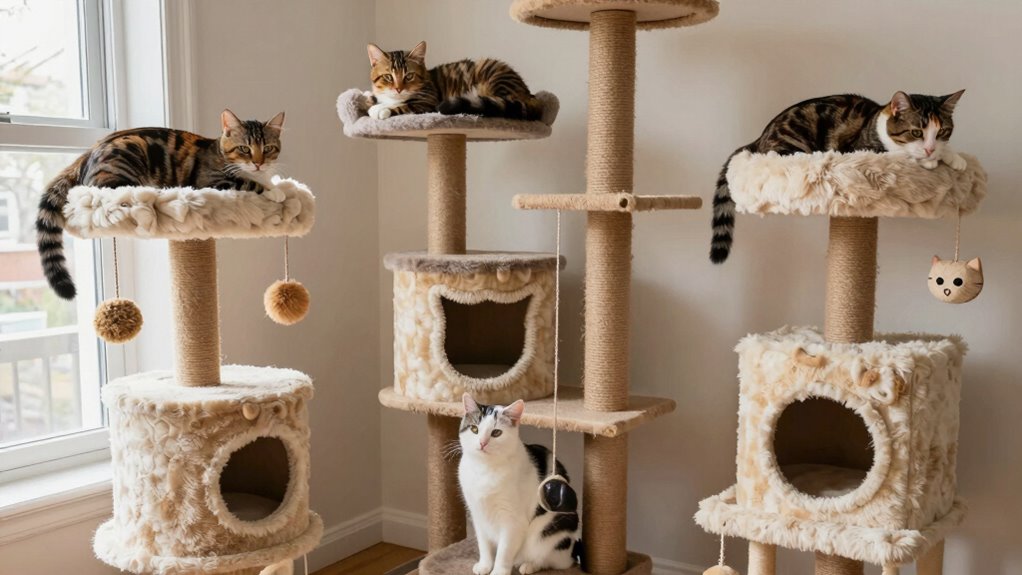
Introducing a new cat can be stressful for everyone involved, but your tree layout can make the process smoother. Use designated spaces on the tree to encourage play and exploration, helping both cats build positive associations with their environment. Place high perches and hiding spots where the newcomer can observe without feeling threatened. This setup allows gradual introductions and reduces territorial disputes. Incorporate accessible grooming and hygiene areas to promote bonding and cleanliness, which can ease tension. Encourage the cats to explore the tree together at their own pace, fostering curiosity rather than conflict. By creating zones that support safe interactions, your tree layout helps minimize stress and discourages bullying, making the transition for your new cat more comfortable and less disruptive for everyone.
How to Troubleshoot Common Issues With Your Multi-Cat Tree Setup
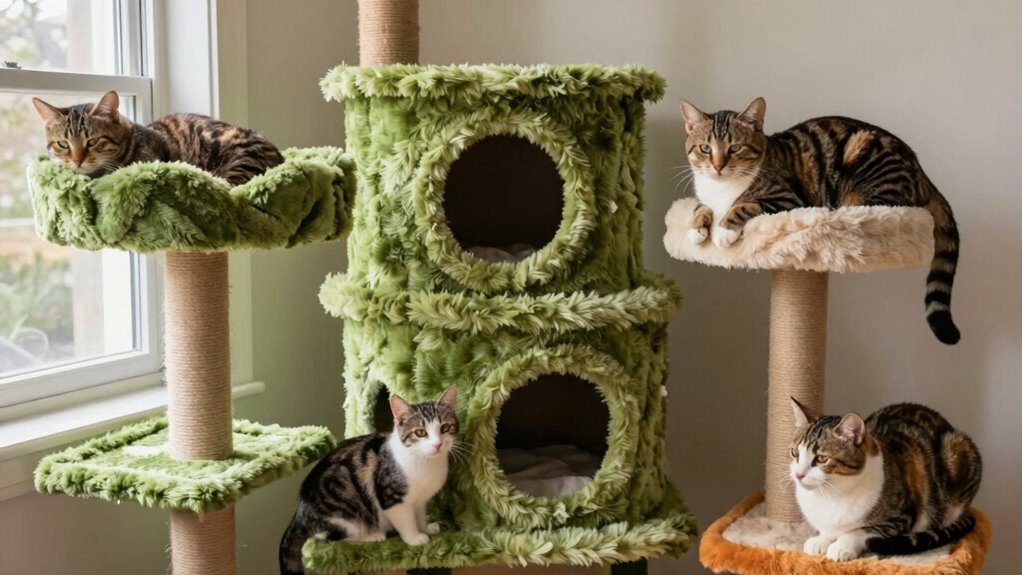
When your multi-cat tree isn’t functioning as intended, troubleshooting common issues can help restore harmony. First, observe your cats for feline behavior signs indicating stress or discomfort, like hiding or aggression. Poor cat tree maintenance or an unsuitable layout could be the cause. To troubleshoot, consider these steps:
- Check for unstable or wobbly platforms and secure or replace them
- Clean thoroughly to remove scent marks that may cause territorial disputes
- Rearrange levels to offer more privacy and reduce competition
- Introduce new features gradually to prevent overwhelming your cats
Addressing these issues helps create a more inviting environment. By paying attention to feline behavior signs and maintaining your cat tree properly, you can resolve conflicts quickly and foster a peaceful multi-cat household.
Maintaining a Peaceful Household With Ongoing Strategies
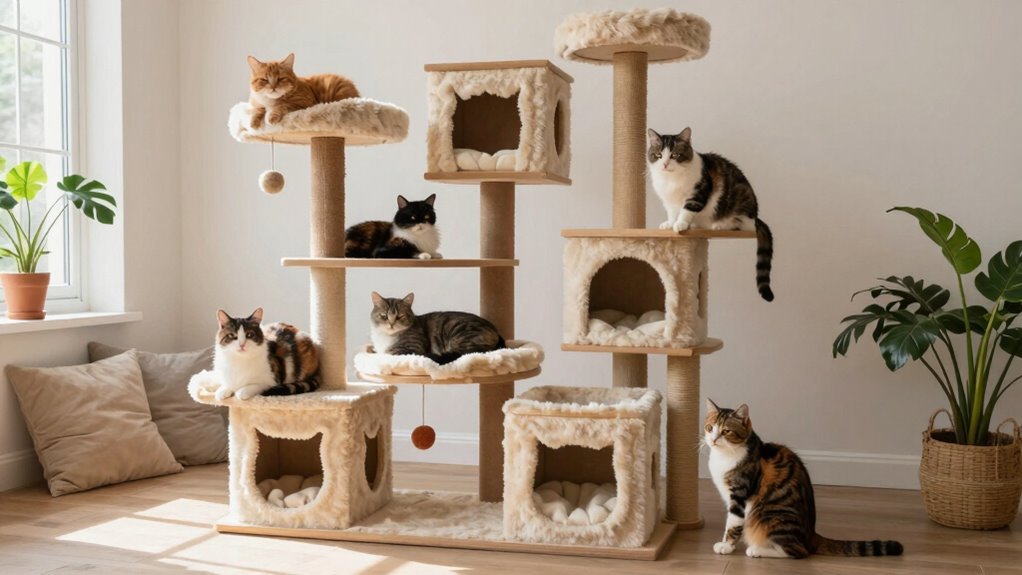
Maintaining a peaceful household with multiple cats requires consistent effort and proactive strategies. You should prioritize regular cat enrichment by providing diverse toys, scratching posts, and hiding spots to reduce boredom and territorial disputes. This helps channel their energy positively and minimizes conflicts. Additionally, establishing and sticking to grooming routines keeps your cats comfortable and reduces stress, which can lead to less aggression. Grooming also allows you to monitor their health and spot early signs of tension or illness. Keep an eye on each cat’s behavior, and address issues promptly. By creating an environment rich in enrichment and maintaining routine grooming, you foster a calmer, more harmonious household where bullying is less likely to occur. Consistency is key to long-term peace.
Frequently Asked Questions
Can Specific Tree Designs Prevent All Types of Feline Aggression?
Yes, specific tree designs can reduce many types of feline aggression. You should look for models with interactive climbing features and hideaway compartments, as these encourage natural behaviors and reduce territorial disputes. Providing separate spots allows cats to retreat and feel secure, minimizing conflicts. While no design can prevent all aggression, thoughtful layouts with these elements help create a calmer environment and promote harmony among your cats.
How Often Should I Rearrange My Multi-Cat Tree Layout?
You should rearrange your multi-cat tree layout every few weeks to keep things fresh and prevent territorial disputes. When doing so, adjust furniture placement and incorporate scent swapping by exchanging bedding or toys between cats. This helps them associate new spaces with familiar scents, reducing stress and aggression. Regular changes encourage exploration and cooperation, making the environment more harmonious for all your cats.
Are There Particular Materials That Reduce Stress for Anxious Cats?
You should look for materials that promote cat calming and stress reduction, like soft, natural fabrics or sisal. These textures help anxious cats feel secure and comfortable. Avoid rough or noisy materials that can increase stress. Providing a variety of cozy hiding spots with calming fabrics encourages relaxation. By choosing the right materials, you create a peaceful environment that reduces anxiety and promotes positive interactions among your cats.
How Do I Balance Access to Resources Across Multiple Levels?
To balance access to resources across multiple levels, you should guarantee your cat tree offers ample vertical space with plenty of perches and platforms at different heights. Distribute resources like food, water, and litter boxes evenly across these levels to prevent competition. This setup encourages cats to claim their own spaces, reduces stress, and promotes harmonious interactions, making everyone feel secure and satisfied.
What Signs Indicate My Cats Are Adapting Well to New Layouts?
Do your cats seem more relaxed and curious around their new environment? If yes, they’re adapting well. Watch for positive cat behavior like exploring different levels, using all the resources, and grooming themselves calmly. They should also show less tension or hiding. Environmental enrichment plays a key role here, helping your cats feel secure and engaged. When they freely navigate and interact without stress, it’s a clear sign they’re adjusting successfully.
Conclusion
By creating thoughtful multi-cat tree layouts, you can reduce conflict and foster harmony at home. Did you know that 70% of multi-cat households report fewer disagreements after redesigning their space? Incorporating safe zones, strategic perches, and stress-reducing features makes a big difference. Keep observing your cats’ behaviors, and adjust your setup as needed. With patience and the right environment, you’ll enjoy a peaceful, happy home where every feline can thrive.