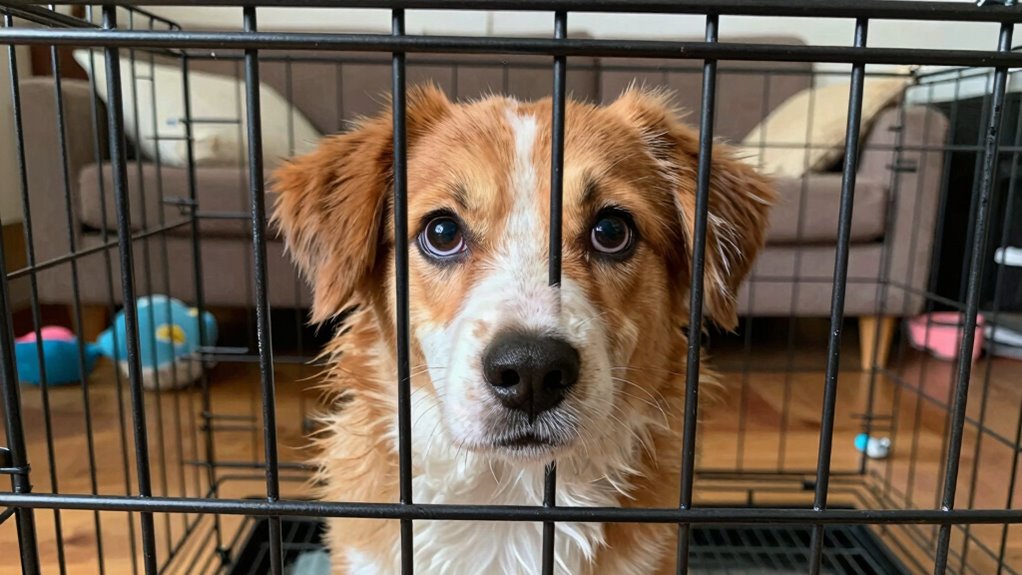

If your anxious dog keeps escaping from the crate, it probably stems from fear, stress, or discomfort rather than misbehavior. Signs include trembling, excessive panting, body tension, or refusal to enter. Causes may be separation anxiety, lack of positive associations, or overwhelmed feelings. To help, create a calm, cozy space, use gradual desensitization, and reinforce positive experiences. If these steps don’t work, exploring further solutions can help your dog feel safe and secure.
Key Takeaways
- Your dog may be experiencing separation anxiety or environmental stressors that trigger escape attempts.
- Inadequate or harsh crate training can cause fear, leading to panic and repeated escape efforts.
- Lack of positive associations, like toys or comfort items, makes the crate feel like a threatening space.
- Overwhelming stimuli or sudden noises might cause the dog to panic and try to escape.
- To address this, implement gradual desensitization, create a calming environment, and seek professional help if needed.
How Do I Know If My Dog’s Crate Escapes Are Due to Anxiety?
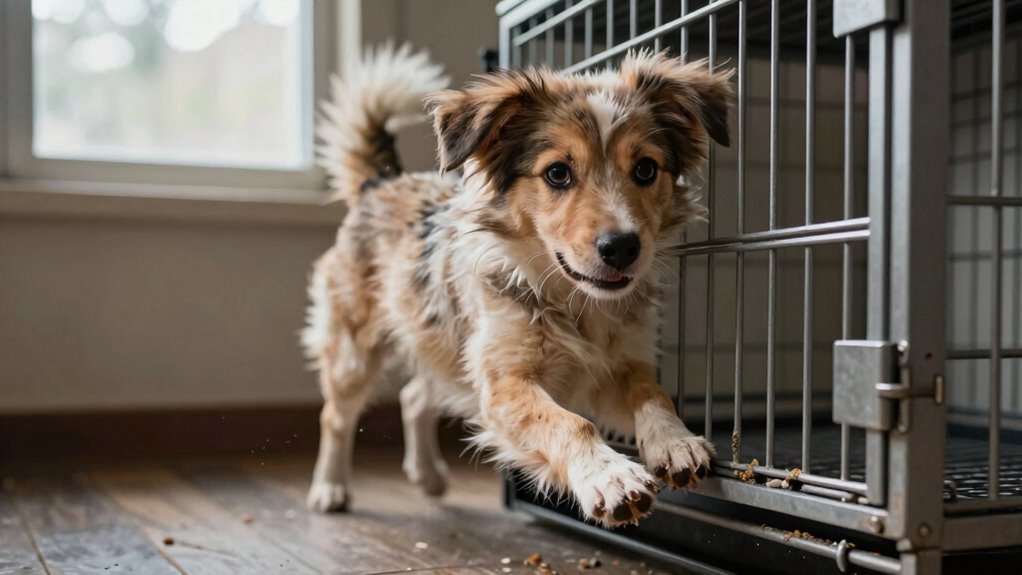
If your dog frequently escapes from the crate, it’s important to determine whether anxiety is the cause. Signs of anxiety include excessive whining, trembling, panting, or destructive behavior when confined. Observe whether your dog shows distress before or during crate time, indicating a struggle with crate relaxation. If your dog seems overly agitated or tries to escape repeatedly, anxiety might be at play. To address this, focus on behavior modification techniques that promote calmness, such as gradual crate training and positive reinforcement. Creating a comfortable, secure environment helps reduce stress. Remember, addressing anxiety early can prevent the behavior from worsening. Recognizing these signs allows you to tailor your approach, ensuring the crate becomes a safe space rather than a source of fear. Understanding emotional responses in dogs can further improve your training approach, especially when considering how their natural instincts influence their reactions. Being aware of self-soothing behaviors can also help you in developing effective calming strategies.
What Causes Anxiety-Related Crate Escapes in Dogs?
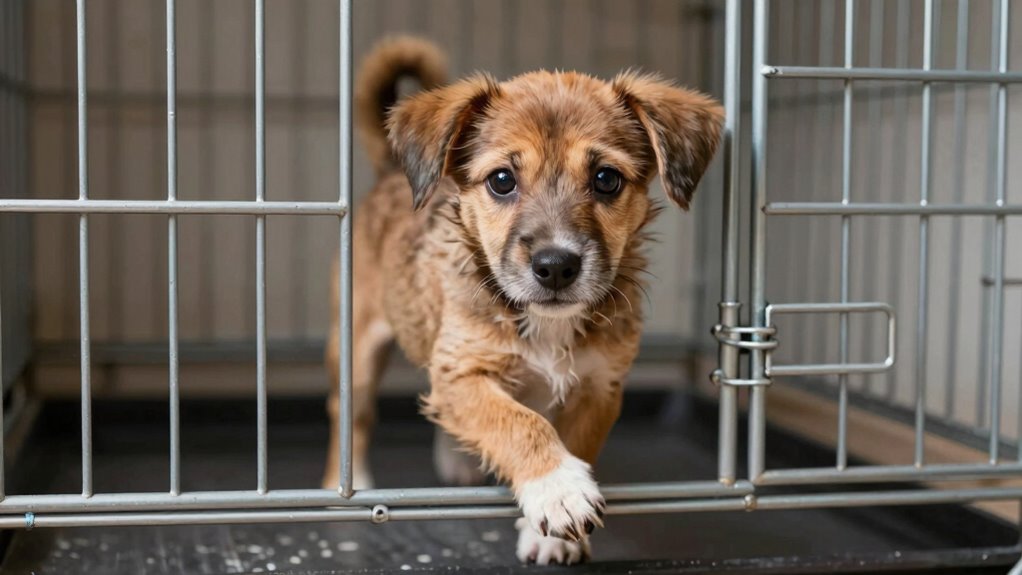
Many dogs escape their crates because of separation anxiety or inadequate training. If your dog feels stressed when alone, they might try to escape to find comfort or freedom. Understanding these triggers can help you address the root causes and keep your dog safe. Using calibration techniques can also improve your dog’s comfort level and reduce their inclination to escape. Recognizing anxiety triggers early can lead to more effective interventions and a calmer, more secure dog. Additionally, being aware of global chaos such as service disruptions can influence your pet’s stress levels, especially if their routine is affected.
Separation Anxiety Triggers
Separation anxiety is a common trigger for dogs attempting to escape their crates, especially when they sense you’re leaving or are gone for extended periods. Dogs with separation anxiety often feel overwhelmed and panic when left alone, leading them to try to escape. To help, incorporate calming techniques like gentle reassurance or soothing music before departure. Providing environmental enrichment, such as puzzle toys or safe chew items, keeps your dog mentally engaged and reduces anxiety. Creating a consistent departure routine can also ease their nerves. Ensuring your dog associates being alone with positive experiences helps lessen their panic. Additionally, integrating smart home technology, like cameras or automatic feeders, can help monitor and comfort your dog remotely, further reducing their stress. Recognizing anxiety signs early allows you to intervene effectively and prevent escalation. Understanding anxiety triggers and how they influence behavior can guide effective interventions. Addressing these triggers with calming techniques and enriching their environment, such as interactive toys, can significantly help in calming anxious dogs. By addressing these issues, you can reduce the likelihood of crate escapes driven by separation anxiety.
Inadequate Crate Training
Inadequate crate training can substantially contribute to anxiety-related escapes, as dogs may not understand that their crate is a safe space. Poor crate behavior often results from inconsistent or harsh training techniques, leaving your dog confused or fearful. When dogs don’t associate the crate with positive experiences, they might panic and try to escape whenever confined. Proper crate training also involves understanding small appliance safety and comfort tips to create a secure environment for your pet. Consider these factors: – Sudden confinement without gradual introduction – Using punishment instead of encouragement – Lack of familiar bedding or toys in the crate – Ignoring your dog’s signals of discomfort – Failing to build positive associations over time. Recognizing and addressing dog anxiety early can prevent future escape attempts and help your pet feel more secure. Effective training techniques involve patience, positive reinforcement, and gradual exposure. Proper crate training helps your dog see the crate as a secure retreat, reducing anxiety and the likelihood of escapes. Additionally, consistent routines can help your dog feel more predictable and safe in their environment, further decreasing their urge to escape. Establishing a calm environment is crucial for reducing stress and preventing anxiety-driven escape behaviors. Incorporating training consistency further reinforces positive habits and builds your dog’s confidence.
Signs Your Dog Is Uncomfortable or Anxious in the Crate
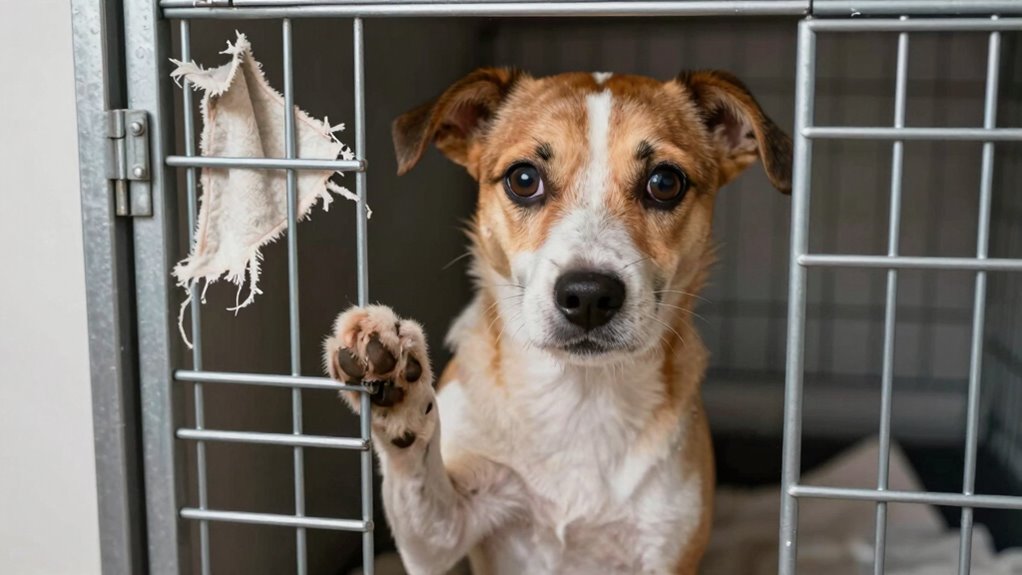
When your dog shows signs of distress or agitation inside the crate, it’s a clear indication they’re uncomfortable or anxious. Pay close attention to their dog body language—pacing, whining, lip licking, or excessive scratching often signal discomfort. If your dog tries to escape, cowers, or avoids eye contact, these are signs of stress. The crate environment also plays a role; if it’s too loud, dark, or feels restrictive, your dog may feel overwhelmed. Notice if they tremble or refuse to enter the crate altogether. These behaviors suggest that the crate isn’t a safe or calming space for them. Ensuring proper air quality considerations can help create a more comfortable environment, reducing your dog’s anxiety. Additionally, proper crate size is essential to prevent feelings of being confined or trapped, which can increase stress levels. Incorporating air circulation techniques can also help keep the space fresh and inviting, promoting a calmer demeanor. Using positive reinforcement training can encourage your dog to associate the crate with pleasant experiences, helping to reduce their anxiety. Creating a consistent and predictable routine can further help your dog feel secure in their crate. Recognizing these signs early helps you adjust the environment or approach, making the crate a more positive experience for your dog.
How to Properly Train Your Dog to Feel Safe in the Crate
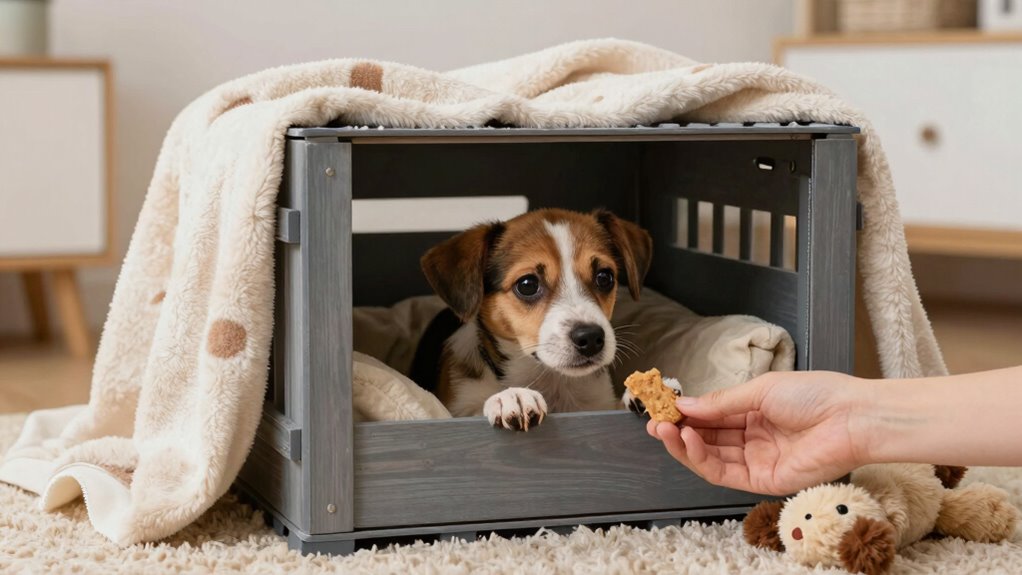
To help your dog feel safe in the crate, start by creating positive associations through treats and praise. Use gentle, gradual steps to introduce your dog to the crate without overwhelming them. Make the space comfortable with soft bedding and familiar items, so your dog feels secure and relaxed.
Create Positive Associations
Creating positive associations with the crate is essential to help your dog feel safe and comfortable. When your dog perceives the crate as a secure space, it reduces anxiety signs and improves crate behavior. You can achieve this by pairing the crate with enjoyable experiences. For example:
- Offering tasty treats whenever your dog enters the crate
- Playing calming music nearby during crate time
- Leaving comfortable toys inside to pique curiosity
- Feeding meals inside the crate to create a positive routine
- Using gentle praise to reinforce calm behavior
- Understanding the importance of Twin Flame connections can help in recognizing emotional bonds that influence your dog’s behavior. Additionally, incorporating positive reinforcement techniques can accelerate your dog’s comfort with the crate. Recognizing dog training principles ensures consistency and effectiveness in your approach.
These actions help your dog associate the crate with good things, making it less stressful. Over time, this builds trust and eases anxiety signs, leading to better crate behavior and a less anxious dog.
Use Gentle Gradual Steps
Building on the idea of creating positive associations, introducing your dog to the crate gradually helps it feel more comfortable and safe. Use calming techniques, like gentle voice commands and soft, reassuring touches, to ease any anxiety. Incorporate desensitization methods by slowly increasing the time your dog spends in the crate, starting with just a few seconds and gradually extending it. Keep sessions short and positive, rewarding calm behavior with treats or praise. If your dog shows signs of stress, pause and give it a break before trying again. The key is patience and consistency, allowing your dog to learn that being in the crate is safe and non-threatening through gentle, step-by-step exposure. Additionally, understanding your dog’s emotional needs and providing a secure environment can significantly reduce anxiety during crate training emotional needs. Recognizing and addressing underlying fears can also prevent setbacks and promote successful training. Incorporating positive reinforcement techniques encourages your dog to associate the crate with good experiences, further easing anxiety.
Make Crate Comfortable
Making your dog’s crate comfortable is essential for helping it feel safe and at ease. A cozy environment encourages your dog to view the crate as a secure retreat rather than a punishment. You can achieve this by adding soft crate bedding that supports comfort and warmth. Incorporate calming scents, like lavender or chamomile, to help relax your dog. Consider placing familiar items inside, such as a favorite toy or blanket, to provide reassurance. Keep the crate in a quiet, low-traffic area to reduce stress. Use gentle lighting and avoid loud noises nearby. These small adjustments create a welcoming space that encourages your dog to settle in calmly, reducing anxiety and making crate training more successful.
Simple Strategies to Reduce Anxiety and Prevent Escapes
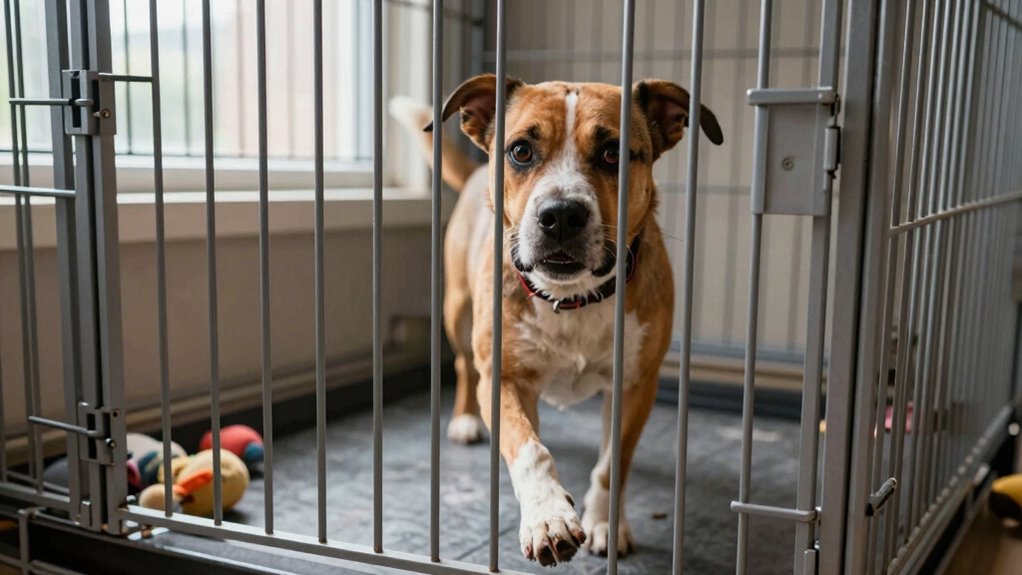
To help your dog feel more secure and prevent escapes, implementing simple strategies can make a significant difference. Start with consistent crate training, gradually introducing your dog to the crate with positive reinforcement. Use calming techniques like soothing voice commands, gentle petting, or calming music to reduce anxiety. Keep crate sessions short initially, then slowly increase duration as your dog becomes more comfortable. Incorporate treats and praise to create positive associations with the crate. Make sure the crate is in a quiet, cozy spot to minimize stress. Avoid forcing your dog inside or punishing escapes. Instead, focus on building trust through calm, patient training. These strategies help your dog feel safe, reducing anxiety and decreasing the likelihood of escape attempts.
When Should You Seek Help From a Vet or Trainer?

Knowing when to seek help from a vet or trainer is crucial if your dog’s anxiety or escape attempts persist despite your efforts. If your dog shows signs of severe stress, aggressive behavior, or refuses food and water, professional guidance is needed. Consider reaching out if:
- Your dog’s stress levels seem uncontrollable or worsen over time
- Escape attempts increase in frequency or intensity
- Dog behavior becomes destructive or dangerous
- You feel overwhelmed managing your dog’s anxiety alone
- Basic stress management techniques aren’t effective
A professional can assess underlying issues and develop tailored stress management strategies. They can help identify if your dog’s behavior stems from deeper anxiety, health problems, or trauma. Early intervention ensures your dog gets the support needed to improve their well-being and prevent further escapes.
Creating a Safe, Comfortable Space for Your Anxious Dog
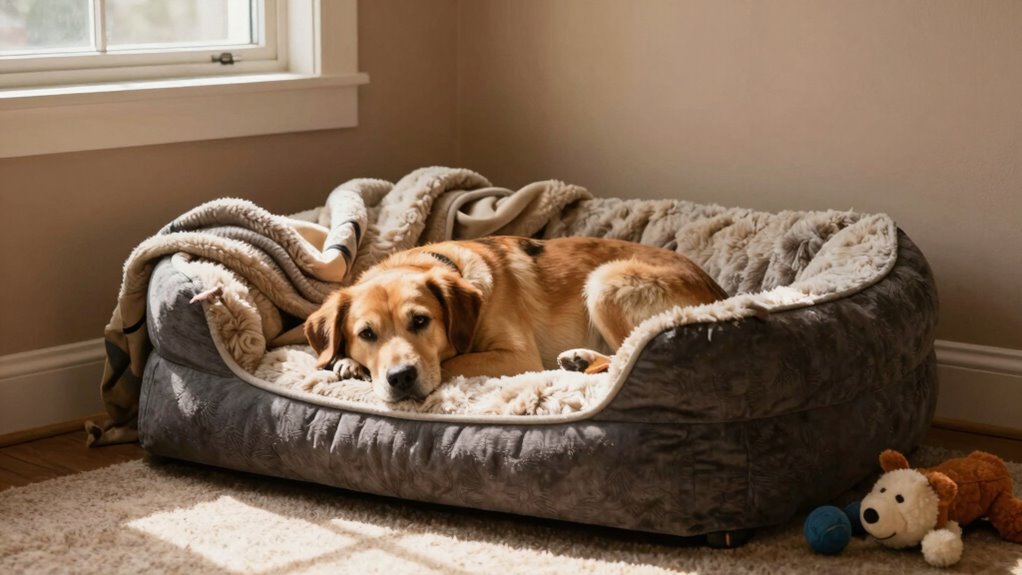
Creating a safe, comfortable space for your anxious dog is essential for helping them feel secure. Use calming scents, like lavender or chamomile, to promote relaxation and reduce stress. Incorporate calming music, such as soft classical tunes or ambient sounds, to create a soothing environment. Make sure the space is cozy, with familiar blankets and their favorite toy, so they associate it with comfort. Keep the area quiet and free from sudden noises or disruptions that could increase anxiety. This dedicated spot acts as a retreat where your dog can unwind and feel protected. Consistently reinforce positive associations with this space, so they learn it’s a safe haven during stressful moments. Creating this calming environment is a crucial step in easing their anxiety.
Frequently Asked Questions
Can a Dog’s Age Influence Crate Escape Behavior?
Yes, a dog’s age influences crate escape behavior. Younger dogs with lower maturity levels often have more energy and curiosity, making them more likely to try escaping. Older dogs usually have better impulse control and are calmer, reducing their chances of escaping. Age factors play a role in how motivated or anxious a dog feels in the crate, so understanding your dog’s maturity can help you address their specific needs effectively.
Are Certain Breeds More Prone to Crate Anxiety?
Certain breeds are more prone to crate anxiety due to breed tendencies and anxiety predisposition. For example, high-energy or intelligent breeds like Border Collies or Jack Russell Terriers often struggle with confinement, feeling restless or stressed. You should recognize these tendencies and adapt your training approach accordingly. Providing mental stimulation, gradual crate introduction, and positive reinforcement can help ease their anxiety and make crate time more comfortable for your dog.
How Long Should Crate Training Sessions Last?
Think of crate training like planting a garden—you build gradually. Start with short sessions of 5 to 10 minutes, then slowly increase as your dog gains confidence. For best results, maintain consistent crate duration during training, aiming for about 30 minutes to an hour daily. This steady approach helps your dog feel safe and reduces anxiety, creating a positive association with the crate over time.
What Are Alternative Calming Methods Besides Crate Training?
You can try calming techniques like scent work, where you hide treats or favorite toys to create positive associations. Use relaxation methods such as gentle massage, calming music, or a weighted blanket for your dog. Incorporate deep pressure therapy and establish a consistent routine to reduce anxiety. These alternative calming methods help your dog feel safe and relaxed, promoting confidence without relying solely on crate training.
How Does Past Trauma Affect Crate Escape Tendencies?
Imagine your dog’s past trauma triggers like shadows from neglect, lurking behind every crate. These memories make your dog feel unsafe, prompting escape attempts as a way to find security. Past neglect leaves emotional scars, intensifying anxiety and distrust. To help, create a calm environment, offer gentle reassurance, and build trust gradually, so your dog can feel safe enough to stay, transforming fear into a sense of security.
Conclusion
So, next time your dog escapes the crate again, remember it’s not just mischief—it’s probably their way of telling you they’re anxious. Ironically, forcing them to stay confined might only make things worse. Instead, create a safe space, be patient, and seek help if needed. Sometimes, the best solution is stepping back and understanding that a dog’s comfort isn’t achieved through confinement alone, but through trust and reassurance.