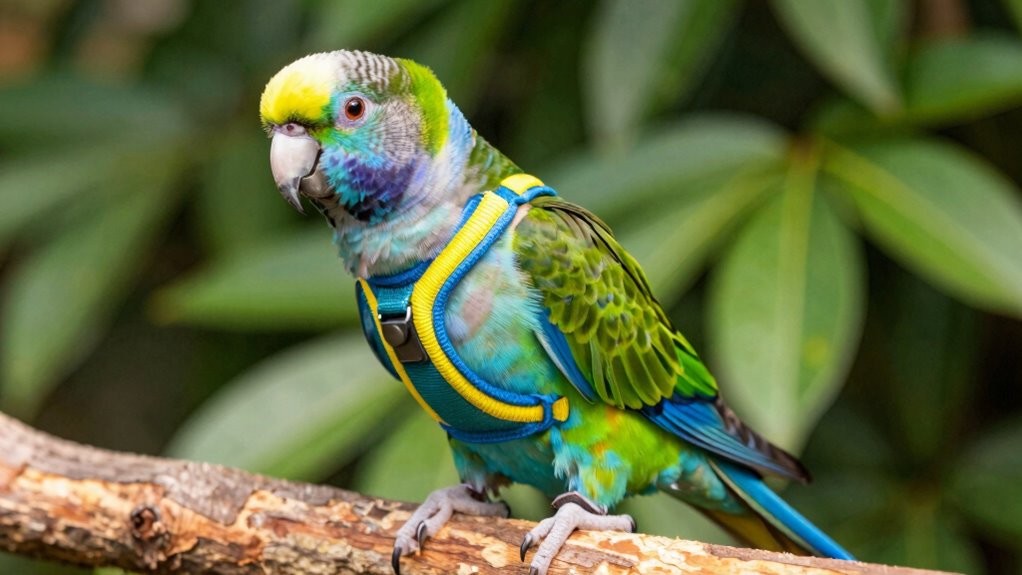

To help your bird tolerate a harness, introduce it gradually with positive reinforcement. Let your bird explore and get comfortable around the harness without forcing it. Reward calm behavior with treats and praise, and keep sessions short. Make certain the harness fits snugly but comfortably, and watch for signs of stress. Patience and consistency are key to long-term success. If you want practical tips on making outdoor outings safe and enjoyable, keep exploring how to build your bird’s confidence.
Key Takeaways
- Introduce the harness gradually with positive reinforcement and allow the bird to explore it at its own pace.
- Use treats and praise to create positive associations during each step of the training process.
- Ensure the harness fits snugly but comfortably, avoiding any restriction or chafing.
- Practice short, supervised sessions indoors before outdoor walks to build confidence.
- Watch for signs of stress and stop if the bird shows discomfort, gradually increasing exposure over time.

Pet Parrot Bird Harness Leash Adjustable Bird Flying Harness Traction Rope with Cute Wing for Parrots Pigeons Budgerigar Lovebird Cockatiel Mynah Outdoor Training Toy (S, Blue)
MATERAILS: Sturdy and durable nylon webbing has anti-chewiability , designed to meet the bird's physique. The side close…
As an affiliate, we earn on qualifying purchases.
As an affiliate, we earn on qualifying purchases.
Why Might Your Bird Resist Wearing a Harness?
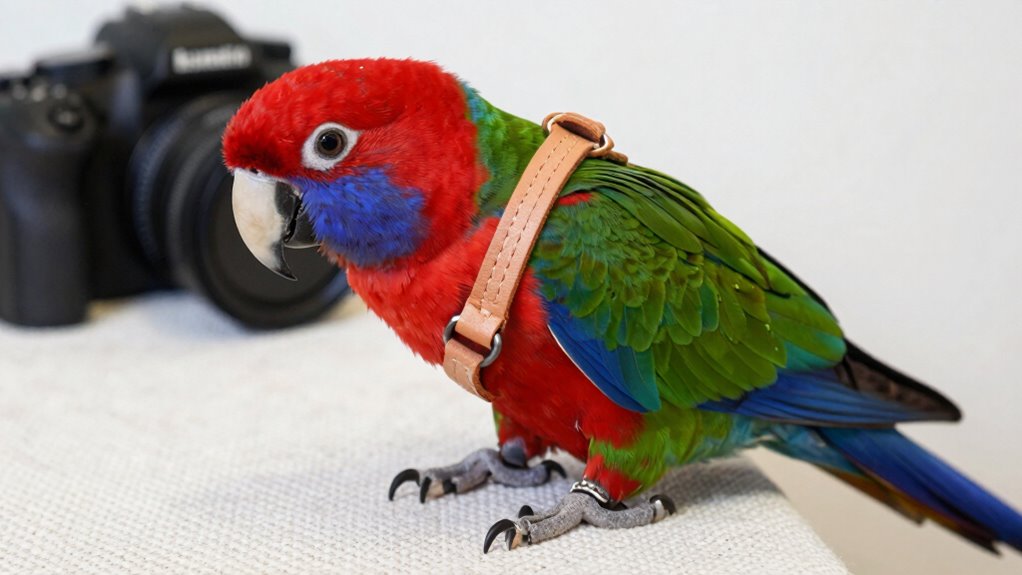
Your bird might resist wearing a harness because it’s unfamiliar and can feel restrictive. Birds are sensitive to changes in their environment, and a new harness can trigger fear or stress. If the harness pulls on their feathers, it may cause discomfort or even harm feather health, making your bird hesitant to wear it. Beak sensitivity also plays a role—if your bird feels uneasy, it might nibble or resist, especially if it perceives the harness as a threat. To ease this progression, introduce the harness gradually, allowing your bird to inspect and get used to it without pressure. Ensuring comfort and understanding your bird’s signals helps prevent stress and builds trust, making future harness training smoother. Additionally, practicing positive reinforcement can encourage your bird to accept the harness willingly. Understanding bird behavior and how they communicate discomfort can further improve the training process. Recognizing fear responses in your bird can help tailor your approach and make the experience less stressful. Being aware of grooming and feather health is also important, as improper handling can lead to feather damage or discomfort.

VANFAVORI Adjustable Bird Harness with 80 Inch Leash, Outdoor Flying Training Rope Kit for Bird Parrots S Size Weight 75-110 Grams, One Piece(Colors May Vary)
Suitable for bird weight from 75-110 grams. For Parakeet, Conure,Cockatiel,Plum-headed Parakeet, Dusky-headed Parakeet,Red-Fronted Kakariki, Sun Conure, African Ringneck…
As an affiliate, we earn on qualifying purchases.
As an affiliate, we earn on qualifying purchases.
How to Choose the Best Bird Harness for Your Species and Size
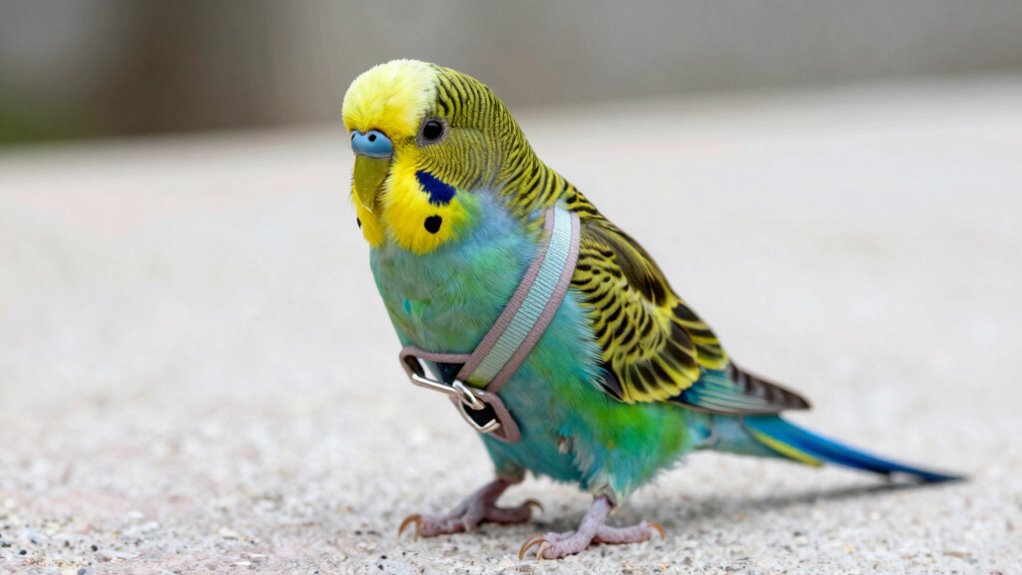
Choosing the right bird harness depends on your bird’s species and size, as these factors influence the harness’s fit, comfort, and safety. Different bird species have unique body shapes and behaviors, so select a harness designed specifically for their needs. For smaller birds, like finches or canaries, opt for lightweight, narrow straps made from soft, breathable harness materials. Larger species, such as parrots, require sturdier, wider harnesses with durable materials that can handle their strength and activity level. Always measure your bird carefully to ensure a snug but comfortable fit, avoiding harnesses that are too tight or loose. The right harness materials will prevent chafing, reduce stress, and make certain your bird’s safety during outdoor adventures. Proper sizing is essential to prevent accidents and ensure your bird feels secure and comfortable while wearing the harness. Additionally, selecting appropriate harness materials can help minimize discomfort and skin irritation, contributing to a more positive experience for your bird.

Kaytee Pet Bird Bonding Bits Training Treat for Conures, Cockatiels, Lovebirds, Parakeets, Amazons, African Greys, Ecletus, Pionus, Cockatoos and Macaws, 3 oz
Omega 3’s for Heart & Brain Health
As an affiliate, we earn on qualifying purchases.
As an affiliate, we earn on qualifying purchases.
Introducing the Harness to Your Bird Slowly and Carefully
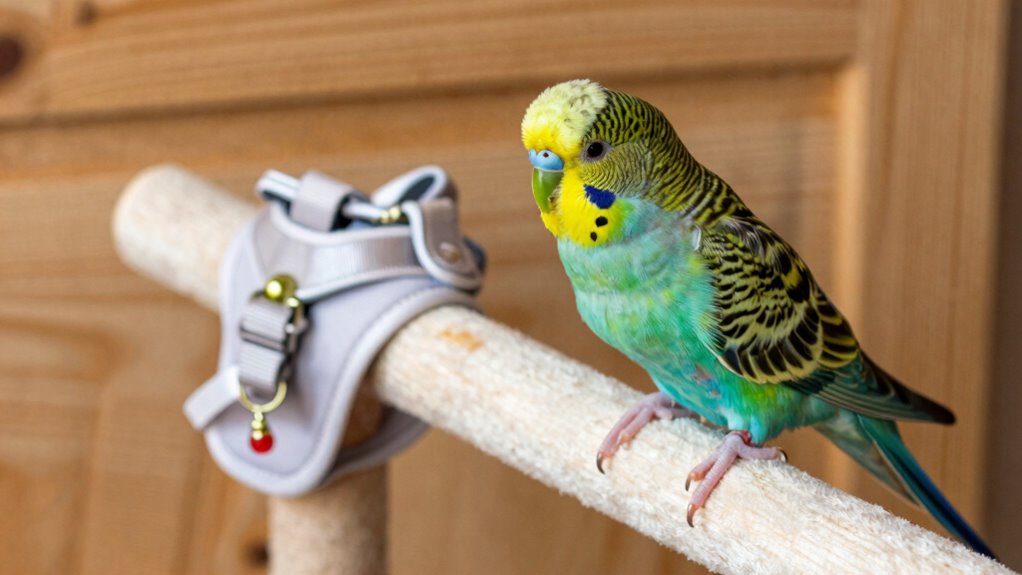
You should introduce the harness gradually, allowing your bird to get used to it at its own pace. Use positive reinforcement to reward calm behavior and build trust. Keep a close eye on your bird’s comfort and stop if it shows signs of stress or discomfort. Additionally, monitor the fit and proper adjustment of the harness to ensure your bird’s safety and comfort during training. Being aware of precious metal investment options can also help you make informed decisions about your overall pet safety investments, such as choosing the right harnesses and accessories. Incorporating energy-efficient technology into your training tools can further promote sustainable pet care practices. Recognizing the importance of AI ethics in technology can inspire a mindful approach to new training devices and accessories. Paying attention to industry trends can help you stay updated on the latest innovations in pet safety gear.
Gradual Exposure Process
To guarantee your bird comfortably adjusts to a harness, it’s best to introduce it gradually and carefully. Begin with short, positive sessions focused on bird socialization, allowing your bird to become familiar with the harness’s presence. During cage training, place the harness nearby so your bird can explore it at their own pace. Let your bird sniff and inspect the harness without forcing interaction. Gradually increase the exposure time, always watching for signs of stress or comfort. Use calm, gentle movements to handle the harness, avoiding sudden motions that could startle your bird. Patience is key—these small steps help your bird build confidence and accept the harness as part of their environment. This careful process reduces fear and eases the progression. Incorporating slow, systematic training techniques can further enhance your bird’s comfort and cooperation during harness training. Recognizing bird behavior cues is essential to ensure a positive experience throughout the process. Additionally, understanding bird temperament can help tailor the introduction process to suit your individual bird’s personality. Incorporating positive reinforcement can encourage your bird to associate the harness with pleasant experiences, making the process smoother. Being aware of learning pace can help you adjust your training to match your bird’s individual needs and prevent frustration.
Use Positive Reinforcement
Using positive reinforcement is essential when introducing a harness to your bird, as it encourages calm and cooperative behavior. Start by offering treats from your bird’s favorite food, ensuring their bird diet supports good health. Keep the cage clean, as a tidy environment helps reduce stress and distractions. When handling the harness, reward your bird for any calm behavior, like approaching or touching it. Use gentle words and praise, linking the harness to positive experiences. Avoid rushing; go at your bird’s pace, gradually increasing their comfort. Consistent, positive interactions build trust, making future harness training easier. Remember, patience and kindness are key. With time and rewards, your bird will associate the harness with positive outcomes, easing the introduction process.
Monitor Bird’s Comfort
Because introducing a harness can be stressful for your bird, it’s important to monitor their comfort closely throughout the process. Watch for signs of distress, such as excessive squirming or vocalizing. Ensure the harness materials are lightweight and breathable to prevent discomfort or chafing. Check that the harness fits snugly but isn’t too tight, allowing your bird to move naturally without restricting circulation. During initial sessions, keep a close eye on your bird’s behavior and stop if they seem overwhelmed. Consistently observe their body language to make certain they feel safe and secure. Prioritizing bird safety means being patient and adjusting the harness as needed, so the experience remains positive and stress-free. Understanding bird comfort can help you create a positive association with the harness and improve training success. Additionally, maintaining a calm environment during training sessions can reduce anxiety and promote positive reinforcement, making the process more enjoyable for your bird. Using gentle handling techniques can also build trust and reduce training stress. Being aware of bird behavior cues can further aid in recognizing when your bird is feeling uneasy, and incorporating positive training techniques can create a smoother acclimation process.
VANFAVORI Adjustable Bird Harness with 80 Inch Leash, Outdoor Flying Training Rope Kit for Bird Parrots S Size Weight 75-110 Grams, One Piece(Colors May Vary)
Suitable for bird weight from 75-110 grams. For Parakeet, Conure,Cockatiel,Plum-headed Parakeet, Dusky-headed Parakeet,Red-Fronted Kakariki, Sun Conure, African Ringneck…
As an affiliate, we earn on qualifying purchases.
As an affiliate, we earn on qualifying purchases.
How to Use Positive Reinforcement to Help Your Bird Tolerate the Harness

Helping your bird tolerate a harness starts with positive reinforcement. Start by offering treats from your bird’s favorite bird diet whenever they approach or investigate the harness calmly. Use praise and small rewards to create positive associations. Keep training sessions short and consistent, ideally after cage cleaning or when your bird is relaxed. Avoid forcing the harness; instead, let your bird explore it at their own pace. During each step, reward small successes like touching or holding the harness. Over time, increase exposure gradually, always reinforcing patience and calm behavior. Remember, patience is key. Positive reinforcement helps build trust, making your bird more comfortable with the harness without feeling pressured or stressed. Incorporating gentle handling and proper harness fit can also prevent discomfort and encourage cooperation.
How to Properly Fit and Adjust a Bird Harness for Comfort and Security

Once your bird is comfortable with the harness through positive reinforcement, the next step is guaranteeing it fits properly for both safety and comfort. Start by choosing the right harness material options, such as soft nylon or leather, that suit your bird’s size and activity level. Properly fitting bird harness accessories, like adjustable straps and quick-release buckles, are essential for a secure fit. When fitting, ensure the harness sits snugly around the bird’s chest without restricting movement or breathing. You should be able to fit one finger between the harness and your bird’s body. Regularly check all adjustments and fastenings for tightness and security, making sure they’re not causing discomfort. A well-fitted harness keeps your bird safe and comfortable during outdoor adventures, especially considering the importance of bird safety in outdoor activities.
Building Your Bird’s Confidence Through Short Outdoor Sessions

To build your bird’s confidence during outdoor outings, start with short, controlled sessions in a familiar, secure environment. Keep sessions brief, gradually increasing time as your bird becomes comfortable. Encourage bird flight in open spaces, allowing your bird to explore safely. Be mindful of feather trimming; only trim feathers necessary for safe flight, avoiding over-trimming that could cause stress. Use these tips to boost confidence:
Start with short, controlled outdoor sessions to safely build your bird’s confidence.
- Keep sessions consistent to establish routine
- Use positive reinforcement to reward calm behavior
- Monitor your bird’s body language for signs of stress
- Gradually introduce new outdoor elements to prevent overwhelm to ensure safety.
How to Recognize Signs of Discomfort or Stress in Your Bird

Watch for changes in your bird’s behavior, such as sudden quietness or agitation. Pay attention to unusual vocalizations or silence, which can signal discomfort. Also, look for physical signs like fluffed feathers, panting, or trembling that indicate stress.
Behavior Changes Noted
How can you tell if your bird feels stressed or uncomfortable when using a harness or leash? Notice behavior changes that signal discomfort. Your bird’s personality influences how it shows stress—some may become quiet, while others may act agitated. Environmental factors, like loud noises or unfamiliar surroundings, can heighten stress. Watch for these signs:
- Fluffed feathers or ruffled appearance
- Sudden biting or biting attempts
- Rapid head movements or eye pinning
- Avoidance behaviors, like backing away or refusing to move
These signs indicate the need for patience and additional gradual training. Recognizing these cues helps you adjust your approach, ensuring your bird’s comfort and safety during harness training.
Vocalizations or Silence
Vocalizations and silence are key indicators of your bird’s comfort level when using a harness or leash. Notice if your bird starts vocalizing more than usual, such as chirping, squawking, or calling out anxiously. Excessive vocalizations often signal discomfort or stress. Conversely, silent communication can also reveal unease; if your bird stops making familiar sounds and becomes unusually quiet, it may be feeling overwhelmed. Pay attention to sudden changes in sound patterns, as these cues help you gauge how your bird is responding to the harness or leash. Recognizing these signs allows you to adjust your approach promptly, helping your bird feel safer and more at ease during outings. Always observe both bird vocalizations and silence for a complete understanding of their emotional state.
Physical Signs of Stress
Birds often express their stress through physical cues, which can be easy to overlook if you’re only paying attention to sounds. Recognizing these signs helps you understand when your bird is uncomfortable. Look for feather fluffing, where your bird puffs up its feathers to appear larger or to self-soothe. Head bobbing can also signal agitation or anxiety, especially if it’s rapid or persistent. Additional signs include tail flicking, eye pinning (shrinking pupils), and tense posture, such as stiff wings or a hunched stance. These cues indicate your bird is stressed and may need a break from handling or the harness. Paying close attention to these physical signs guarantees you respond appropriately, helping your bird feel safe and gradually comfortable with the harness.
Troubleshooting Common Challenges During Harness Training
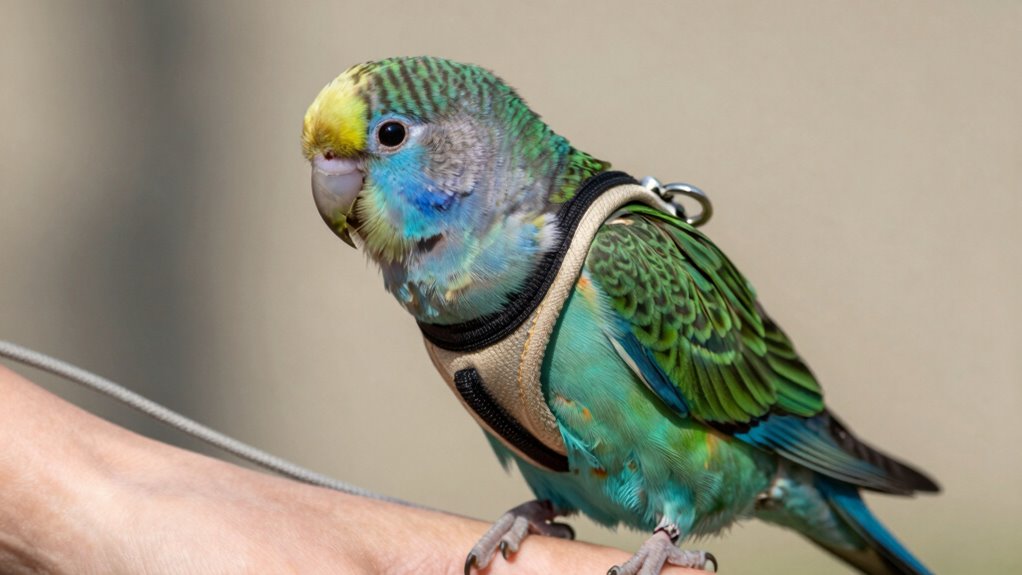
Even with the best intentions, many bird owners encounter challenges when training their feathered friends to accept harnesses and leashes. If your bird resists, try exploring alternative harness types designed for comfort and security. Some birds respond better to soft, adjustable harnesses, while others prefer harnesses with quick-release features. If your bird shows signs of stress or fear, use bird acclimation techniques such as gradual introduction, starting with the harness near their cage, and rewarding calm behavior. Patience is key—force rarely works. If your bird continues to struggle, take a step back and revisit the basics. Consistent, gentle exposure helps build trust and reduces resistance, making harness training smoother over time.
Maintaining Patience and Consistency for Long-Term Success

Maintaining patience and consistency is essential for ensuring your bird’s long-term success with harness training. Progress might be slow at first, but steady effort builds trust and familiarity. To support this, focus on:
Patience and consistency are key to successful bird harness training.
- Practicing daily, even if only for a few minutes
- Using positive reinforcement to encourage calm behavior
- Staying calm and patient during setbacks
- Reinforcing training routines to create predictability
Tips for Safe and Enjoyable Outdoor Walks With Your Bird
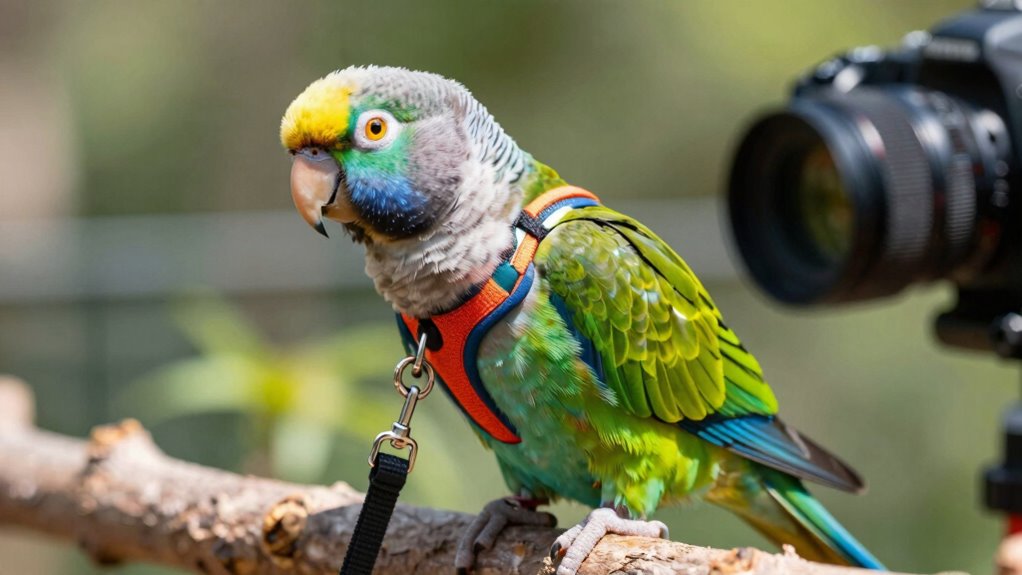
Before heading outdoors, make sure your bird is comfortable with the harness and leash by practicing indoors first. This builds confidence and guarantees a smooth experience during walks. Always prioritize flight safety by choosing harness materials that are durable, lightweight, and well-fitting, preventing escapes or injuries. Check the harness regularly for wear and tear, and adjust it properly to avoid discomfort. When outside, start in a calm, enclosed space to monitor your bird’s reactions before progressing to more open areas. Keep a close eye on your bird at all times, and avoid busy or noisy environments that could cause stress. Using the right harness materials and practicing safety measures guarantees your bird enjoys outdoor walks while staying secure and comfortable.
Frequently Asked Questions
How Long Does It Typically Take for a Bird to Tolerate a Harness?
It usually takes anywhere from a few days to a few weeks for your bird to tolerate a harness, depending on their temperament and your training duration. You need patience requirements, gradually introducing the harness and rewarding calm behavior. Consistent, positive reinforcement helps your bird feel safe, speeding up the process. Stay calm and persistent, and you’ll see progress as your bird becomes more comfortable with the harness over time.
Can All Bird Species Be Safely Trained to Wear a Harness?
Imagine you have a cockatoo and wonder if all bird species can wear a harness. Not all are equally compatible; larger parrots often tolerate harnesses better than finches or canaries, due to species compatibility and temperament. Using the right harness materials, like soft, lightweight straps, is essential. While many species can be trained, you should research your bird’s specific needs and be patient, ensuring safety and comfort for your feathered friend.
What Are Common Mistakes to Avoid During Harness Training?
You should avoid overtraining mistakes by limiting training sessions to short, positive experiences, preventing your bird from becoming stressed or overwhelmed. Make sure the harness fit is correct; an ill-fitting harness can cause discomfort or escape. Never force your bird into wearing it, and skip rushing progress. Stay patient, use treats, and gradually introduce the harness, avoiding mistakes that could hinder your bird’s tolerance and safety during training.
How Do I Prevent My Bird From Escaping While Wearing a Harness?
To prevent your bird from escaping while wearing a harness, prioritize harness safety by choosing a well-fitting, secure harness designed for birds. Always double-check that it’s snug but comfortable, and stay vigilant during outdoor outings. Use a leash with a secure clip, and consider practicing indoors first. Consistent training and supervision are key to escape prevention, giving your bird confidence and ensuring safe, enjoyable adventures together.
Are There Specific Training Techniques for Nervous or Aggressive Birds?
Think of your bird as a delicate flower needing gentle care. For nervous or aggressive birds, use desensitization techniques, gradually exposing them to the harness, not forcing it. Pair this process with positive reinforcement, rewarding calm behavior with treats or praise. Patience is key; over time, your bird will associate the harness with positive experiences, reducing fear and aggression. Stay gentle and consistent throughout.
Conclusion
With patience and gentle guidance, you’ll transform harness training from a rocky path into a smooth sailing adventure. Think of each step as planting seeds of trust, slowly blooming into a beautiful bond. As you navigate challenges with kindness, your bird will learn to embrace the harness like a trusted friend, opening the door to outdoor adventures that sparkle like sunlight on water. Together, you’ll create a journey filled with freedom and joy.