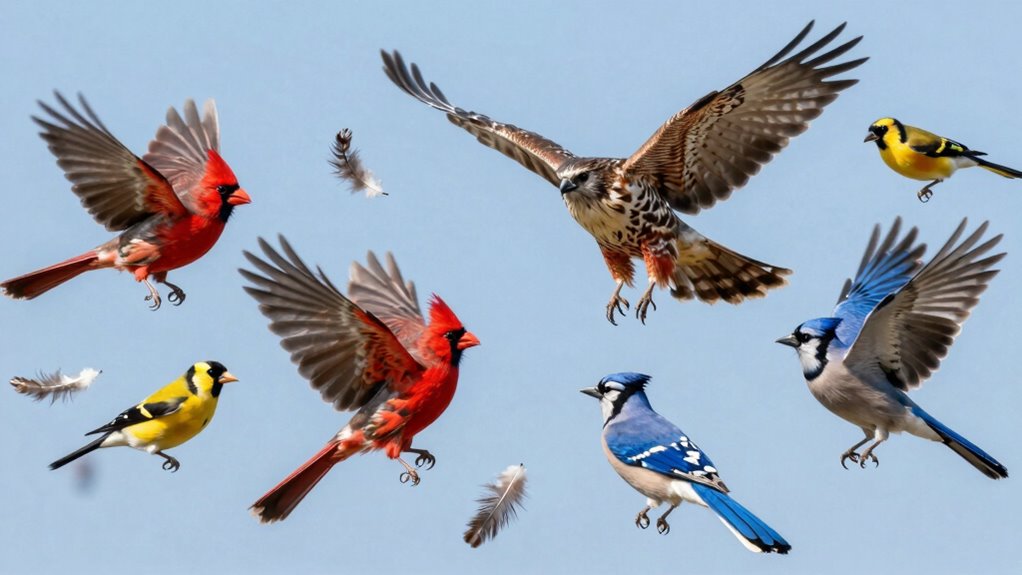

Birds mob predators together to protect their nests and young by acting as a coordinated team. When they sense danger, they quickly gather in large groups, making it harder for predators to attack successfully. Their numbers help them spot threats early, and their loud vocalizations and dive-bombing tactics confuse and deter attackers. This collective effort boosts their chances of survival. Keep exploring to discover more about how these behaviors work and why they are so effective.
Key Takeaways
- Large flocks improve predator detection and create an intimidating visual threat.
- Coordinated mobbing behaviors overwhelm and disorient predators, discouraging attacks.
- Collective defense increases the likelihood of early predator spotting and rapid response.
- Mobbing tactics like dive-bombing and loud calls make predators feel overwhelmed.
- Nesting site selection with good visibility facilitates effective mobbing and predator deterrence.
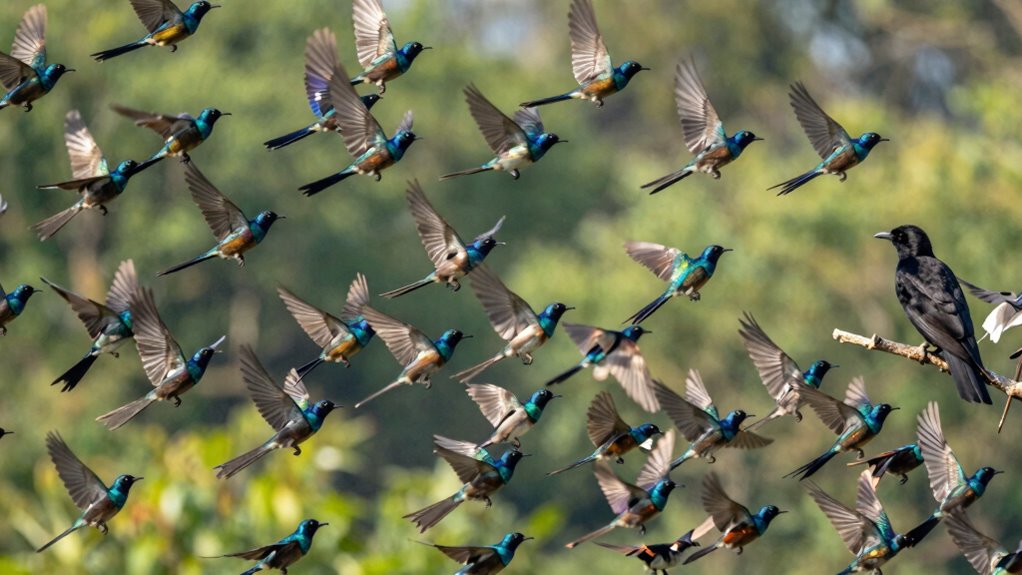
Bird migration patterns play a significant role in mobbing behavior. During migration, birds often gather in large flocks, making them more effective at defending themselves. These large groups can spot predators from a distance, and their sheer numbers make it more intimidating for the attacker. When a predator, like a hawk or falcon, approaches a flock, the birds instinctively band together, dive-bombing or vocalizing loudly to disorient and deter the threat. Their mobility during migration also allows them to quickly relocate if a predator becomes a persistent danger in a particular area, effectively reducing the risk of attack. This behavior illustrates how migration strategies are closely linked to their survival tactics. Moreover, their ability to adapt their mobbing tactics based on environmental cues demonstrates their remarkable behavioral flexibility.
During migration, large flocks use loud calls and dive-bombs to scare predators and quickly relocate if threatened.
Nesting site selection is another critical factor influencing mobbing behavior. Birds tend to choose nesting sites that offer good visibility and ample cover, but they also prefer areas where they can quickly summon others in case of danger. Once their nest is established, they remain highly vigilant. If a predator nears the nesting site—a fox, snake, or even a larger bird—the resident birds will rally other nearby birds to join the mob. They dive, screech, and swoop in a coordinated effort designed to make the predator feel overwhelmed and discouraged from attacking. This collective defense mechanism is especially vital during breeding season when eggs and chicks are most vulnerable. The strength of their communal response often depends on the predation pressure in their environment, which can vary depending on the presence of predators and habitat conditions.
As an affiliate, we earn on qualifying purchases.
Frequently Asked Questions
How Do Birds Recognize Predators From a Distance?
You recognize predators from a distance through visual cues like distinct shapes, movements, or colors that trigger a predator alarm in birds. They’re keen observers, detecting these visual cues quickly, which alerts them to danger. Once they spot a potential threat, they communicate using calls or alarm signals, prompting nearby birds to mob the predator. This coordinated response helps protect the flock from harm effectively.
What Triggers a Mobbing Response in Birds?
You trigger a mobbing response in birds when they detect predator silhouettes or hear alarm calls that signal danger. Once they recognize these cues, they become alert and start vocalizing loudly to warn others. This collective behavior arises from their instinct to protect the flock, prompting them to mob the predator by diving, calling, or swooping around it. Your presence or sudden movement can also intensify their alertness and response.
Are Certain Bird Species More Likely to Mob Predators?
Yes, certain bird species are more likely to mob predators due to their avian communication and predator avoidance strategies. Birds that rely heavily on social signals and alarm calls tend to mob predators more actively, especially those with strong territorial instincts or high predation risks. You’ll notice species like crows, starlings, and finches often band together to mob threats, using coordinated signals to protect themselves and their nests efficiently.
How Effective Is Mobbing in Deterring Predators?
Mobbing is quite effective in deterring predators because it creates predator confusion and signals alarm to other birds. When you see birds mobbing, their coordinated attack overwhelms the predator, making it harder to target a single prey. The loud calls and aggressive behavior serve as alarm signaling, warning nearby birds and discouraging the predator from continuing its attack. This collective effort increases the chances of predator retreat and safety for the mobbing birds.
Do All Bird Groups Participate in Mobbing Behaviors?
Not all bird groups participate in mobbing behaviors. Imagine a flock of chickadees loudly alarm calling to scare off a hawk—this is an example of altruistic behavior and territorial defense. Many small birds engage in mobbing, but larger or solitary species often don’t. Birds that mob do so to protect their territory and kin, showing that mobbing is a collective effort rooted in their instinct to defend and survive.
Conclusion
So, as you see, birds band together boldly to beat back beasts. Their collective courage creates an mesmerizing, chaotic curtain of coordinated chaos, confusing and deterring dangerous predators. By combining clever communication and cooperative combat, they craft a mesmerizing display of community and courage. This teamwork transforms terror into a tactical, thrilling theater of teamwork, teaching us that together, even tiny creatures can tackle terrifying threats with tenacity and trust.