To keep your bird happy and prevent boredom, regularly rotate toys and swings every 1-2 weeks or more often if your bird is very active. Switch out items with new textures, colors, or shapes to maintain their curiosity. Avoid overcrowding and replenish favorites periodically to boost interest. Consistently changing toys and swings helps stimulate natural behaviors and keeps your bird engaged. If you continue, you’ll discover simple tips to make this routine even easier and more effective.
Key Takeaways
- Rotate bird toys and swings every 1-2 weeks to maintain novelty and prevent boredom.
- Introduce new textures, colors, or shapes during rotation to stimulate curiosity.
- Swap toys in small groups to avoid overwhelming the bird and keep engagement high.
- Observe your bird’s reactions to determine the optimal rotation frequency for their activity level.
- Regularly update and hide toys temporarily before reintroducing to renew their interest.
How to Recognize When Your Bird Is Bored
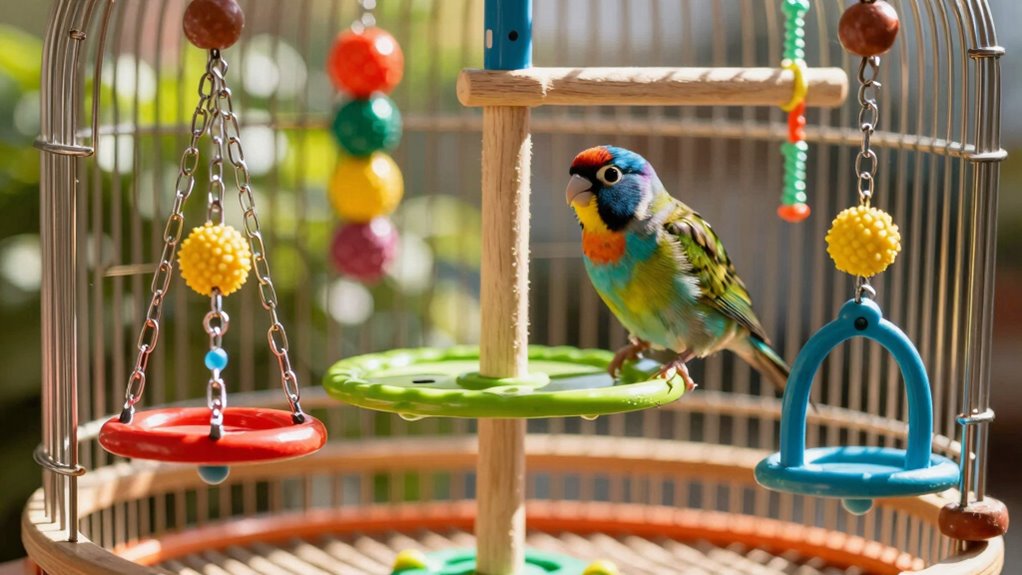
How can you tell if your bird is bored? One clear sign is a lack of bird enrichment, which leads to noticeable behavioral cues. If your bird seems restless, chews on cage bars, or feathers excessively, it’s a sign they need more stimulation. Watch for repetitive behaviors like pacing or vocalizing loudly without purpose. A bored bird often shows less interest in their environment and may become lethargic or disengaged. Additionally, a lack of natural behaviors can be an indicator of boredom. Incorporating variety of toys and activities is essential for maintaining your bird’s overall well-being. Providing appropriate enrichment activities can significantly reduce boredom and promote mental engagement. Conversely, when you observe your bird actively exploring, playing, or engaging with toys, it indicates healthy stimulation. Recognizing these behavioral cues helps you understand when your bird needs more mental and physical activity. Providing appropriate bird enrichment is key to keeping your feathered friend happy and preventing boredom.
How to Choose the Best Toys and Swings for Your Bird
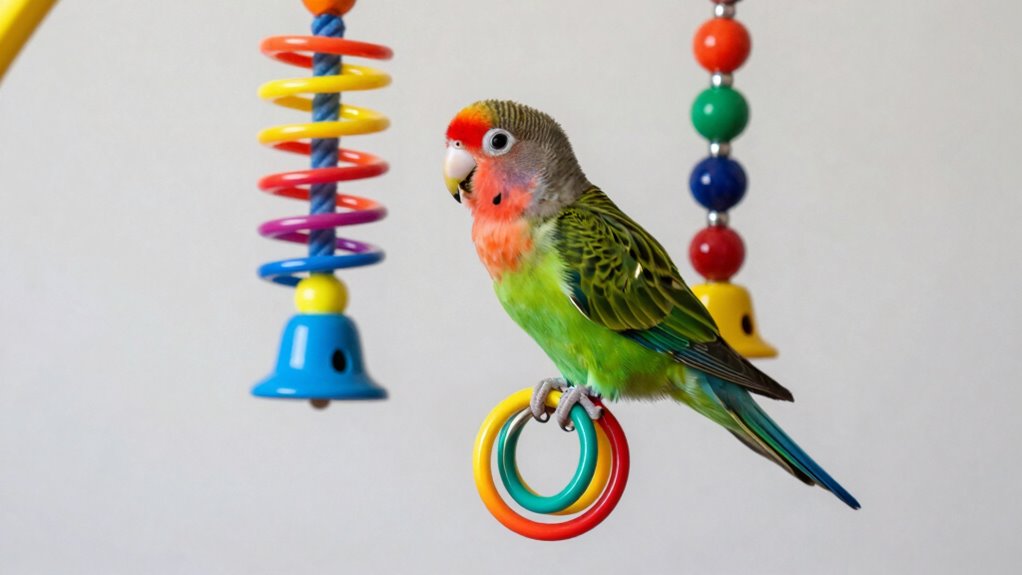
Choosing the right toys and swings for your bird is key to keeping them engaged and preventing boredom. Opt for a variety of toys that encourage natural behaviors, like shredding or foraging, and consider DIY crafts to create personalized options. When selecting swings, look for safe, comfortable materials that promote movement and balance. Incorporate bird training techniques by introducing new toys gradually, rewarding curiosity and exploration. Avoid overcrowding the cage with too many toys at once; instead, rotate them regularly to maintain interest. Focus on durability and safety, ensuring all items are non-toxic and free of sharp edges. Understanding bird behavior can help you select toys that truly stimulate your pet’s mental and physical needs. Additionally, choosing safe and durable toys ensures longevity and safety for your bird. Incorporating appropriate enrichment not only enhances your bird’s environment but also fosters healthy habits and reduces stress. By thoughtfully choosing and introducing toys and swings, you foster mental stimulation and physical activity, helping your bird stay happy and healthy.
How to Rotate Bird Toys and Swings in Easy Steps
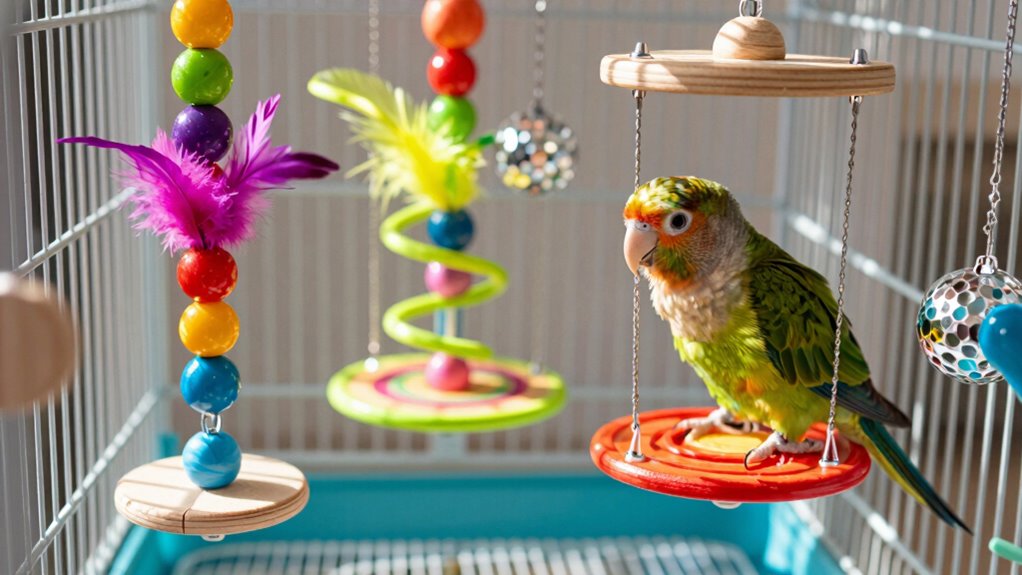
Keeping your bird engaged requires more than just selecting the right toys and swings; it also involves regularly rotating them. To do this effectively, establish a simple schedule to swap out toys, ensuring your bird stays stimulated. When rotating, consider your bird’s feeding habits and preferences, introducing new textures or colors for variety. Clean the cage thoroughly during cage cleaning to remove any debris or droppings, and then replace the toys to keep the environment fresh. You can also hide toys for a few days before reintroducing them to renew their appeal. Rotate toys in small groups so your bird doesn’t become overwhelmed. Observe your bird’s reactions to determine which toys are most engaging, and adapt your rotation accordingly. Incorporating proper toy rotation techniques and understanding the importance of mental stimulation can significantly enhance your bird’s mental stimulation and prevent boredom. Additionally, choosing safe and durable toys ensures your bird’s safety during play and keeps the environment engaging over time. Implementing reliable safety checks and having a variety of toys helps maintain a stimulating environment that promotes your bird’s overall well-being. To further prevent boredom, consider monitoring your bird’s behavior and adjusting your approach as needed.
How Often Should You Rotate Your Bird’s Toys?
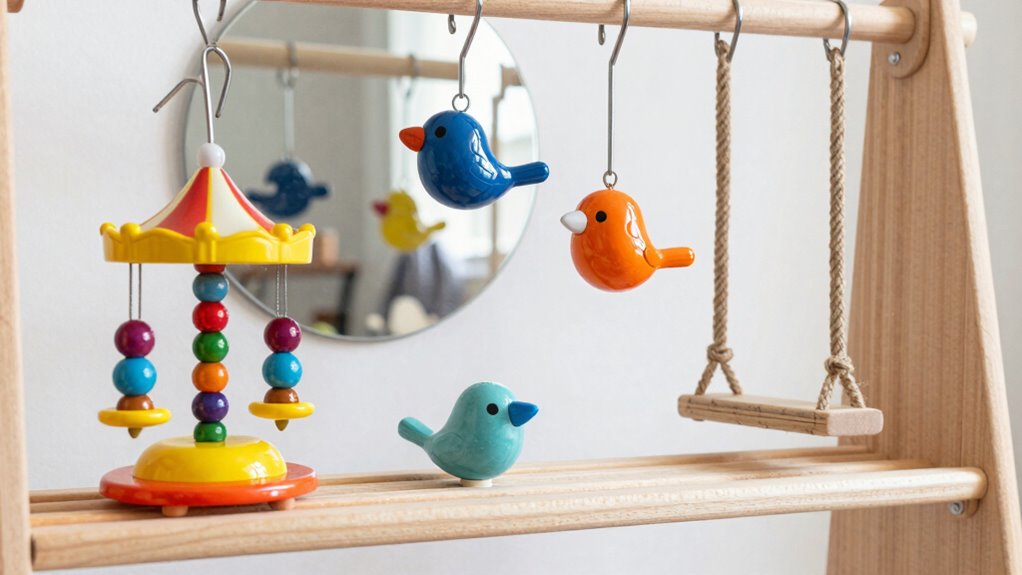
You might wonder how often you should rotate your bird’s toys to keep them engaging without causing confusion. Generally, changing toys every one to two weeks works well. This schedule promotes bird fitness by encouraging activity and prevents boredom. Rotating toys also keeps your cage décor fresh and interesting for your feathered friend. If your bird is particularly active or curious, consider swapping toys more frequently, maybe every few days. Conversely, if your bird prefers familiar items, a longer rotation, like every three weeks, might be better. Observe your bird’s behavior—if they seem disinterested or bored, it’s time for a change. Regular rotation maintains their interest, stimulates mental and physical activity, and keeps their environment lively and stimulating. Incorporating environmental enrichment devices can further boost their mental health and prevent boredom. Paying attention to cage organization can also help in creating an engaging environment that encourages exploration and play.
Extra Tips to Keep Your Bird Happy and Engaged
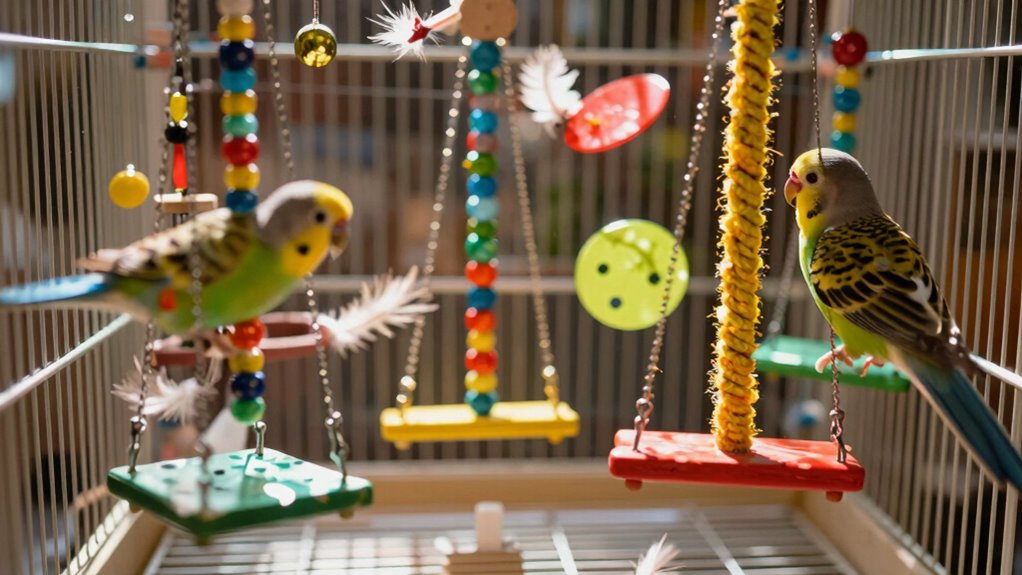
To keep your bird happy and engaged, incorporating a variety of enrichment activities is essential. Mixing up feeding routines, such as offering treats in different ways or hiding food, stimulates natural foraging behaviors. Ensuring your cage size provides enough space for movement and play prevents boredom and promotes physical health. Regularly changing toys and introducing new ones keeps your bird curious and interested. Incorporate safe, diverse perches and climbing structures to challenge your bird’s agility. Additionally, spending quality time talking or training your bird to strengthen your bond can be very rewarding. enrichment activities are vital for preventing boredom and supporting your bird’s mental and physical well-being. These simple strategies, including appropriate cage size, make a big difference in preventing boredom and supporting your bird’s mental and physical well-being. To further enhance your bird’s environment, consider creating a stimulating habitat that encourages natural behaviors and exploration. Engaging your bird in mental stimulation activities can also help prevent boredom and promote overall happiness. Incorporating essential oils like lavender or eucalyptus (used cautiously and appropriately) can create a calming environment, reducing stress and enhancing your bird’s overall comfort.
Frequently Asked Questions
What Signs Indicate My Bird Prefers Specific Toys or Swings?
You can tell your bird prefers certain toys or swings if it spends more time engaging with them, shows excitement, or consistently chooses them over others. Watch for signs like preening, vocalizing, or playful behavior around specific items. When selecting swings, observe which ones your bird hangs on or interacts with most. This helps you understand their preferences and choose the best options, ensuring they stay happy and stimulated.
Can Rotating Toys Reduce My Bird’s Stress?
Did you know that 80% of pet birds show reduced stress levels when their environment is varied? Rotating toys can effectively reduce your bird’s stress by keeping their environment stimulating and preventing boredom. Regular toy rotation encourages curiosity, mental engagement, and reduces anxiety. By changing toys frequently, you help your bird stay mentally active and happy, ultimately promoting a calmer, healthier bird that feels secure and content in its environment.
Are Certain Materials Better for Bird Toys?
Certain materials are better for bird toys because they guarantee material safety and toy durability. Opt for non-toxic, bird-safe woods like untreated pine or apple, and avoid plastics with harmful chemicals. Natural fibers like sisal or rope are also safe and durable. You’ll want to choose materials that withstand chewing and play while being safe if ingested, helping keep your bird healthy and entertained without risk.
How Can I Involve My Bird in Choosing New Toys?
You can involve your bird in choosing new toys by offering a variety of safe, engaging options for them to inspect and interact with. Observe which toys they show interest in and ask for their preferences during playtime. This promotes bird enrichment and guarantees toy safety, making your bird feel involved and happy. Rotating toys based on their preferences keeps their environment stimulating and prevents boredom.
What Are Creative Ways to Hide Treats in Toys?
A bird in the hand is worth two in the bush, so get creative with DIY enrichment by hiding treats inside toys. You can stuff them in paper tubes, hide treats beneath puzzle pieces, or tuck them into small boxes. Use safe, bird-friendly materials and change the hiding spots regularly to keep your feathered friend engaged. This keeps their mind sharp and prevents boredom while making treat time more exciting.
Conclusion
By rotating your bird’s toys and swings regularly, you keep their environment fresh and stimulating. Imagine Sarah, who noticed her parrot lost interest in old toys, then started swapping them out weekly. Suddenly, her bird was more active and happy. Just like Sarah’s experience, you’ll see your bird flourish when you keep things exciting. So, make rotation a habit, and watch your feathered friend thrive with endless curiosity and joy.