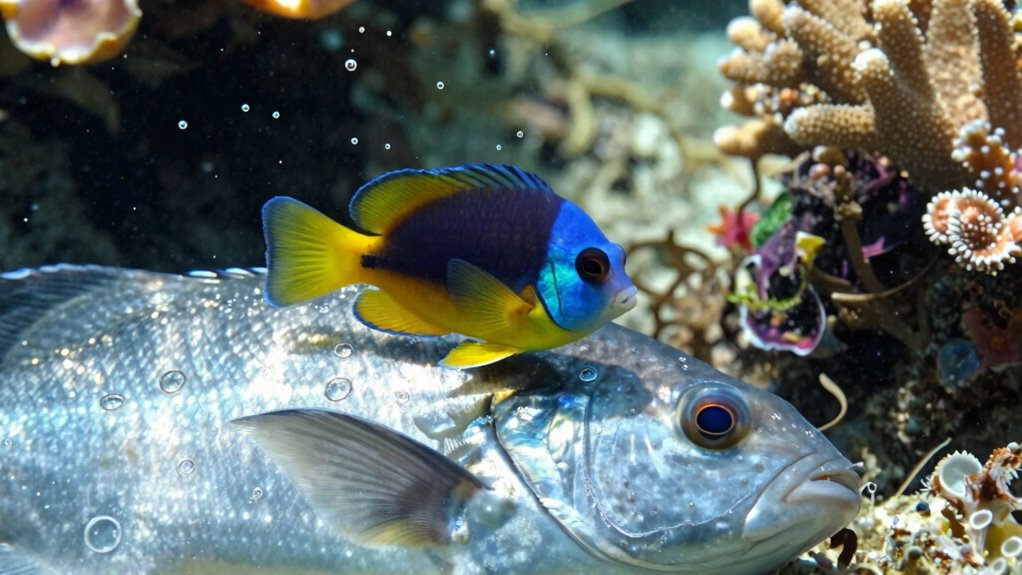
You might wonder why some fish clean others, and it’s because these cleaner fish form mutualistic relationships that benefit both. They remove parasites, dead skin, and debris from larger fish, which helps keep them healthy and reduces disease spread. These interactions also provide the cleaner fish with a steady food source. Recognizing specific signals and behaviors makes these partnerships work smoothly. If you keep exploring, you’ll discover how vital these interactions are to marine ecosystems’ balance.
Key Takeaways
- Cleaner fish remove parasites, dead skin, and debris, benefiting the health of larger host fish.
- These relationships are mutualistic, providing cleaner fish with a steady food source.
- Cleaner fish establish specific cleaning stations and use signals to attract clients.
- Such interactions reduce disease spread and improve overall fish population health.
- The behavior enhances ecosystem stability through interdependence and balanced predator-prey dynamics.
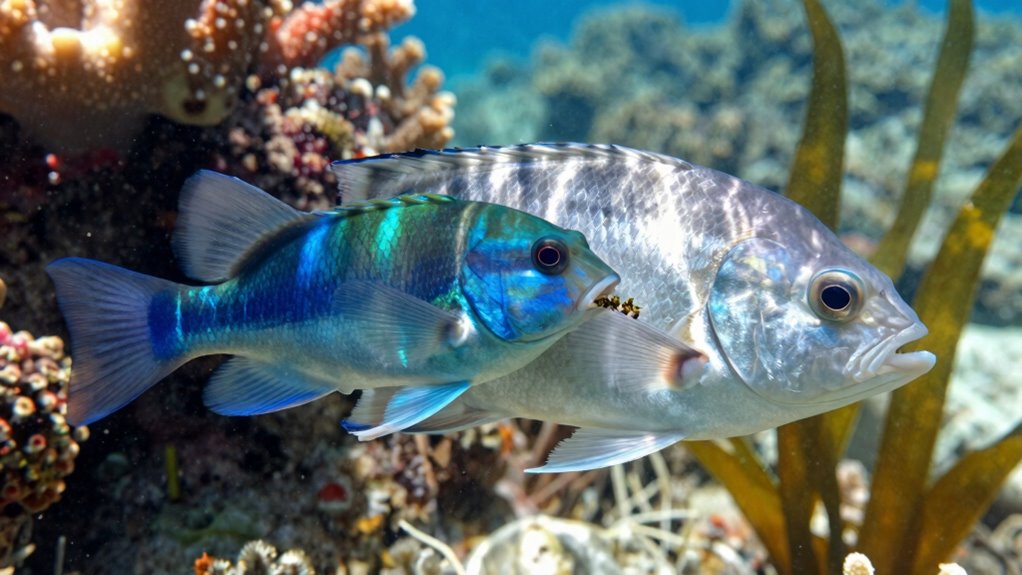
Have you ever wondered why some fish willingly clean other fish? It’s a fascinating example of marine symbiosis, where two different species interact in a way that benefits both. In these relationships, the cleaner fish remove parasites, dead skin, and other debris from their hosts, which are often larger fish. This mutualistic interaction not only helps keep the host healthy, but it also provides the cleaner fish with a reliable source of food.
Cleaner fish remove parasites and debris, benefiting both themselves and larger host fish in a fascinating marine partnership.
This behavior plays a significant role in predator-prey dynamics, as it influences how fish interact within their environment. Cleaner fish often establish cleaning stations, where larger fish come to receive their grooming. These stations become social hubs, with cleaner fish recognizing regular clients and even performing specific rituals to signal their readiness to clean. In this way, the relationship is built on trust, as larger fish allow the cleaners to perform their tasks without attacking or eating them. This mutual trust reduces the risk the cleaner fish faces in the presence of potential predators, as the larger fish act as protectors of sorts during the cleaning process.
The importance of marine symbiosis here extends beyond individual interactions. It impacts the health and stability of entire fish populations. When cleaner fish thrive, they help control parasite populations, reducing the spread of disease among larger fish. This, in turn, can influence predator-prey dynamics by maintaining the health of prey species and ensuring their survival. Conversely, if cleaner fish populations decline, parasites can proliferate, weakening their hosts and making them more vulnerable to predators. The balance maintained through these relationships can ripple through the ecosystem, affecting predator-prey interactions and the overall health of the marine environment. Additionally, these specialized relationships demonstrate how ecological balance depends on the cooperation of different species. Understanding these interactions also highlights the role of biodiversity in supporting resilient ecosystems, as diverse species interactions contribute to ecosystem stability.
You might also notice that these relationships are highly specialized. Some cleaner fish have specific signals, like unique dances or colors, to attract their clients. Larger fish have learned to recognize and approach these signals, understanding that the cleaner fish pose no threat and will provide a beneficial service. This mutual understanding enhances the efficiency of their interactions and helps sustain the delicate balance of marine ecosystems. Recognizing the interdependence among species highlights how the loss of one can impact the entire ecosystem. Ultimately, the intricate behaviors seen in these fish relationships serve as a reminder of how interconnected life is within marine environments, emphasizing the importance of preserving ecological diversity for the health of our oceans.

AQUANEAT Aquarium Cleaning Tools, Fish Tank Cleaner Kit with Adjustable Long Handle, 5 in 1 Set Including Fish Net, Algae Scraper
5-in-1 cleaning tool kit helps to keep tank neat and clean without getting hands wet. Made the cleaning…
As an affiliate, we earn on qualifying purchases.
As an affiliate, we earn on qualifying purchases.
Frequently Asked Questions
Do Fish Cleaning Behaviors Vary Across Different Aquatic Environments?
Yes, fish cleaning behaviors vary across different aquatic environments. In coral reefs, cleaner fish like wrasse actively seek out larger fish to remove parasites, forming symbiotic relationships. In freshwater streams, cleaning behaviors are less common but still observed among certain species. You’ll notice that environmental factors, such as habitat type and available species, influence how and when fish engage in cleaning behaviors, adapting to their specific ecosystems.
How Do Fish Recognize Their Cleaning Partners?
You recognize your cleaning partners through mutualistic relationships, where both benefit. Fish use recognition mechanisms like visual cues, such as specific colors or patterns, to identify trustworthy cleaners. These signals help establish cooperation, ensuring cleaners don’t bite or harm their hosts. By observing these cues, fish confidently engage in cleaning behaviors, fostering mutual trust and reinforcing their symbiotic bond.
Are There Risks Involved in Fish Cleaning Interactions?
Yes, there are risks involved in fish cleaning interactions. While mutual benefits, like parasite removal and cleaner fish gaining food, are common, conflicts can arise from territorial disputes. You might see cleaner fish accidentally bite healthy tissue or provoke defensive reactions from hosts. These interactions rely on trust, but disputes over space or access can lead to aggressive behavior, making the relationship potentially risky for both fish.
Do Fish Cleaning Behaviors Have Evolutionary Origins?
Did you know fish cleaning behaviors likely evolved from ancient symbiotic relationships? These interactions probably started as mutual benefits, where cleaner fish gained food, and hosts received parasite removal. Over time, predator-prey dynamics shaped these behaviors, reinforcing cooperation. This evolutionary origin highlights how complex social interactions develop in aquatic environments, demonstrating nature’s remarkable ability to foster mutually beneficial relationships that improve survival for both cleaning and host fish.
How Do Environmental Changes Affect Fish Cleaning Relationships?
Environmental changes can disrupt fish cleaning relationships by altering habitats and food availability. When conditions shift, symbiotic bonds may weaken or break, affecting mutual benefits like parasite removal and nourishment. You might notice fewer cleaning interactions or changes in behaviors, as fish adapt to new environments. These adjustments highlight how sensitive these relationships are to habitat stability, emphasizing the importance of healthy ecosystems for maintaining beneficial mutualistic interactions among fish species.

Seachem Aquarium Cleaner 250ml
Safe for Glass & Acrylic
As an affiliate, we earn on qualifying purchases.
As an affiliate, we earn on qualifying purchases.
Conclusion
Imagine you’re swimming alongside these tiny heroes, their bright scales shimmering as they approach the unsuspecting fish. You wonder what secrets lie beneath their actions—are they simply cleaning, or is there more at play? As the water ripples around you, you realize this delicate balance of trust and survival keeps the ocean alive. And just like that, you’re left pondering: what other mysteries hide beneath the surface of these fascinating relationships?

DaToo Aquarium Mini Magnetic Scrubber Scraper Small Fish Tank Cleaner Nano Glass Aquarium Cleaning Tools with Super Strong Magnet
【Perfect Mini Aquarium Cleaner】: Still looking for a powerful magnetic aquarium glass cleaner? Then you can't miss the…
As an affiliate, we earn on qualifying purchases.
As an affiliate, we earn on qualifying purchases.

MICROBE-LIFT Herbtana Fish Medicine, Immune Booster and Parasite Treatment for Aquarium Fish Health, Ich Treatment, Use in Freshwater Tank or Saltwater Aquarium, 16 Ounces (HERB16)
IMPROVE FISH AQUARIUM HEALTH: MICROBE-LIFT HERBTANA is a unique, herbal, immune-enhancing stimulant, to reduce parasite infections in your…
As an affiliate, we earn on qualifying purchases.
As an affiliate, we earn on qualifying purchases.