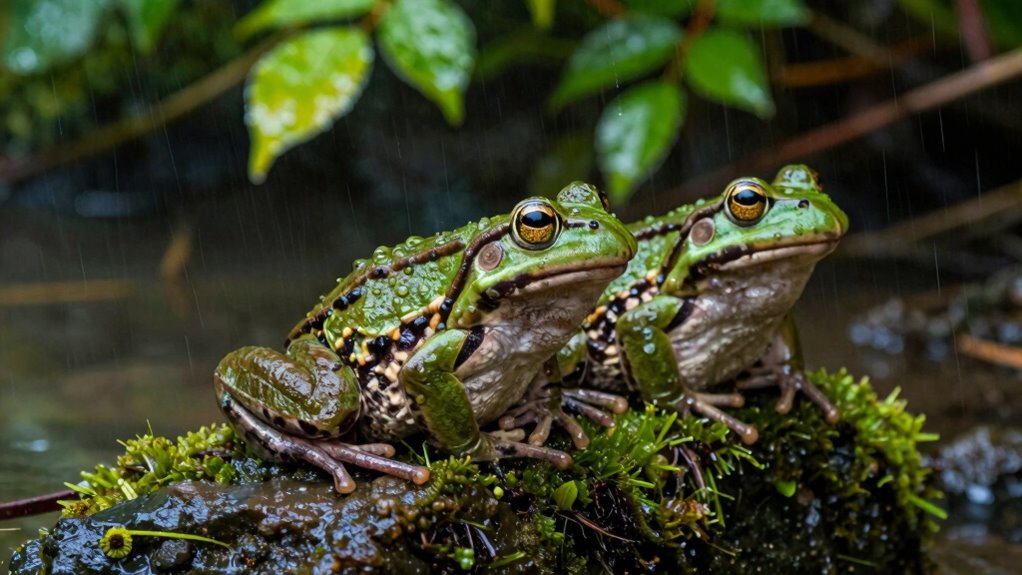

After rain, frogs call more because the moist environment signals ideal breeding conditions. The standing water from rain creates perfect spots for eggs and tadpoles, encouraging frogs to become more active and vocal. These calls help attract mates and are part of their natural reproductive strategy. The increased moisture also boosts frog energy levels and reduces desiccation risks. To uncover more about what influences their vocal behavior, keep exploring how weather shapes frog communication.

Get pet supplies delivered free with Prime
- Fast, free delivery on millions of items
- Prime Video, Amazon Music and more included
- Member-only deals all year
Key Takeaways
- Frogs call more after rain to attract mates in favorable, moist conditions.
- Rain fills breeding ponds, providing ideal sites for reproduction.
- Increased humidity and warmth amplify frog activity and vocalizations.
- Calls are synchronized with environmental cues to optimize reproductive success.
- Rain-driven choruses signal frogs are ready to reproduce in optimal conditions.
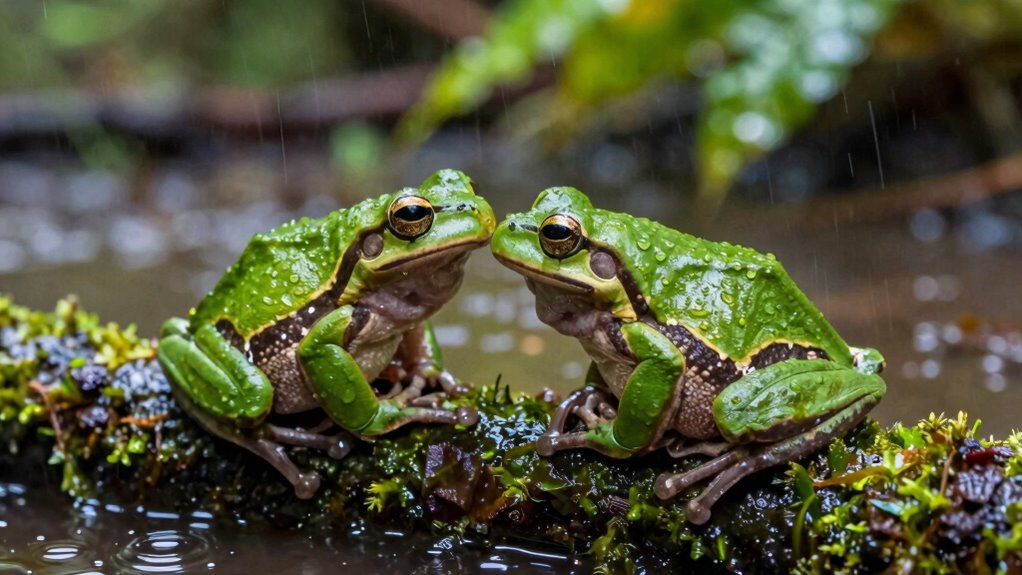
After a rainstorm, frogs tend to call more frequently, signaling their presence and attracting mates. You might notice a sudden surge of croaks and ribbits echoing through your neighborhood or nearby wetlands. This increase in frog calls is a clear example of amphibian communication, which plays a *essential* role in their reproductive behavior. When the weather influences amphibian communication, frogs are more likely to be active and vocal because the conditions are favorable for breeding. Heavy rain and moist environments create the *perfect* setting for frogs to broadcast their calls, ensuring they stand out in a crowded chorus.
After rain, frogs call more to attract mates in moist, ideal breeding conditions.
The connection between weather and frog calling is rooted in the needs of these amphibians to reproduce successfully. Rain fills ponds and puddles, providing *necessary* breeding sites that might dry up during dry spells. The increased moisture levels signal to frogs that it’s time to mate, prompting them to vocalize more often. Their calls serve as a way to communicate with potential mates, letting them know where they are and that they’re ready to reproduce. When the weather is wet, frogs are more active because the conditions reduce the risk of desiccation and make it easier for eggs and tadpoles to develop in aquatic environments.
You might wonder why frogs don’t call just anytime. It’s primarily because their calls are energy-intensive and attract predators. Hence, they tend to be strategic, choosing *ideal* weather conditions—like after a rain—to maximize their chances of successful reproduction without unnecessary risk. The weather influence on amphibian communication isn’t just about moisture; temperature also plays a role. Warmer, humid conditions boost frog activity, amplifying their calls, while dry, cold days tend to suppress vocalizations. So, when you hear an abundance of frogs calling after a rain, it’s a sign that the weather has aligned *perfectly* with their biological needs.
The increased calling frequency isn’t just random noise; it’s an adaptive behavior shaped by evolution. Frogs have learned that rain and humidity improve their chances of attracting mates and ensuring their offspring survive. This weather-dependent communication strategy helps them optimize their reproductive efforts during the most advantageous times. As a result, after rainfall, you’re likely to hear a lively chorus of frogs, a natural symphony driven by the intricate relationship between amphibian communication and weather influence. It’s a reminder of how finely tuned these creatures are to their environment and how *important* weather conditions are to their life cycle.
As an affiliate, we earn on qualifying purchases.
Frequently Asked Questions
Do All Frog Species Increase Calls After Rain?
Not all frog species increase calls after rain, but many do during peak Frog mating seasons. Rain creates ideal conditions, prompting frogs to call more to attract mates and defend their habitat selection. Your observations might vary depending on the species and environment. Typically, increased calling signals abundant resources and suitable breeding conditions, helping frogs maximize reproductive success. So, if you notice more calls after rain, it’s likely a part of their natural mating behavior.
How Does Temperature Affect Frog Calling Behavior Post-Rain?
Think of frogs as singers tuning their instruments before a concert. When temperature fluctuations are gentle and warm, you notice more calling because they’re more comfortable and breeding-ready. Cooler or erratic temperatures make frogs hesitate, like musicians pausing before a performance. Post-rain, ideal warmth boosts their activity, signaling they’re ready to mate. So, the right temperature sparks their chorus, turning rainy nights into lively symphonies.
Do Frogs Call More During the Day or Night After Rain?
You’ll notice frogs call more at night after rain, as nocturnal frog vocalization aligns with cooler, moist conditions ideal for breeding. Rain patterns create the perfect environment, stimulating frogs to sing and attract mates. During the day, calling diminishes because the heat and dryness are less favorable. So, after rain, your best chance to hear frog calls is during the nighttime, when their vocalization peaks to signal readiness for reproduction.
Can Frog Calls Indicate the Presence of Predators?
Frog vocalizations can indeed hint at predator awareness, but they also serve other vital purposes. When you hear an increase in calls, it might signal that frogs are warning each other of lurking dangers or trying to attract mates. However, this chorus can also draw predators closer, creating a tense, unpredictable scene. So, listening closely, you might just catch the moment when nature’s delicate balance teeters on the edge.
How Long Do Frogs Continue Calling After Rain Stops?
After rain stops, frogs typically continue calling for a few hours or sometimes overnight. Rain triggers frog mating by creating ideal conditions, so they keep calling to attract mates even after the rain ends. You’ll notice their calls diminish once the environment dries out or temperatures change. Your best chance to hear their persistent calls is shortly after rain, as frogs utilize this time for breeding and signaling their presence to potential mates.
Conclusion
So, the next time rain hits, brace yourself—you’re about to witness the most thunderous, earth-shaking frog chorus in history! Their calls will be louder than a rock concert, echoing through the night like a symphony of nature’s greatest singers. It’s as if every frog in the world suddenly decided to compete for the title of “Loudest Croaker,” turning the quiet night into a wild, unstoppable celebration of rain and life.
Halloween Picks
halloween
As an affiliate, we earn on qualifying purchases.