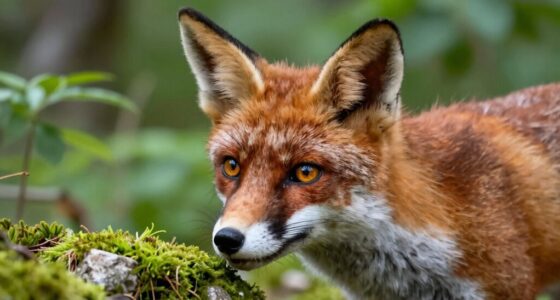

Nocturnal and diurnal activity patterns differ mainly due to survival strategies and environmental adaptation. Diurnal animals, like birds and many mammals, thrive during daylight, using sharp eyesight to find food and avoid predators. In contrast, nocturnal creatures, such as owls and bats, are active at night, relying on enhanced night vision and hearing to hunt. This separation in activity helps reduce competition and boosts survival for both groups. Curious about how these dynamics shape ecosystems? There’s more to uncover!

Get pet supplies delivered free — and shop member deals
- Fast, free delivery on millions of items
- Access to Prime Big Deal Days deals on October 6–7
- Prime Video, Amazon Music and more included
Key Takeaways
- Nocturnal and diurnal activity patterns evolved as adaptations to optimize survival and resource use in different environmental conditions.
- Diurnal animals utilize keen eyesight and vibrant colors for foraging and camouflage during daylight hours, reducing predation risk.
- Nocturnal creatures have developed excellent night vision and acute hearing to navigate and hunt effectively in darkness.
- Activity separation between nocturnal and diurnal species minimizes direct competition and enhances survival rates for both predators and prey.
- These behavioral adaptations maintain ecosystem balance by supporting predator-prey dynamics and promoting biodiversity.
The world around us is divided into two fascinating lifestyles: nocturnal and diurnal. Each of these lifestyles has evolved over time, shaped by unique evolutionary adaptations that help different species thrive. As you explore these distinctions, you’ll see how animals have tailored their habits to fit their environments, and how these choices influence predator-prey interactions.
When you’re out during the day, you’re likely to encounter diurnal creatures, like birds and many mammals. These animals have adapted to make the most of daylight, using their keen eyesight to spot food and avoid predators. Their vibrant colors and patterns often serve as camouflage among the foliage, allowing them to blend into their surroundings. You can think of it as a strategic advantage, where being active when others are also awake helps them find food more easily and reduces the risk of becoming prey.
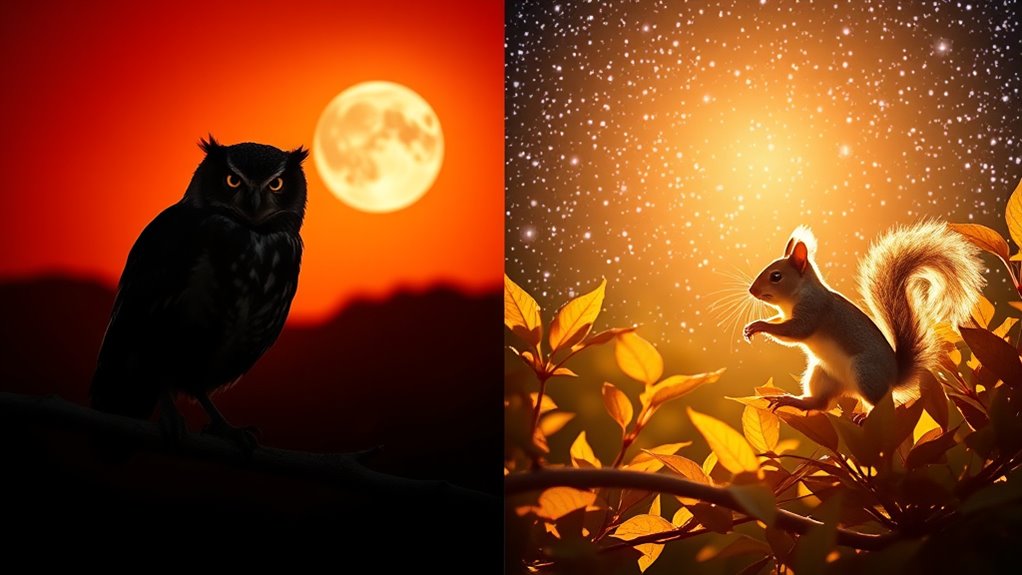
On the other hand, when night falls, the world transforms. Nocturnal animals, such as owls and bats, have developed their own set of evolutionary adaptations. Their excellent night vision and acute hearing enable them to navigate and hunt in complete darkness. They’ve also adapted to be less visible to their predators, using the cover of night to move stealthily. In this way, the dark becomes their ally, allowing them to thrive in an environment where diurnal animals are at rest.
As night descends, nocturnal creatures like owls and bats utilize darkness to enhance their hunting prowess and evade predators.
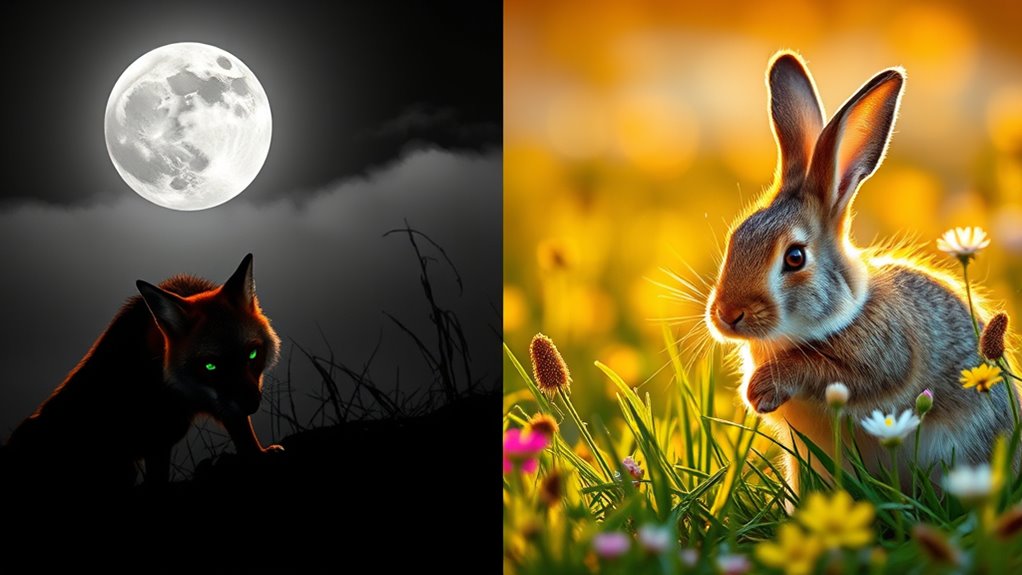
These lifestyle choices directly affect predator-prey interactions. For example, a nocturnal predator like a fox can hunt small mammals that are active at night without competition from diurnal hunters. Conversely, during the day, those same small mammals can forage for food while avoiding nighttime predators. This separation of activity minimizes direct competition and maximizes survival rates for both predators and prey.
You might wonder how these adaptations affect ecosystems. The balance between nocturnal and diurnal species maintains a healthy environment. Predators and prey interact in ways that ensure populations remain stable, preventing overpopulation or extinction. This delicate dance is essential for biodiversity, showcasing the intricate relationships that have developed over millennia. Additionally, the energy dynamics in ecosystems can be compared to electricity production from bike generators, illustrating how different species contribute to the overall energy flow in their habitats.
As you reflect on the differences between nocturnal and diurnal lifestyles, consider how these evolutionary adaptations allow animals to coexist, each playing their part in the grand tapestry of life. Understanding these patterns not only deepens your appreciation for nature but also sheds light on the remarkable strategies animals employ to survive.
night vision binoculars for wildlife observation
As an affiliate, we earn on qualifying purchases.
As an affiliate, we earn on qualifying purchases.
Frequently Asked Questions
How Do Seasonal Changes Affect Nocturnal and Diurnal Activity Patterns?
Seasonal changes markedly influence nocturnal and diurnal activity patterns. As temperatures shift, you’ll notice many animals adapt their behaviors for survival. For instance, some species may undergo seasonal migration to warmer regions, altering their active hours. In colder months, nocturnal animals might become more active to avoid daytime heat, while diurnal creatures may shift their routines to take advantage of milder temperatures. This adaptability helps them thrive throughout the changing seasons.
Are There Any Exceptions to the Nocturnal or Diurnal Classifications?
Yes, there are exceptions to the nocturnal and diurnal classifications. For instance, around 30% of mammals exhibit crepuscular behaviors, being most active during dawn and dusk. Additionally, some species display cathemeral activity, meaning they’re active at various times throughout the day and night. This flexibility allows them to adapt to environmental changes and exploit different food sources, showcasing the diversity in animal behavior beyond strict nocturnal or diurnal patterns.
Can Animals Switch From Nocturnal to Diurnal Behavior?
Yes, animals can switch from nocturnal to diurnal behavior. This behavioral flexibility allows them to adapt to changing ecological conditions, such as food availability or predator presence. For instance, some species may become more active during the day if their primary food sources are more accessible then. You’ll often see these adaptations in urban environments where light pollution alters natural patterns, prompting animals to adjust their activity to thrive.
How Do Human Activities Impact Nocturnal and Diurnal Species?
Human activities dramatically impact both nocturnal and diurnal species. Urban light pollution can confuse nocturnal animals, disrupting their natural behaviors and leading them into danger. Imagine a once-comfortable night turned into chaos as predators, drawn by the glow, hunt more effectively. Meanwhile, diurnal species may struggle to find food as their environments change, altering their patterns. As you explore this, consider how even small changes can ripple through ecosystems, affecting survival.
What Are the Evolutionary Advantages of Being Nocturnal or Diurnal?
Being nocturnal or diurnal offers evolutionary advantages like predator avoidance and resource competition. If you’re nocturnal, you can evade daytime predators and exploit food sources that aren’t available to diurnal creatures. On the flip side, being active during the day allows you to gather resources efficiently in the light. Each strategy minimizes competition for food and enhances survival chances by aligning with specific ecological niches in their environments.
Conclusion
In conclusion, understanding the differences between nocturnal and diurnal activity patterns is like unraveling the threads of a complex tapestry. Each pattern reveals unique adaptations that help species thrive in their environments. Whether you’re a night owl or an early bird, these behaviors showcase the incredible diversity of life on Earth. Embracing both perspectives enriches our appreciation for nature’s rhythms, reminding us that every creature plays an essential role in the world’s intricate ecosystem.
Fall Picks
fall essentials
As an affiliate, we earn on qualifying purchases.