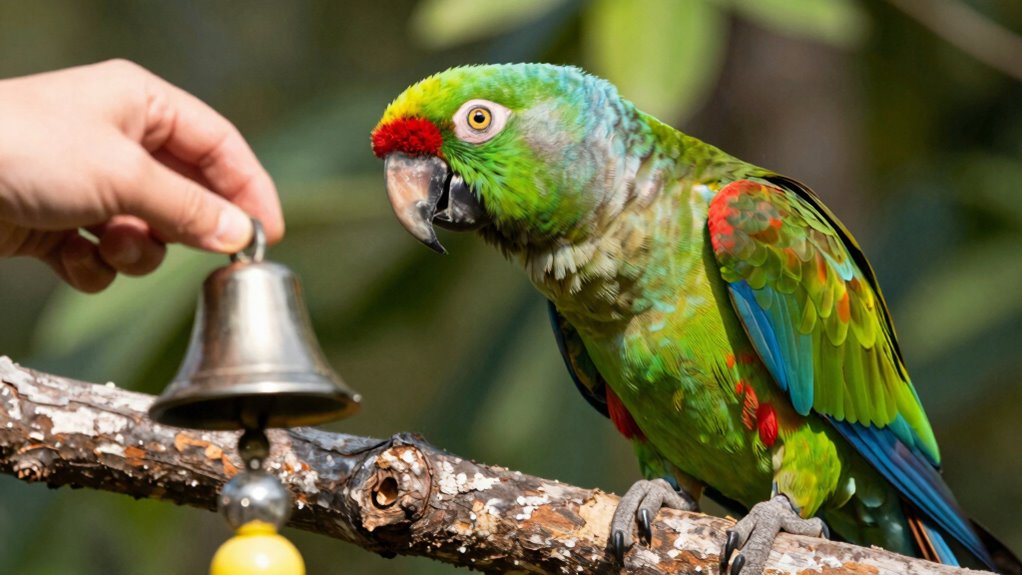
Parrots copy sounds that stand out, are emotionally meaningful, or are associated with positive experiences. They tend to ignore dull, repetitive, or unpleasant noises. Their mimicry is shaped by exposure, social cues, and reinforcement, so they focus on sounds that help them feel connected or are rewarded. If you want to understand more about what influences their choices and how to encourage better mimicry, there’s plenty more to discover below.
Key Takeaways
- Parrots imitate sounds that are loud, distinct, rhythmic, or emotionally significant, making them more attention-grabbing.
- They tend to ignore dull, repetitive, or unpleasant sounds that lack engagement or positive associations.
- Vocal copying is influenced by environmental exposure and the relevance of sounds within their social context.
- Parrots focus on sounds associated with positive experiences or social interactions, reinforcing imitation.
- Their mimicry is shaped by learning during early life stages through observation and reinforcement.

Parrots are remarkable mimics, capable of copying a wide range of sounds they hear around them. Their ability to imitate is not random; it’s influenced by several factors, especially how they are raised and the environment they’re in. When you start understanding why they copy some sounds and ignore others, you gain insight into their behavioral training and vocal development. These two aspects are crucial in shaping a parrot’s vocal repertoire.
Your parrot’s vocal development begins early. When they’re young, they are most receptive to new sounds. During this period, they learn through observation and repetition, so the sounds they are exposed to frequently tend to stick. If you want your bird to mimic specific words or noises, consistent exposure is key. Repeating those sounds in a clear, engaging manner helps your parrot recognize and eventually imitate them. Behavioral training plays a critical role here, as it encourages your bird to focus on and practice certain sounds over others. Positive reinforcement, like treats or praise, motivates your parrot to repeat the sounds you want them to learn.
Consistent exposure and positive reinforcement are key to developing your parrot’s vocal skills early on.
However, your parrot doesn’t just copy everything it hears. It tends to imitate sounds that stand out—those that are loud, distinct, or have a particular rhythm. If a sound catches their attention or seems associated with a positive experience, they’re more likely to adopt it. Conversely, sounds that are dull, repetitive, or unpleasant often get ignored. Your bird naturally filters out background noise or less interesting sounds because their vocal learning is driven by what they find engaging or rewarding. Additionally, parrots are more likely to copy sounds that are emotionally significant, as these tend to resonate more deeply with their social and environmental experiences. This emotional connection enhances their motivation to mimic specific sounds, especially those linked to social bonding or positive encounters.
The social aspect also influences which sounds your parrot chooses to copy. They are social animals, and mimicking sounds from their flock or human companions helps them feel connected. If you talk to your bird frequently and use expressive tones, they’re more inclined to imitate those sounds to bond with you. This is where behavioral training intertwines with vocal development—by consistently engaging your parrot with specific sounds and rewarding their efforts, you guide their vocal growth. Creating a consistent routine around training sessions can significantly improve their learning process and reinforce desired sounds. Furthermore, the environment’s overall acoustic landscape can impact which sounds a parrot finds most appealing to imitate, as they are naturally attuned to the sounds that dominate their surroundings. A stimulating environment with varied sounds can encourage a broader range of vocalization and imitation.
In addition, parrots are capable of selective imitation, which allows them to focus on particular sounds that are most relevant or meaningful to them in their social context.
In the end, your parrot’s choice of sounds to imitate isn’t random. It’s shaped by what they hear, what captures their attention, and how they are encouraged through training. Recognizing this helps you create a supportive environment that fosters healthy vocal development, making your pet’s mimicry more meaningful and enjoyable for both of you.

NICERINC PET Parrot Training Clicker with Target Stick, Getting Started Bird Clicker Training Kit, All Bird Breeds Training Stick Foster Discipline and Behavior Training, for Parrots Birds Lovers
A parrot training stick is a tool designed to train and guide your bird’s behavior. It helps establish…
As an affiliate, we earn on qualifying purchases.
As an affiliate, we earn on qualifying purchases.
Frequently Asked Questions
Do All Parrot Species Mimic Sounds Equally Well?
Not all parrot species mimic sounds equally well. You’ll notice that some, like African grey parrots, excel in vocal diversity and sound variability, making them impressive mimics. Others may have limited ability or focus on specific sounds. This variation depends on their species and individual personality. Your parrot’s environment and social interactions also influence their mimicry skills, but overall, certain species are naturally better at copying sounds than others.
How Does a Parrot’s Age Affect Its Ability to Copy Sounds?
You’ll find that younger parrots are better at vocal development, especially during their first year, which is essential for age-related learning. Studies show they can imitate sounds more accurately and quickly than older ones. As parrots age, their ability to copy new sounds diminishes, but they still retain some learned phrases. So, if you want an avid mimicker, start training your parrot early in its life.
Can Parrots Learn Sounds From Other Animals Besides Humans?
Yes, parrots can learn sounds from other animals besides humans. Their remarkable parrot vocal range allows them to mimic a variety of noises, facilitating interspecies communication. You might notice your parrot copying the sounds of cats, dogs, or other birds. This ability helps them connect with their environment and can be influenced by their exposure. Keep in mind, consistent interaction and observation enhance their skill to imitate diverse animal sounds.
What Environmental Factors Influence a Parrot’s Sound Copying?
You might be surprised to learn parrots copy sounds more often in diverse habitats—studies show increased environment complexity boosts their vocal learning. Your parrot’s sound copying is heavily influenced by habitat diversity and social interactions; they mimic sounds heard frequently and from preferred companions. When they encounter varied sounds and engage socially, they’re more motivated and adept at copying, making their environment a key factor in shaping their vocal repertoire.
How Long Does It Take for a Parrot to Learn New Sounds?
It generally takes a few weeks to several months for a parrot to learn new sounds, depending on their individual aptitude and the frequency of exposure. When you consistently introduce new parrot vocalizations, your bird’s sound recognition improves, and they start mimicking more accurately. Patience is key—repetition and positive reinforcement help solidify their ability to copy sounds, making their vocalizations more diverse and natural over time.

Talking Parrot No Matter What You Say Will Repeat What You Say Funny Learning Good Helper Bring You Happiness!Parrot Toys! Speaking Parrot.Talking Bird.Multifunctional Electric Plush Parrot Speaking
If you have any questions or suggestions about the goods, please contact us In time, we will give…
As an affiliate, we earn on qualifying purchases.
As an affiliate, we earn on qualifying purchases.
Conclusion
You’ve learned that parrots are more likely to copy sounds they find interesting or rewarding, especially those they hear frequently. Remarkably, studies show that around 50% of pet parrots can learn to mimic human speech, but only if they’re regularly exposed to engaging sounds. So, if you want your parrot to pick up new words or noises, make sure to interact with them consistently and positively. Your efforts could turn your bird into a surprisingly talented chatterbox!

The Parrot Wizard's Guide to Well-Behaved Parrots 2nd Edition
Develop a magical relationship with your parrot
As an affiliate, we earn on qualifying purchases.
As an affiliate, we earn on qualifying purchases.

Talking Parrot Toy, Repeat What You Say Parrot Toys with Flapping Wings, Interactive Electronic Funny Rcording Singing Parrot Tummy Time Toy Talking Stuffed Animal Birthday Gifts for Toddler Kid, Red
FUNNY VOICE REPEAT: Our interactive Talking Parrot Toy is designed with smart imitation technology that repeats what you…
As an affiliate, we earn on qualifying purchases.
As an affiliate, we earn on qualifying purchases.