Social structures in the animal kingdom highlight the stark differences between solitary and pack animals. Solitary animals, like tigers, thrive on independence and rely on personal skills, while pack animals, such as wolves, depend on social cooperation and community support. Hierarchies in both groups influence behaviors and decision-making. Understanding these dynamics can help you navigate your own social interactions and choices between independence and collaboration. Discover more about these fascinating contrasts and their implications for human behavior.

Get pet supplies delivered free with Prime
- Fast, free delivery on millions of items
- Prime Video, Amazon Music and more included
- Member-only deals all year
Key Takeaways
- Solitary animals, like tigers, rely on independence and personal skills for survival, establishing their own territories.
- Pack animals, such as wolves, thrive in social groups, using cooperation for breeding and resource sharing.
- Hierarchical structures in pack animals guide group decisions, often based on experience or strength.
- Human interactions reflect a blend of solitary independence and pack cooperation, influencing collaboration in work environments.
- Understanding these social structures helps navigate relationships and adapt behaviors in various social situations.
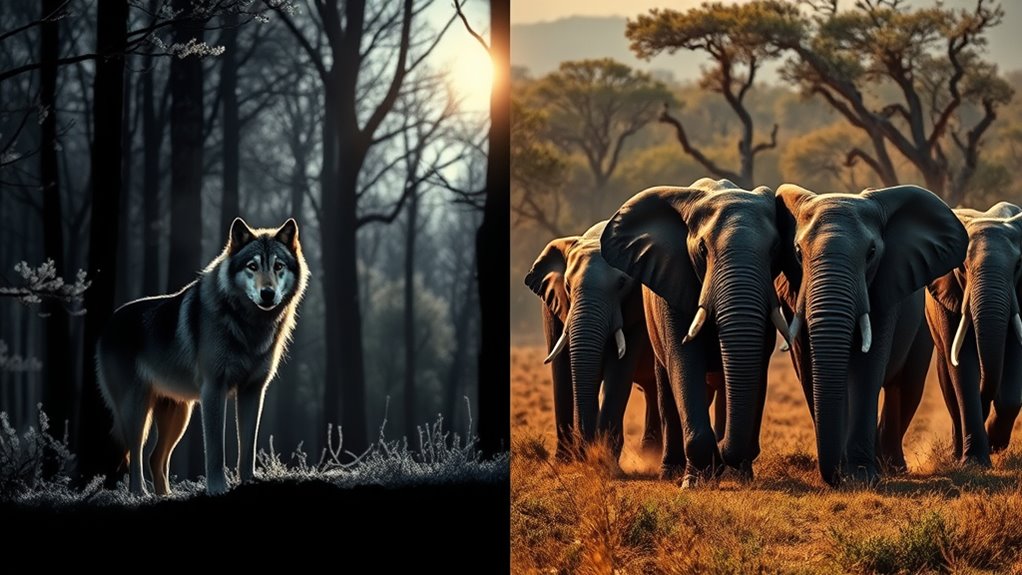
What shapes our daily interactions and influences our behaviors? The answer often lies in the social structures we find ourselves in, akin to the dynamics seen in both solitary and pack animals. Understanding these structures can help you navigate your own social reality. Just like in the animal kingdom, where hierarchical dominance often dictates behavior, your interactions can also reflect a blend of individualism and cooperation.
When you think about solitary animals, you might imagine creatures like tigers or bears, who thrive independently. They establish territories, hunt alone, and rely on their skills rather than social bonds. This independence can be empowering, allowing you to make decisions based solely on your needs. However, it also means you bear the weight of survival entirely on your shoulders. In certain situations, this might feel isolating or overwhelming, especially when you could benefit from shared resources or support.
On the flip side, pack animals like wolves or elephants rely heavily on their social structures. They thrive in groups, utilizing cooperative breeding as a strategy to ensure the survival of their young. This approach fosters a sense of community and shared responsibility, where individuals work together for the common good. You might find parallels in your own life when you rely on friends or family for support, whether it’s raising children or facing challenges. In these scenarios, hierarchical dominance often emerges, with certain individuals taking the lead based on experience or strength, guiding the group’s actions and decisions.
Your social interactions can reflect these principles. Think about how often you seek collaboration over competition. In a work environment, for instance, you might notice a shift from hierarchical dominance to a more cooperative atmosphere when tackling projects. It’s not just about who’s in charge; it’s about leveraging each person’s strengths for a common goal. This cooperative breeding model can lead to innovation and success, mirroring the pack dynamics seen in nature. Additionally, just as certain species have adapted their behaviors to thrive in their environments, vacuums for pet hair often showcase specialized features designed for efficient cleaning.
Ultimately, recognizing the nuances between solitary and social structures can empower you to navigate your relationships more effectively. Whether you lean towards independence or interdependence, understanding these dynamics offers insight into your behavior and how you can adapt to different social situations. Your choices shape your environment, just as the structures in the animal kingdom influence their survival and social interactions.
As an affiliate, we earn on qualifying purchases.
Frequently Asked Questions
How Do Solitary Animals Communicate With Each Other?
Solitary animals communicate through various communication signals, like vocalizations or scent markings. These signals help establish territory and alert others to their presence. Despite their solitary nature, you might notice that some animals engage in social bonding during mating seasons or when raising young. They use subtle cues to signal readiness to mate or to guarantee their offspring receive care, demonstrating that even solitary creatures find ways to connect during vital moments.
What Adaptations Help Pack Animals Thrive in Groups?
Pack animals thrive in groups thanks to several key adaptations. Did you know that 80% of wolves hunt cooperatively? This teamwork allows for efficient hunting and sharing of resources. Additionally, hierarchical dominance plays an essential role in maintaining order and reducing conflict within the group. By establishing clear roles, pack animals can work together seamlessly, enhancing their survival. These adaptations guarantee that they not only find food but also protect each other from threats.
Can Solitary Animals Form Temporary Social Bonds?
Yes, solitary animals can form temporary social bonds, especially during certain circumstances like mating or food availability. You might observe how they engage in social bonding during these times, setting aside their usual territorial behavior. For instance, some solitary species come together in small groups to share resources or protect themselves from predators. These interactions can be vital for survival, proving that even solitary creatures recognize the benefits of short-term social connections.
How Do Pack Animals Establish Hierarchy Within Their Groups?
In pack animals, hierarchy is established through alpha dominance, where the strongest or most assertive individual leads. You’ll notice that social bonding plays a vital role; animals form relationships based on trust and respect, which helps maintain order. As these bonds strengthen, subordinates understand their roles, leading to a more stable group dynamic. Observing interactions within the pack reveals how these hierarchies function and evolve over time, ensuring cooperation and survival.
What Role Does Territory Play for Solitary Versus Pack Animals?
Territory plays a crucial role in both solitary and pack animals. For solitary animals, territory defense is vital; it guarantees access to resources like food and shelter without competition. You’ll often see them marking their boundaries to deter intruders. In contrast, pack animals may share territory but still allocate resources among themselves. They establish roles within their group to defend their shared territory, ensuring everyone has access to vital resources needed for survival.
Conclusion
In the grand tapestry of life, you see how both solitary and pack animals thrive in their own ways. Like the lone wolf or the bustling ant colony, each social structure offers unique strengths and challenges. You can appreciate the beauty in both paths, understanding that whether you prefer solitude or companionship, nature’s design showcases the importance of diversity. So, embrace your place in this intricate web, for every role plays a part in the story of survival.
Halloween Picks
halloween
As an affiliate, we earn on qualifying purchases.