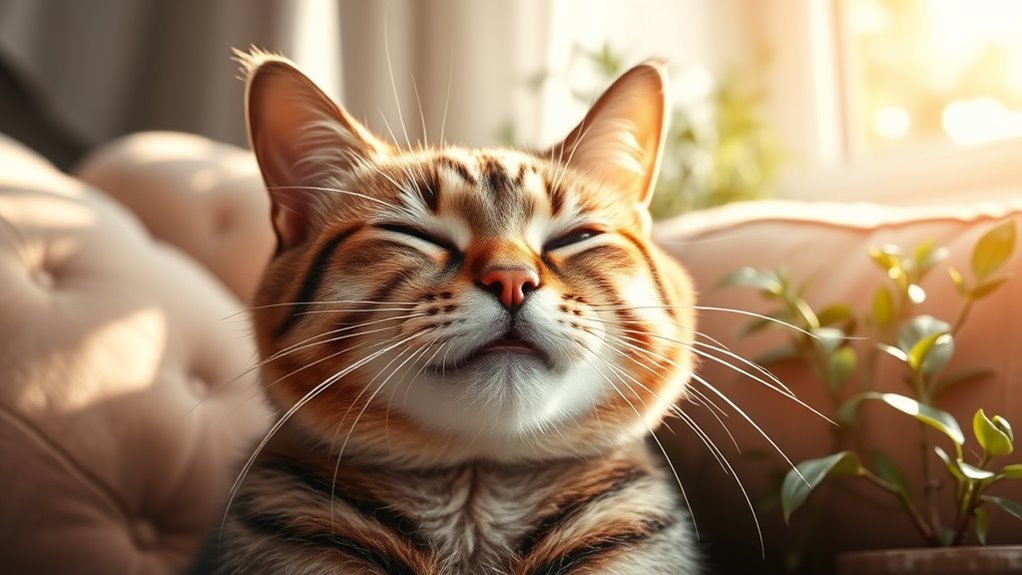

Purring in cats serves several important purposes. It often signals happiness and contentment, especially when they’re relaxed or cuddling. However, purring can also express nervousness or pain, acting as a communication tool among cats. Remarkably, the frequency of a cat’s purr may help speed up healing and reduce inflammation. This soothing sound not only brings comfort to cats but can also enhance your bond. Discover more about the fascinating implications of a cat’s purr.
Key Takeaways
- Purring signifies happiness and contentment, often occurring when cats are relaxed or cuddled.
- It serves as a communication tool, conveying trust and emotional states to humans and other animals.
- The frequency of purring may promote healing, reducing pain and inflammation while aiding recovery from illness or injury.
- Purring acts as a self-healing mechanism, reflecting a cat’s overall well-being and comfort.
- The calming sound of purring has therapeutic effects on humans, fostering relaxation and strengthening the bond between cats and their owners.
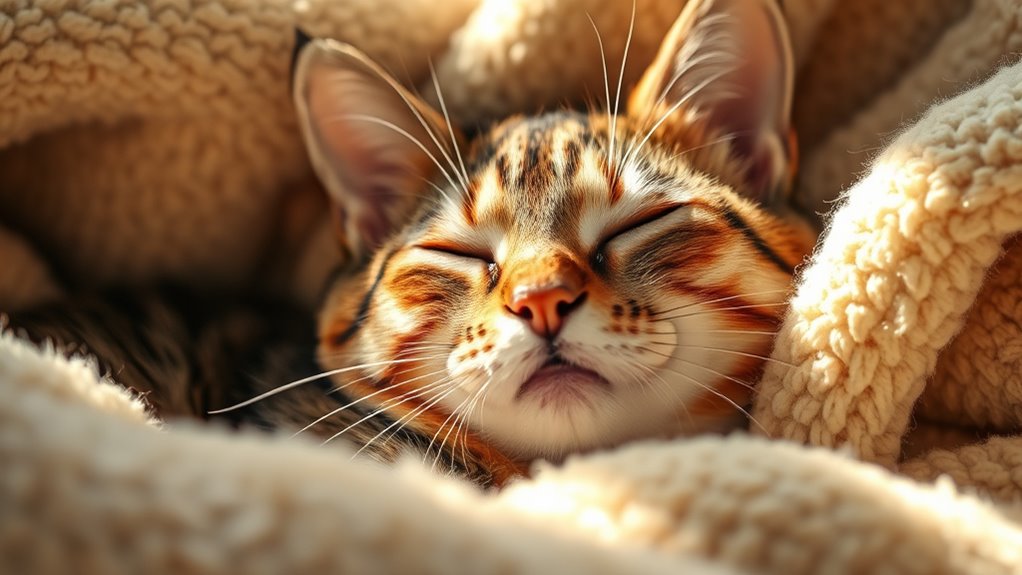
Have you ever wondered why cats purr? It’s one of those charming quirks that captivates cat lovers everywhere. When your feline friend curls up in your lap and starts to purr, it creates a soothing atmosphere, but the reasons behind this behavior are more complex than mere contentment. Purring plays a significant role in cat communication, and understanding it can deepen your bond with your pet.
Cats purr for various reasons, and it’s essential to recognize the context. While you might associate purring with happiness, your cat may also purr when they’re nervous or in pain. This vocalization serves as a form of cat communication, helping them express their feelings. For instance, a mother cat often purrs to reassure her kittens, creating a sense of safety. When your cat purrs around you, it’s likely a sign of trust and affection, signaling that they feel comfortable in your presence.
Cats purr for various reasons, from happiness to reassurance, signaling trust and comfort in their relationships.
Interestingly, purring isn’t just a way for cats to communicate their emotions; it’s also linked to their well-being. Research suggests that the frequency of a cat’s purr, usually between 25 and 150 Hertz, may have healing properties. This range is known to promote tissue regeneration and reduce pain and inflammation. So, when your cat is purring, they could be harnessing their innate ability to heal themselves. This phenomenon is something you might want to keep in mind, especially if your feline seems to be recovering from an illness or injury.
When you listen to your cat purring, you might feel a sense of calm wash over you. This isn’t just a coincidence. The sound of a purring cat can also have therapeutic effects on humans. Studies indicate that the sound can lower stress levels and promote relaxation, making it beneficial for both you and your furry companion. In essence, your cat’s purr is a mutual form of healing, enhancing your emotional well-being while helping them recover physically.
Frequently Asked Questions
Can All Cat Breeds Purr, or Is It Breed-Specific?
Yes, all cat breeds can purr, but there are breed differences in how they do it. The purring mechanisms involve rapid contraction and relaxation of the laryngeal muscles, which creates that soothing sound. While every domestic cat, regardless of breed, has the ability to purr, some breeds may purr more frequently or audibly than others. So, if you’ve got a cat, you’ll likely hear that comforting purr, no matter the breed!
Do Cats Purr When They Are in Pain?
Yes, cats can purr when they’re in pain. You might picture your feline curled up, purring softly despite discomfort. This cat vocalization serves as a form of feline communication, signaling both distress and self-soothing. While purring usually indicates contentment, it can also mean your cat’s trying to cope with pain. So, if you notice unusual purring, it’s essential to check in on your pet and consult a vet if needed.
How Does Purring Affect a Cat’s Health?
Purring can considerably benefit your cat’s health. The vibrations from purring generally fall within a frequency range that promotes healing and reduces stress. When your cat purrs, it might help lower pain levels, heal bones, and even boost their immune system. By creating a soothing environment, purring aids in recovery and overall well-being. So, when your cat curls up and purrs, know it’s not just cute—it’s likely helping them heal!
Can Cats Purr While Sleeping?
Yes, cats can purr while sleeping. This cat vocalization often occurs during deep sleep, reflecting their contentment and relaxation. When you notice your feline friend softly purring in their dreams, it’s a form of communication that signals comfort and security. It’s fascinating how this behavior showcases their peaceful state, allowing you to understand their emotional well-being. So, if your cat’s purring in their sleep, it’s a good sign they’re feeling safe and happy!
Is Purring a Sign of Happiness in All Cats?
Purring isn’t always a sign of happiness in all cats; in fact, studies show that about 25% of purring occurs when a cat is in distress or pain. While many felines purr during relaxation, it’s a complex form of cat communication. You should pay attention to other cues—like body language and vocalizations—to understand your cat’s true feelings. Remember, their purring can signal both comfort and discomfort.
Conclusion
So, next time your cat curls up and starts purring, remember, it’s not just a charming serenade to lull you into a false sense of security. No, it’s a clever ploy to make certain you keep that treat jar full and those cozy spots warm. After all, why hunt for dinner when you can simply vibrate your way into a human’s heart? Purring: the feline equivalent of a well-practiced sales pitch, ensuring their reign over your household continues unabated.