You might hear foxes scream at night because they use loud vocalizations to communicate, defend territory, and attract mates. These high-pitched calls help them stay connected in the dark, ensuring they can find each other and avoid conflicts, especially in urban areas. Their screams are essential for survival, social bonds, and reproduction. Understanding the purpose behind these sounds reveals much about their adaptable and social nature—if you keep exploring, you’ll discover even more about these fascinating creatures.
Key Takeaways
- Foxes scream at night primarily for communication related to mating, territory defense, and social bonding.
- Their high-pitched calls help locate mates and establish territorial boundaries over long distances.
- Screams serve as warnings to other foxes to avoid conflicts in shared or limited spaces.
- Nighttime screaming is an adaptive behavior that ensures survival and social cohesion in nocturnal environments.
- The piercing calls cut through quiet night sounds, making them effective communication tools in darkness.
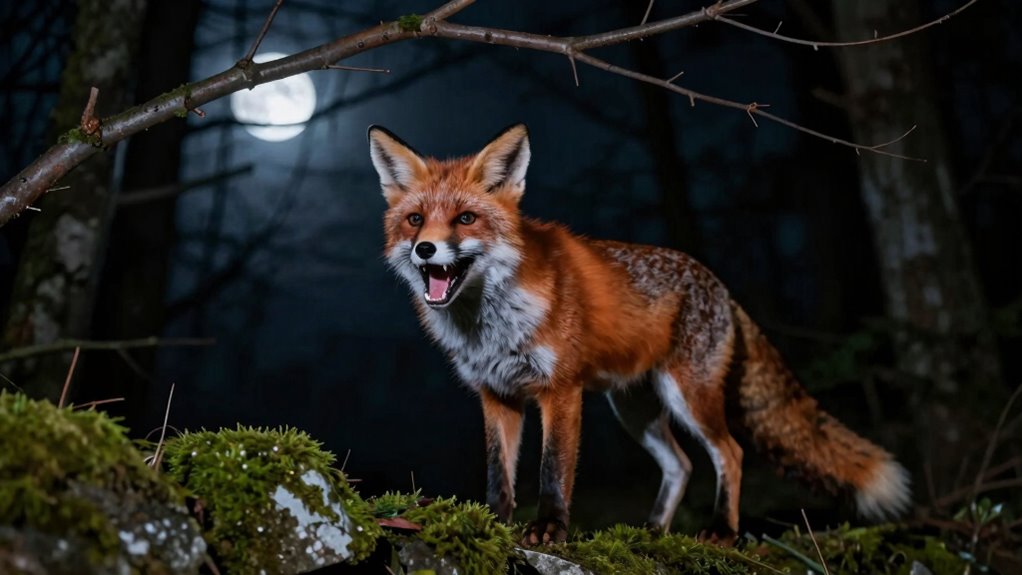
At night, the eerie screams of foxes often puzzle and alarm those who hear them, leading many to wonder what drives these animals to make such unsettling noises. Foxes are primarily nocturnal creatures, and their nighttime vocalizations are a significant part of their behavior. These sounds serve various purposes, from communication to territory defense, and understanding their nocturnal habits reveals much about why they scream at night. As you observe urban environments, you might notice foxes thriving alongside human activity, showcasing their remarkable ability to adapt to city life. This urban adaptation means they often hunt, communicate, and navigate in areas filled with artificial lights and human presence, yet their nocturnal behavior remains unchanged. They prefer the cover of darkness because it offers safety from predators and less competition for food, which explains why their screams are more frequent after sunset.
When you hear a fox scream, it’s likely a mix of calls related to mating, establishing territory, or alerting others to danger. During breeding season, these animals become especially vocal. Males and females use high-pitched screams to attract mates and communicate their availability. If you live near a fox den or territory, you might notice that these screams can carry over long distances, helping foxes locate each other in the dark. These vocalizations are often loud and piercing, designed to cut through the quiet of night, which is why they seem so unsettling. The nocturnal behavior of foxes means they’re most active when humans are asleep, so you might not immediately realize just how much of their life happens under the cover of darkness. Their nocturnal activities are vital for survival and are deeply rooted in their natural instincts. Additionally, their adaptability allows them to utilize urban environments effectively, which is a testament to their resilience and resourcefulness. This ability to thrive in diverse habitats demonstrates their impressive ecological adaptability.
The screams also serve as territory markers, warning other foxes to stay away. In urban settings, where space is limited and resources are shared, these calls help reduce conflicts among neighboring foxes. They’re a way of saying, “This is my turf,” without physical confrontation. Despite their reputation for being elusive, foxes are quite social within their own groups, and their vocalizations are essential for maintaining social bonds. Their ability to adapt to urban environments doesn’t change their instinctual nocturnal routines; instead, it allows them to exploit new resources while still relying on their natural behaviors. So, the next time you hear those haunting screams at night, remember they’re not just random noises—they’re crucial communications rooted in the foxes’ nocturnal and highly adaptable nature.

Icotec Furnado Predator Game Caller Decoy Combo – Designed for Coyote, Fox, Bobcat, Raccoon Hunting – 15 Sounds Included, 150 Yard Remote Range.
150-yard remote range allows for flexibility in caller placement out in the field. More distance from caller =…
As an affiliate, we earn on qualifying purchases.
As an affiliate, we earn on qualifying purchases.
Frequently Asked Questions
Do Foxes Scream to Scare Predators Away?
Yes, foxes scream to scare predators away. Urban foxes use their distinctive vocalization patterns to communicate and defend themselves, especially at night. When threatened, their loud, high-pitched screams can startle or deter predators, signaling danger. These vocalizations are a key part of their behavior, helping them establish territory and warn others, all while blending into their nighttime environment.
Are Fox Screams a Form of Communication?
Yes, fox screams are a form of vocal communication. They use loud, piercing calls to convey different messages, such as warning others of danger or establishing territory. These screams are part of their behavioral displays, helping them communicate with other foxes even in the dark. When you hear a fox scream at night, know it’s likely expressing its presence or alerting others, not just making noise for no reason.
How Loud Can a Fox’s Scream Get?
A fox’s scream can reach up to 100 decibels, making it quite loud and startling. Fox vocalization varies, especially during their nocturnal behavior, when they communicate through high-pitched screams. This loud vocalization helps them establish territory or attract mates at night. As a nocturnal creature, their screams are designed to carry over long distances, ensuring their messages are heard even in the dark.
Do All Fox Species Scream at Night?
Not all fox species scream at night, but many do, especially those with strong urban adaptation. For example, urban foxes often vocalize to communicate in dense environments, and their diet diversity influences their behaviors, including screaming. Around 40% of fox species are known for their vocalizations, which serve purposes like territory marking or attracting mates. Your chances of hearing a scream depend on the species and their habitat, especially in urban areas.
Can Humans Identify Individual Foxes by Their Screams?
Yes, humans can often identify individual foxes by their unique vocalizations during urban encounters. Fox vocalization varies in pitch, tone, and pattern, which helps experts and attentive observers distinguish one fox’s scream from another’s. When you hear a fox’s scream at night, pay close attention to its sound, as these vocal cues can reveal if you’re encountering a familiar or new fox in your neighborhood.

STRONGBERRY Pro 300ft Parabolic Listening Device – Digital Sound Amplifier & Recorder with Headphones for Bird Watching, Wildlife Observation, Long-Range Audio Monitoring
PROFESSIONAL AUDIO CAPTURE: STRONGBEERY parabolic microphone features 8x roof prism optics for natural sound amplification. Hear/observe wildlife clearly…
As an affiliate, we earn on qualifying purchases.
As an affiliate, we earn on qualifying purchases.
Conclusion
So, next time you hear a fox’s eerie scream at night, remember it’s mostly about communication—marking territory or finding a mate. Did you know that foxes can produce up to 28 different vocalizations? This diversity helps them survive and thrive in their environment. Understanding their reasons for screaming not only demystifies the noise but also deepens your appreciation for these clever, adaptable creatures. Sleep peacefully, knowing their calls serve essential purposes in the wild.

Zoom V3 Vocal Processor for Streaming & Live Performance with Harmony, Pitch Correction, Reverb & Delay, 16 Studio Effects, Battery Powered
16 Built-In Effects Pads + Delay, Reverb and Compression
As an affiliate, we earn on qualifying purchases.
As an affiliate, we earn on qualifying purchases.

FOXPRO Hellcat American Made Electronic Predator Call Remote Operated and Programmable Coyote, Fox, Crow, Hog Call for Hunting
Proudly Made in the USA.
As an affiliate, we earn on qualifying purchases.
As an affiliate, we earn on qualifying purchases.