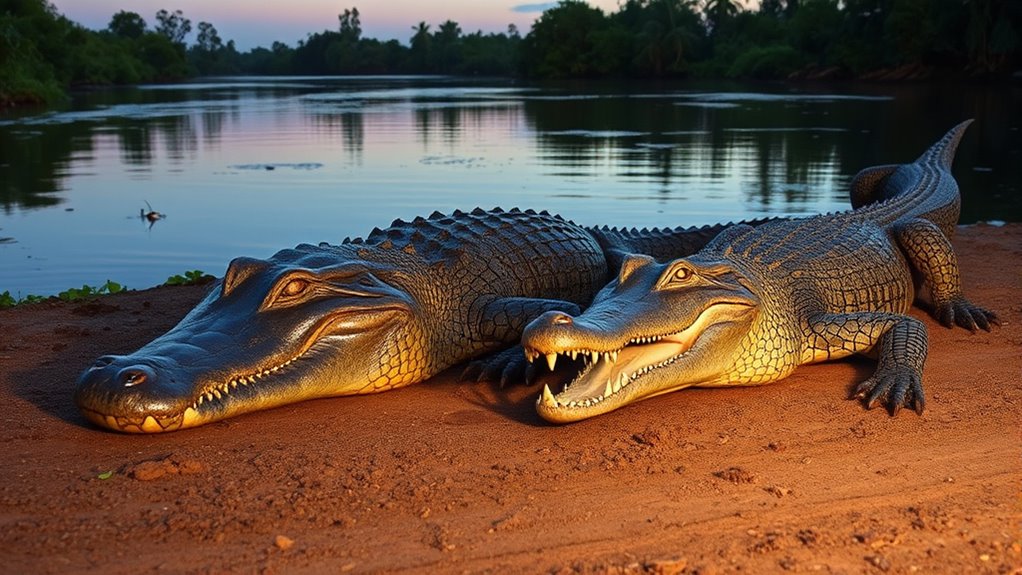

Alligators and crocodiles aren’t the same; they’re distinct species adapted to different habitats. Alligators prefer freshwater environments like swamps and lakes, mainly found in the southeastern U.S., while crocodiles thrive in saltwater habitats, often residing in estuaries and coastal regions across Africa and Australia. You can spot differences in their snouts and colors, which reflect their environments. If you want to discover more about their unique traits and behaviors, just keep going!
Key Takeaways
- Alligators primarily inhabit freshwater environments, while crocodiles are found in saltwater and brackish habitats.
- Alligators have broad, U-shaped snouts, whereas crocodiles possess narrower, V-shaped snouts.
- When their mouths are closed, alligators hide their lower teeth; crocodiles do not.
- Alligators are darker in color, while crocodiles have a lighter hue for camouflage.
- These physical and habitat differences highlight distinct adaptations and evolutionary paths between the two species.
Have you ever wondered what sets alligators and crocodiles apart? At first glance, they might look similar, but dive a little deeper, and you’ll uncover some fascinating differences. Understanding these distinctions can help you appreciate the unique characteristics of each species.
When it comes to habitat differences, alligators typically prefer freshwater environments. You’ll often find them in swamps, rivers, and lakes throughout the southeastern United States and parts of China. They thrive in warm, humid conditions, which is why they’re commonly associated with the southern U.S. In contrast, crocodiles tend to favor saltwater habitats. They can be found in brackish waters, such as estuaries and coastal areas, and are more widespread, living in regions from Africa to Australia, and even North America. This difference in habitat plays a significant role in their behavior and physical adaptations.
Alligators thrive in freshwater, while crocodiles prefer saltwater, highlighting their unique adaptations to different environments.
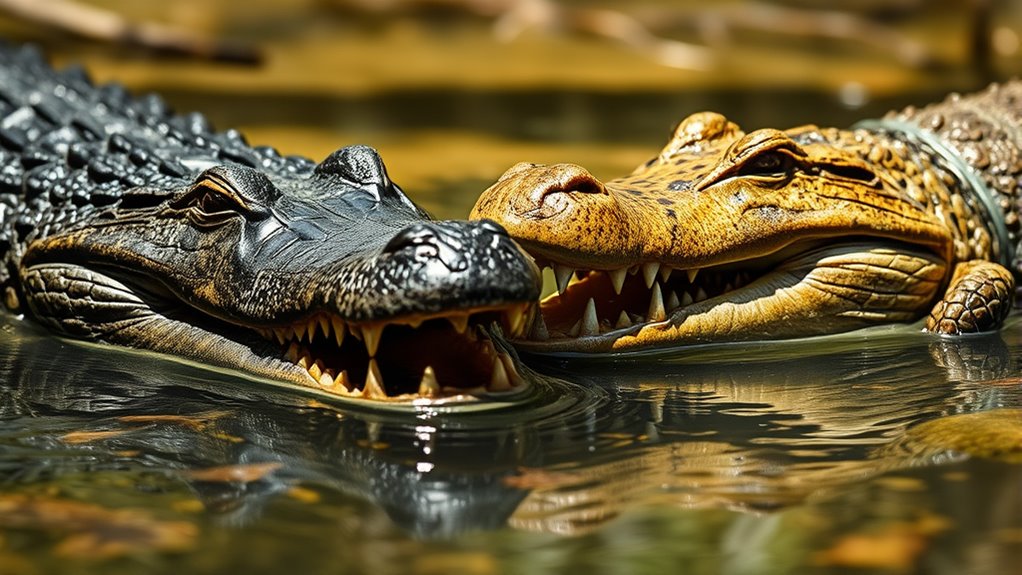
Speaking of physical distinctions, a few key features can help you tell them apart. Alligators have broader, U-shaped snouts, which are better suited for crushing prey like turtles. On the other hand, crocodiles have a more V-shaped, narrower snout, allowing them to catch fish more efficiently. When their mouths are closed, you’ll notice that alligator’s upper jaw is wider than the lower jaw, which conceals the teeth of the lower jaw. With crocodiles, both jaws are about the same width, leaving some teeth visible when their mouths are shut.
Color also varies between the two species. Alligators usually have a darker, more olive-black coloration, while crocodiles have a lighter, olive-brown hue. This difference in color can be attributed to their habitats; the darker color helps alligators blend into the murky waters of freshwater environments, while the lighter shade of crocodiles aids in camouflage within their saltier habitats. Additionally, the contrast ratio in their coloration plays a role in how effectively they adapt to their surroundings.
Understanding these habitat differences and physical distinctions can help you appreciate the adaptability of both species. By observing their environments and traits, you can gain insight into how they’ve evolved over time to thrive in their respective niches. So, next time you see an alligator or a crocodile, you’ll know exactly what makes them unique, and you’ll feel even more connected to the natural world around you.
Frequently Asked Questions
Can Alligators and Crocodiles Coexist in the Same Habitat?
Alligators and crocodiles can coexist in the same habitat, but it often depends on their territorial behavior. You’ll find that alligators are more tolerant of each other and might share spaces, while crocodiles tend to be more aggressive and protective of their territory. In areas where their ranges overlap, you might see competition for resources, which could lead to conflicts. Overall, while they can share habitats, it’s not always peaceful.
What Are the Primary Predators of Alligators and Crocodiles?
Alligators and crocodiles face predators like fish and birds as if they’re the kings of a vast kingdom under siege. Fish predators, like large catfish, can pose a threat to young alligators and crocodiles, while bird predators, such as eagles and ospreys, often swoop down on hatchlings. Even adults aren’t entirely safe, as larger mammals like panthers might hunt them. In this fierce ecosystem, survival is a constant battle for these reptiles.
Do Alligators and Crocodiles Have Similar Lifespans?
Yes, alligators and crocodiles have similar lifespans, often living 35 to 75 years in the wild. However, reproductive differences play a role in their longevity. Alligators tend to have fewer young, which can lead to better survival rates, while crocodiles have a larger number of offspring. Additionally, diet variations can influence their health and lifespan, with both species thriving on a diet of fish, birds, and small mammals, depending on their environment.
How Do Alligators and Crocodiles Communicate With Each Other?
Alligators and crocodiles communicate using vocalizations and body language. You might hear them hiss, grunt, or bellow, especially during mating seasons or territorial disputes. Their body language also speaks volumes; for instance, a raised head can signal aggression, while a relaxed posture indicates calmness. Observing these behaviors helps you understand their social interactions and hierarchies, revealing how they establish dominance, attract mates, and warn others of potential threats in their environment.
Are Alligators and Crocodiles Endangered Species?
Yes, alligators and crocodiles are considered endangered species in certain areas due to habitat loss and poaching. You’ll find that many conservation efforts aim to protect their natural habitats and guarantee their survival. By supporting these initiatives, you can help maintain their populations and ecosystems. It’s vital to raise awareness about the threats they face and promote sustainable practices to safeguard these fascinating reptiles for future generations.
Conclusion
So, while alligators and crocodiles might look similar at first glance, they’re actually quite different in several ways. For instance, picture a swamp where a curious alligator swims quietly, blending into the murky waters, while a crocodile basks in the sun on a riverbank, showcasing its distinctive snout. Understanding these differences not only enriches your knowledge but also enhances your appreciation for these fascinating reptiles and their unique roles in our ecosystems.