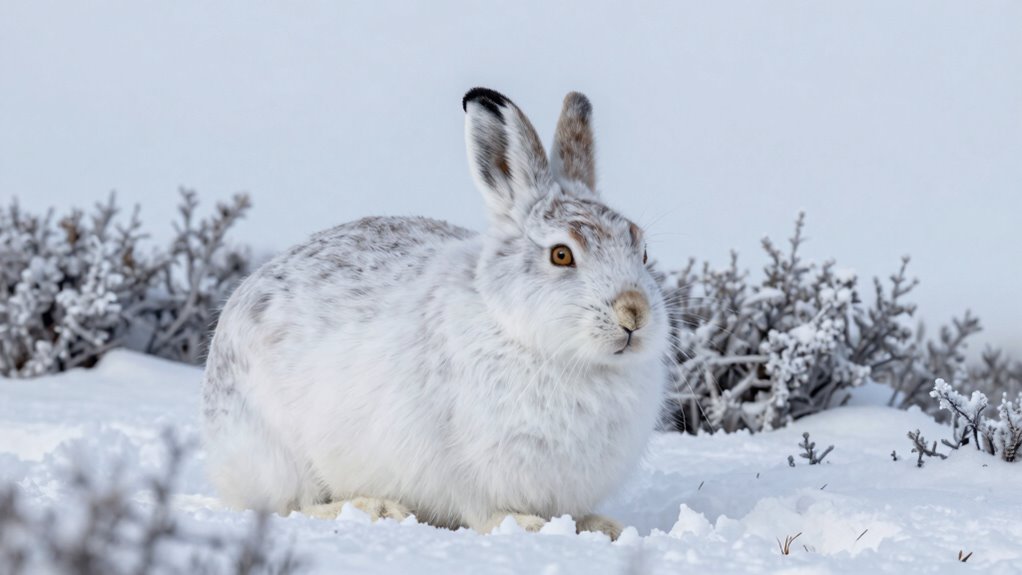

Arctic hares change their fur color from brown in summer to white in winter to blend into snowy landscapes and avoid predators. This transformation is triggered by environmental cues like decreasing daylight and colder temperatures, which activate their skin cells to produce white pigment gradually. Their body’s internal clock also helps coordinate this change for ideal timing. If you want to learn more about this fascinating adaptation, there’s plenty more to discover about how these animals survive harsh conditions.

Get pet supplies delivered free with Prime
- Fast, free delivery on millions of items
- Prime Video, Amazon Music and more included
- Member-only deals all year
Key Takeaways
- Arctic hares gradually change fur color from brown in summer to white in winter, aiding camouflage.
- The color change is triggered by environmental cues like decreasing daylight and temperature.
- Specialized skin cells produce more pigment during the transition, replacing darker fur with white.
- The process is gradual, ensuring continuous concealment and reducing predator detection.
- This seasonal adaptation enhances survival by providing effective camouflage in snowy environments.
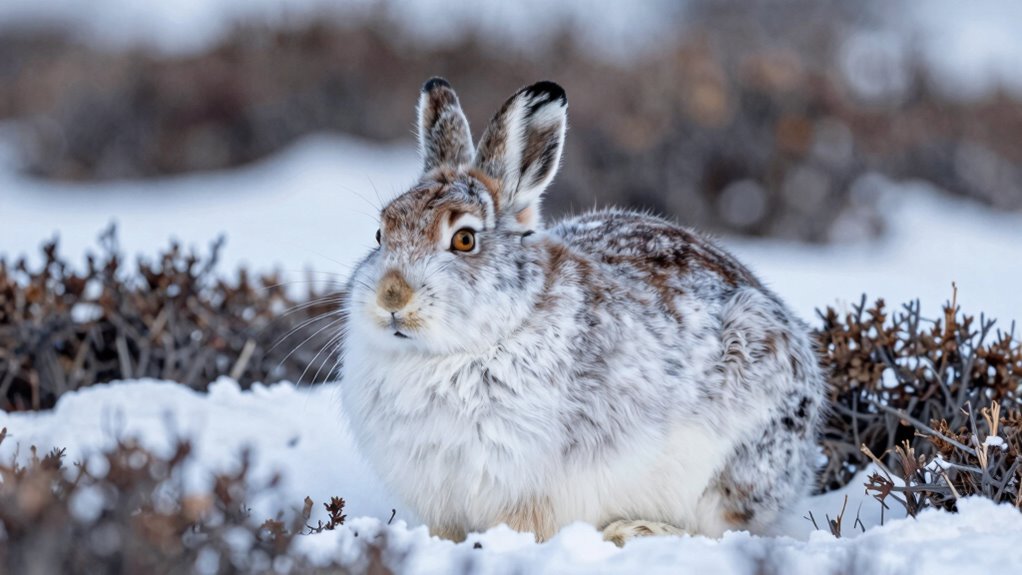
Arctic hares have a remarkable ability to change their fur color, helping them blend seamlessly into their environment throughout the year. This incredible feat is a prime example of how animals adapt to their surroundings through camouflage techniques and seasonal adaptations. As winter approaches and snow begins to blanket the landscape, these hares gradually shift from their brown summer coats to a pure white, making them nearly invisible against the snow. This color change isn’t random; it’s a carefully timed response to environmental cues that signals the changing seasons.
Your body’s internal clock, along with environmental signals like daylight and temperature, triggers the fur’s transformation. As days grow shorter and temperatures drop, specialized cells in the hare’s skin start to produce more pigment, replacing the darker fur with white. This process is gradual, allowing the hare to stay concealed from predators like foxes and wolves, which rely heavily on sight to hunt. When winter ends and the snow melts, the hares’ white fur begins to shed, revealing their brown summer coats. This seasonal adaptation helps them remain camouflaged in the lush, earthy tones of summer and fall, providing a crucial survival advantage. The timing of these changes is also influenced by seasonal cues, which help synchronize their molt with environmental conditions.
The camouflage techniques used by Arctic hares are a testament to their evolutionary success in harsh environments. Their ability to switch colors isn’t just about blending in; it’s a dynamic response that enhances their chances of survival. You might notice that the change isn’t instantaneous but occurs over several weeks, synchronized with the natural rhythms of the environment. This gradual transition ensures they are never caught out of place, whether in the snow or amidst the tundra’s exposed vegetation. Moreover, this seasonal coloration is an example of adaptive camouflage, which is vital for animals living in extreme and changing habitats. The process also involves environmental cues, which act as triggers for their seasonal molt.
Understanding the seasonal timing of these color changes highlights how finely tuned Arctic hares are to their habitat. They don’t rely on static features but instead utilize a flexible, responsive coat that adjusts in harmony with the changing landscape. This ability to adapt through camouflage techniques offers a testament to their evolutionary success, allowing them to evade predators and conserve energy during the demanding winter months. Overall, the color-changing ability of Arctic hares exemplifies nature’s ingenuity in creating animals perfectly suited to their environment, demonstrating how seasonal adaptations can be crucial for survival in extreme conditions.
As an affiliate, we earn on qualifying purchases.
Frequently Asked Questions
Do Arctic Hares Ever Change Color Outside of Seasonal Shifts?
Arctic hares generally change color only with seasonal shifts, using camouflage strategies to blend in with snow or tundra. Outside these seasonal changes, they rarely alter their fur color, relying mainly on their natural coat for predation avoidance. Their ability to adapt their appearance seasonally helps them evade predators effectively, but outside those times, their fur remains consistent, emphasizing the importance of camouflage strategies for survival.
How Quickly Can Arctic Hares Molt Their Fur?
You might wonder how fast an Arctic hare can molt its fur. Their molting frequency varies with the seasons, driven by changing daylight and temperature, but typically, they shed and regrow their fur over a few weeks. The process involves a rapid increase in fur density for winter and a quick reduction for summer, allowing them to adapt swiftly to their environment. This seasonal cycle keeps them insulated and camouflaged effectively.
Are Color Changes Linked to Arctic Hare Behavior?
Yes, the color changes in arctic hares are linked to their behavior, primarily for camouflage strategies and predation avoidance. By turning white in winter, you help them blend into snow-covered landscapes, making it harder for predators to spot them. During summer, their brown fur offers better camouflage in tundra and shrublands. These seasonal color shifts are essential for their survival, helping them stay hidden and avoid predators effectively.
Do Other Animals Have Similar Seasonal Fur Changes?
Many animals use seasonal fur changes as camouflage strategies. For example, snowshoe hares turn white in winter, just like arctic hares, to blend into snowy landscapes. Others, like the ptarmigan bird, alter their feather pigmentation seasonally. These changes help animals hide from predators and hunt more effectively. You’ll find that seasonal fur or feather pigmentation is a common adaptation across various species living in environments with distinct seasonal shifts.
How Does Climate Change Affect Arctic Hare Color Adaptation?
Climate change disrupts Arctic hare color adaptation by causing unpredictable snow cover, which leaves their white winter coat less effective. As habitat disruption increases, these hares struggle to blend into their surroundings, making them more vulnerable to predators. You might feel concern seeing how rising temperatures threaten their survival, highlighting the urgency to address climate change and protect their fragile habitats, ensuring these remarkable animals can continue their seasonal adaptations.
Conclusion
So, next time you spot an Arctic Hare blending perfectly into the snow, remember—its secret to survival is hiding in plain sight, thanks to its remarkable color change. Ironically, what helps it stay safe from predators also makes it a master of disguise, fooling the eye while nature’s little trickster quietly adapts to the changing seasons. Isn’t it funny how something so simple can be such a clever survival strategy? Nature’s irony at its finest!
Halloween Picks
halloween
As an affiliate, we earn on qualifying purchases.