
Your nose can be deceived by pet odors and airborne allergens that linger unseen. Air quality numbers from monitors provide a clearer picture of pollutants like pet dander, VOCs, and dust that your nose might miss. Keep in mind, some devices struggle to differentiate allergens from other particles, so combining data with visual checks and regular cleaning is key. If you want to better understand what your air truly contains, keep reading for expert tips.
Key Takeaways
- Air quality monitors provide quantitative data that surpasses subjective nose-based assessments of indoor pollutants.
- Understand sensor limitations and calibration needs to accurately interpret allergen, VOC, and particulate levels.
- Look for specific allergen or pet dander readings rather than general air quality indices for targeted insights.
- Regularly compare monitor data with visual inspections, humidity levels, and cleaning routines for comprehensive assessment.
- Use trends over time and threshold alerts to identify persistent issues and evaluate the effectiveness of air quality improvements.
Why Your Pet Home’s Air Quality Might Be Worse Than You Think
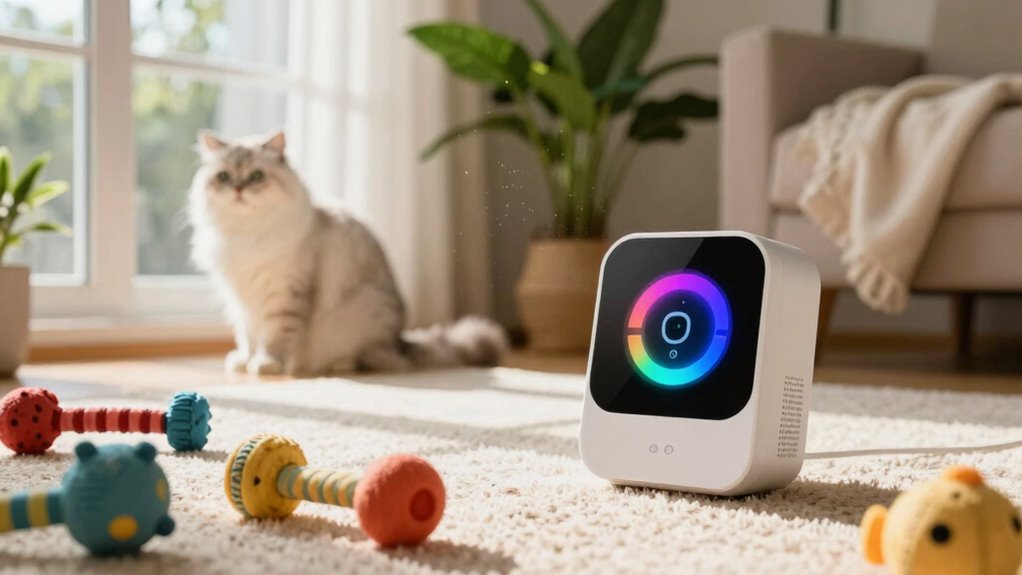
Even if your home seems clean, the air quality might be worse than you realize. Poor air circulation can trap dust, pet dander, and indoor pollutants, making the air feel fresher than it actually is. Without proper airflow, these particles linger, aggravating allergies and respiratory issues. Humidity control also plays a vital role; high humidity encourages mold growth and dust mites, while low humidity can dry out nasal passages, making you more sensitive to airborne irritants. Regularly ventilating your space helps keep the air fresh and reduces buildup of harmful particles. Using fans or air purifiers improves air circulation, and maintaining ideal humidity levels ensures your environment isn’t a hidden source of health problems. Understanding these factors helps you better assess your pet home’s true air quality. Proper airflow is essential to prevent indoor air from becoming stagnant and harmful. Additionally, being aware of filtration systems can significantly improve your home’s air quality by removing microscopic pollutants more effectively. Enhancing air quality monitoring can help you detect and address issues proactively. Incorporating air exchange methods, such as exhaust fans or air purifiers with fresh air intake, can further enhance overall air quality and reduce pollutant buildup.
Common Allergens and Pollutants Pets Bring Into Your Home
Pets naturally shed dander and allergens that can linger in your home’s air. Fur and dust particles also become airborne, contributing to poor air quality. Additionally, pet odors and VOCs from cleaning products or toys can further pollute your environment. Incorporating air purifiers into your home decor can help mask some pet odors and create a more inviting space.
Pet Dander and Allergens
Have you ever wondered why some people experience allergy symptoms around their furry friends? Pet dander and allergens are major culprits. These tiny skin flakes and proteins cling to fur, bedding, and furniture, becoming airborne when disturbed. Regular pet grooming helps reduce allergen levels by removing loose hair and skin flakes, making the environment safer. To improve allergen mitigation, vacuum often with a HEPA filter, wash bedding frequently, and keep pets out of bedrooms. While you can’t eliminate all allergens, these steps considerably lower their presence, helping allergy sufferers breathe easier. Remember, understanding the types and sources of pet allergens is key to managing indoor air quality and maintaining a healthier home environment.
Fur and Dust Particles
Fur and dust particles are among the most common allergens and pollutants that pets bring into your home. These tiny particles can settle on surfaces or become airborne, impacting your indoor air quality. Regular dog grooming helps reduce shedding and loosen fur, decreasing the amount of fur and dust circulating in your environment. To further improve air quality, consider allergen mitigation strategies like using HEPA filters, vacuuming frequently with a HEPA-equipped vacuum, and keeping surfaces clean. Minimizing dust buildup and removing loose fur not only benefits your air quality but also makes your home more comfortable. Staying proactive with grooming and cleaning routines is essential in managing these pollutants, especially if allergies or respiratory issues are a concern. Additionally, understanding the air quality numbers in your area can help you take timely actions to maintain a healthier indoor environment.
Pet Odors and VOCs
Pet odors and volatile organic compounds (VOCs) are common indoor pollutants that can affect your home’s air quality. Pet odors often result from natural oils, dander, and accidents, creating persistent smells. VOC levels can increase from cleaning products, pet supplies, and even your pet’s breath. High VOC levels may cause headaches, respiratory issues, or allergic reactions, especially in sensitive individuals. To manage these pollutants, ventilate your home regularly and use air purifiers with activated carbon filters. Keep pet bedding and toys clean, and minimize the use of harsh cleaning chemicals. Monitoring VOC levels helps you understand how your pet’s presence impacts your indoor air. Recognizing pet odors and VOCs enables you to take targeted steps to improve air quality and create a healthier environment for everyone. Regular cleaning and the use of aroma oil diffusers can also help neutralize odors and promote a fresher atmosphere. Implementing proper ventilation can significantly reduce the buildup of harmful pollutants caused by pets.
Can Air Quality Monitors Detect Pet Allergens Effectively?
Air quality monitors vary in how well they can detect pet allergens, often limited by sensor sensitivity. While some devices can identify certain pollutants, distinguishing pet allergens from other particles remains challenging. Understanding these detection capabilities helps you choose the right monitor for maintaining a healthy pet home. Incorporating evidence‑informed guidance can further improve your ability to interpret air quality readings accurately. Additionally, knowledge about sensor accuracy can assist in making more reliable assessments of your indoor environment. Recognizing the limitations of sensors is essential in setting realistic expectations for air quality monitoring in environments with pets. Moreover, the average price range of these devices can influence the selection process, ensuring affordability without sacrificing necessary features. Being aware of sensor limitations can help prevent false assurances about air quality, especially in pet households.
Sensor Sensitivity Limits
While air quality monitors have become more advanced, their ability to detect pet allergens depends heavily on their sensor sensitivity. If the sensors aren’t properly calibrated, their data accuracy suffers, making it harder to rely on the readings. Many monitors have a detection threshold, meaning they can only identify allergens above a certain concentration. If pet allergens are present below this level, the monitor might show a false sense of safety. Regular sensor calibration is essential to maintain accuracy and ensure the device responds correctly to changing allergen levels. Keep in mind, even the best sensors have limits—so understanding a monitor’s sensitivity range helps you interpret the data more effectively and avoids overestimating or underestimating your indoor air quality.
Pet Allergen Detection Capabilities
Detecting pet allergens effectively depends on the capabilities of your air quality monitor’s sensors. Many monitors are designed to identify general airborne particles but may lack allergen specificity, making it difficult to detect pet dander precisely. Proper sensor calibration is essential to guarantee accurate readings; without it, the device may underestimate or overestimate allergen levels. Some advanced models incorporate allergen-specific sensors or filters, improving their ability to target pet-related particles. However, not all monitors are equal in this regard. To reliably track pet allergens, look for devices that emphasize allergen detection, have undergone rigorous calibration, and specify their allergen detection capabilities. This ensures you get meaningful data to manage your pet’s impact on indoor air quality effectively.
Differentiating Pollutant Sources
Differentiating pet allergens from other indoor pollutants can be challenging, even with advanced air quality monitors. Ozone generation from air purifiers or electronics may falsely elevate pollutant readings, making it harder to identify pet-related issues. Mold spores are another common pollutant that can mimic allergen levels, especially in damp areas. To accurately pinpoint sources, consider monitors that distinguish between particles like pet dander, mold spores, and gases such as ozone. Understanding these differences helps you target specific problems—like mold growth or ozone-producing devices—that may worsen allergy symptoms. By combining monitor data with visual inspections and humidity control, you can better identify whether pet allergens or other pollutants are impacting your indoor air quality. Additionally, sensor specificity in your air quality device can greatly improve your ability to interpret the data accurately. This approach enables more effective strategies to improve your home’s air health and reliable data collection.
How to Interpret Your Air Quality Readings for Pet-Related Pollutants
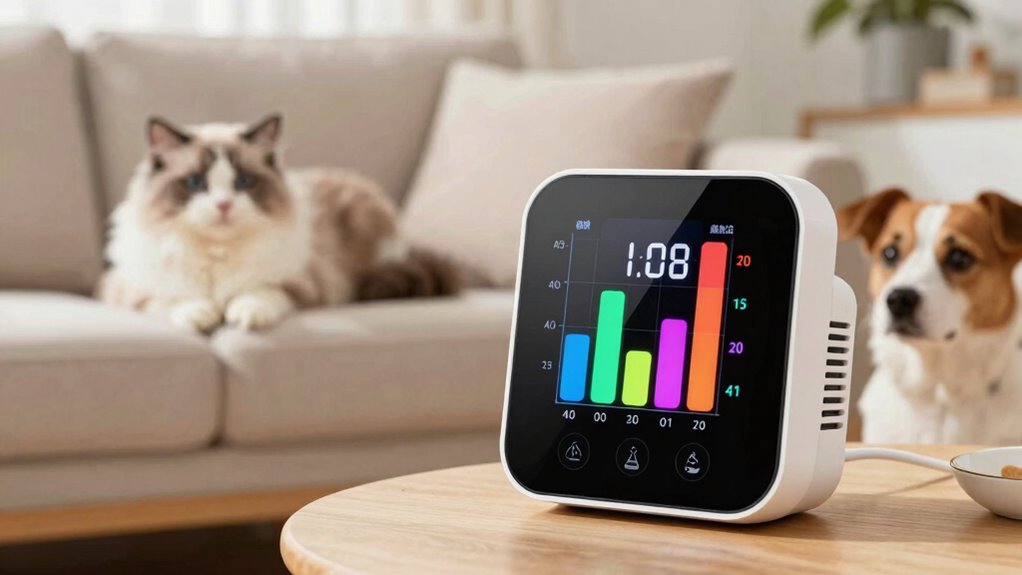
Understanding your air quality readings for pet-related pollutants is essential to ensuring a healthy environment for your furry friends. Elevated readings may indicate pet dander, odors, or allergens that affect air quality. Use your monitor’s numbers to assess if ventilation strategies need adjustment or if air purifier benefits are being maximized. For example, high volatile organic compounds (VOCs) suggest increased ventilation or air purifiers with activated carbon filters. Regularly check your readings to gauge improvements after cleaning or changing filters. Consistent monitoring techniques help you optimize your environment effectively. Monitoring air quality parameters can also help you identify patterns and predict when issues might arise, enabling proactive adjustments. Incorporating reliable measurement tools ensures your readings accurately reflect your indoor air quality. Additionally, understanding the limitations of air quality monitors can help you interpret their data more effectively and avoid misjudging your environment. Being aware of sensor calibration and placement is also crucial for obtaining accurate measurements and making informed decisions.
Should You Trust Your Nose or Your Air Quality Monitor?
While your nose can alert you to strong odors, it may not reliably detect subtle changes in air quality that affect your pets’ health. Pet hair and dander can hide airborne pollutants like VOCs or particulates that your nose might miss. An air quality monitor provides precise measurements, revealing hidden risks that aren’t smellable. Relying solely on your nose could lead you to ignore lingering irritants or allergens, especially if your pets or you have sensitivities. An air purifier, combined with accurate readings, helps reduce pet hair and airborne pollutants, creating healthier indoor air. Trusting your monitor over your nose ensures you catch issues early, even when everything smells fine. This proactive approach helps protect your pets from unseen dangers lurking in your home. Additionally, understanding air quality readings can help you identify specific issues like humidity levels or chemical emissions that your nose cannot detect. Regularly monitoring indoor air quality also allows you to evaluate the effectiveness of your air purification strategies. Incorporating air quality data into your routine can further empower you to make smarter decisions for a healthier environment. Recognizing pollutant levels accurately is essential for maintaining a safe and comfortable space for your pets. Furthermore, awareness of air quality standards can guide you in optimizing your home’s environment for pet health.
Tips to Improve Indoor Air Quality for Pets and People
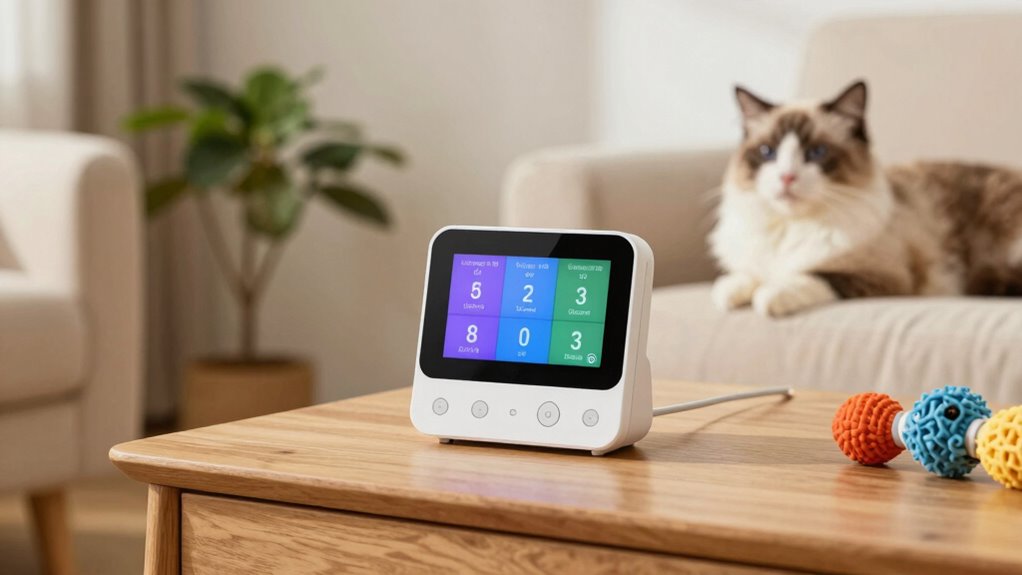
Improving indoor air quality for both pets and people starts with regular cleaning to reduce dust, pet hair, and dander that can accumulate over time. Using pet-safe cleaning products guarantees you don’t introduce harmful chemicals into the air. An air purifier benefits your environment by capturing airborne allergens and pollutants, making the air safer to breathe. Place air purifiers in common areas and bedrooms for maximum effect. Keep pets off furniture and bedding to minimize dander build-up. Ventilate your home daily to exchange stale air for fresh outside air. Regularly wash pet bedding and soft toys to reduce dust and dander. These simple steps help create a healthier indoor space for everyone, reducing allergens and improving overall air quality.
Why Standard Air Quality Metrics May Miss Pet Allergens

Standard air quality metrics often fail to detect pet allergens because they mainly measure common pollutants like dust, smoke, and volatile organic compounds, leaving out specific proteins from pet dander that trigger allergies. These metrics don’t account for allergens that linger in carpets, upholstery, or settle on surfaces. Regular air filter maintenance helps, but it doesn’t eliminate all pet dander, especially if pet grooming routines aren’t consistent. The table below highlights key differences:
| Pollutant Type | Detection Method | Common Sources |
|---|---|---|
| Particulate Matter | Particle sensors | Dust, pet dander, pollen |
| Volatile Organic Compounds | Gas sensors | Cleaning products, smoke |
| Pet Allergens | Specific allergen testing | Pet dander proteins |
| Surface Allergens | Surface sampling | Upholstery, carpets |
| Airborne Allergens | Air quality monitors with allergen detection | Pet fur, dander, saliva |
Understanding these gaps helps you better manage pet allergens indoors.
Choosing the Best Air Quality Monitors for Pet Owners
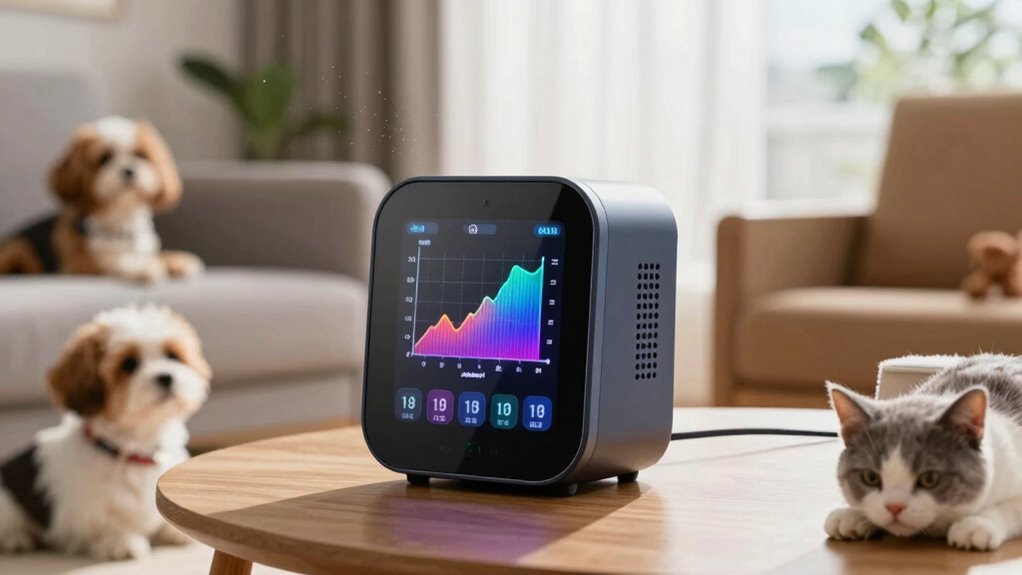
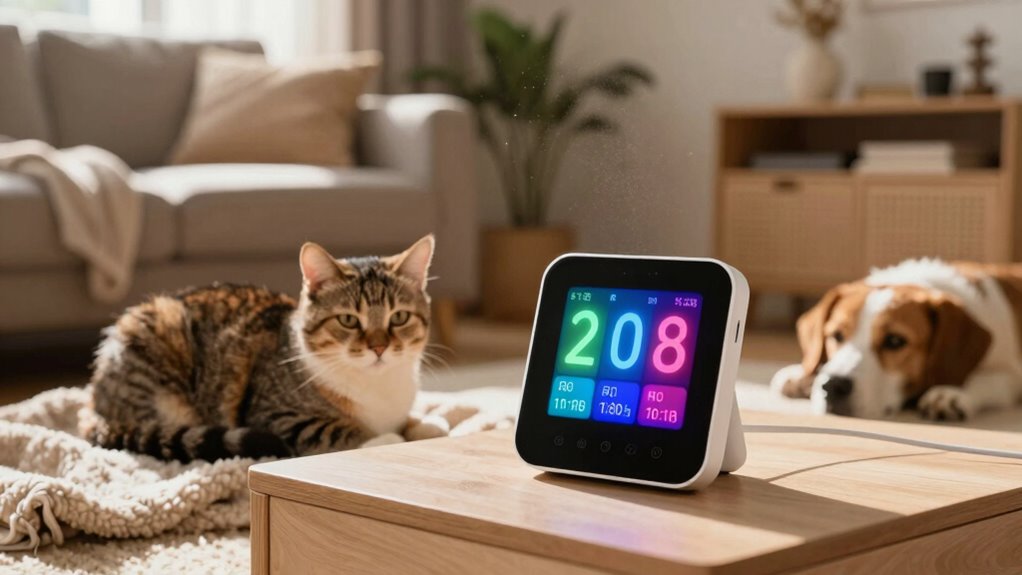
Choosing the right air quality monitor is essential for pet owners aiming to reduce allergens and improve indoor air. Look for devices that accurately measure VOC levels, as many household products release harmful gases that can affect your pets’ health. An effective monitor should also provide clear data on air purifier effectiveness, helping you determine if your current setup is working or if adjustments are needed. Prioritize models with real-time VOC measurement and user-friendly displays to track changes easily. Some monitors also include sensors for pet dander and particulate matter, giving you an all-encompassing view of your indoor air quality. By selecting a device tailored to your needs, you can better identify problem areas and take targeted steps to create a healthier environment for your pets.
Simple Steps to Create a Cleaner, Safer Home for You and Your Pets
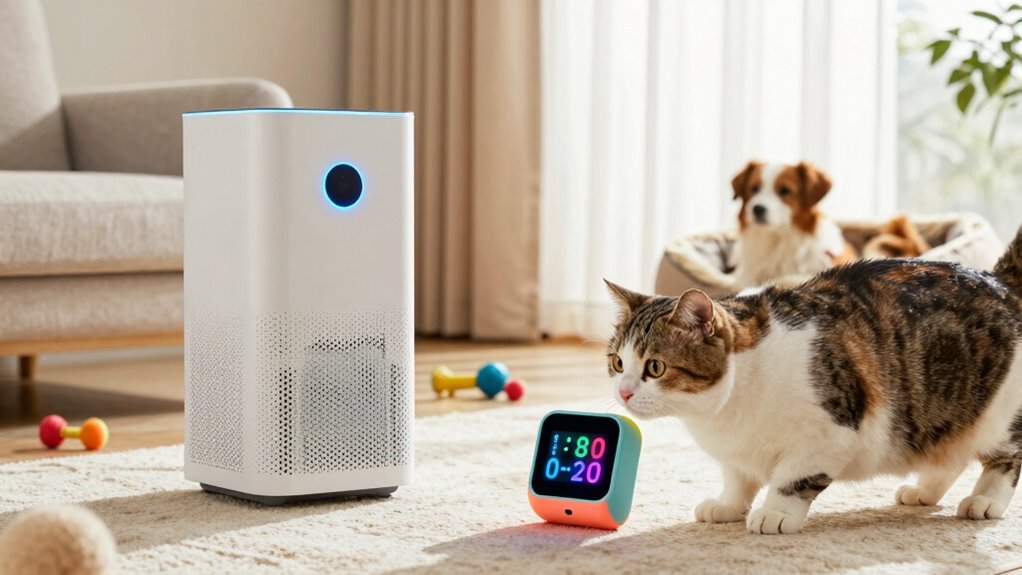
Creating a cleaner, safer home for you and your pets starts with simple, intentional steps. Regular pet grooming reduces dander and fur, decreasing airborne allergens and odors. Keep your pet’s bedding and toys clean to prevent buildup of dust and bacteria. Invest in effective air purification systems to filter out pet-related pollutants and improve overall air quality. Ventilate your home daily by opening windows or using exhaust fans to keep fresh air circulating. Use HEPA filters in your HVAC system to trap allergens and pet hair. Maintaining a tidy environment minimizes dust and pet dander, making your home safer. Consistent cleaning and proper air purification not only protect your health but also create a more comfortable space for your pets.
Frequently Asked Questions
Can Air Quality Monitors Identify Specific Pet Allergens Accurately?
Air quality monitors can detect species-specific allergens, but their allergen detection accuracy varies. While some advanced models are designed to identify pet allergens like dander, saliva, or urine, others may have limited sensitivity. To get reliable results, choose monitors with proven allergen detection accuracy for your pets. Keep in mind, no device can replace allergy testing done by a healthcare professional, but they can provide helpful insights into your household environment.
How Often Should I Test My Home’s Air Quality With Pets?
Think of your home’s air quality like a garden that needs regular tending. You should monitor it weekly, especially if you have pets. Regular monitoring frequency helps catch allergens early and keeps your indoor environment safe. Consider allergy testing for your pets and yourself every few months to identify any sensitivities. Staying proactive guarantees everyone breathes easier and maintains a healthy, happy home.
Are There Particular Times When Air Quality Worsens in Pet Households?
Air quality in pet households often worsens during certain times of day, especially after high pet activity. In the evening or early morning, when pets have been more active or sleeping, you might notice increased pet dander and odors, which can lower air quality. Regularly ventilate during these times and monitor air quality numbers to keep the environment safe for both you and your pets.
Do Air Purifiers Effectively Remove Pet Allergens From the Air?
Think of an air purifier as a brave knight facing a dragon. It can combat many pet allergens, but its limitations mean it might not catch every tiny speck. While it improves allergen removal efficiency, it doesn’t eliminate all allergens entirely. So, use it alongside regular cleaning and good ventilation to give your home the best defense. Remember, no device is perfect, but combined efforts make a healthier environment.
How Do Seasonal Changes Affect Indoor Air Quality for Pets?
Seasonal changes can worsen indoor air quality for your pets, especially during allergy seasons. As outdoor allergens increase, you might notice more sneezing or itching in your pets. To combat this, improve ventilation strategies by opening windows during low pollen times and using air purifiers. Regular cleaning and maintaining good airflow help reduce allergens and keep indoor air healthier for your pets year-round.
Conclusion
Don’t rely solely on your nose—air quality monitors can reveal hidden pollutants your senses might miss. Even if your home smells fine, allergens and toxins may still be lurking. Investing in a good monitor and following simple tips can make a real difference for your pets and your health. If you think your environment is already safe, remember that many harmful particles are invisible; a proactive approach keeps everyone happier and healthier.