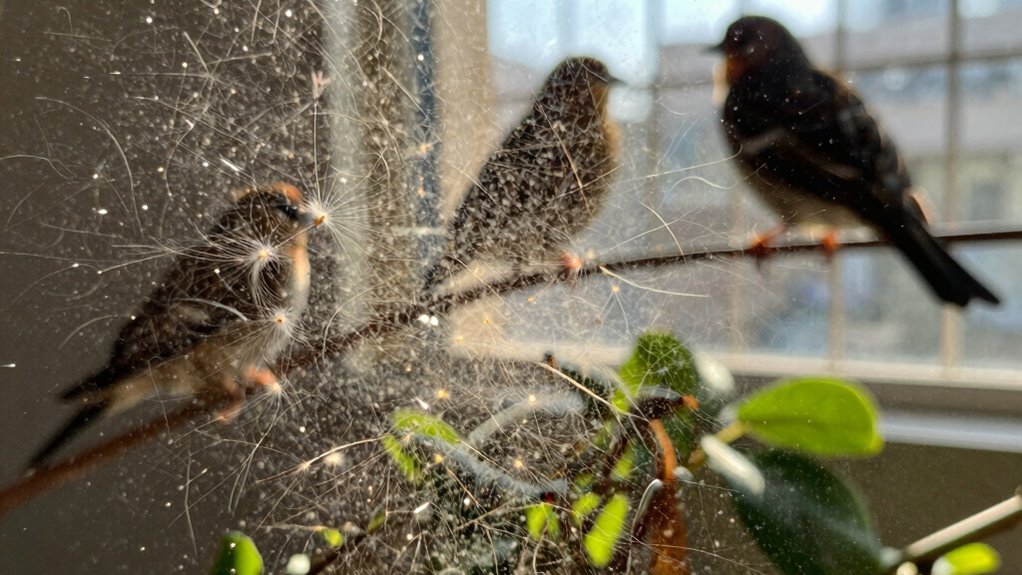

Bird dander isn’t just messy; it can seriously affect your lungs by triggering allergies, asthma, and respiratory irritation. When you keep birds, tiny particles from feathers, skin cells, and droppings become airborne, making it easier to breathe in allergens or irritants. These particles can also cause health issues in your bird, including immune and respiratory problems. To protect yourself and your feathered friends, it’s essential to manage dander levels—learn more about effective ways to keep everyone safe.
Key Takeaways
- Bird dander contains tiny particles that can be inhaled, triggering allergies and aggravating respiratory conditions in humans.
- Accumulated dander in bird habitats can cause respiratory issues and weaken immune systems in birds.
- Regular cleaning, proper ventilation, and HEPA filters help reduce airborne dander, protecting both human and bird lung health.
- Sensitivity to bird dander may cause symptoms like coughing, wheezing, or shortness of breath, requiring medical attention.
- Minimizing dander through hygiene and environment management improves indoor air quality and safeguards lung function for all.
What Is Bird Dander and How Does It Affect Your Lungs?
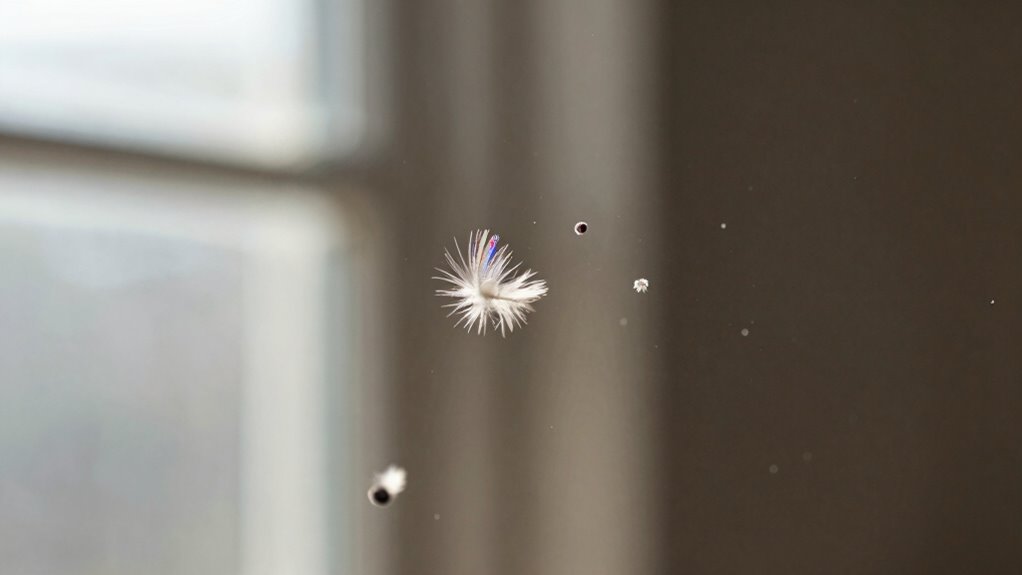
Bird dander is made up of tiny particles from feathers, skin cells, and droppings that become airborne in environments where birds are kept. When you breathe in this feather dust, it can trigger avian allergies, causing symptoms like sneezing, nasal congestion, and itchy eyes. These particles are lightweight and easily inhaled, settling into your respiratory system. People sensitive to bird dander often notice increased allergy symptoms, especially in enclosed spaces with many birds. Understanding what bird dander is helps you recognize potential triggers for allergic reactions. Although it doesn’t always cause lung problems on its own, it can worsen respiratory conditions in sensitive individuals. Managing exposure to feather dust is key to reducing allergy symptoms and protecting your lung health. Regular cleaning and proper ventilation can significantly reduce airborne particles and help maintain healthier indoor air quality. Additionally, knowing about allergy triggers can help you take targeted steps to minimize exposure and improve respiratory health. Incorporating proper ventilation systems can further help prevent the buildup of feather dust in indoor environments.
How Bird Dander Causes Respiratory Problems in Humans?

When you breathe in bird dander, your immune system may react by triggering allergies. These reactions can cause symptoms like sneezing, coughing, or difficulty breathing. Because the particles are so tiny, they can also reach deep into your lungs, posing serious breathing hazards.
Allergic Reactions Triggered By Dander
Dander from birds contains tiny particles that can easily become airborne and enter your respiratory system. These particles often trigger allergic reactions, especially if you have avian allergies. When exposed, you might experience allergy symptoms like sneezing, runny nose, or watery eyes. The immune system overreacts to these harmless proteins, causing inflammation and discomfort. To better understand how your body responds, consider these points: 1. Dander is a common allergen that can worsen asthma and other respiratory issues. 2. Repeated exposure can increase sensitivity, intensifying symptoms. 3. Removing or reducing bird contact may help lessen allergy symptoms and improve lung health. Recognizing these reactions allows you to take steps to minimize exposure and manage your symptoms effectively. Essential oils for respiratory health can provide additional relief by supporting your breathing and reducing inflammation.
Fine Particles Breathing Hazards
Because tiny particles from bird dander can become easily airborne, they pose a significant breathing hazard. When these fine particles are inhaled, they can settle deep in your lungs, negatively affecting your air quality and respiratory health. Small enough to bypass your body’s natural defenses, they may trigger inflammation and exacerbate conditions like asthma or bronchitis. Poor air quality due to persistent dander exposure can lead to persistent coughing, wheezing, and difficulty breathing. If you keep birds as pets or work around them, it’s essential to minimize airborne particles with proper ventilation and cleaning. Recognizing this risk helps you take steps to protect your lungs and maintain healthier air quality in your environment.
How Bird Dander Impacts Bird Health and Well-Being?
Bird dander can considerably affect the health and well-being of the birds themselves. When dander builds up, it can lead to respiratory issues and weaken their immune systems. Poor feather hygiene caused by excess dander makes it harder for birds to regulate body temperature and stay dry, increasing vulnerability to infections. To protect their avian health, you should:
- Maintain clean cages to reduce dander accumulation.
- Provide regular grooming to support feather hygiene.
- Monitor for signs of respiratory distress or feather loss.
- Understanding feather hygiene is essential for preventing health problems in captive birds.
Common Sources of Bird Dander in Your Home

You might notice bird cage dust settling around your home, especially on surfaces nearby. Feather accumulation in corners or on furniture can also release dander into the air. Additionally, nesting materials left around can become a hidden source of airborne particles that affect your lung health. Regular cleaning of bird accessories and dander control measures can help reduce airborne allergens.
Bird Cage Dust
Bird cage dust is a primary source of airborne dander in your home, often overlooked despite its health implications. This dust results from continuous feather buildup and debris inside the cage, which can become airborne when disturbed. To minimize exposure, focus on these areas:
- Regularly clean the cage to remove accumulated bird cage dust and loose feathers.
- Replace bedding material frequently to reduce feather buildup and dust.
- Use a damp cloth or vacuum with a HEPA filter to clean around the cage area, preventing dust from spreading. Proper ventilation also helps disperse airborne particles and improve indoor air quality.
- Incorporate air filtration systems designed to reduce airborne particles and improve indoor air quality, especially those with HEPA filters that can effectively capture tiny dander particles. Additionally, choosing energy-efficient air purifiers can help maintain healthy indoor environments without increasing energy consumption.
Feather Accumulation Areas
Have you ever noticed feather buildup accumulating on surfaces near your pet’s cage? These areas often become hotspots for feather accumulation, especially where loose feathers fall or shed. Birds naturally disperse feathers as they preen or molt, and some feathers drift into nearby corners, shelves, or furniture. Additionally, nesting materials like shredded paper or soft fabrics can trap and hold loose feathers, increasing airborne dander. Over time, this accumulation can become a persistent source of bird dander in your home. Cleaning these areas regularly helps reduce feather buildup and minimizes dander release into the air. Being aware of where feathers tend to collect allows you to target cleaning efforts effectively, improving both your lung health and your bird’s environment. Regular piercing care and hygiene practices can also help prevent the spread of allergens and irritants in your home environment.
Nesting Materials
Nesting materials are a significant source of bird dander in your home, especially when they contain loose fibers or small particles. During bird nesting, the material selection plays a vital role in how much dander is released. If you use materials like shredded paper, feathers, or straw, these can break apart easily, dispersing dander into the air. To minimize exposure, consider these tips:
- Avoid soft, fibrous materials that shed easily.
- Choose tightly woven or non-porous options for nesting.
- Regularly clean and replace nesting materials to prevent buildup.
Easy Ways to Reduce Bird Dander and Protect Your Lungs

To protect your lungs from bird dander, start by ensuring good ventilation in your space. Open windows regularly or use exhaust fans to circulate fresh air, reducing airborne particles. Keep your bird’s environment clean by washing cages, perches, and toys frequently. Use high-efficiency particulate air (HEPA) filters to trap dander and improve indoor air quality. Limit your exposure by avoiding direct contact with bird accessories and cleaning areas outside of living spaces. Regularly check your bird’s health since healthy birds produce less dander. Here’s a quick guide:
| Tip | Action | Benefit |
|---|---|---|
| Ventilation | Open windows, use fans | Reduces airborne dander |
| Cleaning | Wash cages and accessories often | Limits dander buildup |
| Air Purifiers | Use HEPA filters | Improves air quality |
| Personal Hygiene | Wash hands after handling birds | Prevents respiratory reactions |
| Bird Health Monitoring | Regular vet visits | Minimizes dander production |
Additionally, proper ventilation can significantly reduce airborne allergens, making your environment healthier. Maintaining a clean environment and ensuring good air quality management are essential steps in protecting your lungs from bird dander.
Signs You Might Be Sensitive to Bird Dander : When to See a Doctor
Even when you take steps to reduce bird dander, some people may still experience symptoms indicating sensitivity. Recognizing these signs is essential. If you notice persistent respiratory symptoms like coughing, wheezing, or shortness of breath, it could be a sign of a bird allergy. You should see a doctor if:
- Symptoms worsen or do not improve with home measures.
- You experience chest tightness or difficulty breathing.
- You develop recurring sinus issues or nasal congestion.
These signs suggest your immune system may be reacting strongly to bird dander. Ignoring them could lead to more serious respiratory problems. Getting tested and diagnosed early can help you manage your allergy effectively and prevent long-term lung issues.
Best Tips for Cleaning Bird Dander From Your Home
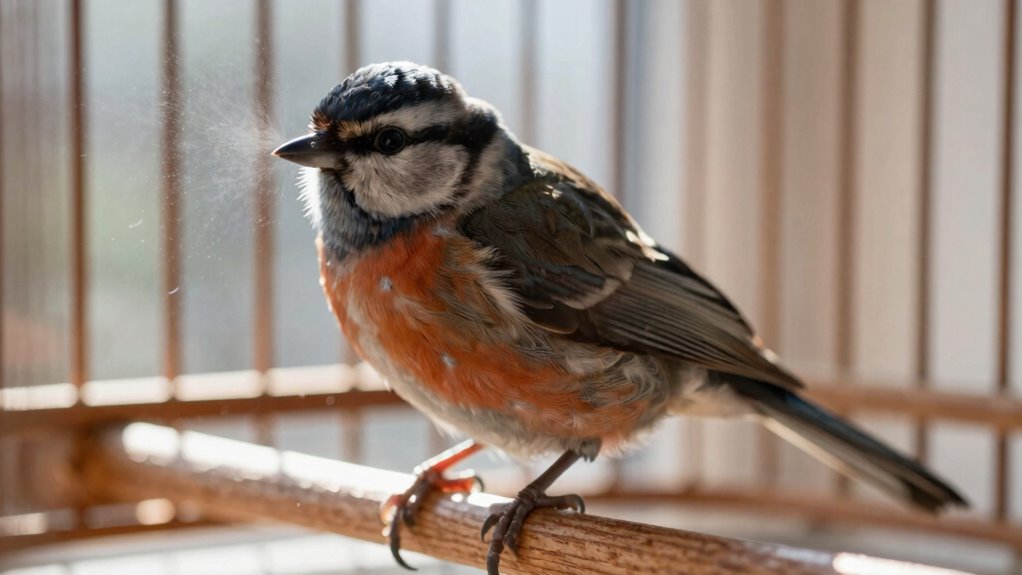
Keeping bird dander under control requires regular and effective cleaning strategies. To reduce exposure to avian allergens and protect your respiratory health, focus on thorough cleaning of surfaces and air. Use a vacuum with a HEPA filter to trap tiny dander particles, and wipe down cages, perches, and nearby furniture daily. Wash bird bedding and toys weekly in hot water. Consider air purifiers with HEPA filters to improve indoor air quality. Remember, proper ventilation helps disperse airborne allergens. Additionally, understanding symbolism in art and culture can help you recognize the deeper emotional impacts associated with allergies and sensitivities.
Creating a Safe Environment for Your Birds and Your Breathing

Creating a safe environment for your birds and your breathing starts with establishing proper space and cleanliness. Guarantee your cage is spacious enough for your bird to move comfortably, reducing stress and feather molting issues that increase dander. Maintain a clean environment by daily removing waste and replacing soiled bedding to minimize airborne particles. Focus on providing proper avian nutrition, which supports healthy feather growth and reduces excessive molting, lowering dander production. Additionally, ensure good ventilation to prevent buildup of airborne allergens. To optimize safety:
- Keep the cage in a well-ventilated area away from smoke and strong fumes.
- Regularly clean and disinfect toys, perches, and cage accessories.
- Monitor your bird’s health, especially during feather molting, to prevent respiratory issues.
Frequently Asked Questions
Can Bird Dander Cause Allergies in People Without Prior Respiratory Issues?
Yes, bird dander can cause allergies even if you’ve never had respiratory issues before. If you develop a bird allergy, your immune system becomes sensitive to the dander, triggering symptoms like sneezing, coughing, or nasal congestion. People with respiratory sensitivity might notice these symptoms more quickly. Keep in mind, exposure can lead to new allergies or worsen existing ones, so managing bird dander is essential for your lung health.
Are Certain Bird Species More Likely to Produce Harmful Dander?
Certain bird species produce more potent, problematic dander. For example, parrots and cockatoos tend to trigger stronger allergic reactions due to allergen variation, compared to finches or canaries. When you compare species, you’ll notice that some birds shed more dander, increasing your risk of allergies and respiratory issues. So, if you’re sensitive or prone to allergies, choosing a quieter, less allergenic species can help minimize your health hazards.
How Long Does Bird Dander Stay Airborne After Cleaning?
After cleaning, bird dander can stay airborne for 30 minutes to several hours, depending on ventilation and cleaning techniques. To minimize exposure, you should use gentle, damp cleaning methods and make certain of good airflow. Airborne particles can linger, so avoid cleaning during peak allergy times or in poorly ventilated spaces. Wearing a mask and using air purifiers can also help reduce the duration and amount of dander in the air.
Can Bird Dander Affect Pets Like Cats and Dogs?
Think of bird dust as a sneaky guest that can upset your pets’ comfort. Yes, bird dust can affect cats and dogs, especially if they have sensitivities to pet allergies. When you clean, tiny particles linger in the air, and your furry friends might inhale them, leading to sneezing, itching, or respiratory issues. To keep everyone happy, make certain thorough cleaning and good ventilation, reducing the impact of bird dust on your pets.
Is It Safe to Keep Birds in Small Indoor Cages Long-Term?
Keeping birds in small indoor cages long-term isn’t ideal, especially if you guarantee proper cage ventilation and regular bird grooming. Poor ventilation can increase dander buildup, impacting your lungs and theirs. Regular grooming reduces dander and prevents health issues. If you maintain good hygiene, provide fresh air, and clean the cage often, it becomes safer. But always monitor your bird’s health and consider larger, more naturalistic spaces when possible.
Conclusion
While bird dander might seem harmless or just messy, it secretly impacts your lungs and their health. Yet, caring for your birds and maintaining a clean environment can protect both their well-being and yours. The challenge is balancing joy with caution—embracing the beauty of your feathered friends without letting dander take control. With mindful habits, you create a space where both your lungs and your birds thrive, proving that safety and companionship can coexist beautifully.