Indoor birds need UVB lighting because it mimics natural sunlight, helping them produce vitamin D3 essential for calcium absorption and bone health. Proper UVB support prevents deficiencies that can lead to weak bones, poor feathering, and health problems. However, UVB can’t fix issues caused by poor diet, social needs, or inadequate overall care. To make certain your bird’s well-being, understanding how to choose and use the right UVB light is key. Keep going to learn more.
Key Takeaways
- UVB supports vitamin D3 production, improving calcium absorption and preventing bone and feather health issues in indoor birds.
- Proper UVB lighting mimics natural sunlight, promoting natural behaviors and overall physical well-being.
- UVB cannot replace a balanced diet, social interaction, or outdoor exposure for comprehensive bird health.
- Excessive or improper UVB exposure can harm birds, causing skin damage or disrupting calcium regulation.
- UVB helps with certain health aspects but can’t fix underlying nutritional deficiencies or address behavioral needs alone.
Why Do Indoor Birds Need UVB Lighting?
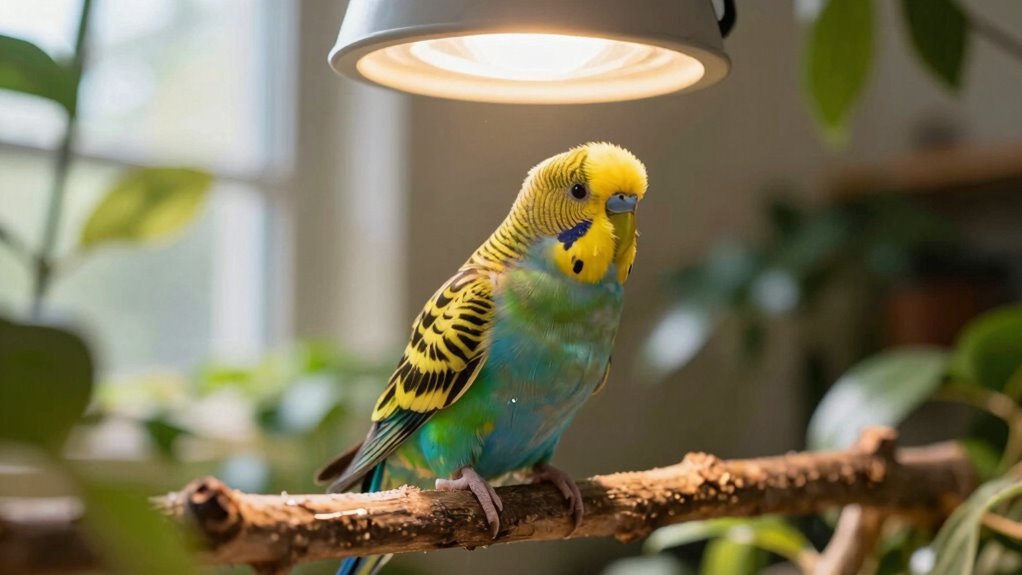
Indoor birds need UVB lighting because, unlike their outdoor counterparts, they don’t get exposed to natural sunlight that provides essential UVB rays. Without proper UVB exposure, your bird might develop diet deficiencies, especially in vitamin D3, which is vital for calcium absorption and bone health. Lack of UVB can also lead to poor cage enrichment, making their environment less stimulating and affecting their overall well-being. Providing UVB lighting helps mimic natural sunlight, supporting their natural behaviors and physical health. It’s not just about preventing deficiencies; it also encourages activity and curiosity. Ensuring your bird gets enough UVB is a key part of maintaining a healthy, happy indoor environment, especially when outdoor access isn’t an option. Additionally, color accuracy in lighting can influence their perception of their surroundings, contributing to their mental well-being. Proper UVB exposure can also help prevent behavioral issues related to insufficient stimulation and health concerns. Moreover, understanding avian lighting needs can help you create a more enriching and healthful habitat for your indoor bird.
How Does UVB Help Prevent Vitamin D Deficiency?
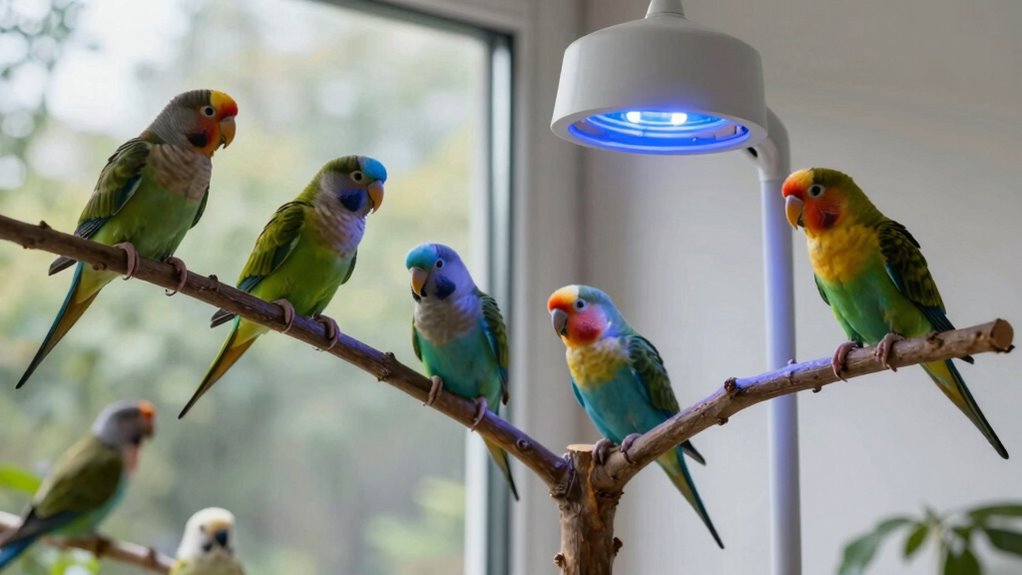
UVB light plays a essential role in helping your bird produce vitamin D3, which is essential for calcium absorption and bone health. Without adequate vitamin D, your bird can develop deficiencies that weaken bones and impair overall health. When exposed to UVB, the skin converts cholesterol into vitamin D3, ensuring proper calcium metabolism. To understand this better, consider the table below:
| UVB Exposure | Vitamin D Production | Impact on Calcium Absorption |
|---|---|---|
| Adequate | Increases | Improves |
| Insufficient | Decreases | Impairs |
| Excess | Can cause harm | Disrupts |
Providing your bird with proper UVB exposure helps prevent vitamin D deficiency, supporting healthier bones and overall well-being.
In What Ways Does UVB Support Bone and Feather Health?
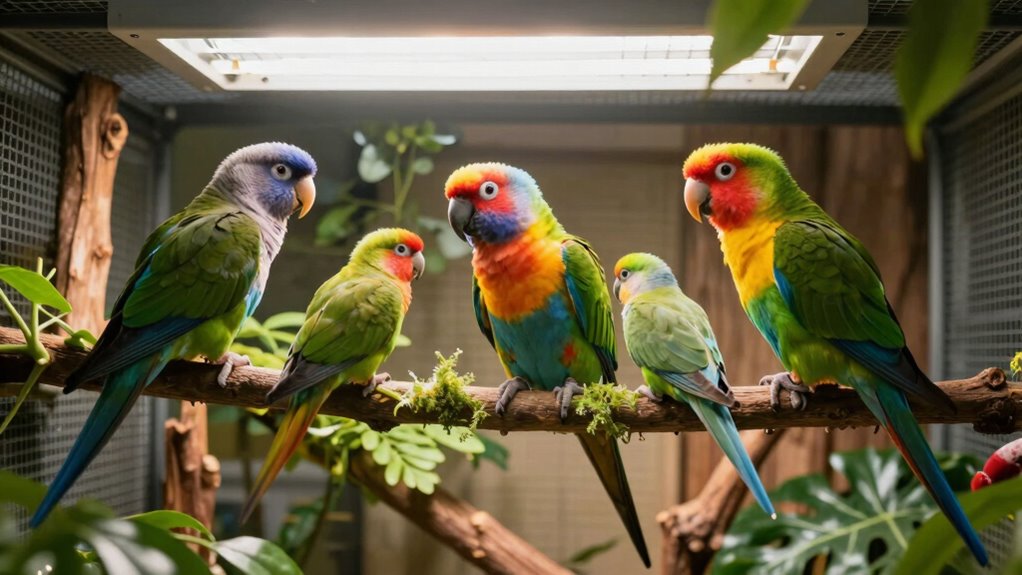
Since UVB exposure is essential for vitamin D3 production, it directly influences your bird’s bone and feather health. When your bird receives adequate UVB, vitamin D3 helps improve calcium absorption in the digestive system. This increased calcium availability is vital for strong bones, preventing conditions like metabolic bone disease. Additionally, UVB exposure supports shell formation in growing feathers by ensuring sufficient calcium reaches the feather follicles, resulting in healthy, well-structured feathers. Without enough UVB, calcium absorption drops, weakening bones and impairing feather quality. Proper UVB lighting mimics natural sunlight and promotes robust skeletal development and vibrant feathering, helping your bird stay active and healthy. The role of UVB in calcium regulation underscores its significance beyond just preventing deficiency, directly impacting your bird’s physical resilience and appearance.
What Are Common Signs Your Bird Needs More UVB?
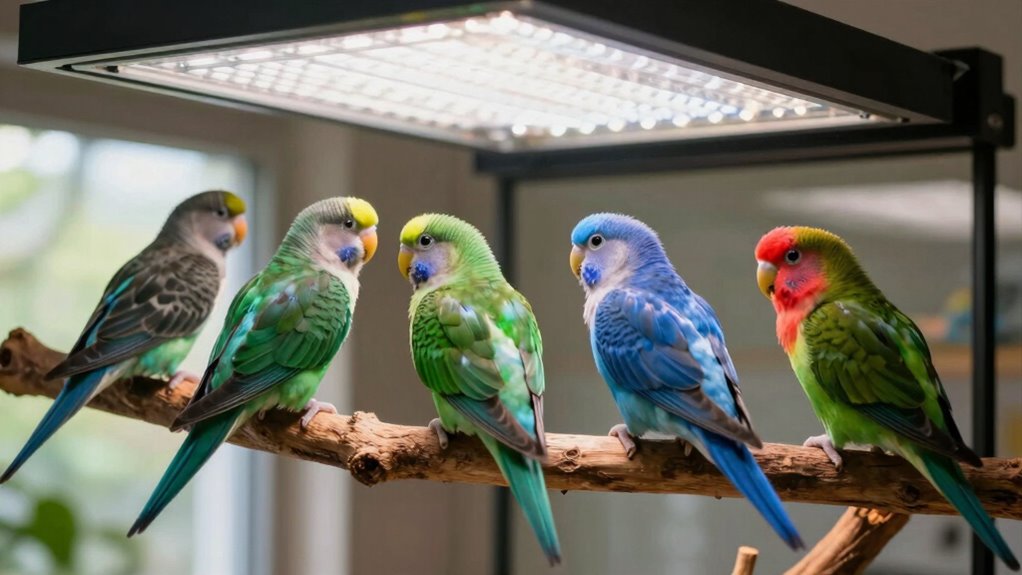
If your bird shows feather fraying or peeling, it might be a sign they need more UVB. You’ll also notice if they become less active or seem lethargic, which can indicate a deficiency. Additionally, changes in their body condition, like weight loss or poor muscle tone, could point to inadequate UVB exposure.
Feather Fraying or Peeling
Feather fraying or peeling can be a clear sign that your bird isn’t getting enough UVB light. When UVB exposure is insufficient, it can lead to weakened keratin in feathers, causing them to fray or peel easily. This issue may also stem from plucking causes, where a bird’s stress or skin irritation worsens feather damage. Additionally, diet deficiencies—such as lack of essential vitamins and minerals—can compromise feather health, making feathers more prone to damage. Without proper UVB, your bird’s body struggles to produce vitamin D3, which is crucial for calcium absorption and overall feather maintenance. If you notice feathers starting to peel or fray, it’s a good idea to assess your bird’s UVB exposure and diet to address potential deficiencies.
Decreased Activity Levels
When your bird starts moving less and seems lethargic, it could be a sign they need more UVB light. Reduced activity might look like sitting quietly, avoiding play, or not engaging with toys or social interaction. This behavior signals possible vitamin D deficiency, affecting their energy levels. To support their health, consider providing appropriate dietary supplements and more natural sunlight or UVB exposure.
| Signs of Decreased Activity | Possible Causes |
|---|---|
| Lethargy or inactivity | Low UVB, vitamin deficiency, poor diet |
| Avoiding social interaction | Lack of stimulation or health issues |
| Less interest in toys | Insufficient UVB, boredom |
| Fluffed feathers, quiet | Underlying illness or UVB deficiency |
Changes in Body Condition
Changes in body condition are often among the earliest signs that your bird may need more UVB light. You might notice weight loss, dull feathers, or muscle weakness, indicating inadequate vitamin D synthesis. Ensuring a diet diversity rich in fresh fruits, vegetables, and high-quality pellets supports overall health, but UVB exposure is essential for calcium absorption and bone strength. Lack of proper UVB can lead to poor body condition despite good diet and enclosure enrichment. Additionally, a dull or fluffed appearance and decreased muscle tone can signal your bird’s body isn’t functioning at its best. Regularly evaluating these signs helps you catch issues early. Providing appropriate UVB lighting, alongside a varied diet and stimulating environment, promotes a healthier, more vibrant bird. Vetted lighting solutions can help ensure your bird receives consistent UVB exposure for optimal health.
How to Choose the Right UVB Light for Your Bird
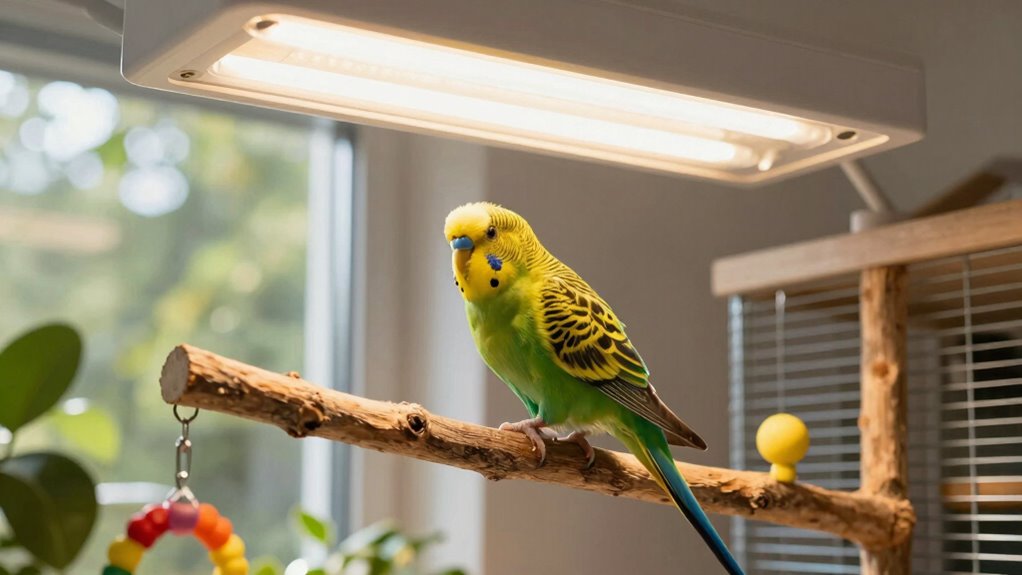
Choosing the right UVB light involves considering the light spectrum options and ensuring it provides the correct UVB wavelength for your bird’s health. You also need to think about wattage and size to match your cage and space. Finally, proper safety and placement are essential to prevent accidents and maximize benefits.
Light Spectrum Options
Selecting the right UVB light for your bird involves understanding the different spectrum options available. Light spectrum options influence how well your bird benefits from UVB exposure and how natural the lighting appears. When choosing a bulb, consider these factors:
- Full-spectrum bulbs that mimic natural sunlight for excellent health.
- UVB intensity levels suitable for your bird’s species and size.
- Bulb color choices that affect visual comfort and behavior.
Your goal is to select a light that provides adequate UVB without causing stress or discomfort. Keep in mind that different spectrum options serve various needs, so understanding these choices helps you create a healthy, natural environment. Proper understanding of light spectrum options enhances the health benefits, and selecting the appropriate spectrum can prevent issues like vitamin D deficiency. Ensuring your bird receives the correct light spectrum is essential for supporting its wellbeing and mimicking natural daylight. Light spectrum choices play a crucial role in simulating a natural environment and supporting your bird’s health. Additionally, understanding the spectral distribution of a bulb helps ensure it delivers the necessary wavelengths for optimal vitamin D synthesis.
Wattage and Size Considerations
Wattage and size are crucial factors when selecting a UVB light for your bird, as they determine the intensity and coverage of the light. Your wattage selection should match your cage size considerations; larger cages require higher wattage bulbs to ensure adequate UVB exposure throughout the space. For small cages, a low-wattage light may suffice, but for bigger setups, you’ll need a stronger bulb to reach all areas. Keep in mind that higher wattage doesn’t always mean better, so choose a bulb designed specifically for bird enclosures. Proper wattage and size ensure your bird gets consistent UVB coverage, which supports healthy vitamin D synthesis. Always consider your cage’s dimensions and your bird’s distance from the light when making your choice. Selecting the right UVB light specifications can help optimize your bird’s health and prevent deficiencies.
Safety and Placement Tips
To guarantee your bird’s safety, it’s vital to carefully consider where and how you place the UVB light. Proper placement not only ensures your bird gets the benefits but also prevents potential hazards. Keep these tips in mind:
- Position the UVB light above the enclosure, avoiding direct eye contact to prevent discomfort.
- Use the right distance—usually 12-24 inches—to balance effective UVB exposure and safety.
- Integrate the light seamlessly with decorative lighting to enhance enclosure aesthetics without compromising functionality.
- Regularly check your environmental conditions to ensure your bird’s habitat remains safe and healthy.
What Mistakes Are Common When Using UVB Lighting?
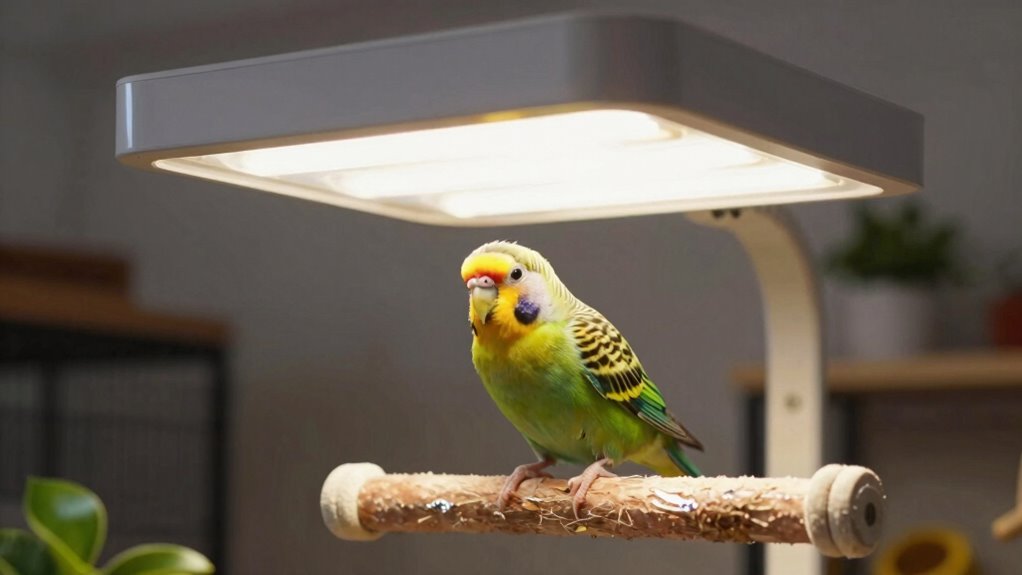
One of the most common mistakes when using UVB lighting is misplacing the bulb or not providing the right distance from your bird. This can lead to insufficient or excessive UVB exposure, affecting UVB dosage and overall health. You might also set the light for too long or too short a duration, disrupting your bird’s natural rhythm. To avoid these issues, ensure the bulb is positioned 12-18 inches above the cage and replace it every 6-12 months. Keep light duration consistent, typically around 10-12 hours daily. Additionally, understanding UVB exposure limits can help prevent health risks associated with improper lighting. Being aware of UVB intensity and how it varies with distance can help fine-tune your setup and optimize your bird’s health. Proper setup guarantees your bird gets safe, effective UVB exposure. Regularly monitoring UVB levels can further ensure your setup remains safe and effective. Recognizing the importance of UVB regulation can also help you maintain a healthy environment for your bird.
What Factors Affect How Well UVB Works for Your Bird?
Several factors influence how effectively UVB lighting benefits your bird. First, your bird’s nutrition essentials play a role—without proper diet, UVB absorption and calcium metabolism can be compromised. Second, the bird’s age and health status matter; younger or healthier birds typically utilize UVB more efficiently. Third, environmental conditions such as cage placement and exposure time impact UVB’s effectiveness. To maximize benefits, guarantee your bird gets a balanced diet, including calcium-rich foods, and interacts socially with you or other birds, which encourages natural behaviors and reduces stress. Remember, UVB is a supplement, not a replacement for good nutrition and social interaction. Paying attention to these factors helps your bird get the full health benefits UVB can provide.
Beyond UVB: Key Elements of Complete Bird Care
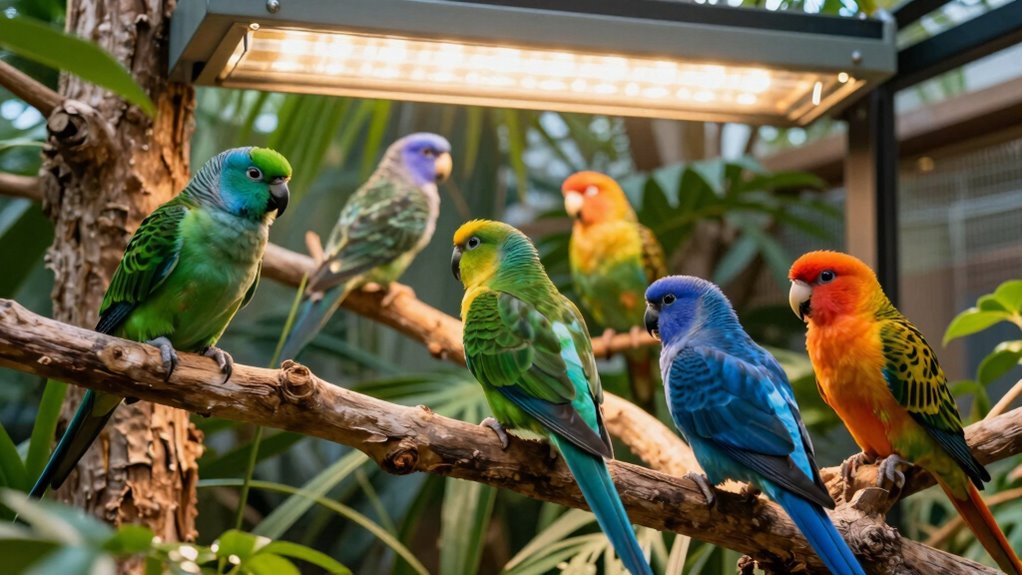
While UVB lighting plays a crucial role in your bird’s health, it’s only one piece of the puzzle. Providing a well-rounded approach involves more than just light. Diet diversity is essential; offering a variety of fresh fruits, vegetables, and pellets ensures balanced nutrition. Incorporating a range of fiber-rich foods can promote digestive health and overall vitality. Social interaction keeps your bird mentally stimulated and reduces loneliness, promoting overall well-being. Regular enrichment activities prevent boredom and encourage natural behaviors. Additionally, maintaining proper security zone measures can help protect your bird from environmental hazards and pests. Incorporating knowledge about aroma oil diffusers can also remind owners of the importance of creating a calming and safe environment to support your bird’s emotional health.
Frequently Asked Questions
Can UVB Lighting Replace Natural Sunlight Entirely for Indoor Birds?
No, UVB lighting can’t replace natural sunlight entirely for your indoor birds. While UVB supplementation helps provide essential rays that promote vitamin D3 production, it can’t replicate the full spectrum or the benefits of natural sunlight. Birds need regular access to natural sunlight when possible, as it offers a broader range of wavelengths and environmental cues that indoor UVB lighting alone can’t fully provide.
How Often Should I Replace My Bird’s UVB Bulb for Optimal Health?
You should replace your bird’s UVB bulb every 6 to 12 months for maximum health. The UVB bulb lifespan decreases over time, reducing its effectiveness. Follow a consistent replacement schedule, ideally marking the date when you install a new bulb. Regularly check for signs of reduced UVB output, and replace promptly if the bulb shows signs of dimming or flickering, ensuring your bird gets the UVB exposure it needs.
Are There Any Risks Associated With Excessive UVB Exposure for Birds?
Exposing your bird to too much UVB can lead to UVB overexposure, which might cause bird skin damage and other health issues. To prevent this, monitor the distance and duration of UVB light exposure, ensuring it’s not too intense or prolonged. Always follow manufacturer guidelines, and consider providing shaded areas or breaks in the UVB light to keep your bird safe and healthy.
Do All Bird Species Benefit Equally From UVB Lighting?
Not all bird species benefit equally from UVB lighting. You should consider species differences, as some, like parrots, require more UVB exposure for vitamin D synthesis, while others, like finches, need less. Feather coloration can also influence UVB needs; vibrant plumage may indicate a higher requirement for UVB to maintain coloration. Tailoring UVB exposure guarantees your bird’s health without risking overexposure.
What Are Alternative Ways to Ensure My Indoor Bird Gets Enough Vitamin D?
You can guarantee your indoor bird gets enough vitamin D through diet diversity and supplementation methods. Offer a variety of nutrient-rich foods like fortified pellets, seeds, and fresh fruits and vegetables. Consider vitamin D supplements recommended by your avian vet, especially if natural sunlight or UVB lighting isn’t sufficient. Regularly consulting your vet helps tailor the best plan, ensuring your bird’s health without relying solely on UVB exposure.
Conclusion
Did you know that providing proper UVB lighting can reduce your indoor bird’s risk of metabolic bone disease by up to 50%? Ensuring your bird gets the right UVB exposure isn’t just about preventing deficiencies—it’s about supporting their overall health and happiness. By choosing the right light and avoiding common mistakes, you give your feathered friend the best chance at a vibrant, healthy life indoors. So, make UVB a top priority in your bird care routine!