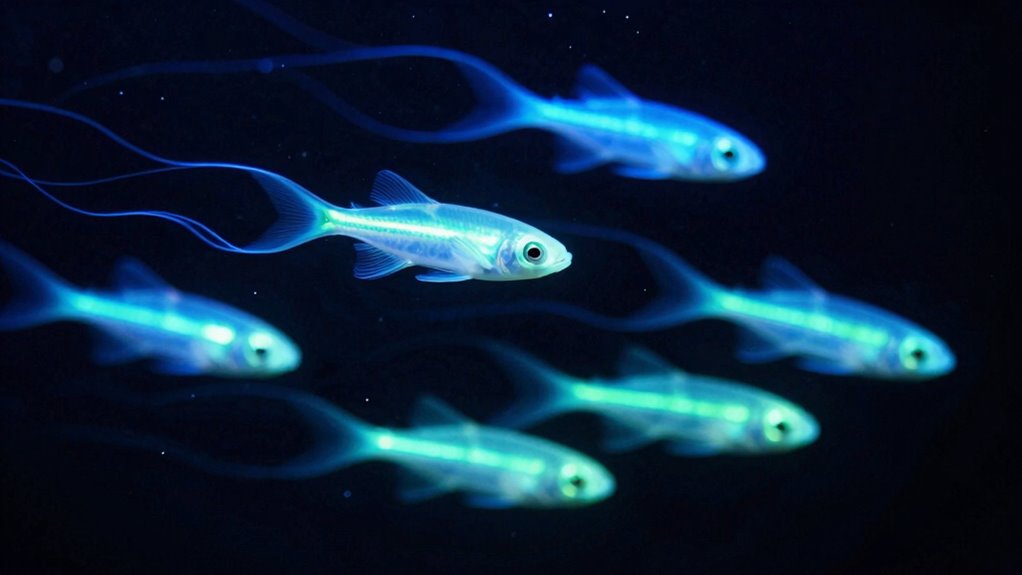

In the deep sea, some fish glow through bioluminescence, a natural way to survive where sunlight never reaches. They use light to attract prey, evade predators, and communicate with others. Their glowing patterns can mimic larger animals or signal toxicity to scare off threats. This energy-efficient light production helps them navigate harsh conditions and stay safe. If you want to discover more about how these fascinating creatures thrive, keep exploring!

Get pet supplies delivered free with Prime
- Fast, free delivery on millions of items
- Prime Video, Amazon Music and more included
- Member-only deals all year
Key Takeaways
- They produce bioluminescent light through chemical reactions to adapt to the darkness of deep-sea environments.
- Bioluminescence helps fish evade predators by startling or mimicking threats.
- Fish use glowing signals to attract prey or communicate with others.
- Specific light patterns aid in individual recognition and reproductive behaviors.
- Bioluminescence enhances survival by enabling camouflage and deception in extreme depths.
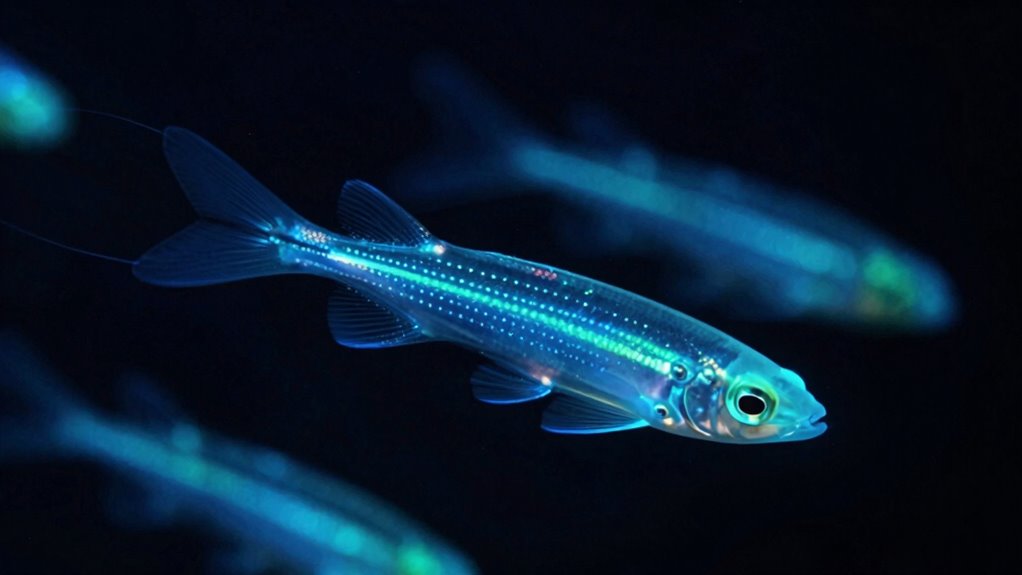
Deep in the dark depths of the ocean, where sunlight never reaches, some fish have developed a remarkable ability to glow. This natural trait, called bioluminescence, is a form of light produced by chemical reactions within their bodies. As you observe these creatures, you’ll notice that their bioluminescent patterns are unique and serve specific purposes. One of the most important functions is predator evasion. In the pitch-black environment, these fish use their glowing features to avoid becoming someone else’s dinner.
Some deep-sea fish glow to avoid predators and stay safe in the dark ocean depths.
When threatened, some fish flash sudden bursts of light, startling predators or confusing their sense of direction. Others display specific bioluminescent patterns that mimic the appearance of larger or more dangerous animals, deterring attack. This form of predator evasion is highly effective because it allows the fish to escape without a fight, relying on their glowing signals to deceive and distract. You might also see fish that use their bioluminescence as a kind of warning sign, signaling that they’re toxic or unpalatable, which discourages predators from attacking altogether.
Furthermore, the patterns themselves often serve as a form of communication among fish. In the darkness, these glowing signals can help individuals recognize each other or coordinate movements during feeding or mating. For example, some species display intricate light patterns that only other members of their species can interpret, creating a form of visual language in an environment where sound travels poorly. These bioluminescent patterns are not just random; they evolve to optimize survival and reproductive success in the deep sea’s extreme conditions. Additionally, bioluminescence can vary among species, allowing for species-specific signals that enhance survival strategies. Scientists continue to study these bioluminescent signals to better understand their role in deep-sea ecosystems. Interestingly, the chemical reactions responsible for bioluminescence are highly efficient, producing very little heat and making them well-suited for the deep-sea environment. Some fish even utilize bioluminescent camouflage to blend seamlessly into their surroundings and avoid detection.
You’ll also notice that certain fish use their bioluminescence to lure prey closer. They create glowing spots or appendages that mimic tiny organisms, drawing in smaller creatures that become easy targets. This tactic complements predator evasion by ensuring they don’t have to chase down food; instead, they attract it. The ability to produce light enhances their chances of survival, whether by avoiding predators or catching prey.
As an affiliate, we earn on qualifying purchases.
Frequently Asked Questions
Can Fish Control Their Bioluminescence Intensity?
You can see that some fish control their bioluminescence intensity through fish light regulation, which is a result of bioluminescence evolution. They adjust the amount of light they produce by controlling the chemical reactions in their luminescent organs. This ability helps them communicate, attract prey, or avoid predators. Their control isn’t perfect but is fine-tuned enough to serve their needs effectively in the deep-sea environment.
Do All Deep-Sea Fish Produce the Same Type of Light?
Not all deep-sea fish produce the same type of light; their bioluminescence varies like a palette of colors in a painter’s studio. Some emit blue or green light for deep-sea camouflage, blending into the darkness, while others glow to attract predators or prey. This diversity helps them survive in the dark, dangerous depths, where each fish’s glow serves a unique purpose, like a secret weapon in the ocean’s shadowy world.
Are Bioluminescent Fish Harmful or Dangerous to Humans?
Bioluminescent fish generally aren’t harmful or dangerous to humans. You’re unlikely to face any human health risks from touching or encountering them, as they aren’t aggressive and don’t produce toxins. Marine predators might use their glow to hunt, but this doesn’t pose a threat to you. Still, it’s wise to avoid disturbing deep-sea creatures, as some may have defensive mechanisms, and safety always comes first.
How Do Scientists Study Bioluminescence Underwater?
You study bioluminescence underwater by combining high-tech tools with natural curiosity. Researchers use specialized cameras and sensors to capture marine light, revealing how deep-sea fish create their glow. These adaptations help them survive in the dark, cold depths. By exploring these behaviors, scientists uncover secrets of deep-sea life, blending technology with nature’s brilliance. This approach reveal the mysteries of marine light and deep sea adaptations, revealing the ocean’s hidden wonders.
Do Bioluminescent Fish Produce Light Naturally or Artificially?
Bioluminescent fish produce light naturally through evolutionary adaptations. They’ve developed specialized organs called photophores that generate their glow without any artificial illumination. This natural light helps them attract prey, communicate, or evade predators in the dark, deep-sea environment. Unlike artificial illumination, their bioluminescence is a biological trait that has evolved over millions of years to suit their survival needs in the deep ocean.
Conclusion
As you glimpse into the depths, the glowing fish become symbols of resilience and mystery, illuminating the darkness not just with light, but with stories of survival. Their bioluminescence is a silent language, a beacon guiding the curious through the abyss. In their glow, you see the delicate balance of life’s hidden wonders—a reminder that even in the darkest places, there’s beauty and purpose waiting to be uncovered.
Fall Picks
fall essentials
As an affiliate, we earn on qualifying purchases.