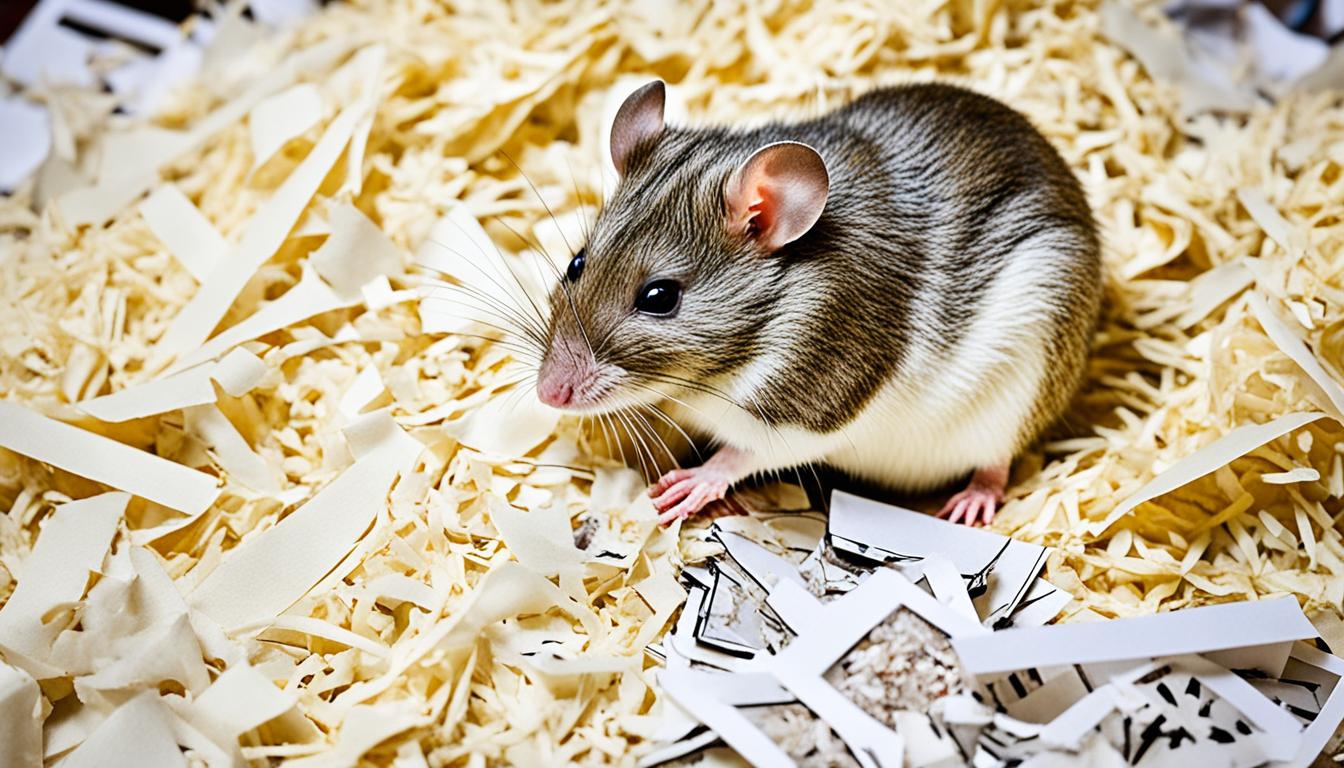
Animals avoid predators using various strategies. They camouflage themselves to blend into their surroundings and evade detection. Some, like the monarch caterpillar, use poison to make themselves unappetizing, while others employ venom to immobilize threats. Many creatures display defensive behaviors such as feigning death or inflating their bodies to look intimidating. Others flaunt bright warning colors to signal their toxicity. Each strategy plays a crucial role in survival, and there's much more to explore about these fascinating adaptations.

Get pet supplies delivered free with Prime
- Fast, free delivery on millions of items
- Prime Video, Amazon Music and more included
- Member-only deals all year
Key Takeaways
- Camouflage allows animals to blend into their environments, reducing visibility to predators and enhancing evasion chances.
- Chemical defenses, like poison and venom, deter predators by making prey unpalatable or dangerous when attacked.
- Defensive behaviors, such as playing dead or adopting intimidating postures, can effectively dissuade predators from attacking.
- Warning coloration, through bright patterns, signals toxicity to potential predators, promoting learned avoidance behaviors.
- Some species incorporate materials from their surroundings, like decorator crabs, to improve concealment and avoid detection.
Camouflage and Body Coverings
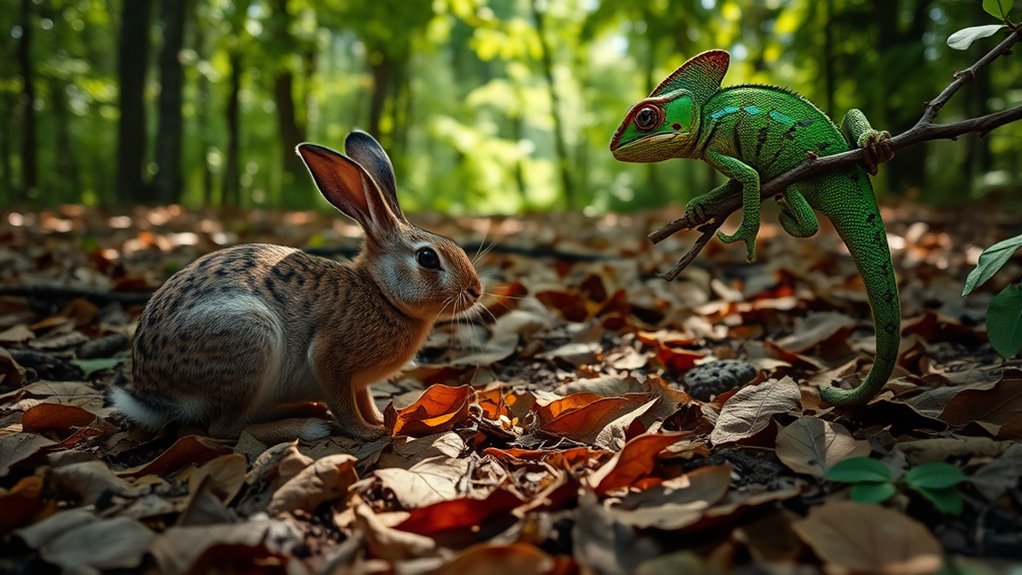
When it comes to survival, many animals rely on camouflage and body coverings to evade predators. Animals use camouflage to blend seamlessly into their environments, boosting their chances of not being spotted.
For instance, the decorator crab showcases this brilliantly by incorporating surrounding materials into its appearance. Specific body coverings, like turtle shells, offer physical protection, with designs that deter predators from biting.
You might notice how some creatures remain motionless or align their shapes to match their surroundings, enhancing their concealment. The effectiveness of these tactics can vary by habitat; in low-visibility areas, animals use alternative cues to escape detection.
Additionally, dynamic mimicry, like that of Indo-Malayan octopuses, highlights how animals use adaptive strategies for survival.
Poison and Venom

Many animals take advantage of chemical defenses like poison and venom to protect themselves from predators. Poison, like that found in monarch caterpillars, is harmful when ingested, making these caterpillars unappetizing to hungry birds.
On the other hand, venom, as seen in rattlesnakes, is delivered through bites or stings, allowing them to immobilize prey or deter threats effectively. Understanding the distinction between poisonous and venomous animals is essential, as many rely on these strategies for survival.
Some species, like milkweed longhorn beetles, flaunt bright colors to signal their toxicity, enhancing their chances of survival. Additionally, the musky odor from musk turtles acts as a deterrent, showcasing the diverse chemical defenses found throughout the animal kingdom. Awareness of potential contaminants is crucial for understanding how these defenses impact their survival.
Defensive Behaviors
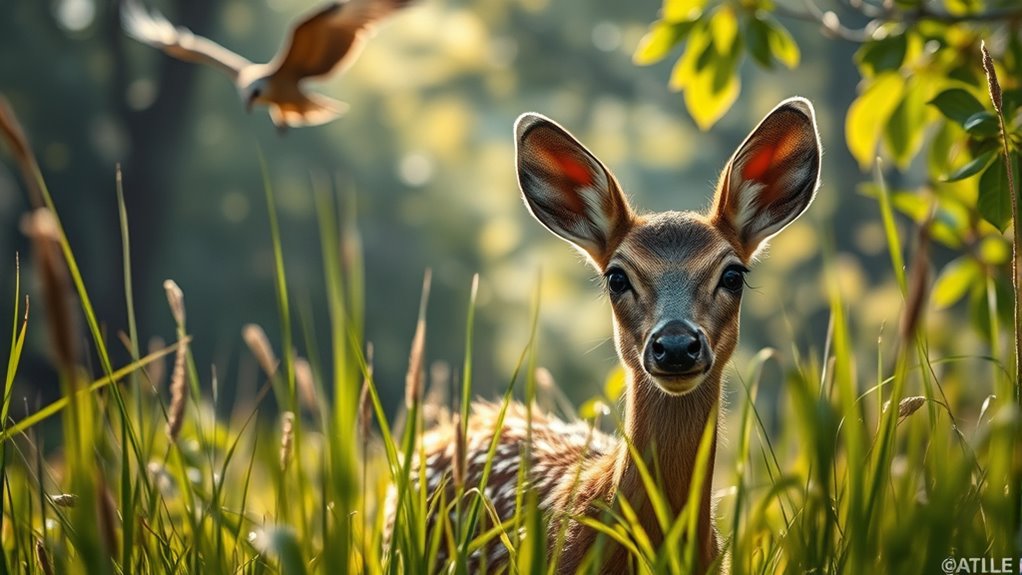
Defensive behaviors play an essential role in an animal's survival, as they help deter potential predators. For instance, hognose snakes cleverly play dead, flipping onto their backs and sticking out their tongues to mimic venomous species.
Similarly, some nonvenomous snakes inflate their bodies and adopt rattlesnake postures to appear more intimidating. These tactics vary widely across species, ranging from feigning death to aggressive displays.
Many animals combine behavioral strategies with physical defenses like camouflage or warning coloration to boost their chances of evading predators. The effectiveness of these defensive behaviors often hinges on the specific ecological context and the predator's past experiences, highlighting the significance of learned behavior in predator-prey interactions.
Chemical Defenses

Chemical defenses serve as a fascinating strategy for animals to fend off predators, often relying on the release of noxious substances to signal danger.
You might be surprised by how diverse these defenses can be. Consider these examples:
- Musk turtles, known as "stinkpots," excrete a musky odor when threatened, deterring predators effectively.
- Milkweed longhorn beetles are poisonous due to their diet and use their chemical defenses to warn predators with distinctive smells.
- Bombardier beetles eject a hot, toxic spray from their abdomen to fend off threats.
- Pufferfish release potent toxins when attacked, making them unappetizing to would-be predators.
These chemical strategies highlight the ingenuity of nature, providing alternatives to physical defenses and enhancing survival odds.
Warning Coloration
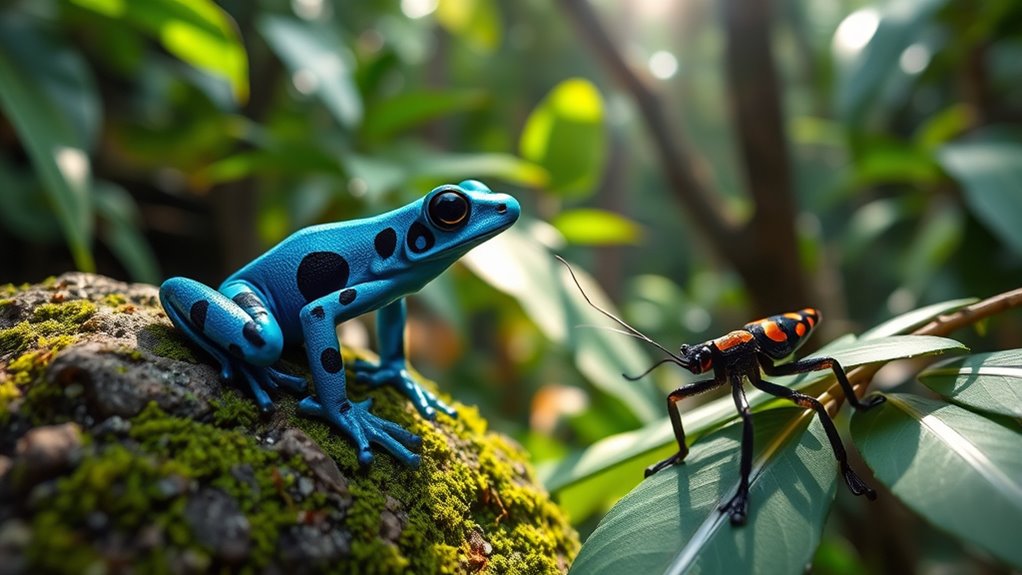
Brightly colored patterns in nature often signal danger, serving as a warning to potential predators. This strategy, known as warning coloration or aposematism, helps animals like the milkweed longhorn beetle and monarch butterflies survive. Their vibrant colors indicate toxicity, deterring predators who learn to associate bright hues with unpleasant experiences.
| Animal | Coloration | Toxicity Source |
|---|---|---|
| Milkweed Longhorn Beetle | Bright stripes | Toxic milkweed |
| Monarch Butterfly | Orange and black | Milkweed consumption |
| Poison Dart Frog | Bright green/yellow | Skin toxins |
This method isn't limited to insects; it's seen in amphibians, reptiles, and mammals, showcasing its evolutionary importance in predator-prey dynamics.
Frequently Asked Questions
How Do Animals Evade Predators?
When you think about how animals evade predators, you'll find they use various strategies.
They might flee to safety or blend into their surroundings with camouflage. Some even feign death to trick their attackers.
You'll see others using intimidation displays or mimicking more dangerous species to deter threats.
Chemical defenses, like unpleasant odors, act as warnings, while bright colors signal toxicity, making predators think twice before attacking.
Each method showcases the ingenuity of survival.
How Do Animals Escape From Predators?
Imagine you're a quicksilver shadow darting through the underbrush, every rustle a whisper of danger.
You escape from predators by relying on your speed, agility, and clever tricks. You might blend into your surroundings or mimic a dead leaf, confusing your pursuer.
If you're cornered, you might shed a part of yourself, distracting the predator just long enough to slip away.
It's a dance of survival, where quick thinking and instinct reign supreme.
How Does an Animal Protect Itself From Predators?
When you think about how an animal protects itself from predators, consider its strategies. Some animals use camouflage, blending into their surroundings to avoid detection.
Others rely on toxic substances to deter threats, making them unappetizing. You might also observe defensive behaviors, like playing dead or emitting unpleasant odors when threatened.
Additionally, bright colors can signal toxicity, warning potential predators to steer clear. Each method enhances the animal's chances of survival in the wild.
What Are the 8 Methods That Prey Use to Avoid Predation?
Isn't it ironic that in the wild, the best survival strategy often involves being invisible? Prey animals use methods like camouflage to blend in, defensive behaviors to scare off threats, and chemical defenses to stink up the place.
Then there's warning coloration, which boldly screams, "I'm toxic!"
Finally, some even sacrifice body parts to escape. By employing these clever tactics, you'll see how nature equips them to dodge danger with style.
Conclusion
In the wild, every creature plays its own game of hide and seek, much like a chameleon blending into a vibrant garden. Just as you might slip into shadows to avoid being seen, animals use camouflage, venom, and clever defenses to outsmart their predators. Their survival strategies are like a well-rehearsed dance, ensuring they stay one step ahead. By understanding these tactics, you can appreciate the intricate ballet of life unfolding in nature, where every move counts.
Halloween Picks
halloween
As an affiliate, we earn on qualifying purchases.