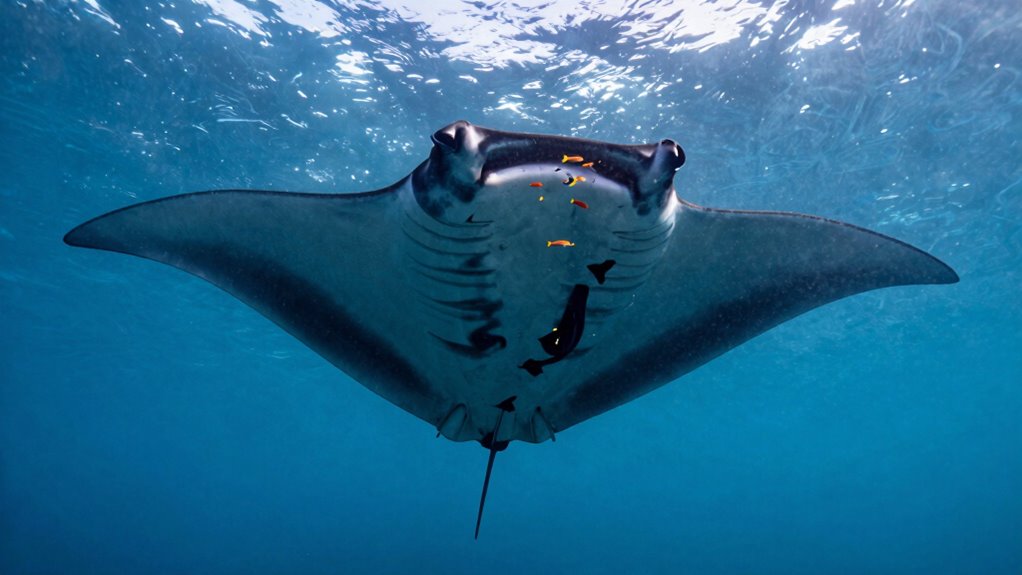

A manta ray can reach a wingspan of up to 23 feet, making it one of the largest oceanic animals. Its massive pectoral fins give the appearance of flying through water, while its size plays a vital role in its survival and ecological impact. Despite their gentle nature, they face threats from habitat loss and illegal fishing. Keep exploring to discover more fascinating facts about these incredible giants of the sea.

Get pet supplies delivered free with Prime
- Fast, free delivery on millions of items
- Prime Video, Amazon Music and more included
- Member-only deals all year
Key Takeaways
- Adult manta rays can reach up to 23 feet (7 meters) in wingspan, with some exceeding this size.
- They are among the largest oceanic creatures, classified as giants in marine environments.
- Their massive pectoral fins give the appearance of flying through water due to their size.
- Larger females tend to produce bigger or more offspring, influenced by their size.
- Their considerable size makes them vulnerable to human threats despite their gentle nature.
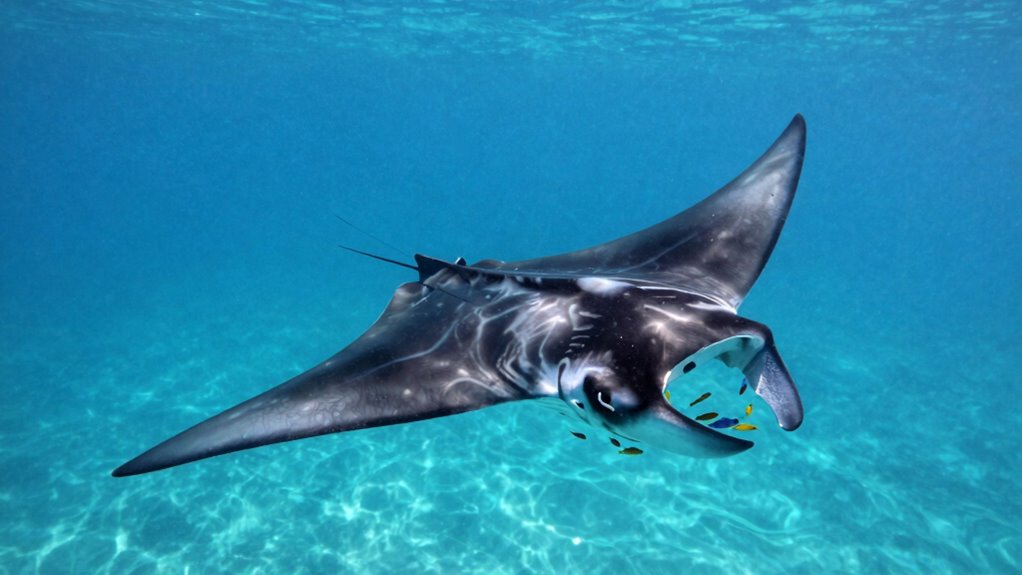
Manta rays are some of the ocean’s most fascinating creatures, known for their graceful movements and impressive size. When you consider how big they can get, it’s clear they’re among the ocean’s giants. Adult manta rays typically reach a wingspan of up to 23 feet, though some reports mention individuals exceeding that. Their massive pectoral fins stretch wide, giving them the appearance of flying through the water, which makes their size even more striking. Despite their enormous size, they are gentle giants, feeding mainly on plankton and small fish. Understanding their size helps you appreciate the significance of manta ray conservation efforts, as these animals face threats from fishing, habitat destruction, and pollution. Their large size also means they require extensive critical habitats for feeding and breeding, emphasizing the importance of habitat protection. As you learn about manta rays, you might wonder about their migration patterns. These creatures undertake long-distance migrations, traveling thousands of miles across oceans. Migration is influenced by seasonal changes, breeding needs, and food availability, highlighting the importance of migration routes in their conservation. During migration, they often visit specific cleaning stations where tiny fish remove parasites from their bodies, a behavior essential for their health. Recognizing these migration patterns emphasizes the need for international cooperation in manta ray conservation. Protecting critical habitats along their migratory routes is necessary to guarantee their survival, especially as many of these routes cross busy shipping lanes and fishing zones. Additionally, their size influences their role in the ecosystem, as larger manta rays are capable of impacting marine biodiversity through their feeding and movement patterns.
You may find it fascinating that the size of a manta ray also plays a role in their reproductive cycle. Larger females tend to produce bigger and sometimes more numerous offspring, which can influence population dynamics. Their large size offers some defense against predators, but it also makes them vulnerable to human activities. The size of manta rays directly affects their vulnerability to illegal fishing and habitat disturbances, making size an important factor in conservation planning. The larger they grow, the more noticeable they are, which unfortunately means they’re more often targeted by illegal fishing and the demand for manta ray parts. This is why understanding how big they can get is essential for conservation strategies. Efforts like establishing marine protected areas and regulating fishing practices are crucial for maintaining healthy populations.
As an affiliate, we earn on qualifying purchases.
Frequently Asked Questions
Are Manta Rays Dangerous to Humans?
Manta rays aren’t dangerous to humans because their behavior is generally peaceful and curious. They rarely show aggression and mostly swim gracefully, avoiding conflict. While they have large, powerful fins, they pose little threat unless provoked. Understanding manta ray behavior helps promote manta ray conservation efforts, ensuring these gentle giants thrive. Respect their space, and you’ll have a safe, awe-inspiring experience observing these magnificent creatures in their natural habitat.
How Long Do Manta Rays Live in the Wild?
Think of manta rays as gentle giants that gracefully dance through the ocean for decades. In the wild, they typically live around 20 to 25 years, with some reaching up to 30 years. During their lives, they undertake significant manta ray migration and manta ray breeding journeys, which help sustain their populations. You can admire their resilience and beauty, knowing they spend much of their lives exploring vast ocean domains.
Do Manta Rays Have Any Natural Predators?
You’ll find that manta rays have few natural predators, mainly large sharks and orcas. Their behavior, such as their wide migration patterns, helps them evade threats by moving to safer waters. During migration, they often gather in large groups, which can reduce individual risks. Although their size offers some protection, their gentle nature and impressive maneuvers make them less targeted by predators, relying on their movement and behavior for defense.
Can Manta Rays Survive in Captivity?
You might feel like you’ve just glimpsed a gentle giant gliding through the water, but surviving in captivity is tough for manta rays. They face captivity challenges that threaten their well-being, making it hard for them to thrive outside their natural ocean habitat. While some aquariums attempt manta ray conservation, these animals often struggle with stress and health issues. Protecting their wild environment remains the best way to guarantee their survival.
What Do Manta Rays Eat Besides Plankton?
Manta rays primarily feed on plankton, but their feeding habits also include small fish and tiny crustaceans, showcasing their dietary variety. You might be surprised to learn that they sometimes filter larger prey like small fish, depending on what’s available. Their feeding habits are flexible, allowing them to adapt to different environments. This dietary variety helps manta rays thrive in the wild, where food sources can vary.
Conclusion
As you watch a manta ray glide gracefully through the ocean, remember it’s a symbol of freedom and gentle strength. Its vast wings remind you that size isn’t everything—sometimes, true greatness lies in the quiet, effortless beauty of your journey. Like the manta ray, you can navigate life’s depths with grace, leaving behind a trail of awe and inspiration. Embrace your own size and presence, knowing your impact can be as vast and profound as the ocean itself.
Fall Picks
fall essentials
As an affiliate, we earn on qualifying purchases.