Polar bears’ fur and skin are unusual because their thick, double-layered fur traps air for insulation while their water-repellent coat keeps them warm in icy water. The white color helps them blend in with ice, preventing prey from spotting them, while the black skin absorbs heat to keep them warm. These adaptations support their survival and hunting in extreme cold. If you want to uncover more about their incredible features, keep exploring.

Get pet supplies delivered free with Prime
- Fast, free delivery on millions of items
- Prime Video, Amazon Music and more included
- Member-only deals all year
Key Takeaways
- Polar bears have a combination of dense undercoat and hollow guard hairs that trap air for exceptional insulation.
- Their white fur provides camouflage and reflects sunlight, aiding in temperature regulation and stealth.
- Black skin beneath the fur absorbs and retains heat, enhancing warmth in extreme cold.
- Fur’s water-repellent properties prevent heat loss in icy water, crucial for hunting seals.
- Their skin and fur are specialized for both insulation and concealment in the harsh Arctic environment.
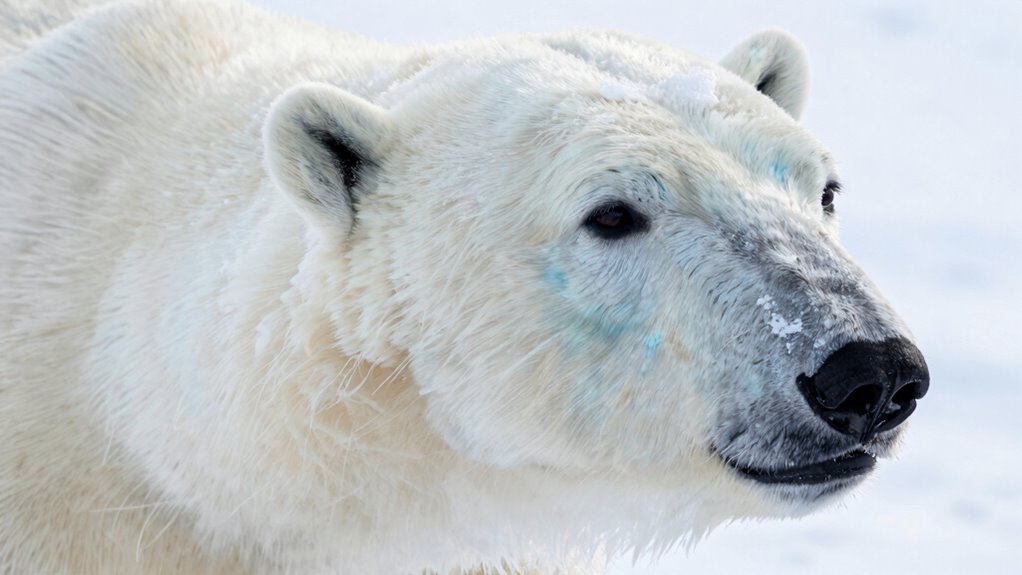
Have you ever wondered how polar bears stay warm in the freezing Arctic? Their fur and skin are truly extraordinary, designed to handle some of the harshest conditions on Earth. These animals have evolved remarkable features that are essential to their survival, especially when it comes to climate adaptation. Their thick layer of fur, combined with a specialized layer of fat beneath the skin, creates an insulating barrier that keeps the cold out and the heat in. The fur itself isn’t just one dense coat but consists of two types of hair: a dense undercoat and long, hollow guard hairs. The hollow guard hairs are particularly unique because they trap air, which acts as an extra insulating layer. This adaptation guarantees that even in temperatures that can plummet to -50°C (-58°F), polar bears can maintain their body temperature comfortably. Insulating layers such as these are vital for their survival in extreme climates.
Moreover, the color of their fur plays a critical role in survival. While it appears white, helping them blend seamlessly into the snow and ice, it also reflects sunlight, preventing overheating during the sun’s stronger rays in summer months. Their skin underneath is black, which might seem counterintuitive but serves an essential purpose. Black skin absorbs and retains heat, assisting in climate adaptation. This combination of white fur and black skin creates an efficient system that keeps them warm despite the extreme cold. Interestingly, their fur also has a water-repellent quality that helps prevent the loss of body heat when they are in contact with icy water. Their adaptations allow them to endure long periods of fasting and conserve energy effectively. In addition, their fur’s light-reflecting properties contribute to their ability to stay cool when temperatures rise.
Their unusual skin and fur also influence their hunting strategies. Polar bears are expert predators, primarily relying on their keen sense of smell to locate seals, their main prey. Their thick fur and fat layers enable them to endure long periods of fasting while waiting near breathing holes or seal dens. Their insulation helps them conserve energy, which is indispensable during food shortages. When hunting, they often rely on patience and stealth, using their fur to remain undetected by seals. Their white appearance camouflages them against the ice, allowing them to approach prey closely without being seen.
In essence, the polar bear’s fur and skin aren’t just about warmth—they’re fundamental tools for climate adaptation and success in their environment. Their specialized coat and skin support their hunting strategies, allowing them to thrive in one of the world’s most extreme habitats. The combination of insulating layers, color adaptation, and skin pigmentation highlights how evolution has finely tuned these animals for survival in the Arctic’s unforgiving conditions.
As an affiliate, we earn on qualifying purchases.
Frequently Asked Questions
Do Polar Bears’ Fur and Skin Change Color With Seasons?
No, polar bears’ fur and skin don’t change color with seasons. Instead, their camouflage adaptation relies on their fur’s density variation, which appears white year-round, helping them blend into the snow and ice. Their black skin absorbs heat, but the dense, water-repellent fur traps air for insulation. This combination keeps them warm and camouflaged, regardless of seasonal changes, making them perfectly suited to their Arctic environment.
Can Polar Bears’ Fur Insulate Them in Extremely Cold Water?
Your polar bear’s fur is an incredible insulator, capable of keeping it warm even in icy waters. Thanks to its dense fur, which is a hyper-efficient barrier, it traps air and reduces heat loss. This fur density, combined with black skin that absorbs sunlight, provides superb insulation. As a result, your polar bear can comfortably hunt and swim in freezing temperatures, using its camouflage to stay hidden from prey and predators alike.
How Does Polar Bear Fur Stay Waterproof Despite Its Color?
Your polar bear’s fur stays waterproof because its dense fur traps air and repels water, preventing it from soaking in. The fur’s density creates a barrier, keeping the skin dry even in icy waters. Its color provides effective polar bear camouflage, blending with snow and ice, while the thick fur guarantees insulation. This combination allows the bear to stay warm and dry, essential for survival in Arctic conditions.
Do Polar Bears Shed Their Fur Annually?
You might imagine shedding as a polar bear’s way of staying fresh, but they don’t shed annually. Instead, they undergo a gradual molt, usually in late spring or early summer, replacing their thick coat over weeks. This process supports their polar bear diet and mating habits by keeping them insulated and healthy for hunting and breeding. Think of it as nature’s way of renewing their armor for survival in icy domains.
Are Polar Bears’ Fur and Skin Affected by Climate Change?
Yes, climate change affects polar bears’ fur and skin. Their adaptation strategies include thick fur and a layer of fat, which help insulate them. However, genetic differences mean their fur can’t grow as quickly or fully adapt to melting ice. As temperatures rise, these features become less effective, forcing polar bears to change behaviors. This highlights how climate change challenges their survival, requiring ongoing adaptation to shifting Arctic conditions.
Conclusion
So, next time you marvel at a polar bear’s thick fur and black skin, remember they’re perfectly adapted for survival in the icy Arctic. Some might think it’s just insulation, but it’s actually a sophisticated system for camouflage, heat absorption, and temperature regulation. Don’t underestimate how these unique features work together, proving that polar bears aren’t just animals—they’re built for the extreme environment they call home. Nature’s design truly is extraordinary.
Halloween Picks
halloween
As an affiliate, we earn on qualifying purchases.