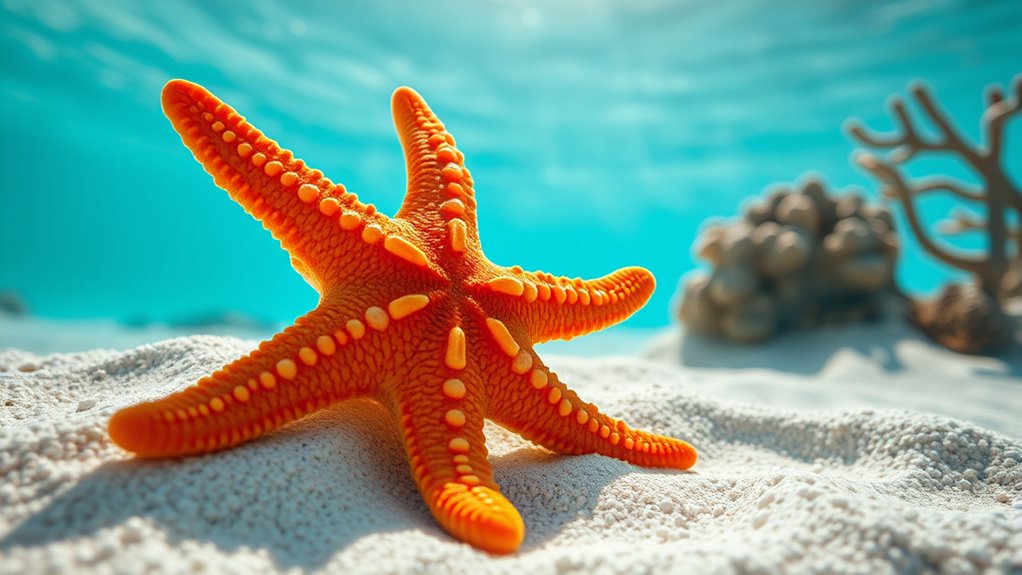

Sea stars can regrow limbs thanks to specialized cells called blastemal cells. When they lose a limb, these cells gather at the injury site, multiplying rapidly. They then differentiate into muscle, nerve, and connective tissue, rebuilding the limb’s complex structures. This regeneration starts almost immediately after injury and follows a series of stages, allowing the new limb to take shape over time. You’ll find fascinating details about their incredible abilities and the science behind it all.
Key Takeaways
- Sea stars use specialized cells called blastemal cells that gather at injury sites and multiply to initiate limb regeneration.
- The regeneration process begins almost immediately after limb loss and involves rapid cell proliferation and differentiation.
- Limb development occurs in stages, starting with a small bump that elongates and shapes into a complete limb.
- Genetic signals guide the cellular mechanisms that dictate limb formation and ensure the reconstruction of intricate structures.
- Sea stars can even regenerate an entire new body from a single arm, illustrating their remarkable survival and reproductive adaptations.
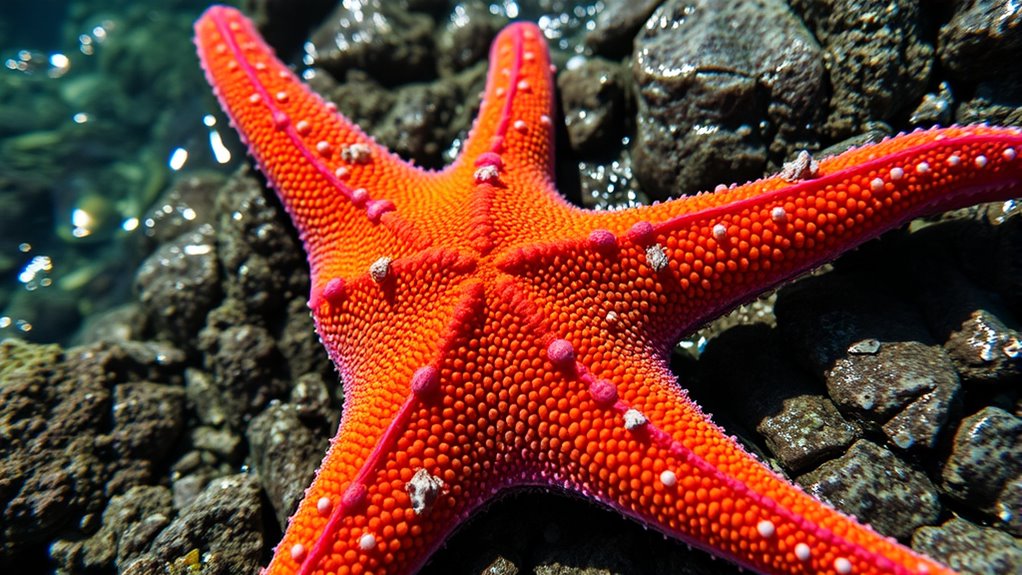
Sea stars, also known as starfish, have an incredible ability to regrow their limbs, making them one of nature’s most fascinating creatures. When you think about marine regeneration, sea stars stand out due to their unique biological processes. If you’ve ever seen a sea star with a missing limb, you might wonder how it manages to regenerate so effectively. The process isn’t just about growing back a lost limb; it involves complex cellular mechanisms and limb differentiation, which allow these creatures to thrive even after injury.
When a sea star loses a limb, whether due to predation or environmental factors, it doesn’t just sit back and wait for nature to take its course. Instead, it activates its regeneration process almost immediately. Specialized cells called blastemal cells play a fundamental role in this process. You’ll find these cells gathering at the site of the injury and multiplying rapidly. They then differentiate into the various cell types needed to form a new limb, including muscle, nerve, and connective tissues.
When injured, sea stars spring into action, activating specialized cells to regenerate lost limbs almost immediately.
One of the most fascinating aspects of sea star regeneration is limb differentiation. Unlike many animals, sea stars can regenerate an entire limb, complete with all its intricate structures. As the new limb starts to develop, it undergoes a series of stages. Initially, you might see a small bump where the limb used to be. Over time, this bump elongates and gradually takes shape. The sea star’s body knows exactly what it needs to do, guided by genetic signals that dictate how the new limb should form.
You might be surprised to learn that a sea star can even regenerate an entirely new body from just a single arm, as long as part of the central disc is intact. This extraordinary feature not only showcases their ability to adapt and survive, but it also plays a critical role in their reproduction. When you think about it, this form of asexual reproduction allows them to populate their environments more effectively. Additionally, understanding the cellular mechanisms involved in their regeneration can provide insights into biological processes that may be applicable in other fields, such as medicine.
Frequently Asked Questions
How Long Does It Take for a Sea Star to Regrow a Limb?
A sea star typically takes several months to a few years for limb regeneration, depending on factors like species and environmental conditions. You’ll notice that the recovery timeline can vary widely; some may regain their limbs in as little as a few months, while others might take longer. Keeping the sea star in a healthy habitat can help accelerate its recovery and guarantee a successful regeneration process.
Do All Sea Star Species Regenerate Limbs Equally?
Not all sea star species regenerate limbs equally. You’ll find significant species variation in regeneration efficiency. Some species can regrow limbs quickly, while others may take much longer, depending on their specific biology and environmental factors. For instance, the common sea star regenerates efficiently, but some tropical species struggle with limb regeneration. Understanding these differences helps you appreciate the unique adaptations within the diverse world of sea stars.
Can Sea Stars Regenerate Other Body Parts Besides Limbs?
Yes, sea stars can regenerate various body parts beyond just their limbs, like their central disc and even some internal organs. The ability to regenerate varies depending on the species and the severity of the damage. Researchers are exploring the cellular mechanisms behind this fascinating regeneration process, which could have potential applications in regenerative medicine. So, understanding how sea stars regenerate can help advance medical science and improve healing in humans.
What Environmental Factors Affect Limb Regeneration in Sea Stars?
Water temperature and salinity levels critically affect limb regeneration in sea stars. When you keep the water temperature within an ideal range, regeneration speeds up. If it’s too cold or too warm, it can slow down or even halt the process. Similarly, maintaining appropriate salinity levels is vital; extreme variations can stress sea stars, hindering their ability to regenerate. So, if you’re caring for them, monitor these factors closely for healthy growth.
Are There Any Risks During the Limb Regeneration Process?
Yes, there are risks during the limb regeneration process. Notably, studies show that up to 30% of sea stars may face predator risks while healing. As they regrow limbs, their vulnerability increases, making them easy targets for predators like fish and crabs. Additionally, healing complications can arise due to environmental stressors or infections, potentially slowing down regeneration. So, while sea stars have this remarkable ability, it’s not without its dangers.
Conclusion
In summary, sea stars’ ability to regrow limbs is like nature’s own magic trick, showcasing resilience and adaptability. By harnessing specialized cells and regenerative processes, these fascinating creatures remind us of the power of recovery. So, next time you spot a sea star, think about its remarkable journey of healing and growth. Just as we face challenges in life, they teach us that sometimes, all it takes is a little patience and the right conditions to thrive.