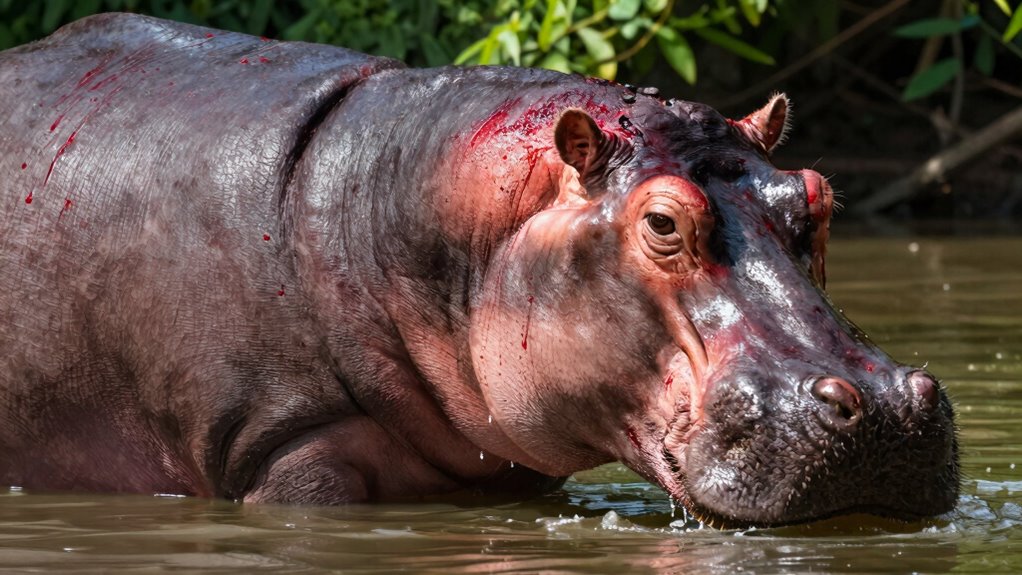

You might wonder why hippos sweat red, and it’s because they produce a unique substance known as “blood sweat.” This reddish secretion isn’t blood but contains pigments and proteins that give it its striking hue. It acts as a natural sunscreen, reflecting sunlight, and helps keep their skin moist and protected. Plus, it has antimicrobial properties that fight bacteria and parasites. Keep exploring, and you’ll discover even more fascinating ways this shows how hippos adapt to their environment.

Get pet supplies delivered free with Prime
- Fast, free delivery on millions of items
- Prime Video, Amazon Music and more included
- Member-only deals all year
Key Takeaways
- Hippos produce a reddish secretion called “blood sweat” that is rich in pigments and proteins.
- It is not blood but a pigment-rich substance with antimicrobial properties.
- The reddish hue helps reflect sunlight, providing natural sun protection.
- The secretion keeps the skin moist, hydrated, and prevents dehydration.
- It offers antimicrobial benefits, protecting against skin infections in bacteria-rich environments.
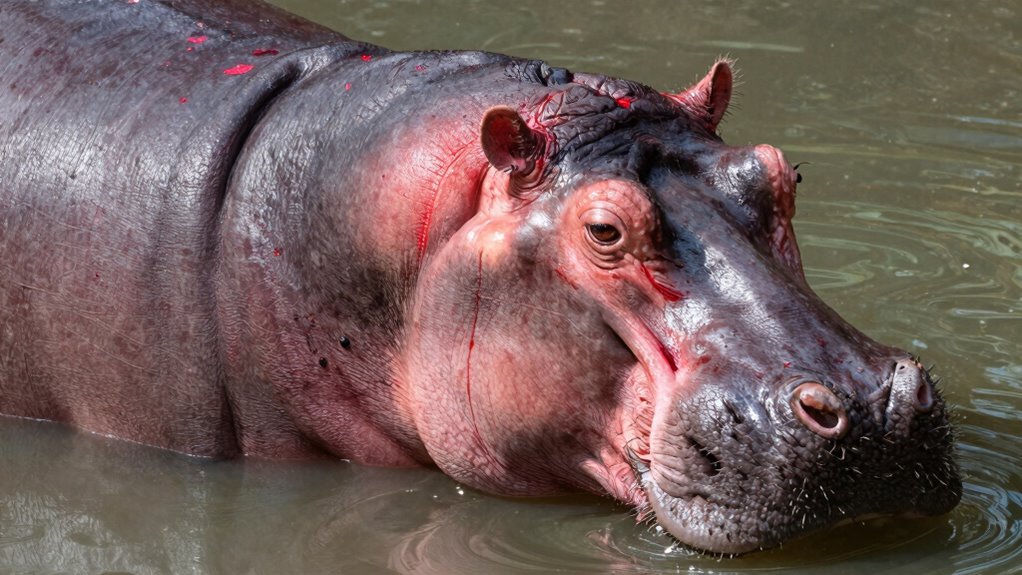
Despite their bulk and seemingly sluggish movements, hippos have a fascinating biological trait: they sweat a reddish-colored secretion known as “blood sweat.” This unusual substance acts as both a sunscreen and an antimicrobial agent, helping hippos protect their skin from the harsh sun and infections. You might wonder why this secretion is blood-red and what purpose it serves, especially considering their aquatic lifestyle. The answer lies in their unique adaptations for water regulation and skin protection.
Hippo coloration is quite distinctive, with their thick, mostly grayish-pink skin often appearing shiny or moist. This shiny appearance is partly due to their natural secretions, including the blood sweat. Unlike most mammals, hippos don’t have sweat glands that produce typical sweat as a cooling mechanism. Instead, they produce this reddish secretion that coats their skin, serving multiple functions. One key role is water regulation; the blood sweat helps keep their skin moist in the hot, dry periods when they spend little time submerged. This secretion forms a protective barrier, preventing excessive moisture loss and helping them maintain hydration. Additionally, the skin’s unique properties enable them to survive in environments with extreme temperature fluctuations.
Hippos’ reddish blood sweat keeps their skin moist, protected, and hydrated during dry, hot periods on land.
You might think that hippos rely solely on water to stay cool, but their blood sweat plays an essential role in thermoregulation, especially when they’re out of the water. The secretion reflects sunlight, reducing heat absorption, and provides a physical barrier against the sun’s rays. This is critical because their thick skin, while protective, can overheat without proper regulation. The redness of the secretion often leads people to believe it’s blood, but it’s actually a pigment-rich substance containing proteins that give it that striking hue. These proteins also have antimicrobial properties, helping prevent skin infections in the aquatic environment, which can harbor bacteria and parasites. This secretion also helps to soothe their skin, reducing irritation caused by the environment. Furthermore, the antimicrobial properties of these proteins contribute to their ability to resist infections, vital in their often bacteria-ridden habitat.
The water regulation aspect of blood sweat ties into their lifestyle. Hippos spend most of their day in water, where their skin stays moist, but they venture onto land at dusk, exposing themselves to the sun’s intense heat. During these times, the secretion’s reflective and protective qualities become even more important. It acts as a natural sunscreen, shielding their skin from damage and dehydration. Interestingly, the unique skin adaptations of hippos help them survive in environments with extreme temperature fluctuations. This dual function of water regulation and skin protection explains why the secretion is so indispensable. It’s a remarkable adaptation that allows hippos to thrive both in water and on land, maintaining their health and comfort despite the extreme conditions of their environment.
As an affiliate, we earn on qualifying purchases.
Frequently Asked Questions
Do All Hippos Sweat Red or Just Some Individuals?
Not all hippos sweat red; only some individuals display this unique trait. Their skin coloration varies, and the red sweat coloration is a natural response to protect their skin from sunburn and bacteria. When they secrete this substance, it acts as a sunscreen and antimicrobial agent. So, if you see a hippo with red sweat, it’s just one of the fascinating ways their skin and sweat coloration work together to keep them healthy.
How Does Red Sweat Benefit Hippos Physically?
Your hippo’s red sweat isn’t just a quirky feature; it’s a superhero shield for its skin. This crimson secretion acts as a natural sunscreen and antimicrobial barrier, protecting your hippo from harmful UV rays and infections. The red color, an evolutionary advantage, also helps regulate body temperature and prevents dehydration. So, this unique sweat isn’t just cool-looking—it’s your hippo’s ultimate defense, keeping it healthy and thriving in its aquatic world.
Is Red Sweat Harmful to Other Animals or Humans?
You might wonder if hippo coloration and sweat composition pose risks to other animals or humans. The red sweat isn’t harmful; it contains pigments that protect their skin from sunburn and has antibacterial properties. While it’s unique to hippos, it doesn’t transfer danger. So, you don’t need to worry about getting harmed by their sweat, as it’s more about their skin health than any threat to others.
Can Red Sweat Indicate a Hippo’s Health Condition?
Yes, red sweat can indicate a hippo’s health condition. When you see the distinctive red pigmentation in a hippo’s sweat, it suggests that their unique coloration is functioning as a natural sunscreen and antimicrobial agent. Changes in this pigmentation might signal stress, illness, or dehydration. So, if the red hue appears abnormal or persists, it’s a sign you should pay closer attention to the hippo’s overall health and environment.
How Long Does the Red Sweat Last on a Hippo’s Skin?
The red sweat on a hippo’s skin typically lasts for a few hours, depending on its activity and environmental factors. You’ll notice this red sweat, composed of pigments called hemoglobin and myoglobin, as a natural part of hippo behavior. It acts as a sunscreen and antibiotic. As the hippo rests or cools down, the red sweat gradually fades, revealing the normal skin color beneath.
Conclusion
So, next time you see a hippo’s red sweat, remember it’s their way of staying cool and protecting their skin—no vampire tales needed. Just like ancient sailors relied on their trusty compasses, hippos rely on this unique secretion to survive the heat and keep their skin healthy. Nature’s got some clever tricks up its sleeve, even if it feels like something straight out of a fairy tale. Now, you know the real story behind their crimson shield.
Halloween Picks
halloween
As an affiliate, we earn on qualifying purchases.