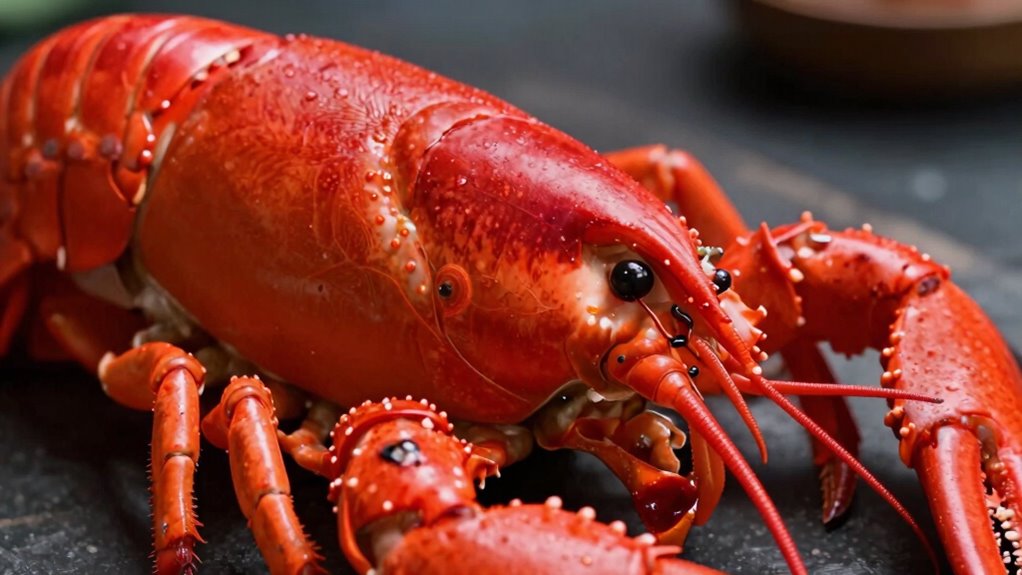

When you cook a lobster, the heat breaks the proteins that tightly bind a pigment called astaxanthin stored in its tissues. Normally, this pigment is hidden beneath the shell’s surface, giving the lobster a dull color. As the proteins break down quickly during cooking, the bright red astaxanthin is released, revealing the lobster’s vibrant hue. If you want to understand more about how this chemical change happens, there’s much more to discover.

Get pet supplies delivered free with Prime
- Fast, free delivery on millions of items
- Prime Video, Amazon Music and more included
- Member-only deals all year
Key Takeaways
- Cooking breaks protein bonds that tightly bind astaxanthin, revealing its bright red color.
- Heat causes rapid denaturation of proteins, exposing the pigment stored in lobster tissues.
- Astaxanthin is naturally red but appears dull when bound to proteins in the shell.
- The color change is a chemical process driven by heat, not a physical alteration of the shell.
- The lobster’s natural habitat and diet influence its original shell color before cooking.
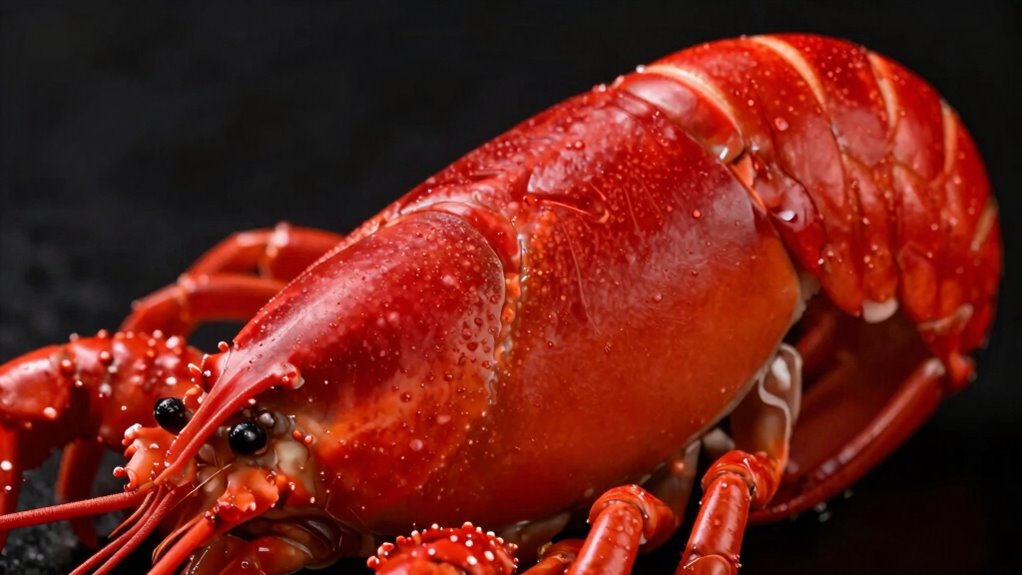
When you cook a lobster, you’ll notice it turns bright red almost instantly, a dramatic transformation that surprises many. This vivid change is primarily due to a pigment called astaxanthin, which is stored within the lobster’s shell and tissues. In its natural state, astaxanthin is bound tightly to proteins, giving the lobster a dull brown or greenish hue that helps it blend into its environment. Yet, when heated, these protein bonds break down, freeing the astaxanthin molecules. As a result, the pigment’s bright red color becomes visible, transforming the lobster’s appearance almost immediately. The process is rapid because heat causes the proteins to denature quickly, revealing the vibrant pigment that was always there but hidden. Additionally, this reaction is a chemical change driven by heat, not a physical alteration of the shell itself, but the exposure of the pigment that was always present. Understanding why lobsters turn red when cooked involves knowing about their habitat and diet. Lobsters typically inhabit the cold, rocky waters of the Atlantic Ocean, often hiding under rocks or burrowing into the ocean floor. Their environment influences their coloring, which tends to be muted and camouflaging, helping them evade predators in the wild. Their diet plays a significant role in the development of their shell color as well. Lobsters are omnivorous and consume a variety of foods, including fish, mollusks, and plant matter. Their diet provides nutrients that contribute to the pigmentation of their shells, but it’s the astaxanthin that’s most responsible for their coloration. Their diet and habitat influence the natural coloration of lobsters long before they are cooked. In their natural habitat, lobsters rarely appear bright red because they are covered in a tough, calcium-rich shell that is often darker or more muted in color. It’s only when they are cooked that the hidden red pigment becomes visible. The intense heat breaks down the protein bonds that hide the astaxanthin, causing the lobster to turn a bright, appealing red. This process is a chemical reaction, not a change in the lobster’s actual shell or tissue color, but rather the exposure of the pigment that was always present. So, when you see a lobster turn red in boiling water, you’re witnessing a physical change that reveals the vibrant pigment stored within its tissues, a result of both its natural habitat and diet shaping its overall appearance long before cooking. Additionally, the environmental factors like temperature and cooking method can influence how quickly and vividly the lobster changes color.
Products Worth Considering

Dyson Ball Animal 3 Corded Upright Vacuum

Dyson Ball Animal 3 Extra Upright Vacuum

PETLIBRO Automatic Cat Feeder with 1080p Camera and Night Vision
As an affiliate, we earn on qualifying purchases.
Frequently Asked Questions
Do All Lobsters Turn Red When Cooked?
Not all lobsters turn red when cooked; their pigmentation varies based on their natural coloration. During cooking, heat triggers a chemical change in the lobster’s shell, revealing the red pigment called astaxanthin. This process, part of cooking chemistry, causes the shell to turn vibrant red. Some lobsters may remain bluish or greenish if their pigmentation contains different pigments. So, your lobster’s color change depends on its unique chemical makeup.
How Long Does It Take for a Lobster to Turn Red?
It takes just about 5 to 10 minutes for a lobster to turn red, revealing its vibrant hue. You might find it ironic how a creature’s natural pigmentation, hidden beneath its shell, transforms so quickly through a simple heat change. The color change mechanism involves the breakdown of proteins that mask the red pigment, astoundingly revealing the lobster’s true fiery color, almost as if it’s blushing at the heat.
Can Lobsters Turn Red Before They Are Cooked?
Lobsters can’t turn red before they’re cooked because their natural pigmentation doesn’t change without heat. Their shells contain astaxanthin, a pigment that’s masked by other compounds. When you cook a lobster, heat breaks down these compounds, revealing the vibrant red color—a process known as culinary coloration. So, in raw form, they stay dark greenish-blue or brown, only turning red during cooking due to this heat-induced change in lobster pigmentation.
Does the Color Change Affect the Lobster’s Taste?
No, the color change doesn’t affect the lobster’s taste. Think of it like a fashion statement—color perception is all about appearance, not flavor. The vivid red hue enhances culinary aesthetics, making your dish visually appealing, but it doesn’t alter the savory, sweet flavor you enjoy. So, while the lobster’s look might impress, its deliciousness remains unchanged, regardless of whether it’s dressed in red or not.
Are There Different Colors of Cooked Lobsters?
When cooked, lobsters primarily turn red due to natural pigmentation called astaxanthin. However, there can be slight color variations, like shades of orange or even mottled hues, depending on the lobster’s natural pigmentation and diet. These color variations don’t affect the lobster’s flavor or quality. So, while most cooked lobsters are red, some can show subtle differences in color due to their unique pigmentation.
Conclusion
So, next time you see a lobster turn bright red, remember it’s all about the chemistry happening inside. That stunning transformation, like a phoenix rising, reminds us of nature’s incredible magic, even if it feels like something out of a fairy tale. It’s a small wonder that’s been mesmerizing humans for centuries, from the age of knights to modern kitchens. Truly, it’s a reminder that some of the most beautiful things come from simple, honest science.