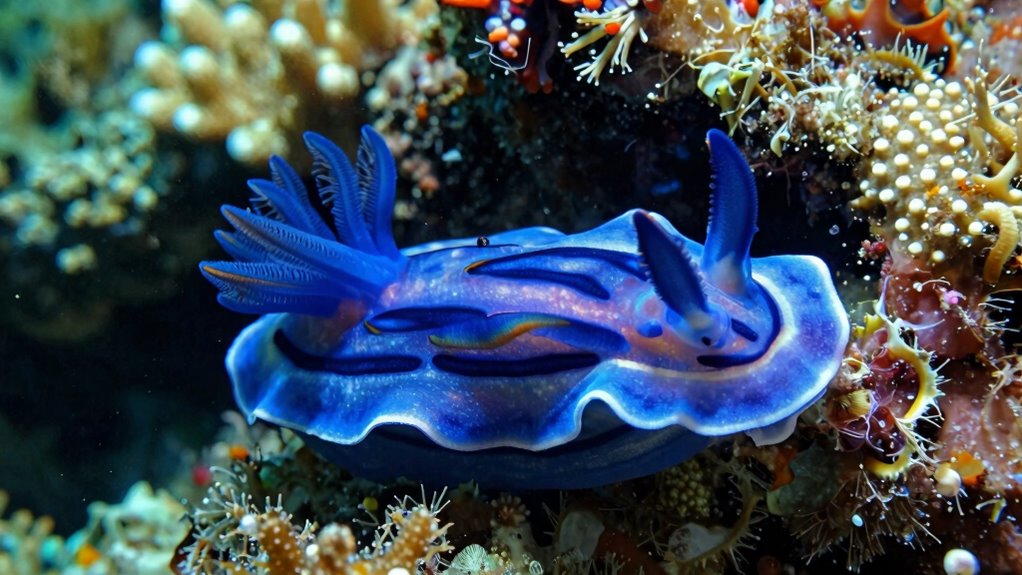

The blue dragon sea slug uses a smart mix of camouflage, chemical defenses, and striking colors to stay safe. Its bright blue hue and frilly edges help it blend into the ocean’s surface and mimic debris or coral, making it hard for predators to spot. Plus, it absorbs toxins from venomous prey like Portuguese man o’ war, releasing them when threatened. These defenses work together, providing powerful protection. Keep exploring to uncover more fascinating survival tricks of this incredible marine creature.

Get pet supplies delivered free with Prime
- Fast, free delivery on millions of items
- Prime Video, Amazon Music and more included
- Member-only deals all year
Key Takeaways
- The Blue Dragon Sea Slug uses bright coloration and frilly edges to blend with its environment, avoiding predators through effective camouflage.
- It mimics colors and textures of debris and seaweed, disguising itself as harmless ocean elements.
- The slug feeds on venomous creatures like Portuguese man o’ war, absorbing toxins for chemical defense.
- Its vivid appearance combined with stored toxins serves as a visual and chemical warning to potential predators.
- These adaptations demonstrate its survival strategy of combining camouflage and toxicity to deter attacks.
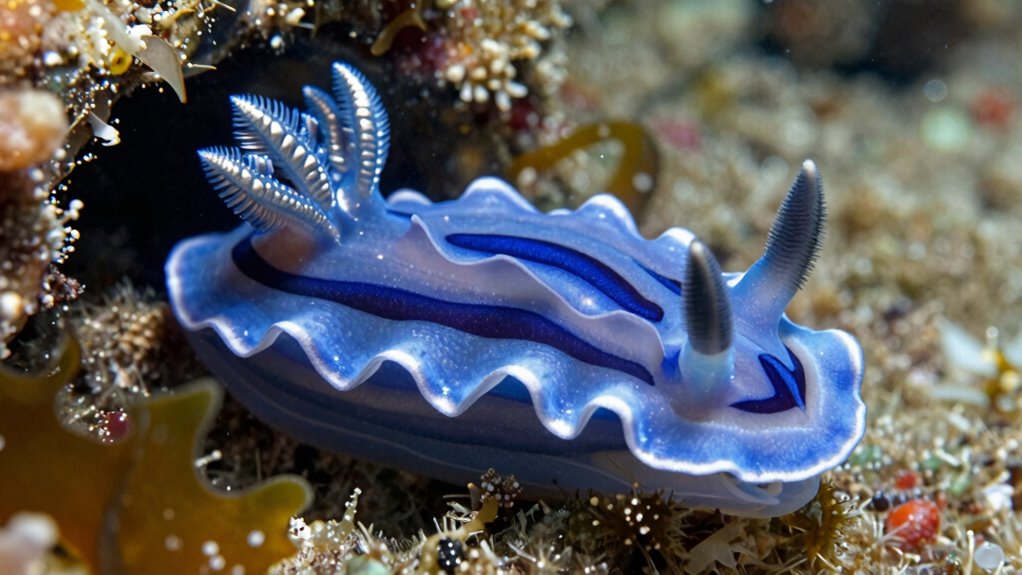
Sea slugs, despite their delicate appearance, have developed a remarkable array of defense strategies to survive in their often-dangerous ocean habitats. One of the most striking examples is the Blue Dragon sea slug, which masterfully combines marine camouflage and chemical deterrents to ward off predators. When you observe this vibrant creature gliding through the water, you might think it’s simply beautiful. But beneath that stunning exterior lies a sophisticated survival toolkit designed to keep it safe.
Marine camouflage is one of the Blue Dragon’s primary defenses. Its bright blue coloration and delicate, frilly edges help it blend into the ocean’s surface and match the hues of its surroundings. This camouflage makes it difficult for predators to spot it against the shimmering blue backdrop of the open water or among floating debris and seaweed. By mimicking the colors and textures of its environment, the Blue Dragon effectively disappears from view, reducing the likelihood of being targeted. This natural disguise is so effective that many predators simply overlook it, mistaking it for harmless debris or a part of the coral reef. Interestingly, these camouflage techniques are a form of marine adaptation that have evolved over time to enhance survival. Additionally, the Blue Dragon’s ability to mimic its environment demonstrates the importance of marine mimicry in predator avoidance.
The Blue Dragon’s vivid blue and delicate edges help it blend seamlessly into the ocean, avoiding predators with natural camouflage.
But the Blue Dragon doesn’t rely solely on camouflage. It also produces powerful chemical deterrents that make it unappetizing or toxic to potential predators. You see, this sea slug feeds on venomous creatures like Portuguese man o’ war, absorbing their toxins and storing them in its own tissues. When threatened, it can release these toxins, which act as a potent chemical deterrent. Predators that attempt to bite or attack it often find themselves repelled by the foul taste or harmful effects of the toxins. This chemical defense not only discourages attacks but also signals to predators that the Blue Dragon might be dangerous or unpalatable. Its striking appearance, combined with its chemical defenses, creates an effective warning system that helps it avoid predation.
Additionally, the Blue Dragon’s ability to absorb toxins from its prey highlights the importance of chemical defense strategies in marine ecosystems, showcasing nature’s innovative ways of protection. Its vivid colors, serving as a visual warning, along with its toxic arsenal, provide an internal shield. You might marvel at its beauty, but it’s this clever combination of disguise and chemical warfare that truly protects it from the many threats lurking beneath the ocean’s surface. Observing these adaptations offers insight into biodiversity and how marine species develop unique survival strategies. It also demonstrates how these defense mechanisms can influence predator-prey relationships within marine habitats. As you observe this tiny yet resilient creature, you gain insight into the extraordinary ways marine life adapts to survive in a world full of predators and dangers.
marine camouflage educational toy
As an affiliate, we earn on qualifying purchases.
As an affiliate, we earn on qualifying purchases.
Frequently Asked Questions
Can the Blue Dragon Sea Slug Regenerate Lost Parts?
Yes, the blue dragon sea slug can regenerate lost parts, though it’s limited compared to some other creatures. Its colorful camouflage helps it blend in, while its toxic secretion strategies protect it from predators. If it loses a small part, it might regrow it over time, but larger damage can be challenging to recover from. Always admire their resilience, but remember, their defense tactics are primarily about avoiding harm altogether.
How Long Does the Blue Dragon Sea Slug Live?
Like a fleeting shadow in a myth, the blue dragon sea slug lives around one year. Its vibrant coloration patterns serve as a warning and camouflage, while its feeding habits on venomous creatures like the Portuguese man o’ war help it survive. You’ll find it gracefully drifting through the ocean, making the most of its brief, yet fascinating, existence, embodying nature’s clever blend of beauty and survival.
What Predators Specifically Target the Blue Dragon Sea Slug?
You might think predators avoid the blue dragon sea slug because of its vibrant appearance, but some, like fish and sea stars, do target it. They often rely on predator camouflage to get close without detection. However, you should know that the slug’s defense toxins make it less appealing, as these toxins can deter or harm predators. Despite this, some predators have adapted to tolerate or bypass its defenses.
Does the Blue Dragon Sea Slug Have Any Known Symbiotic Relationships?
You’ll find that the blue dragon sea slug has a fascinating symbiotic relationship with certain microorganisms, engaging in mutual symbiosis. These microorganisms help the slug enhance its chemical defenses, making it less appealing to predators. By absorbing toxins from its prey and storing them, the slug becomes toxic itself, using chemical defenses as a key survival strategy. This partnership boosts its ability to ward off threats in its marine environment.
How Does the Blue Dragon Sea Slug Navigate Its Environment?
Exploring its environment is like a sailor steering through fog—you rely on your senses. The blue dragon sea slug uses its coloration camouflage to blend into surroundings, making it harder for predators to spot. It also depends on sensory guidance, sensing vibrations and chemical cues in the water to find food and avoid danger. This combination helps it move efficiently and stay safe in its vibrant, often perilous, ocean habitat.
Conclusion
Like a mythic guardian of the ocean, the blue dragon sea slug’s fierce defense reminds you that even the smallest creatures can wield mighty power. Its vibrant colors and venomous secret echo tales of ancient legends and hidden warriors lurking beneath the waves. So, next time you see a seemingly delicate sea creature, remember it might be a silent sentinel, standing brave and bold against the deep, dark mysteries of the sea—an unspoken hero in nature’s grand story.
Halloween Picks
halloween
As an affiliate, we earn on qualifying purchases.