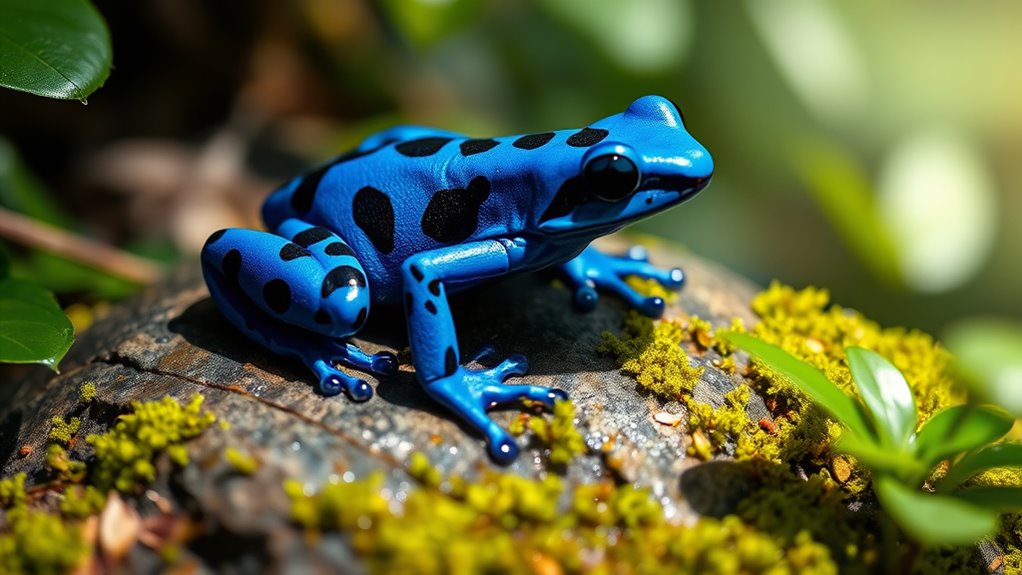

The blue poison dart frog, or *Dendrobates tinctorius*, captivates with its vibrant blue hue. This bright coloration isn’t just for show; it acts as a warning sign for predators, indicating the frog’s potent toxicity. Found mainly in the lush rainforests of Suriname and French Guiana, its striking appearance serves as a critical defense mechanism against threats. Understanding these frogs’ colors and their implications reveals more about their fascinating ways of survival and their role in the ecosystem.
Key Takeaways
- The Blue Poison Dart Frog, known as *Dendrobates tinctorius*, displays vibrant blue coloration that serves as a warning to potential predators.
- Their bright colors are an example of aposematic coloration, signaling their high toxicity and deterring attacks.
- The frog’s toxicity is derived from alkaloids in their natural diet, which enhances their striking appearance and survival.
- Indigenous tribes historically utilized their toxic secretions to poison blow darts, showcasing the frog’s dangerous chemical properties.
- Protecting their rainforest habitat is crucial to maintain their populations and the ecological balance they help sustain.
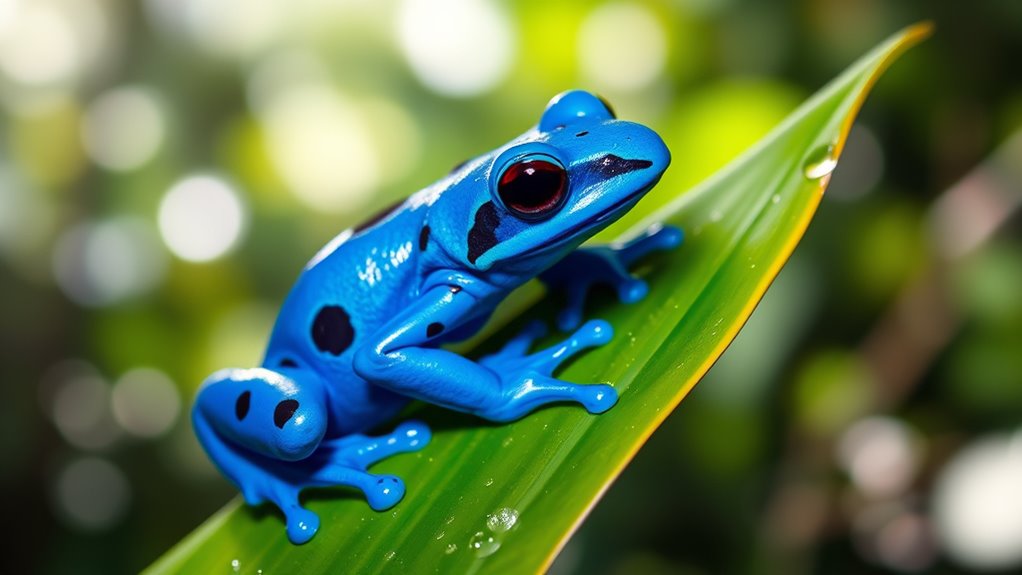
Have you ever wondered what makes the Blue Poison Dart Frog so mesmerizing? Its vibrant blue hue instantly captures your attention, but it’s not just the color that’s fascinating. The Blue Poison Dart Frog, known scientifically as Dendrobates tinctorius, showcases a unique blend of beauty and danger. You might be surprised to learn that these tiny amphibians possess some of the highest toxicity levels in the animal kingdom. Their brilliant color serves as a warning to predators, signaling that they’re not a safe snack. This striking feature is an evolutionary advantage, helping them survive in the wild.
The Blue Poison Dart Frog’s vibrant hue not only captivates but also signals its potent toxicity, a fascinating blend of beauty and danger.
As you explore their habitat range, you’ll find that these frogs mainly reside in the rainforests of Suriname and French Guiana. The lush, humid environment provides not only shelter but also a rich source of food. You can imagine them hopping among the damp leaf litter, feasting on insects and other small organisms. The frog’s diet plays a critical role in its toxicity. In the wild, they absorb toxic alkaloids from their prey, which accumulate in their skin, enhancing their defensive capabilities. However, if you were to raise them in captivity without their natural diet, you’d notice a significant drop in their toxicity levels, showcasing how environment and diet directly impact their chemical makeup.
The Blue Poison Dart Frog’s captivating appearance and potent defense mechanism make it a subject of interest for both researchers and enthusiasts. You might find yourself drawn to their bright colors, but it’s important to remember that their beauty comes with a price. While they’re stunning to observe, handling them without caution can lead to serious consequences. In fact, indigenous tribes have historically used their toxic secretions to poison blow darts for hunting, highlighting their remarkable chemical prowess. Additionally, the frog’s bright colors are a prime example of aposematic coloration, a form of warning coloration found in various species.
Understanding the Blue Poison Dart Frog requires an appreciation of its natural habitat and the delicate balance of its ecosystem. By protecting their rainforest homes, we ensure these incredible creatures continue to thrive. You might also consider how your actions impact their environment. Every effort you make to support conservation can help preserve the unique tapestry of life that includes the mesmerizing Blue Poison Dart Frog. So, the next time you catch a glimpse of this vibrant amphibian, remember the complexity behind its beauty, and appreciate the intricate web of life it represents.
Frequently Asked Questions
How Long Do Blue Poison Dart Frogs Live in the Wild?
Blue poison dart frogs typically live around 4 to 7 years in the wild. Their vibrant colors serve as a warning to potential predators, signaling their high toxicity levels. By showcasing these bright hues, they effectively deter most would-be attackers, ensuring their survival in their natural habitat. So, when you spot one, remember that its striking appearance is both beautiful and a clever defense mechanism against threats in the wild.
What Do Blue Poison Dart Frogs Eat in Their Natural Habitat?
Blue poison dart frogs feast primarily on small insects, like ants and termites, which they skillfully hunt within their lush rainforest homes. Picture yourself wandering through vibrant foliage, observing these frogs’ foraging behavior as they dart with precision. Their diet preferences hinge on the availability of these tiny creatures, which are essential for their survival. By consuming these insects, they not only thrive but also acquire the toxic compounds that make them unique in the animal kingdom.
Are Blue Poison Dart Frogs Endangered or Threatened?
Yes, blue poison dart frogs are considered endangered due to habitat threats like deforestation and pollution. Their conservation status is alarming, as these beautiful creatures rely on specific environments to thrive. When you learn about their plight, it’s vital to understand how habitat destruction impacts their survival. Supporting conservation efforts can help protect their habitats and guarantee that future generations can appreciate these unique frogs in the wild.
Can Blue Poison Dart Frogs Be Kept as Pets?
You can keep blue poison dart frogs as pets, but it’s essential to create the right environment. They thrive in a humid habitat with plenty of plants and hiding spots. Their breeding behavior can be fascinating, so you’ll need to replicate natural conditions for that to happen. Just remember, these little creatures require special care, and their toxic nature means you should handle them with caution. Enjoy their vibrant presence responsibly!
How Do Blue Poison Dart Frogs Reproduce?
Blue poison dart frogs reproduce through unique reproductive behaviors. During mating season, males call out to attract females, showcasing their vibrant colors. Once a female selects a mate, she lays her eggs in moist breeding habitats, often in vegetation near water. The male then fertilizes the eggs and guards them until they hatch. After hatching, tadpoles are usually transported to water by the male, ensuring their survival in a safe environment.
Conclusion
So, while you might think those vibrant blue hues of the poison dart frog would make it an easy target, it’s quite the opposite. Nature’s irony at play: its stunning colors scream, “Look at me!” while simultaneously shouting, “Don’t touch!” You can admire its beauty from a distance, but remember, those hues are a warning. Who knew that such a cute little creature could pack such a potent punch? Beauty really does have its dangers!