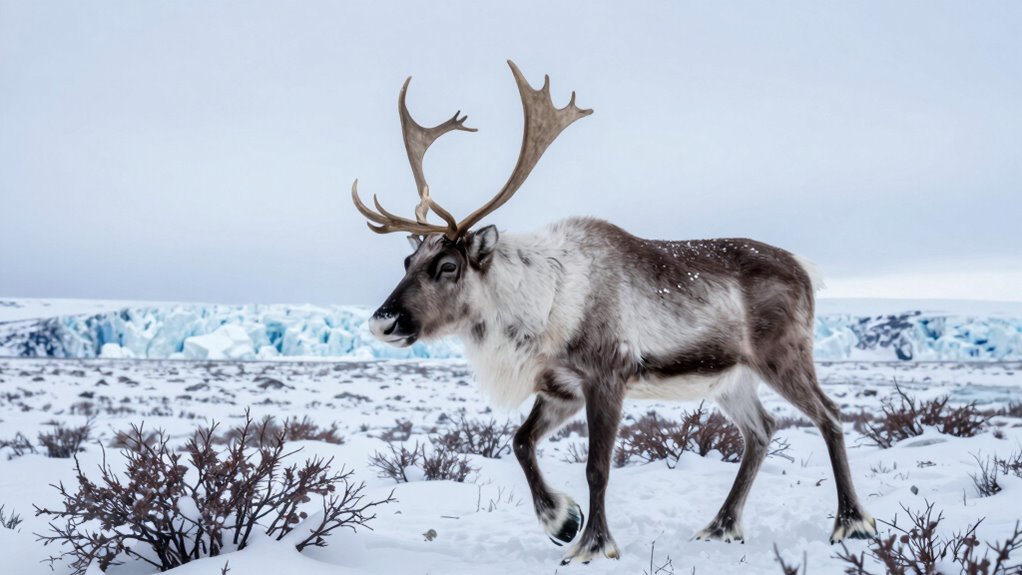

To survive long Arctic migrations, you rely on keen senses and strategic route choices to avoid predators and find food. Herd behavior offers safety through numbers, while quick and unpredictable movements help dodge threats like wolves and bears. Timing your migration with the seasons guarantees access to abundant resources and ideal breeding conditions. Traditional paths and cooperation within the herd increase your chances of success. Keep going to uncover more about how these incredible animals thrive in the Arctic wilderness.

Get pet supplies delivered free with Prime
- Fast, free delivery on millions of items
- Prime Video, Amazon Music and more included
- Member-only deals all year
Key Takeaways
- Caribou utilize keen senses and unpredictable movements to detect and evade predators during migration.
- Herd behavior provides safety in numbers, reducing individual predation risk.
- They follow traditional migration routes optimized over generations for resource access and predator avoidance.
- Timing of migration aligns with breeding seasons, ensuring calves are born in favorable conditions.
- Caribou combine speed, stamina, and strategic route selection to navigate vast, featureless Arctic terrains effectively.
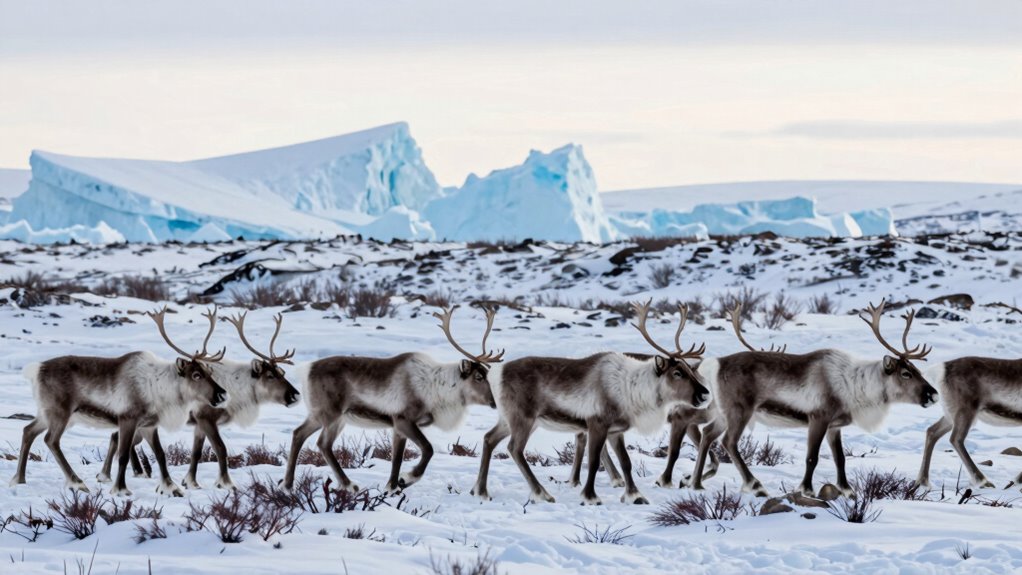
Have you ever wondered how caribou manage to travel thousands of miles each year? It’s a remarkable feat, one that requires a finely tuned combination of survival strategies. You might think it’s just about endurance, but a lot goes into their ability to survive long Arctic migrations. One key aspect is their predator adaptation. Caribou face predators like wolves, bears, and even Arctic foxes, so they’ve developed quick, unpredictable movements to stay ahead. Their keen senses help them detect threats early, giving them essential seconds to react. During migration, they often travel in large herds, making it harder for predators to single out an individual. This herd behavior acts as a natural defense, with the sheer number of caribou providing safety in numbers. Additionally, their speed and agility allow them to outrun many predators, especially in open tundra where they can leverage their stamina. These adaptations aren’t just about evasion; they also include strategic resting periods and choosing migratory routes that minimize predator encounters. The importance of their migratory routes is also influenced by their traditional knowledge, which guides them to the safest and most resource-rich paths each year. Moreover, the ability to navigate vast and often featureless terrains is crucial for their survival, especially when combined with their adaptation strategies that have evolved over millennia.
When it comes to breeding habits, timing is everything. You’ll find that caribou synchronize their migration to coincide with breeding seasons, which typically occur in late summer or early fall. This timing guarantees that calves are born during the most favorable conditions for survival—when food is abundant and the weather is less severe. Males often compete for females through displays of strength and dominance, which may involve vocalizations and physical sparring. Once a male wins a mate, he stays close to her and the calves during their early months, providing protection and guidance. This close bond is essential because calves are vulnerable from birth; they can’t run or escape predators immediately. The mothers, however, are fiercely protective, using their speed and alertness to shield their young from danger. Breeding habits also influence migration patterns—caribou tend to follow traditional routes year after year, partly to maximize reproductive success and partly because they’ve learned which areas offer the best resources for raising calves. These routes are often passed down through generations, emphasizing the importance of cultural traditions in their migratory behavior.
In short, the survival of migrating caribou hinges on their ability to adapt to predators and their strategic breeding habits. You can see that their long journeys are more than just endurance tests—they’re carefully coordinated events shaped by millions of years of evolution. Their predator adaptations help them stay alive amid constant threats, while their breeding habits guarantee the next generation is born at the right time and place. Together, these strategies make it possible for caribou to survive the harsh Arctic environment and continue their incredible migrations year after year.
outdoor binoculars for wildlife observation
As an affiliate, we earn on qualifying purchases.
As an affiliate, we earn on qualifying purchases.
Frequently Asked Questions
How Do Caribou Navigate During Their Migrations?
You might wonder how caribou navigate during their migrations. They use a combination of navigation techniques, including the sun’s position, the Earth’s magnetic field, and landmarks like rivers and mountains. Their seasonal movement patterns guide them when to migrate. These instinctive skills help them find food and avoid predators, ensuring they travel the right routes at the right times for survival in the challenging Arctic environment.
What Predators Do Caribou Encounter on Long Journeys?
Ever wonder what predators challenge your long journey? You encounter wolves, bears, and sometimes even Arctic foxes. These predators adapt their hunting strategies to catch you, using stealth and pack tactics. Your thick fur and swift movements are your best defenses, but they constantly evolve predator adaptations to stay ahead. Do you think they’ll ever outsmart your survival skills? Staying alert and aware helps you dodge these threats during your arduous migration.
How Does Climate Change Affect Caribou Migration Timing?
Climate impacts disrupt your caribou migration timing by causing unpredictable snow and ice conditions, which make it harder to find food and safe routes. Warmer temperatures lead to earlier springs and later falls, shifting migration schedules. These changes can force you to arrive too early or too late at key habitats, increasing risks of starvation and predation. Adapting to these altered patterns becomes essential for your survival in a changing Arctic environment.
What Role Do Caribou Play in Arctic Ecosystems?
You play a crucial role in Arctic ecosystems as a primary herbivore in the tundra. Caribou help shape the landscape through seasonal feeding, which influences plant growth and nutrient cycling. Their migrations distribute seeds and nutrients across vast areas, supporting diverse plant and animal species. By maintaining these ecological balances, you guarantee the health and stability of the Arctic tundra, benefiting the entire ecosystem and its inhabitants.
How Do Young Calves Survive the Migration Challenges?
You might wonder how young calves survive migration barriers, but their calf development is essential. Calves are born with strong instincts and adapt quickly, gaining strength as they grow. They rely on their mothers for protection and nourishment, helping them navigate tough terrain. Their resilience and rapid development enable them to overcome migration barriers, ensuring they keep up with the herd and survive long Arctic journeys.
Conclusion
Just like a skilled traveler steering endless roads, you now see how caribou survive their long Arctic migrations. Their resilience, adaptations, and teamwork help them endure brutal cold and shifting landscapes. With every step, they remind you that persistence and cleverness can conquer even the harshest environments. So, next time you face a tough journey, think of the caribou—steady and determined, they teach us that survival depends on endurance and hope, no matter how challenging the path.
Halloween Picks
halloween
As an affiliate, we earn on qualifying purchases.